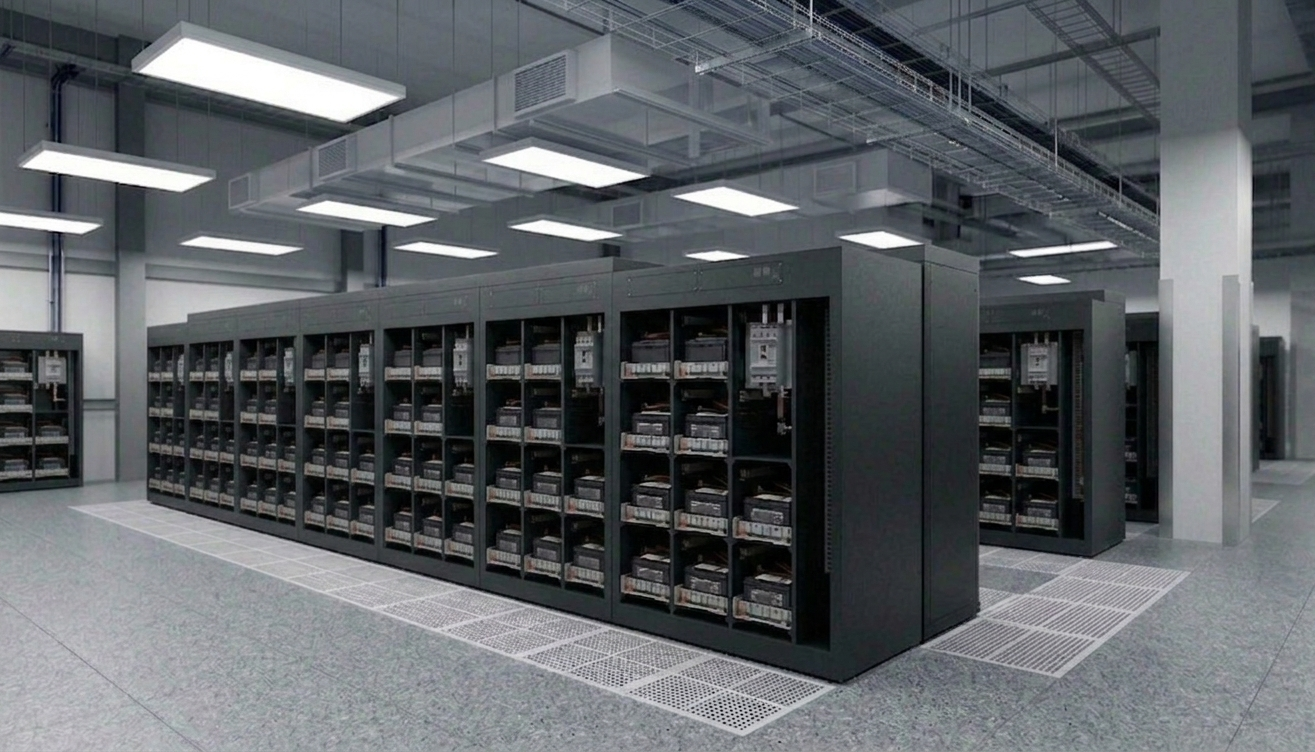
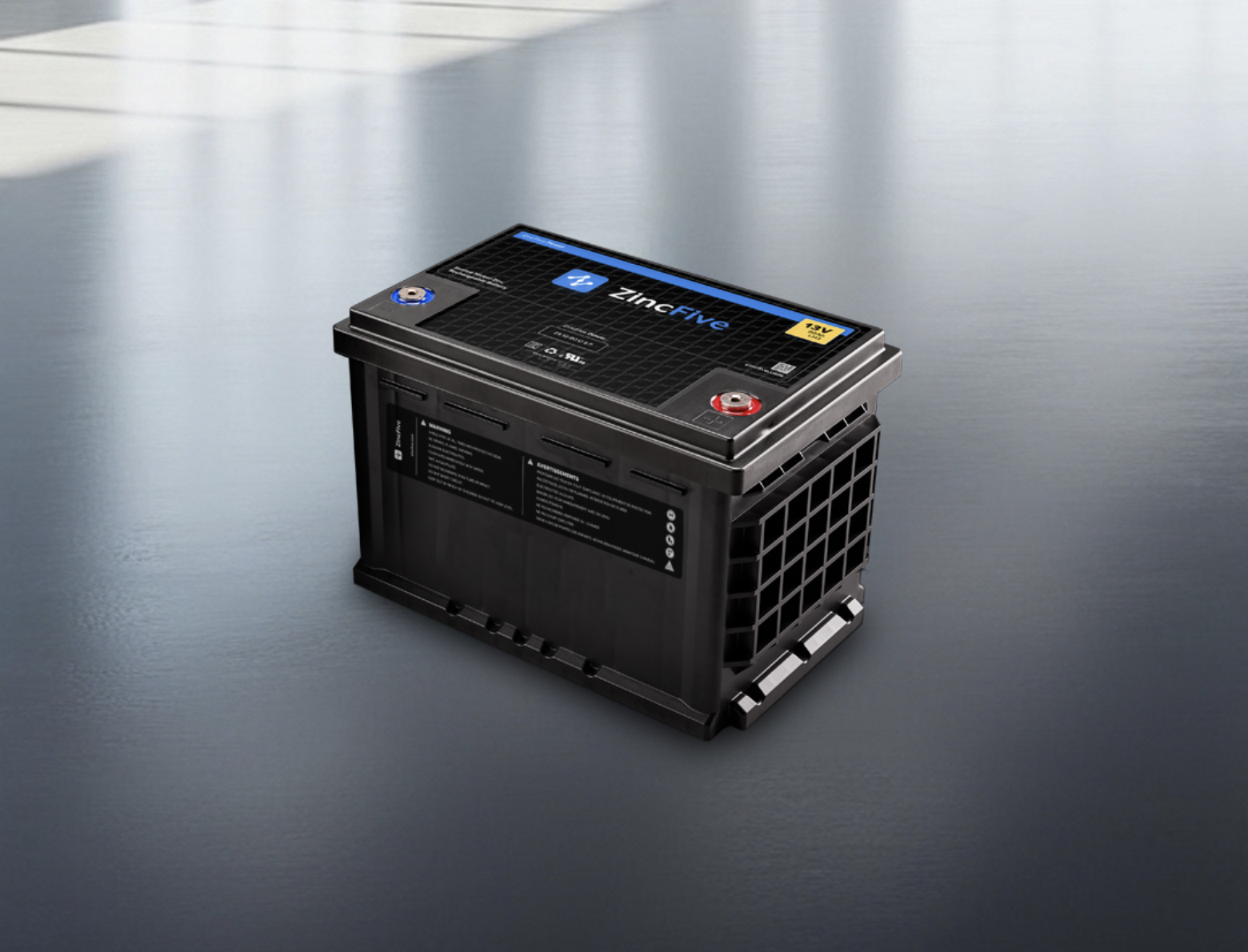
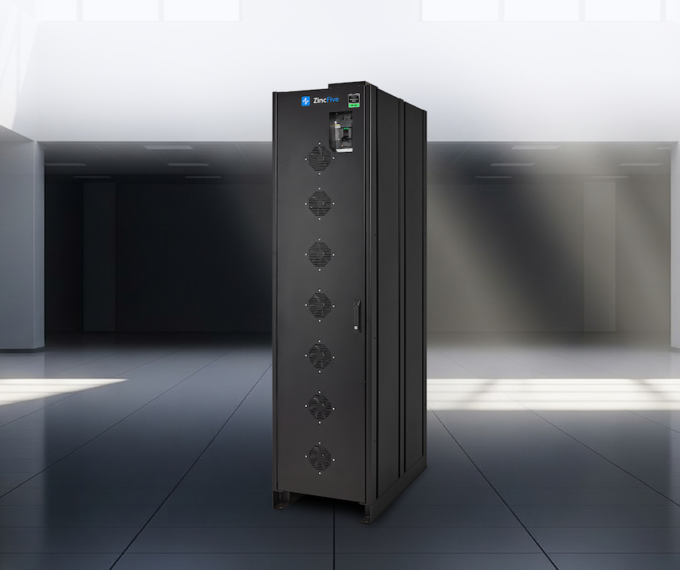
Its chemistry is inherently safe: nickel-zinc operates across a wide temperature range without the risk of thermal runaway, even during cooling failures. It’s sustainable: with a lower lifecycle carbon footprint, recyclable materials, and a 3x longer lifespan than lead-acid. And it’s resilient: remaining operational even when individual cells weaken, ensuring continuous power delivery without forced shutdowns.
The Middle East’s AI Ambitions and the Need for a New Class of High-Power Battery Solutions
When Saudi Arabia announced its $100 billion Transcendence AI Initiative and the UAE unveiled its 5-gigawatt Abu Dhabi AI campus in 2025, the headlines focused on the staggering investment figures and geopolitical implications. But buried in the technical specifications of these mega-projects lies a more fundamental question: Can the Middle East’s power infrastructure support its AI ambitions?
The answer requires examining not just power generation capacity, but the entire regional power ecosystem: from the pioneering GCC super grid that has quietly interconnected the power grids of six countries into a single, resilient network since 2009, to the ambitious Red Sea cable projects linking Saudi Arabia to Egypt and beyond.
The competition between Saudi Arabia and the UAE for Middle East AI dominance has produced investment announcements that dwarf most national infrastructure budgets. Beyond the Saudi Transcendence initiative, the kingdom secured $600 billion in AI infrastructure partnerships during Trump’s 2025 visit, Oracle’s $14 billion commitment to cloud infrastructure, and AWS’s $5.3 billion Saudi region development. The UAE has responded with equally massive commitments: the 5-gigawatt G42 AI campus—one of the world’s largest—the$500 billion Stargate project in partnership with OpenAI and SoftBank, and plans to deploy significantly more capacity beyond the current 100 MW Khazna facilities.
The Infrastructure Reality Gap
These AI investments represent a fundamental break from previous infrastructure planning. A comprehensive 2022 analysis of Saudi Arabia’s electrical energy future projected methodical growth based on population expansion and traditional energy demand patterns, anticipating peak demand growth to 84 GW by 2030 from 62.3 GW in 2020, with a total generation capacity target of 123 GW by 2032.
What the 2022 planning didn’t anticipate was the AI infrastructure explosion: NEOM’s 1.5 GW net-zero AI data center, G42’s 5 GW AI campus (equivalent to 8% of Saudi Arabia’s 2020 peak demand), and the reality that AI-focused data centers require up to 10 times more power than traditional facilities. Traditional data centers operate at 5-10 kW per rack, while AI data centers require 60 or more KW per rack. This 6-12x power density increase, combined with gigawatt-scale facility announcements, represents 5-10 GW of unexpected concentrated demand that wasn’t in any 2022 planning scenarios.
Immediate Power Is the Missing Link Between AI Scale and Sustainability
Read PostFrom a pure generation perspective, Saudi Arabia appears positioned to handle this challenge, with current capacity around 66 GW and the region’s abundant energy resources. However, the challenge extends far beyond total power generation to encompass power quality, delivery infrastructure, and cooling systems operating in extreme climates where temperatures can easily reach 50° Celsius during summer.
Regional Grid Foundation: A $50 Trillion Vision Already in Motion
The Middle East isn’t starting power grid integration from scratch. The GCC Interconnection Authority has united the power grids of UAE, Bahrain, Saudi Arabia, Oman, Qatar, and Kuwait into a single, resilient network since 2009. The 400-kV GCC super grid represents a sophisticated engineering achievement, featuring high-voltage direct current (HVDC) systems that connect 50 Hz systems (UAE, Oman, Kuwait, Bahrain) to Saudi Arabia’s 60 Hz system through 1,200-MW HVDC installations with centralized control from GCCIA’s center in Ghunan, Saudi Arabia.
The most ambitious expansion is the Saudi Arabia-Egypt electricity interconnection, representing the first large-scale HVDC link between Middle East and North Africa. This 1,350-km route combines overhead lines and Red Sea subsea cables, with 3 GW total exchange capacity and $1.8 billion investment. Twenty-two-kilometer-long underwater cables are installed/ being installed in the Red Sea, with the first 1.5 GW currently in trial operations.
Regional grid ambitions extend to transcontinental connections: India is planning to link its power grid with Saudi Arabia and the UAE through undersea cables, while the EuroAfrica Interconnector will provide a 2 GW link from Egypt to Cyprus, Crete, and mainland Greece. Such ventures would ultimately tie the GCC, the eastern Mediterranean, and North Africa to Europe to the west and north, and south and central Asia to the east, in a transcontinental grid.
The Technical Challenge: Where AI Meets Reality
While the Middle East offers significant advantages—electricity tariffs ranging from US$0.05 to US$0.06 per kWh, well below the US average of US$0.09 to US$0.15 per kWh, and abundant energy resources—AI creates unprecedented technical challenges. Power delivery challenges in most markets are driven by limitations in interconnecting to the transmission grid, rather than an inability to generate the power, and moving gigawatt-scale power to specific AI facility locations creates transmission bottlenecks that traditional grid infrastructure wasn’t designed to handle.
AI’s microsecond-scale power variation requirements demand a level of power quality that exceeds conventional grid standards, while integrating massive, variable AI loads threatens to destabilize networks designed for predictable, distributed demand patterns. Cooling infrastructure presents equally daunting challenges. Traditional air-cooled chillers, which rely on very cold water (around 4-6°C), struggle when ambient temperatures exceed 50°C, consuming substantial energy. AI compounds this exponentially: air cooling becomes inefficient above 50 kW per rack, necessitating liquid cooling solutions that are both more complex and energy-intensive. In extreme Middle Eastern climates, cooling infrastructure can consume 50% or more of a facility’s total power, creating a compounding effect where AI’s higher power density hinges on even more cooling power.
These challenges require advanced power infrastructure solutions. Traditional UPS systems designed for gradual power ramps can’t handle AI’s microsecond-scale power variations, creating reliability risks that could undermine billion-dollar infrastructure investments. Immediate Power Solutions (IPS) deliver high-rate power instantly, enabling infrastructure to be right-sized for normal operation while meeting peak demand during power surges.
Propelling IPS Innovation
These IPS architecture requirements have driven innovation in the battery technology sector, with companies like ZincFive developing specialized solutions for AI workloads.
At ZincFive, we deliver high-power nickel-zinc (NiZn) battery systems for UPS and other mission-critical applications. Built on NiZn chemistry, our Immediate Power Solutions respond to millisecond-level AI power fluctuations while supporting conventional base-load and backup demands—without the safety, sustainability, footprint, or cost tradeoffs of legacy battery chemistries.
Everything You Need to Know About Nickel-Zinc Batteries (FAQ)
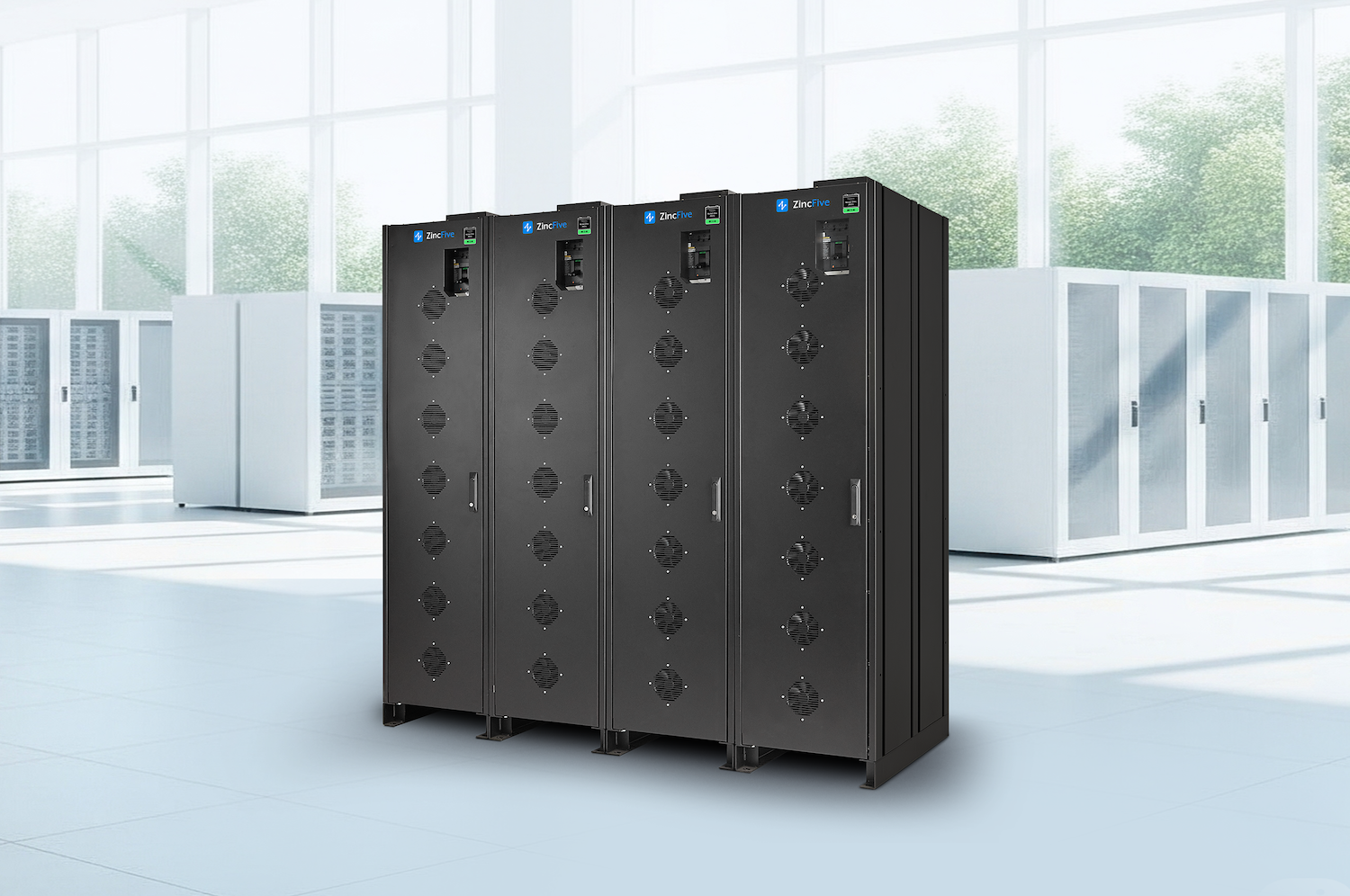
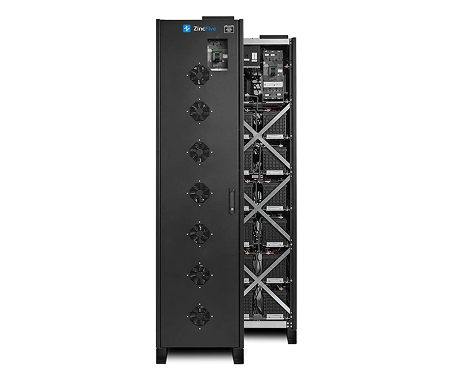
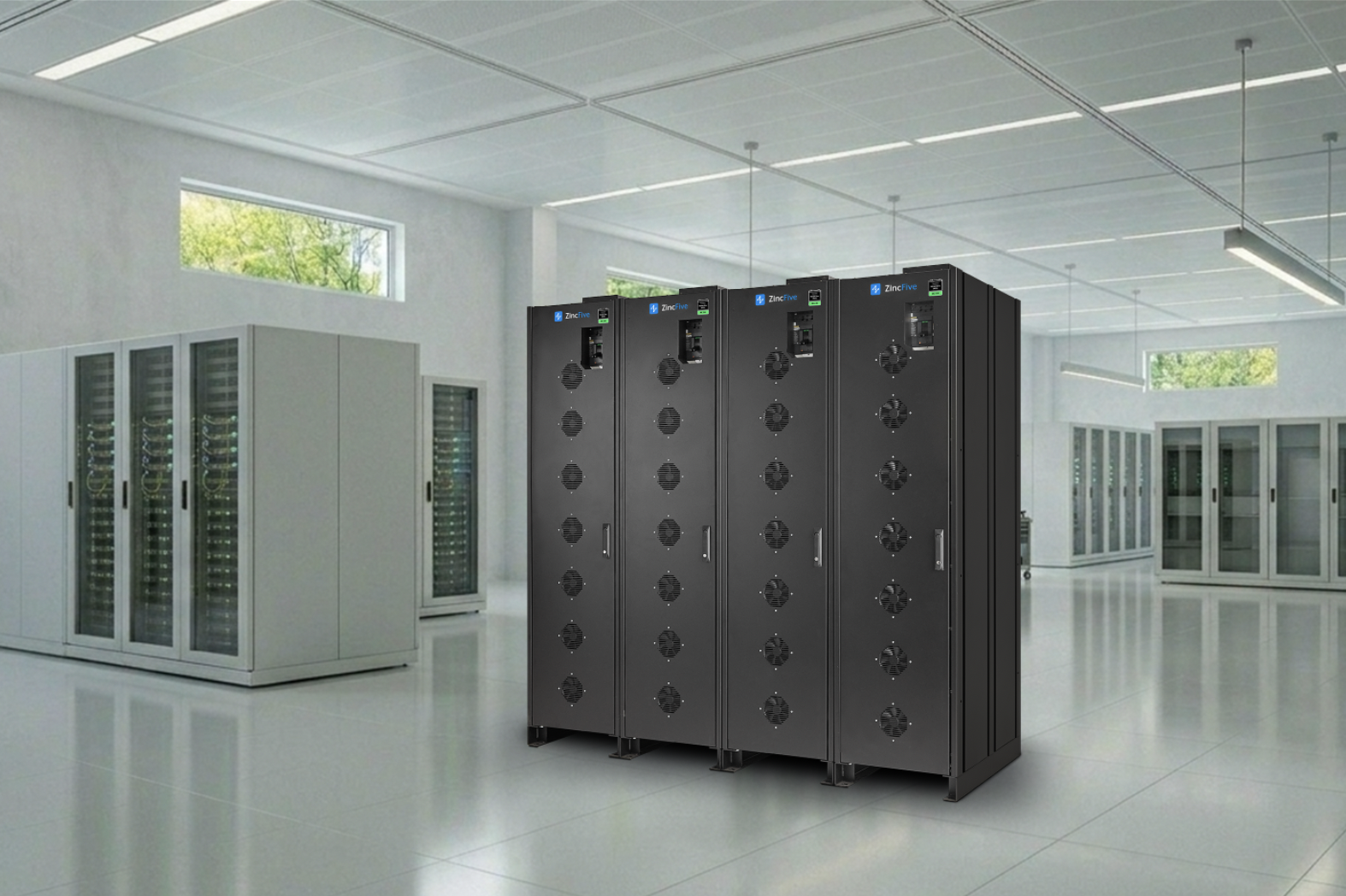
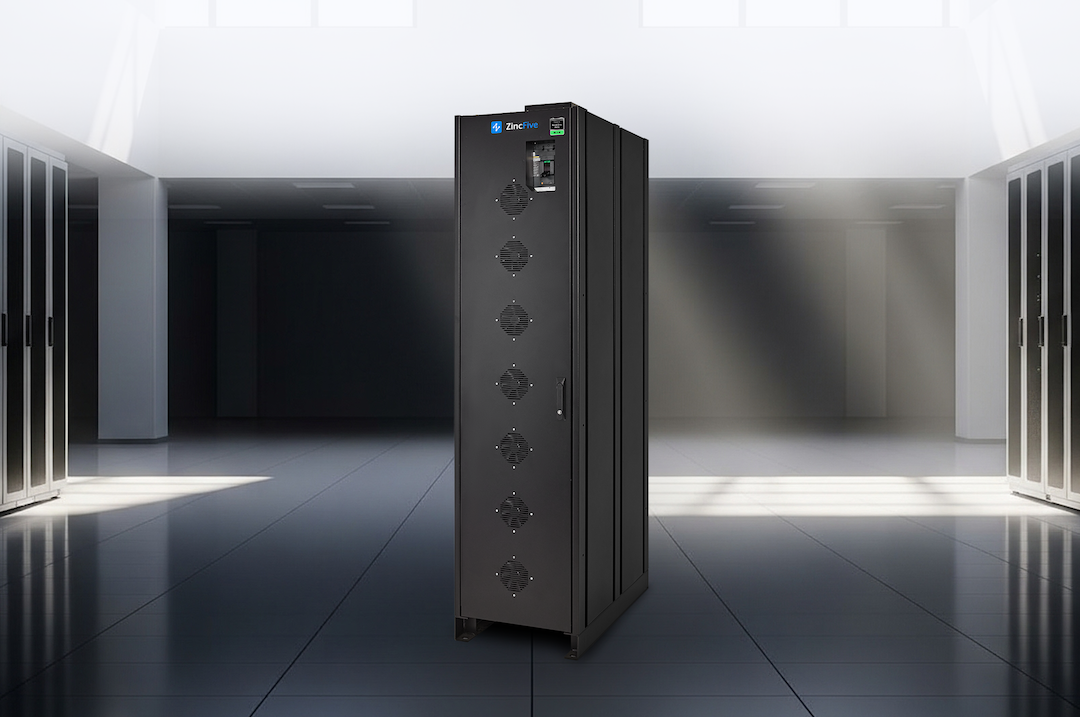
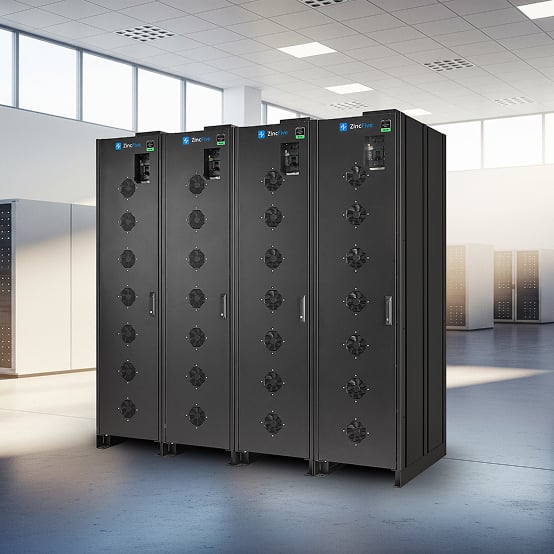
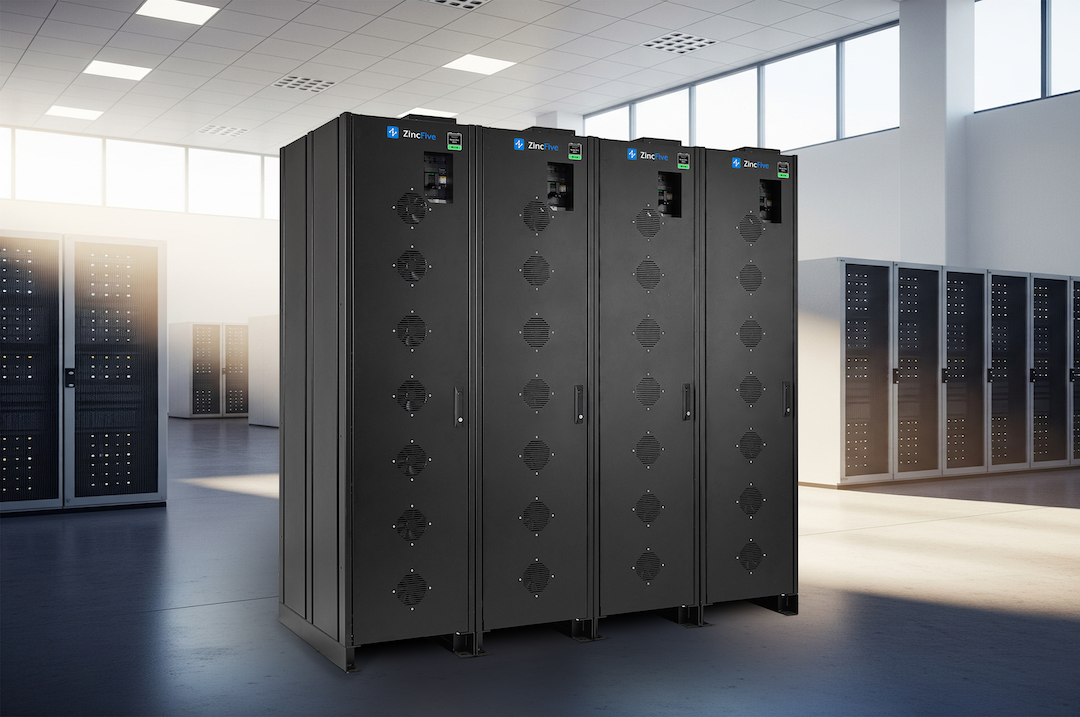
Read PostThis versatility addresses a critical gap in the market, where operators need solutions that can support both legacy IT infrastructure and next-generation AI workloads in the same facility. This approach is exemplified by ZincFive’s BC 2 AI UPS Battery Cabinet, which integrates immediate, high-rate power delivery and reliable backup in a compact, data center–ready footprint.
In addition, ZincFive has already prepared for the extensive EU Battery Regulation 2023/1542, which lays out unprecedented requirements for supply chain transparency and environmental compliance. Technologies that have navigated this regulatory framework—demonstrating compliance with the world’s most stringent standards—offer crucial advantages for Middle East operators seeking international partnerships and investor confidence.
The Path Forward: Transformation, Not Just Scaling
Goldman Sachs Research currently estimates the power usage by the global data center market to be around 55 gigawatts (as of their recent reports), and projects power demand will reach 84 GW by 2027, with AI growing to 27% of the overall market. The Middle East can capture a significant portion of this growth, but success requires recognizing that this isn’t just a scaling challenge—it’s a transformation challenge.
While the region’s energy resources and the 400-kV GCC super grid provide a world-class foundation, the era of theoretical planning is over. The transition from 2022 projections to the 2026 ‘AI Reality’—marked by trial operations of the Saudi-Egypt interconnection and record-breaking solar deployments—demands an unprecedented level of infrastructure sophistication. Success now hinges on more than just scale; it requires real-time grid integration for gigawatt-class campuses, AI-optimized cooling that defies 50°C summer peaks, and a highly resilient regional network capable of balancing constant AI pulse loads with the variable output of 12+ GW of new solar capacity.In order for the Middle East to recognize its AI dreams, advanced power infrastructure deployment will need to be accelerated and cooling technologies will need to be addressed proactively. And, the region should consider leveraging the recent regulatory work that the EU has put in place, which prioritizes sustainability.
The Middle East’s AI race isn’t just about who can invest the most—it’s about whether the region can collaborate to build connected power infrastructure that is sophisticated enough to underpin massive AI workloads.
Previously published by Intelligent CIO Middle East
Immediate Power Is the Missing Link Between AI Scale and Sustainability
AI investment has catapulted data center expansion beyond any previous computing wave. But growth is only part of the story. What the industry is discovering, often the hard way, is that AI doesn’t simply demand more power. It changes how power moves.
Large GPU clusters can shift from low utilization to peak demand in milliseconds, creating rapid, repeated step-load surges that strain power quality and stress infrastructure designed for steadier workloads. At ZincFive, we call this AI Dynamic Power: not just higher demand, but volatility, fast changes that occur frequently and with little time to react. Volatility and emerging power demand needs change the design problem entirely. A power system built to handle steady growth isn’t automatically equipped to handle fast, repeated surges without paying a price somewhere else.
The scale of that challenge is significant. The International Energy Agency (IEA) estimates data centers consumed about 415 TWh in 2024, around 1.5% of global electricity, and projects that figure could more than double to roughly 945 TWh by 2030, with accelerated computing for AI as a major driver.
The Regulatory and Procurement Reality
Circularity has shifted from an aspirational goal to a design constraint in Europe and a high-stakes competitive hurdle everywhere else. Under the EU’s recast Energy Efficiency Directive, large data centers must report standardized energy and sustainability KPIs into a European database, with annual reporting ongoing and a public-facing energy efficiency label forthcoming that covers energy and water use and share of renewables. The EU Battery Regulation adds recycling mandates and carbon footprint declaration requirements, with labeling rules taking effect this year.
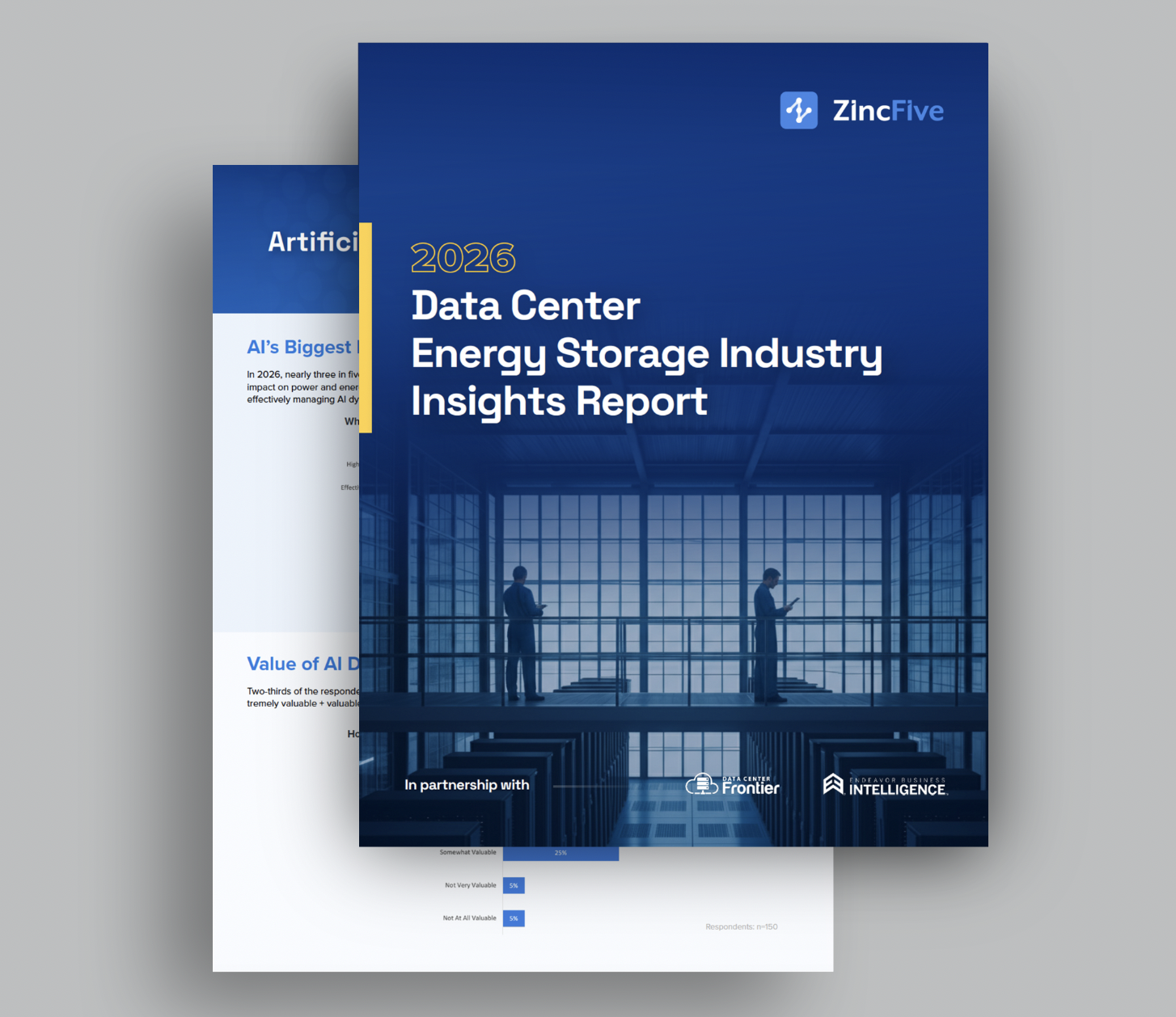
This isn’t only policy. It’s procurement reality. In the 2025 Data Center Energy Storage Industry Insights Report done by ZincFive in partnership with Data Center Frontier, 87% of data center professionals said sustainability is a priority, and 72% reported moderate or significant cost reductions from sustainability efforts. Sustainability is becoming measurable, and increasingly, economically visible.
2026 Data Center Energy Storage Industry Insights Report
Read PostWhy Overbuilding Isn’t a Long-Term Solution
When AI introduces volatility, the instinct is to add more: more capacity, more redundancy, more layers of hardware and batteries to absorb the shock. The problem is that overdesign is costly, and the cost isn’t only capital expenditure.
Overdesign consumes materials and space. It increases battery quantity beyond what runtime alone requires, driving architectures that stack multiple systems to handle different parts of the problem — one technology for fast transients, another for backup energy. The result is more hardware to manufacture, deploy, maintain, and ultimately retire. That is exactly the lifecycle burden that circularity mandates are designed to reduce.
Data center operators are already feeling this pressure. In the same industry insights report, respondents cited increased energy-efficiency requirements (55%) and the need for higher power density and smaller footprints (54%) as AI’s biggest impacts on power and energy storage. AI is not only increasing demand, it’s forcing the right-sizing conversation. And in that conversation, the most sustainable architecture is often not the one with the most equipment. It’s the one that maintains performance and resilience with the least overbuild.
Mitigation at the Source
If emerging demands and volatility is the defining characteristic of AI Dynamic Power, mitigation must start where those emerging power demands show up first: inside the data center, close to the UPS and critical power path.
A centralized battery system placed near the UPS intercepts sudden surges before they ripple through the rest of the electrical chain. The battery absorbs brief, high-intensity peaks and discharges during rapid troughs, smoothing the power curve. That approach creates three downstream benefits. It reduces stress on upstream distribution and helps maintain power quality. It protects usable compute, keeping GPU clusters operating at full intended performance rather than forcing throttling or derating to stay within electrical limits.
Everything You Need to Know About Nickel-Zinc Batteries (FAQ)
Read PostThis is the role ZincFive’s nickel-zinc (NiZn) technology is built for. NiZn is industry-leading in power density engineered for power delivery and rapid response, precisely the profile that AI Dynamic Power demands. Its non-flammable aqueous electrolyte eliminates the thermal runaway risk associated with lithium-ion, removing the need for suppression systems, added clearance space, and the operational complexity that increases cost, footprint, and carbon impact. Safety, in this case, is an architectural advantage.
ZincFive’s BC 2 AI UPS Battery Cabinet translates those chemistry advantages into a system engineered specifically for AI infrastructure. Built on high-rate NiZn batteries, BC 2 AI is designed to inject and absorb large bursts of power in milliseconds, allowing it to stabilize the rapid load swings created by GPU clusters before those fluctuations propagate through the UPS and upstream electrical infrastructure. Unlike conventional battery systems built primarily for energy storage, BC 2 AI is optimized for rapid power cycling, enabling it to repeat this sequence millions of times over its lifetime. The cabinet effectively serves a dual purpose: actively smoothing AI dynamic power during normal operation while also providing reliable short-duration runtime protection during outages.
By managing volatility at the battery layer, BC 2 AI allows operators to support high-density AI workloads without overbuilding data center infrastructure.
Power Infrastructure That Is Both Reliable and Responsible
Nickel-zinc batteries deliver reliable performance without compromising safety. Unlike lithium-based chemistries – which may require system shutdowns via battery management systems (BMS) to prevent thermal events – NiZn systems remain operational even when individual cells become weak or depleted, ensuring uninterrupted performance and minimal downtime.
The sustainability case for nickel-zinc technology is equally strong over the full lifecycle. ZincFive’s BC 2 Series UPS Battery Cabinets feature highly recyclable design. At end-of-life, the vast majority of materials are recovered and reused, a recovery rate that lithium-ion systems still struggle to achieve at scale. That performance translates directly to impact: end-of-life recycling offsets more than two metric tons of CO₂-equivalent emissions per cabinet (source: PEP ecopassport). The BC 2 Series is also designed to address both transient response and runtime requirements in a single, modular architecture, reducing the incentive to stack multiple technologies and lowering the total material burden from the outset.
The Accountability Era
The industry is moving toward an environment where power behavior influences grid access, permitting timelines, and procurement scores. How a facility manages volatility — and how responsibly it accounts for the lifecycle of the equipment doing that work — will increasingly shape what operators can build, where they can build it, and at what cost.
The operators who treat power mitigation as a design discipline rather than an afterthought will hold a structural advantage. In the AI era, power can’t just keep up. It has to behave well, and account for itself throughout its entire life.
Previously published by Data Center Dynamics
Immediate Power for the AI Era: Engineering What’s Next
Artificial intelligence is transforming industries at an unprecedented pace – and data centers are feeling the strain. The same systems enabling the next wave of innovation are exposing the limits of legacy power infrastructure. Power can’t just keep up anymore – it has to think fast.
The AI Dynamic Power Challenge
AI workloads behave unlike anything the data-center world has seen before. Instead of drawing steady power, GPU clusters fluctuate wildly – surging to 15 times their idle load within milliseconds, sometimes multiple times per second. These rapid pulses, known as AI Dynamic Power, generate electrical shockwaves that ripple from the IT rack to the grid.
Legacy UPS and critical power architectures were built for predictable curves, not these sharp, jagged spikes. The result is instability, degraded power quality, and elevated operational risk. The only way forward is to manage volatility where it begins – inside the data center itself – by intercepting surges before they cascade through the system.
From Backup to Active Partner
In AI-driven environments, batteries are no longer just emergency backup. They’re the first line of defense – absorbing millisecond-level power spikes, stabilizing voltage, and recharging during low-demand intervals.
But chemistry matters.
- Lead-acid struggles to withstand the constant high-power cycling.
- Lithium-ion offers energy density but introduces heat buildup, accelerated aging, and thermal-runaway risk when exposed to high-power cycles.
- Supercapacitors react quickly and manage power well but lack energy density and scalability.
What AI demands is immediate power – fast, safe, sustainable, and always ready.
Nickel-Zinc: Power Without Compromise
Nickel-zinc (NiZn) technology was engineered precisely for this moment. Delivering up to three times the power density of legacy chemistries at half the footprint and one-third the weight, NiZn responds instantly to transient loads while operating safely across a wide temperature range – with no thermal-runaway risk, no flammable components, and no permitting issues with local jurisdictions.
How Nickel-Zinc Is Powering the Future of Data Centers
Read PostBeyond its chemistry, NiZn represents a philosophy of continuous improvement. With nearly two gigawatts of power systems delivered or contracted worldwide, ZincFive incorporates lessons from every deployment to refine cabinet designs, controls, and battery-management systems. UL-tested performance, global field data, and real-world customer feedback are incorporated into the next generation of products. Every installation isn’t just an endpoint – it’s an input.
BC 2 AI: Built for the Pulse of Progress
This commitment to evolution culminates in the BC 2 AI – the latest generation in ZincFive’s proven BC Series. Purpose-built for AI dynamic loads, the BC 2 AI delivers both surge absorption and runtime assurance in one intelligent, modular system.
Its advanced battery-management system enables millisecond response to transient surges, while its dual-purpose design supports both high-frequency cycling and sustained backup. NiZn batteries can support millions of high-intensity cycles over the 10-year warranty period. Since nickel-zinc batteries have high millisecond cycle count coupled with industry leading power density the BC 2 AI significantly shrinks footprint by replacing multiple systems with one, reducingoverdesign of critical infrastructure and lowering both CAPEX and OPEX.
And because the BC 2 AI is designed with the future in mind, it integrates seamlessly with megawatt-class UPS systems – both backward and forward compatible – for today but also incorporates design futures tomorrow’s UPS systems will require to handle AI dynamic workloads, helping operators evolve without disruption.
Rethinking Power for AI-Driven Data Centers
Read PostLike every evolution of the BC Series, BC 2 AI is the result of our continuous improvement philosophy – taking lessons from real-world deployments to advance both our chemistry and system-level design.
Sustainability Designed In
In today’s data centers, sustainability isn’t a checkbox – it’s a business driver. According to the 2025 Data Center Energy Storage Industry Insights Report, 87% of operators rank sustainability as a top factor in power-system selection. NiZnmakes it achievable without sacrifice.
- 25–50% lower lifecycle emissions than lithium-ion or lead-acid
- Recyclable, globally available materials
- Longer lifespan and fewer replacements, reducing waste and downtime
- No cobalt, lead, or volatile electrolytes – simplifying compliance and operations
This isn’t sustainability as an afterthought – its responsibility built into the design. NiZn’s chemistry aligns naturally with ESG frameworks and regulatory standards like the EU Battery Regulation and Scope 3 emissions accounting.
Powering the Future of AI Data Centers with ZincFive BC 2 AI
Discover how ZincFive’s BC 2 AI — the industry’s first AI-optimized nickel-zinc battery system — delivers compact, safe, and sustainable power for AI data centers, combining ultra-fast response, dual-mode operation, and unmatched efficiency to meet the demands of next-generation AI infrastructure.
Continuous Innovation, Proven in the Field
AI is accelerating the pace of change – and power systems must evolve just as fast. At ZincFive, innovation isn’t an event; it’s an ongoing process fueled by field experience, customer collaboration, and real-world data. Each generation of NiZn products builds on the last, refined through rigorous UL testing and lessons from almost two gigawatts of power delivered and contracted worldwide.
As AI workloads grow more dynamic and sustainability goals tighten, ZincFive’s mission remains constant: to engineer immediate, intelligent, and inherently safe power that performs today and prepares for tomorrow.
Immediate. Intelligent. Evolving. That’s the power behind what’s next.
Previously published by Data Center Dynamics
Data Center Rack Power Trends and What They Mean for Build-Outs
The insatiable global appetite for compute – intensified by the AI era – continues to drive exceptional demands on data center infrastructure, prompting many enterprises to build new data centers and/or retrofit existing ones.
This rapid deployment of new data centers presents challenges as companies grapple with availability of real estate, utilities and power, particularly in prime locations. Addressing these challenges means rethinking traditional infrastructure approaches and data center designs with a particular focus on rack power demands.
Power density has become a critical metric for data center operators in a world where some GPUs designed for AI workloads consume more power at peak usage than the average American household. Open AI estimates that the compute demand for AI training has doubled every 3.4 months since 2012, seven times the speed of Moore’s Law, and shows no signs of abating. This unprecedented pace of growth is driving a surge in power requirements, highlighting the need for data centers to support high-density racks that can accommodate powerful equipment.
The Growing Need for Higher Rack Power Density
U.S. data center power consumption is expected to reach 35GW by 2030, nearly doubling its 2022 level, according to a report by Newmark. Hyperscalers such as Amazon Web Services, Microsoft Azure and Google Cloud, which support large-scale cloud and enterprise workloads, will need to handle 40-60kW per rack or more to keep pace with demand.
In this environment, power density emerges as a strategic imperative for data center operators looking to future-proof their infrastructure.
Data Center Modernization: Building for Power Density
Read PostChallenges in Prime Locations
The constraints of power and real estate in high-demand regions amplify the importance of density. As the world’s largest data center market, Northern Virginia exemplifies these challenges. With over 300 data centers and more than 2,500 MW of capacity, the region has reached a saturation point. In 2022, development paused due to limited power availability and growing opposition to new projects encroaching on residential areas and historic sites.
This scenario is not unique to Northern Virginia. Across the globe, data center operators grapple with similar constraints in prime locations. The solution lies in maximizing power efficiency and density to extract more value from existing facilities and minimize the need for expansive real estate footprints.
Benefits & Challenges of High-Density Racks
By increasing power per rack, data centers gain flexibility in how they expand and optimize resources. Higher-density racks allow operators to either scale up within an existing footprint or reduce the total number of racks required to achieve the same computing output.
For organizations looking to maximize their existing space, deploying high-density racks enables more computing power within the same physical footprint. This approach allows data centers to delay or even avoid costly real estate expansions while making better use of available infrastructure. It also supports growth without requiring major modifications to the facility layout. However, this strategy intensifies challenges related to heat dissipation, necessitating advanced cooling solutions such as liquid cooling or rear-door heat exchangers, which come with higher upfront costs and ongoing maintenance demands. Additionally, increased power density may push existing electrical infrastructure beyond its capacity, requiring upgrades to power distribution units, circuit breakers, and backup power systems.
Artificial intelligence is challenging rack power density and battery backup
Read PostAlternatively, organizations can choose to reduce the number of racks while maintaining the same overall capacity. This consolidation minimizes the data center’s physical footprint. However, concentrating more workloads into fewer racks also increases the potential impact of failures, making redundancy and reliability planning even more critical.
The Role of Uninterruptible Power Supply
As data centers continue to support higher and higher power densities, the role of uninterruptible power supply (UPS) systems becomes increasingly critical. UPS systems ensure seamless operations during power outages, safeguarding critical data and applications. Traditionally, lead-acid batteries have been the go-to choice for UPS systems. However, advancements in battery technology are presenting more efficient and sustainable alternatives, such as nickel-zinc (NiZn) battery technology. ZincFive is leading the charge in nickel-zinc immediate power solution innovation, with batteries that deliver three times the power density of traditional lead-acid batteries in a smaller footprint, making them ideal for high-density environments. Their ability to discharge at high rates of power ensures rapid response times, a crucial factor for maintaining continuity in mission-critical operations.
Nickel-zinc batteries are also non-flammable, eliminating the risk of thermal runaway at a cell level — a common safety concern with lithium-ion batteries. This intrinsic safety reduces the need for extensive cooling and fire suppression systems, which traditionally consume around 40% of a data center’s power. By minimizing these auxiliary systems, data center operators can achieve significant improvements in power usage efficiency (PUE), and lower overall Total Cost of Ownership (TCO).
Moreover, NiZn immediate power technology offers a sustainable, recyclable backup power solution for data centers with a significantly lower climate impact than lead-acid and lithium, as validated by third-party analysis. Nickel-zinc’s lifetime greenhouse gas emissions are 25-50% lower than lead-acid or lithium-ion alternatives, making it a safer, more environmentally responsible choice.
How Nickel-Zinc Is Powering the Future of Data Centers
Read PostPreparing for the Future
As the digital era evolves, high-density racks, efficient power solutions, and forward-thinking designs will enable tomorrow’s data centers to deliver the performance and reliability that modern businesses require. As AI, HPC, and other advanced workloads continue to drive the need for more power in increasingly compact spaces, embracing innovative solutions like alternative battery chemistries and newer technology solutions, such as nickel-zinc, as well as adopting complementary strategies, data center operators can build future-ready infrastructure.
Previously published by EnergyTech
Immediate Power Solutions (IPS): Definition, Benefits, and Impact
Description
The expansion in segmentation and applications is revolutionizing energy storage, moving beyond traditional long-duration storage (hours to days) to include short-duration storage (minutes to microseconds) through advanced mechanical, thermal, electromagnetic, and electrochemical technologies.
Long duration energy storage applications have traditionally been labeled ESS (Energy Storage Systems) and long duration electrochemical (battery) technologies logically evolved to be known as BESS (Battery Energy Storage Systems). In this electrified everywhere age, short duration energy storage segments and applications have expanded rapidly based on the surge in use cases and new enabling technologies.
The widening gap between long and short-duration energy storage segments and applications, along with the emergence of new technologies tailored to each, necessitates the creation of a new category aptly named Immediate Power Solutions (IPS).
A requirement of short duration energy storage applications is the availability of instantaneous, high-rate power for a range of minutes to microseconds. The IPS group of technologies and applications are vital to the growth of all power infrastructure with many of these applications being categorized as critical, mission critical, or life safety.
A fundamental difference between long and short duration energy storage is that storage capacity (i.e., energy density) is the highest value characteristic in long duration applications and discharge capacity (i.e., C rate or power density) is the highest value characteristic in short duration applications.
This white paper delves into the significance, definition, and impact of IPS as a category.
Register to read full paper
Introduction
The relentless advancement of modern technology is made possible by an electrical infrastructure that supplies the essential power and energy needed for future progress. Macro trends in computing, AI, mobile devices, and the electrification of transportation have combined to bring power generation and delivery to the forefront of public consciousness.
The electrification of everything is now spurring innovation across all segments of electrical infrastructure, emphasizing the importance of energy storage. What was once in the background is now at the forefront. New requirements and technologies are building on each other, resulting in an explosion of new products and applications.
Examples abound:
- Rooftop solar installations are now large enough to cause load defection.
- In the opposing direction, significant increases in electricity demand are jolting the global electric utility industry out of traditional growth rates.
- Energy storage technologies—mechanical, thermal, electromagnetic (capacitors), or electrochemical (batteries/fuel cells) —are rapidly advancing.
Among these, energy storage, batteries in particular, have swiftly transitioned from being overlooked for nearly a century to becoming the focus of major technological advancements, global investments, massive deployments, and even Nobel prizes. Batteries for electric vehicles (EVs), long-duration grid storage, and short-duration applications are now a central concern for technologists, general users, and governments worldwide.
This paper focuses on the expansion in segmentation and applications beyond traditional long duration energy storage (hours to days) to include short duration energy storage (minutes to microseconds) utilizing mechanical, thermal, electromagnetic, and electrochemical technologies. Note that all energy storage and short duration power systems share the characteristics of being charged and discharged when desired. This is distinct from power conversion systems which have no storage: examples of converters are wind turbines, solar panels, or diesel generators that convert wind, solar, and chemical power into electricity. Long duration energy storage applications have traditionally been labeled ESS (Energy Storage Systems) and long duration electrochemical (battery) technologies logically evolved to be known as BESS (Battery Energy Storage Systems). In this electrified everywhere age, short duration energy storage segments and applications have expanded rapidly based on the surge in use cases and new enabling technologies.
A fundamental difference between long and short duration energy storage is that storage capacity (i.e., energy density) is the highest value characteristic in long duration applications and discharge capacity (i.e., C rate or power density) is the highest value characteristic in short duration applications. Short duration energy storage examples here include mission critical power backup systems, commercial and military pulse power applications, and short duration industrial and grid power stabilization support. The widening gap between long and short-duration energy storage segments and applications, along with the emergence of new technologies tailored to each, necessitates the creation of a new category aptly named Immediate Power Solutions (IPS).
Under the umbrella of IPS, the short duration energy storage stakeholder community can now effectively identify and differentiate their requirements from the long duration labels used incorrectly due to lack of an alternative. An example of the effect of this overlap is the ever-growing family of lithium-ion rechargeable battery technologies, which are inherently high energy density chemistries. These products work well in long duration energy storage applications such as renewables grid storage and EVs. Due to familiarity or cost, or both, they have also been applied to short duration applications where high energy density is a poor fit or even a disadvantage. In this new era, one-size-fits-all application of battery technologies has become obsolete in favor of optimizing products and technologies for the specific applications.
The IPS category helps short duration users, technology providers and services suppliers self-identify and come together to optimize short duration energy storage implementations.
The widening gap between long and short-duration energy storage segments and applications, along with the emergence of new technologies tailored to each, necessitates the creation of a new category aptly named Immediate Power Solutions (IPS).
Immediate Power Solutions Defined
A requirement of short duration energy storage applications is the availability of instantaneous, high-rate power for a range of minutes to microseconds.
Applications for this type of short duration power delivery exist across multiple verticals including industrial and manufacturing, data center, electric vehicle charging infrastructure and even support of long duration energy storage and generation products as they ramp up to peak power. The IPS group of technologies and applications are vital to the growth of all power infrastructure with many of these applications being categorized as critical, mission critical, or life safety. The presence of instantaneous, high-rate power in a mission critical application requires the additional characteristic of safety for IPS technology to remain viable. Further, mission critical applications demand high reliability along with sustainability, which are now prime factors in all short duration energy storage use cases.

Immediate Power Solutions (IPS)
Safe, reliable and sustainable, short duration, high-rate power technologies for critical applications.
Given the above characterization, Immediate Power Solutions (IPS) can be concisely defined as: safe, reliable and sustainable, short duration, high-rate power technologies for critical applications.
Immediate Power Solutions (IPS) address the needs of electrical applications that are defined by the power levels and typically short duration response time required to maintain desired system operation. For example, a 480 VAC three phase UPS system in a datacenter that must provide 1 Megawatt of power within 10 milliseconds and for up to 2 minutes to assure the successful start and synchronization of backup generators. This is an Immediate Power Solution that requires AC and DC power, real and reactive power considerations, and energy typically discharged by mechanical, electromagnetic, or electro-chemical means. IPS is not a new idea, but frequency and severity of problems caused by power outages in computer systems, electric vehicles, medical monitoring equipment, etc. brought forth the importance of the category. As is often the case, new IPS challenges spur the development of new, innovative IPS solutions. Moreover, each new IPS solution will not only address its target application but will also be applicable to a range of similar challenges and applications.

Immediate Power Solutions (IPS): Applications and a Look Ahead
Now that we have defined Immediate Power Solutions (IPS), we can explore their current state and future directions. As illustrated in the previous section, there are multiple technological approaches to IPS, each with its own set of performance characteristics. This allows users to identify applications that fall into the IPS category and compare their requirements to the available technologies.
Understanding the IPS distinction is critical for matching the right technology to the use case. While the world demands more power and energy, not every application requires a long-duration Energy Storage System. Using ESS technology where it’s not the best fit is inefficient. Conversely, employing an IPS product for a 4-hour grid support application is impractical and costly.
Technologies within the IPS space are designed to serve immediate high-power needs for applications such as EV charging infrastructure, mechanical temporary overloads, critical power for data centers, and artificial intelligence (AI)/machine learning (ML) power influxes.
These use cases would be inadequately served by ESS products. For instance, ZincFive nickel-zinc (NiZn) batteries can bridge short duration power gaps (1 minute to 5 minutes) in multi-megawatt data center installations with a small footprint, and supercapacitors can fill millisecond voids for electronics to ensure proper function. There are IPS products tailored to each of these needs.
All examples discussed in this paper so far are existing applications with new challenges associated with immediacy, power, and duration. Consider electronic power supplies used for many applications. Power supplies typically have surge power specifications supported on a limited basis by internal capacitance. When placed in an IPS application, traditional power supplies don’t have the ability to respond properly to the new high variability loads. The additional challenges of meeting reliability requirements while safely supporting high variability loads create the opportunity to look to IPS technology as a solution.
New IPS technologies like batteries that exhibit superior power and energy density compared to capacitors, similar cycle life, and simple battery management characteristics are gaining traction in applications like power supply surge capacity.
Another common future IPS application example is microgrid power stabilization when exposed to unpredictable loads and availability of power sources. Microgrids have the same problems as utility scale grids, but on a small enough scale that introduction of a single stabilizing microgrid component can make a significant overall performance difference. IPS technology enables easy management of hybridized fuel cells, diesel, and gas turbine generators by allowing any type of generator to provide immediate power at “time zero.”
A final unique category of the issues IPS can resolve includes unrecognized problems associated with the status quo. Consider a factory that sequentially starts all its process motors to avoid power surges that exceed utility-supplied power limits. An IPS solution can help this factory achieve the operational efficiency benefits of simultaneous motor starting. This type of IPS application example highlights the direct benefits of an IPS solution to both known problems and yet-to-be discovered future IPS application opportunities.
Conclusion
The IPS technologies and applications are essential for the expansion of power infrastructure, with many being classified as critical or mission critical. Clearly differentiating between ESS and IPS is just as significant for addressing power infrastructure challenges effectively. Consequently, this significance necessitates its own distinct category in the market to address the unique demands and ensure robust solutions for these vital applications. Selecting the right IPS solution for each application is essential as we continue to face and solve the power issues created by and resolved by the developing IPS infrastructure.
Rethinking Power for AI-Driven Data Centers
Artificial intelligence is rewriting the rules of data center power. The very systems designed to fuel the next wave of innovation are also pushing infrastructure to its breaking point.
The AI Dynamic Power Challenge
Today’s AI systems – from large language models to GPU clusters and high-performance training environments – don’t behave like traditional IT workloads. Instead of drawing steady, predictable power, AI workloads are highly variable. GPU clusters can spike to 15 times their idle power levels in milliseconds, sometimes multiple times per second.
These rapid surges, known as AI Dynamic Power, strain infrastructure in ways legacy systems were never built to handle. Traditional UPS and grid power are designed for smooth curves, not jagged spikes. When these surges hit, their impact ripples from the data center floor all the way back to the grid, creating instability, degrading power quality, and elevating operational risk.
Maintaining stability now requires addressing volatility where it begins – inside the data center. That means intercepting the spikes before they become problems.
Why Batteries Are the First Line of Defense
When utilizing a centralized UPS design, placing high-performance batteries capable of supporting AI dynamic load at the UPS level allows data centers to absorb surges in real time. These batteries can respond in milliseconds, smoothing out sharp pulses and recharging during low-demand periods.
But not all battery chemistries are created equal.
- Lead-acid is reliable but struggles with rapid cycling and short lifespan under AI loads.
- Lithium-ion is energy dense but faces heat buildup, accelerated degradation, and thermal-runaway risk under repeated surges.
- Supercapacitors respond quickly but can’t sustain runtime or scale cost-effectively.
What the AI era demands is a power solution built for responsiveness, reliability, and responsibility – not tradeoffs.
Nickel-Zinc: A Smarter Chemistry for Modern Power
Nickel-zinc (NiZn) technology is purpose-built to meet the demands of modern data centers. With up to three times the power density of legacy chemistries at half the footprint and one-third the weight, NiZn delivers the high-intensity performance required to handle AI surges – in real time.
NiZn also minimizes infrastructure risk and cost by eliminating the need for complex fire suppression systems and specialized thermal management—reducing both insurance exposure and operational overhead.
For data centers navigating the convergence of rising energy demands and tightening sustainability goals, NiZn provides power without compromise. And because NiZn technology aligns with emerging ESG reporting frameworks and new regulatory standards such as the EU Battery Regulation and Scope 3 emissions accounting, it helps operators meet both performance and compliance targets.
BC 2 AI: Engineered for the AI Power Profile
Building on its proven BC Series platform, ZincFive developed the BC 2 AI, a breakthrough nickel-zinc battery cabinet designed specifically to address the unique power demands of AI workloads.
BC 2 AI features:
- Advanced BMS, enabling millisecond response to transient surges.
- Dual-use capability for both fast pulse handling and runtime assurance in one compact system.
- A 90Ah NiZn battery supporting thousands of high-intensity cycles with a 10-year warranty.
- A field-upgradable design to evolve with future AI power requirements.
- Seamless integration with megawatt-class UPS systems – backward and forward compatible to minimize disruption.
This modular architecture allows operators to scale capacity as AI workloads evolve, avoiding full system replacement and reducing long-term lifecycle costs. BC 2 AI also integrates smoothly with modern grid-interactive UPS platforms and renewable sources, enabling more flexible and sustainable energy strategies.
A More Sustainable Foundation
Sustainability is no longer a side note in power strategy – it’s a business driver. According to the 2025 Data Center Energy Storage Industry Insights Report, 87% of operators now rank sustainability as a top consideration when selecting power systems and nearly three-quarters (72%) report significant or moderate cost reductions from their organization’s sustainability efforts.
NiZn aligns with this shift:
- 25-50% lower lifecycle emissions compared to lithium-ion or lead-acid
- Highly recyclable materials with global availability
- Fewer replacements, reducing waste and downtime
- No hazardous or flammable components, simplifying operations and compliance
By combining high-performance power with a low-carbon, circular design, NiZn technology allows data centers to meet operational and sustainability goals in parallel – not at the expense of one another.
And as AI power profiles intensify, NiZn’s unique combination of high power density, safety, and sustainability positions it as a future-proof foundation for next-generation data center infrastructure.
Ready for What’s Next
AI isn’t just changing workloads; it’s reshaping the energy architecture of the data center. The transition ahead isn’t incremental – it’s fundamental. Power systems can no longer just sit in the background waiting for outages. They need to actively support daily operations, smooth out unpredictable spikes, and keep infrastructure stable as demand grows.
NiZn technology and BC 2 AI are built for this new reality: fast, scalable, and sustainable by design. As AI becomes the backbone of digital infrastructure, the ability to stabilize power in real time will separate those who keep pace from those who lead.
The future of data center power won’t be defined by compromise – but by chemistry built for what comes next.
For full details, read ZincFive’s press release announcing the product.
Previously published by Data Center Frontier
How Nickel-Zinc Is Powering the Future of Data Centers
Data centers face the challenge of balancing industry demands—telecom, e-commerce, AI, and more—with rising sustainability expectations. As critical infrastructure, even seconds of downtime can mean lost data and revenue, making reliable UPS backup systems essential.
For many decades, lead-acid batteries remained at the core of backup power, providing the reliability and power required for an always-on world, at an accessible price point. The absence of shipping restrictions, and ability to provide back-up power, additionally ensured this chemistry’s stake in the market. Though, despite its legacy of consistency, the low-energy density, space requirements, and shorter lifespan of lead-acid left an opening for a more compact and long-lasting solution.
Lithium-ion chemistry, commonly used in consumer products, quickly gained popularity as a UPS solution due to its high-energy density and long lifespan. Able to provide the same power at a much smaller size and weight than lead-acid, lithium-ion remains a strong contender and stalwart choice in many data centers. However, safety remains a major concern with this chemistry, as demonstrated by incidents across several industries. Any number of factors, including high temperature or cell failure, can lead to thermal runaway and the output of flammable, toxic gases. This, in addition to the challenging extraction process of a limited lithium supply, provided an opportunity for alternative chemistry. In the last decade, nickel-zinc (NiZn) has challenged traditional solutions as a highly power-dense technology that meets the reliability demands of a data center, while touting many safety, cost, and sustainability benefits.
Higher Power, Smaller Footprint
Nickel-zinc delivers up to three times the power density of legacy chemistries, at half the footprint and one-third of the weight. Every square foot in a data center is valuable, and as power demands continue to increase, packing more into a smaller space translates to better performance with significant cost savings. The industry-leading footprint of NiZn ultimately allows data centers to allocate more space to revenue-generating equipment.
Nickel-Zinc: High Power Density Backup Power for Data Centers
Read PostSafety and Reliability at a Lower TCO
NiZn chemistry offers exceptional operational flexibility, withstanding a broader temperature range than lead-acid or lithium-ion – without the risk of thermal runaway at the cell level. This inherently safe, non-toxic chemistry reduces the need for intensive cooling, lowering operational costs while offering critical peace of mind for data center operators.
Nickel-zinc batteries deliver reliable performance without compromising safety. Unlike lithium-based chemistries – which may require system shutdowns via battery management systems (BMS) to prevent thermal events – NiZn systems remain operational even when individual cells become weak or depleted, ensuring uninterrupted performance and minimal downtime.
Thanks to their stable chemistry, NiZn batteries don’t force a tradeoff between reliability and safety. Even in the event of a cooling system failure, they continue to operate safely and are warrantied for their full-service life. They’re also warrantied to perform reliably during occasional temperature excursions up to 50°C, providing added assurance in high-demand environments.
Fewer replacements, less downtime, and a safer solution – nickel-zinc is a chemistry data centers can count on, year after year.
Sustainability & Low Carbon: A Chemistry That Cares
In addition to the safety, reliability, and cost-effectiveness that data centers require from their UPS backup system, sustainability is an increasing priority for many organizations. According to the 2025 Data Center Energy Storage Industry Insights Report, 87% of respondents consider sustainability a priority in their power system buying decisions, up from 81% in 2024. Moreover, 72% indicated that their organization’s sustainability efforts have resulted in cost reductions, nearly a 10% increase from last year.
ZincFive’s nickel-zinc (NiZn) technology offers a sustainable, recyclable backup power solution for data centers with a significantly lower climate impact than lead-acid and lithium, as validated by third-party analysis. With an operating life up to 3x longer than lead-acid batteries, NiZn reduces waste and replacement frequency. Plus, NiZn’s lifetime greenhouse gas emissions are 25-50% lower than lead-acid or lithium-ion alternatives, making it a safer, more environmentally responsible choice. Nickel-zinc solutions use common, highly available, conflict-free materials which are also highly recyclable. In fact, nickel and zinc are four to five times more abundant in the Earth’s crust than lithium and lead respectively, making NiZn a safer, more sustainable, and resource-efficient energy storage choice.
AI’s impact on data center power requirements
Read PostNavigating AI’s Power Surges
Perhaps the greatest demand of the moment, though, is the rapid adoption of AI. In the new normal, an AI-powered search requires at least ten times the energy of a traditional web search, meaning there is a large increase in the overall power demand required to support AI properly. Another growing challenge is the frequent, rapid power spikes, up to millions per month, that stem from GPU clusters operating at peak capacity. These pulses require a high-density, fast-discharging and re-charging chemistry to mitigate and reduce impacts on the grid. Despite its overall reliability, this is where lead-acid becomes less effective, as the chemistry does not perform well in high cycle environments. Lithium on the other hand responds well to typical battery cycling but struggles to maintain that advantage under these high-power peak load spikes. Of the three solutions, nickel-zinc chemistry clearly demonstrates the most effective load management for rapid pulsing present in AI load profiling. With its high-power density and rapid discharge capabilities, NiZn solutions can provide high bursts of power with near instantaneous response time.
A Lasting Future with Nickel-Zinc
While legacy battery chemistries remain competitive in UPS backup systems, nickel-zinc—proven with millions of operating hours across multiple industries—has emerged as a strong, viable solution in the rapidly evolving data center landscape. In short, nickel-zinc batteries offer a long life, reliable performance, and low maintenance while delivering higher power density in a smaller footprint. Capable of managing the peak loads of today’s automated world, NiZn batteries reduce footprint, ensure safety, support corporate sustainability goals, and lower the total cost of ownership—all without compromise.
Previously published by Data Center Dynamics
The Critical Shift to Immediate Power Solutions (IPS) in Data Centers
In the ever-evolving landscape of energy storage, the choice of battery chemistry is a pivotal factor that can determine the success of our applications. Different battery technologies offer distinct advantages and disadvantages: some excel in delivering high power for brief intervals, while others provide sustained energy over longer durations at lower discharge rates. Additionally, these batteries vary in safety, reliability, and sustainability. As energy storage becomes increasingly integral to the 21st-century economy, it is critical to select the most appropriate battery solution for each application, rather than relying on a one-size-fits-all mentality.
Traditionally, long-duration energy storage has been encapsulated within the framework of Energy Storage Systems (ESS), commonly used for applications such as powering electric vehicles and consumer electronics. Conversely, short-duration applications, which prioritize immediate power output, fall under the category of Immediate Power Solutions (IPS). IPS applications demand instantaneous, high-rate power for durations ranging from minutes to microseconds. These solutions are vital across various sectors, including industrial manufacturing, electric vehicle charging infrastructure, and support systems that help long-duration energy storage and generation products achieve peak power.
One of the most fitting applications for IPS is in the realm of uninterruptible power supply (UPS) systems, where a battery backup temporarily supplies power for a system until a longer-term power source comes online. These short but pivotal moments can have significant financial and reputational implications, especially for data centers.
AI’s impact on data center power requirements
Read PostWith the exponential growth of consumer electronics, IoT, and AI, our reliance on digital infrastructure is at an all-time high, making data center uptime absolutely critical. To meet these escalating demands, data center operators must contend with workplace safety, rising real estate costs, and increased sustainability expectations from regulators, investors, and clients. These pressures are driving a transition toward backup power solutions that deliver greater reliability, space efficiency, and environmental responsibility.
The mounting demands on data centers have created an environment where reliance on traditional UPS systems, often powered by ESS, results in suboptimal performance. While legacy IPS solutions have historically been used, they frequently compromise on benefits such as footprint and sustainability. Fortunately, innovative IPS battery solutions have emerged, designed specifically to provide immediate, high-rate power essential for managing the critical transition between an outage and backup generator activation—all while improving on the shortcomings of legacy IPS and current ESS systems.
Lead-acid batteries, a long-standing IPS technology, are often seen as a familiar and reliable choice for UPS in data centers. However, they are increasingly recognized for their limitations in size, sustainability, and power output, making them less suitable in today’s context. Many data centers have relied on lead-acid due to its affordability and widespread availability in the past, but the good news is that enhanced alternatives are now on the market.
Lithium-ion batteries are another option frequently considered by data center operators for UPS systems, and their popularity grew due to their favorable weight and size compared to lead-acid solutions. As real estate costs escalate, the physical footprint of UPS systems has become a critical concern for operators looking to optimize space for revenue-generating servers. However, lithium-ion batteries are still classified as ESS because their limited discharge rates are designed to mitigate safety concerns, thus failing to fully meet the immediate power needs of UPS systems.
In contrast, nickel-zinc batteries present a compelling IPS solution, boasting significantly higher power density than both lead-acid and lithium-ion batteries. They can deliver immediate power to an entire data center while occupying less than half the space of traditional lead-acid systems, thus allowing for additional servers and increased revenue potential. Furthermore, nickel-zinc batteries enhance reliability and sidestep the thermal runaway risks associated with lithium batteries. Their lifecycle emissions are also substantially lower than those of lithium and lead-acid alternatives, with reduced resource consumption and environmental impact.
The Race to Reduce UPS Runtime: Why Backup Battery Selection Matters More Than Ever
Read PostTransitioning to advanced battery technologies previously posed challenges, including compatibility issues and high retrofitting costs, often stemming from the specialized safety equipment required for lithium-ion systems. However, recent developments in UPS cabinets designed for seamless integration into existing setups have changed the game. These innovations facilitate the straightforward replacement of ESS with IPS, enabling data centers to enhance efficiency, safety, and sustainability without the need for extensive system overhauls.
As data centers continue to be crucial players in driving the global economy, reliable UPS systems are indispensable. The need to increase power density and eliminate outage risks efficiently has shown that we need to look beyond traditional ESS systems. With the barriers to adopting advanced technology now addressed, data centers are well-positioned to maximize their reliability, safety, and efficiency by embracing Immediate Power Solutions in their UPS systems.
Previously published by Data Centre Review
Nickel-Zinc: The Data Center Shift Beyond Lithium-Ion and Lead-Acid
Modern data centers are the backbone of digital operations, supporting AI, cloud computing, e-commerce, and more. As power consumption surges – especially due to AI’s high computational requirements – the need for reliable, efficient, and eco-friendly backup power is greater than ever. While lead-acid and lithium-ion batteries have long been widely used, nickel-zinc (NiZn) technology is emerging as a powerful alternative that is inherently more safe, reliable, and sustainable.
The Limits of Traditional Battery Technologies
Lead-acid batteries have historically been the standard for uninterruptible power supply (UPS) systems, valued for their affordability and reliability. However, in today’s high-demand environments, their large size, short lifespan, and relatively low energy density have made lead-acid batteries a less efficient choice.
Lithium-ion batteries improved on some of these limitations with their compact design and longer lifespan. However, this chemistry presents well-documented risks, including thermal runaway and toxic gas emissions – factors that can carry serious operational and financial implications. Environmental and ethical concerns around lithium mining further complicate its role as a long-term fit for sustainable data center operations.
2025 Data Center Energy Storage Industry Insights Report
Read ReportThe Nickel-Zinc Advantage: Safer Power. Smarter Design. Sustainable Future.
Nickel-zinc batteries deliver a superior alternative to traditional chemistries – overcoming historical UPS limitations without compromise. Here’s why NiZn is quickly becoming a preferred choice for UPS systems:
1. Maximum Power, Minimal Footprint
NiZn immediate power technology delivers up to three times the power density of conventional battery solutions, while occupying just half the footprint and one-third of the weight. As data center operations continue to demand more power in existing or smaller spaces, high power density translates to direct savings. By packing more power into a smaller, industry-leading footprint, nickel-zinc solutions optimize floor space for critical, revenue generating equipment.
2. Exceptional Safety and Dependability
NiZn chemistry is fundamentally safe and does not pose a risk of thermal runaway at the cell level. It also operates effectively across a wider temperature range than both lead and lithium, reducing the need for extensive cooling infrastructure.
Nickel-zinc batteries deliver consistently high dependability without compromising safety. Unlike lithium-based chemistries that may require system shutdowns through battery management systems (BMS) to prevent thermal runaway, NiZn systems remain operational—even if a single cell becomes weak or depleted—ensuring continued performance with minimal downtime.
Thanks to its inherently safe chemistry, NiZn does not require trading off reliability for safety. Even during unexpected cooling system failures, NiZn batteries continue to operate safely and reliably and remain under warranty for their full-service life. NiZn batteries are warrantied to perform reliably even with occasional exposure to elevated temperatures up to 50°C, offering added peace of mind in demanding operating environments.
3. Longevity and Cost Efficiency
With a 10-year warranty and service life of up to 15 years, NiZn batteries outlast traditional chemistries in lifespan and value. The frequency of nickel-zinc replacements and maintenance is significantly lower compared to lead-acid and lithium-ion, contributing to a higher overall cost of ownership for these legacy chemistries. Alternatively, the durability, longevity, and low maintenance of NiZn contributes to an overall lower total cost of ownership (TCO), making this chemistry a financially sound investment for data centers.
4. Sustainability Without Compromise
With increasing consumer and regulatory requirements, sustainability has emerged as a key focus for many organizations. The 2025 Data Center Energy Storage Industry Insights Report reveals that 87% of respondents consider sustainability a priority, up from 81% in 2024. Additionally, 72% of respondents report that their organization’s sustainability efforts have resulted in cost reductions, nearly a 10% increase from last year.
ZincFive’s nickel-zinc (NiZn) battery technology delivers a sustainable and recyclable backup power solution with the highest positive climate impact, when compared to traditional lead-acid or lithium-based systems. NiZn batteries boast an operational lifespan up to three times longer than lead-acid counterparts, minimizing waste and reducing replacement needs. In addition, the lifetime greenhouse gas emissions from NiZn solutions are 25–50% lower than lead-acid and lithium-ion alternatives, and utilize conflict-free, widely-available materials. Nickel and zinc are both highly recyclable, and significantly more abundant in the Earth’s crust than lithium and lead. From cradle-to-grave, nickel-zinc solutions are the more sustainable and environmentally responsible choice for energy storage and immediate power in modern data centers.
AI’s impact on data center power requirements
Read PostSupporting AI’s Energy Demands with Nickel-Zinc
As AI-driven tools and applications demand immense computational power, data centers are faced with frequent and intense energy surges. These rapid power spikes, numbering millions monthly, are a result of GPU clusters operating at peak capacity. Lead-acid batteries struggle to perform in these high-cycle environments, making this chemistry a less effective choice for the future. While lithium-ion systems can manage typical battery cycling, this chemistry experiences performance degradation under extreme load fluctuations common with AI. Nickel-zinc systems, alternatively, demonstrate highly effective load management of rapid pulsing present in AI load profiling. With its rapid discharge and recharge capability and high-power density, nickel-zinc chemistry efficiently manages AI-driven power spikes without compromising performance.
Nickel-Zinc: Powering the Next Generation of Data Centers
As data center needs and digital infrastructure rapidly evolve amidst the growing use of AI, nickel-zinc continues to rise as the future-proof energy storage solution. With millions of operating hours across multiple industries, NiZn delivers high-power density and a compact footprint that is unmatched by traditional chemistries. Coupled with a long lifespan, inherent safety and reliability benefits, and notable sustainability advantages, NiZn chemistry is a strong and resilient alternative to legacy battery technologies. With an unshakable standard of high performance under the peak loads of today’s digital landscape, nickel-zinc chemistry is the sustainable, compact, and cost-effective solution capable of growing the data centers of tomorrow – all without compromise.
Previously published by Data Center Frontier
Immediate Power Solutions (IPS): A Vital Component in Modern Data Centers
The rapid evolution of technology—spanning online services, consumer electronics, IoT, and AI—has amplified our reliance on digital infrastructure and emphasized the importance of uninterrupted data center operations. This technological surge is driving advancements in electrical infrastructure, particularly in energy storage, due to evolving needs. Data center operators face the challenge of addressing these increasing demands while also managing workplace safety, rising property expenses, and sustainability issues. Consequently, there is a noticeable shift towards backup power solutions that prioritize greater reliability, space efficiency, and environmental stewardship.
The growing pressure on data centers has brought Immediate Power Solutions (IPS) to the forefront as a crucial category of energy storage. IPS addresses the evolving digital infrastructure landscape by focusing on the immediate, high-rate power necessary for critical operations, distinguishing it from traditional Energy Storage Systems (ESS). Unlike ESS, which focuses on long-duration capacity, IPS is designed to deliver high-rate power instantly for short durations, emphasizing reliability and efficient space use.
When assessing mission-critical backup applications through the IPS framework, the suitability of different systems becomes clearer. For example, lead-acid batteries, which utilize one of the oldest battery technologies, are frequently viewed by many data center operators as a traditional and reliable choice for data center uninterruptible power supplies (UPS). However, given today’s data center requirements for safety, reliability, sustainability, and space efficiency, more advanced battery technologies have now surpassed lead-acid in their suitability for the sector.
The Next Era of Data Center Power: Trust, Sustainability, and Innovation
Read PostOne alternative considered by data center operators for their UPS systems is lithium-ion, an ESS battery. These batteries’ energy density—characterized by their ability to release moderate amounts of energy over extended periods—makes them well-suited for applications such as electric vehicles and consumer electronics. However, data centers need a different capability: the ability to deliver rapid, high-power bursts to keep operations running during power outages until backup generators activate. While lithium-ion batteries are effective for sustained energy output, they may not meet the immediate high-power demands required for data centers. In contrast, IPS solutions are specifically designed to provide the rapid, high-power energy needed during these critical moments and do not have the same space and safety challenges associated with lithium-ion batteries.
Recent advancements in battery technology have introduced solutions specifically tailored for IPS needs. Notably, nickel-zinc batteries represent a breakthrough innovation in this field. Their enhanced power density allows them to deliver substantial bursts of energy rapidly while occupying less than half the space of conventional lead-acid systems. Their compactness and efficiency are particularly advantageous for data centers, as they align with the core objectives of IPS by optimizing space usage, supporting uninterrupted data center operations, and improving overall operational effectiveness and reliability.
IPS batteries can also contribute to UPS systems’ reliability and safety. Unlike other batteries that may experience cell failures, batteries such as nickel-zinc maintain conductivity even if some cells are depleted, ensuring continuous operation. They also avoid thermal runaway and tolerate higher temperatures better than other types, adding an extra layer of safety and stability crucial for maintaining uninterrupted data center operations.
As environmental concerns increasingly influence technological development, IPS is advancing to meet new sustainability standards as well. Nickel-zinc batteries, for example, are designed with sustainability in mind, offering lower lifecycle emissions and reduced resource consumption. They require fewer resources during production and utilize abundant, less environmentally taxing materials.
AI’s impact on data center power requirements
Read PostBy adopting IPS for UPS, data centers not only achieve their sustainability goals but also benefit from high-performance energy storage solutions. This alignment with environmental objectives, combined with the efficient power delivery and space optimization inherent to IPS technologies, underscores the critical role of innovative solutions in advancing both operational effectiveness and ecological responsibility in modern data centers.
Finally, transitioning to advanced IPS technologies is becoming increasingly seamless thanks to recent innovations in battery technology. These advancements have simplified the integration of new solutions into existing systems, allowing data centers to upgrade to more efficient and sustainable IPS options with minimal disruption. This streamlined process not only enhances operational efficiency but also ensures that data centers can quickly adapt to the evolving demands of modern infrastructure, positioning them for long-term success.
As the global economy relies more on data centers, the need for reliable UPS systems to ensure uninterrupted operations has become increasingly critical. This growing demand for dependable, space-efficient, and eco-friendly backup power solutions is driving the shift towards IPS. Their alignment with the challenges they’re solving, as well as the seamless integration into existing systems, facilitates a smoother transition to advanced battery solutions, ensuring that data centers remain resilient and future-ready.
Previously published by Datacentre Solutions