Everything You Need to Know About Nickel-Zinc Batteries (FAQ)
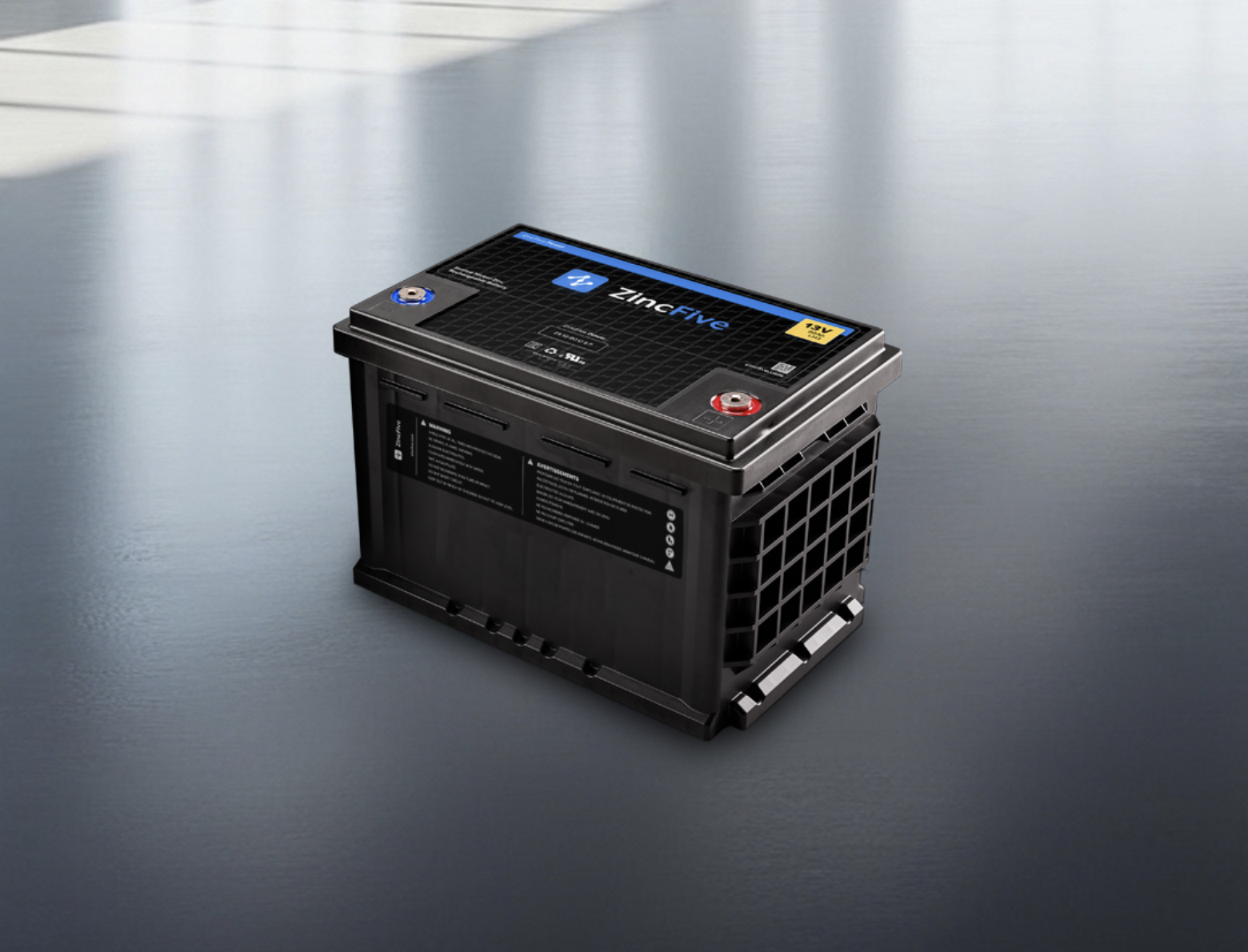
As data centers navigate the explosive growth of AI and e-commerce alongside tightening sustainability mandates, the need for a superior Uninterruptible Power Supply (UPS) backup solution has never been more urgent. While legacy lead-acid batteries are hindered by excessive weight and short lifespans, and lithium-ion alternatives face persistent safety risks like thermal runaway, nickel-zinc (NiZn) has emerged as the definitive modern standard. Over the last decade, NiZn has challenged these traditional chemistries by delivering a high-power-dense technology that fulfills the rigorous uptime demands of critical infrastructure while offering unmatched safety, cost-efficiency, and environmental benefits.
How Nickel-Zinc Batteries Work
NiZn batteries are a combination of a stable and long-lasting nickel positive electrode and a lightweight zinc negative electrode, capable of high discharge rates. When combined with a highly conductive electrolyte, these rechargeable cells offer high power and energy density with low impedance and no risk of thermal runaway. A key technical advantage of NiZn is its “fail-safe” characteristic: unlike other chemistries that might develop high-resistance open circuits, NiZn cells typically maintain a conductive path even if a cell becomes weak, ensuring the entire battery string remains operational.
Data Center Batteries: Why Nickel-Zinc is the Best Choice
Higher Power, Smaller Footprint
As power demands scale, spatial efficiency becomes a critical metric for profitability. NiZn delivers up to three times the power density of legacy chemistries while requiring only half the physical footprint and one-third of the weight. This drastic reduction in size and mass allows data center operators to maximize their existing facilities, packing more backup capacity into tighter spaces. By minimizing the area dedicated to power infrastructure, NiZn ultimately enables data centers to reallocate valuable square footage toward revenue-generating servers and high-density compute racks.
Safety and Reliability at a Lower TCO
NiZn chemistry provides unparalleled operational flexibility by maintaining stability across a much wider temperature range than traditional lead-acid or lithium-ion batteries. Because NiZn is inherently safe and non-toxic, it eliminates the risk of cell-level thermal runaway, which significantly reduces the need for intensive, energy-heavy cooling systems. This not only lowers long-term operational costs but also provides data center operators with critical peace of mind regarding facility safety.
Furthermore, NiZn systems prioritize uptime without compromising on security. Unlike lithium-based solutions, which often rely on complex Battery Management Systems (BMS) to force total shutdowns during thermal events, NiZn batteries remain operational even if individual cells become weak or depleted. This “fail-safe” characteristic ensures uninterrupted performance and minimal downtime. Even during cooling failures or temperature spikes up to 50°C, NiZn remains warrantied and reliable, offering a durable solution that data centers can depend on year after year.
Sustainability & Low Carbon
Sustainability has moved from a secondary concern to a primary driver in power system procurement. According to the 2025 Data Center Energy Storage Industry Insights Report, 87% of professionals now prioritize sustainability in their buying decisions, with 72% reporting that green initiatives have directly led to cost reductions. ZincFive’s NiZn technology meets this demand by offering a recyclable backup power solution for data centers with a significantly lower climate impact than lead-acid and lithium, as validated by third-party analysis. NiZn’s lifetime greenhouse gas emissions are 25-50% lower than lead-acid or lithium-ion alternatives, making it a safer, more environmentally responsible choice.
Beyond its carbon footprint, NiZn is a champion of resource efficiency. It boasts an operating life up to three times longer than lead-acid, drastically reducing waste and the frequency of replacements. The chemistry utilizes highly available, conflict-free materials—nickel and zinc are four to five times more abundant in the Earth’s crust than lithium and lead. By choosing NiZn, organizations opt for a safer, more environmentally responsible energy storage path that aligns with global ESG goals.
Scalability
NiZn batteries are uniquely suited for scalability because their high-power density allows data centers to expand compute capacity without requiring a proportional increase in physical infrastructure. As facilities transition to high-density AI and GPU clusters, space becomes the ultimate constraint; NiZn’s ability to deliver three times the power of lead-acid in half the footprint means operators can support massive power upgrades within their existing floor plan and avoid overbuild (especially in AI data centers).
Beyond physical space, NiZn is operationally scalable due to its wide temperature tolerance and superior safety. Because it doesn’t require the same level of intensive, specialized cooling or the complex, restrictive fire suppression systems mandated by lithium-ion installations, it is much simpler and more cost-effective to scale power modules across diverse global sites. This modular flexibility, combined with a highly abundant supply chain, ensures that NiZn can meet the growing energy demands of the industry without the logistical or safety bottlenecks of legacy chemistries.
For a deeper look at what makes nickel-zinc uniquely suited for modern data center infrastructure, explore our dedicated BC Series FAQ.
Nickel-Zinc vs Other Data Center Battery Technology
NiZn vs Lead-Acid
While lead-acid batteries have long been the industry standard due to their low initial cost and established supply chain, NiZnbatteries offer a significant leap in performance and efficiency for modern data centers. NiZn delivers up to three times the power density of lead-acid, allowing for a much smaller physical footprint and roughly one-third the weight for the same power output. This power-to-weight advantage is critical in high-density environments where floor loading and space are at a premium. Furthermore, NiZn boasts a service life up to three times longer than lead-acid, thriving in higher temperatures where lead-acid performance would rapidly degrade. From a maintenance perspective, NiZn’s ability to remain operational even with a weak cell provides a level of reliability that the high-resistance failure modes of lead-acid simply cannot match.
NiZn vs Lithium-Ion
While lithium-ion batteries are often praised for their high energy density, NiZn offers a compelling alternative by addressing lithium’s two greatest liabilities: safety and stability. Lithium-ion systems are prone to thermal runaway, a condition where cell failure can lead to thermal incidents and the release of toxic gases, often requiring complex battery management systems (BMS) that may shut down the entire UPS to prevent an incident. In contrast, NiZn does not exhibit risk of thermal runaway and remains stable even under extreme stress, operating safely at higher temperatures without the risk of fire. Furthermore, NiZn provides a more resilient “fail-safe” architecture; while a single failing lithium cell can compromise a whole string, NiZn cells continue to conduct power even when weakened, ensuring uninterrupted backup. From a sustainability standpoint, NiZn also avoids the ethical and environmental complexities of lithium extraction, utilizing more abundant, highly recyclable materials to deliver similar performance with much lower risk.
Frequently Asked Questions
FAQ: Nickel-Zinc Chemistry and Technology
What is ZincFive’s nickel-zinc (NiZn) battery technology?
ZincFive’s NiZn battery technology uses a unique alkaline battery chemistry that combines a nickel positive electrode with a zinc negative electrode. Unlike lead-acid or lithium-ion, it uses a non-flammable, aqueous (water-based) electrolyte. This combination creates a high-power, high-reliability energy storage solution specifically designed for mission-critical applications like traditional and AI data centers, intelligent transportation, industrial engine starting, and more.
How does NiZn differ from lead-acid (VRLA) and lithium-ion (Li-ion)?
The primary differences lie in power density, safety, and lifespan.
- Vs. Lead-Acid: NiZn offers up to 3x the power density and can last up to 3x longer (15-year design life vs. 3–5 years).
- Vs. Lithium-Ion: NiZn does not exhibit thermal runaway at the cell level. It also lacks the “conflict mineral” concerns associated with cobalt and the environmental intensity of lithium extraction.
What is “Power Density,” and why is it important for data centers?
Power density refers to how much power (measured in watts) a battery can deliver rapidly relative to its size. NiZn delivers exceptional high-rate discharge performance. In data centers, this means you can provide the same backup power in half the footprint and one-third the weight of legacy systems, freeing up expensive floor space for revenue-generating servers.
What are Immediate Power Solutions (IPS)?
Immediate Power Solutions (IPS) is a specialized category defined by instantaneous, high-rate, and short-duration power delivery. While traditional Energy Storage Systems (ESS) focus on “energy density” (storing large amounts of power for hours or days), IPS focuses on “power density”—the ability to discharge a massive burst of electricity in seconds or minutes to bridge critical gaps.
Why is nickel-zinc such a powerful solution for AI data center power challenges?
AI workloads demand a fundamentally different kind of power support. GPU-driven environments create rapid, unpredictable surges that occur in milliseconds and repeat continuously. Solving this challenge isn’t about adding more capacity—it’s about delivering immediate, precise power response exactly when and where it’s needed.
NiZn excels because it is engineered for high-power delivery and rapid cycling. It can absorb sharp power spikes in real time, stabilize load before it propagates through the UPS and grid, and recharge quickly between events. Unlike legacy battery chemistries, NiZn maintains performance under frequent, high-intensity cycling without accelerated degradation—making it uniquely suited for both daily AI volatility and traditional backup requirements.
NiZn also eliminates tradeoffs that data center operators have historically been forced to accept. The chemistry is safe, with no thermal-runaway or flammability risk, reducing cooling and fire-suppression complexity. Its high-power density supports a compact footprint, helping operators avoid inefficient overbuild strategies while lowering total cost of ownership. Over its lifecycle, NiZn delivers 25–50% lower greenhouse gas emissions and uses highly recyclable materials, aligning performance with sustainability and regulatory priorities.
These advantages are purposefully integrated into ZincFive’s BC 2 AI UPS Battery Cabinet—an AI-optimized, dual-purpose solution designed to deliver immediate power for dynamic AI workloads while providing reliable runtime protection, all in a compact, safe, and sustainable platform.
FAQ: Nickel-Zinc Performance & Reliability
What are the charge and discharge capabilities of NiZn batteries?
NiZn batteries are designed for high-rate power performance, meaning NiZn can deliver and accept currents that are several times higher than lithium-ion UPS cabinets. They can discharge very large amounts of current almost instantly, which provides strong ride-through capability during short outages, supports high load spikes, and often allow fewer cabinets to meet the same power requirement. NiZn batteries also have high charge acceptance, enabling much faster recharge after an event and reducing the time a system operates at reduced protection. By comparison, most lithium-ion UPS batteries are optimized more for energy density than power, so they typically charge at lower currents and cannot deliver the same level of instantaneous discharge, which can mean longer recharge times and more cabinets needed for high-power applications.
Can NiZn batteries handle the power surges associated with AI workloads?
Yes. This is a standout feature of NiZn. AI-driven GPU clusters create frequent, rapid power spikes. While lead-acid batteries struggle to cycle this frequently and lithium-ion can experience performance degradation under extreme load fluctuations, NiZn is “pulse-ready.” It offers near-instantaneous response times and can handle high bursts of power without compromising the battery’s health or the grid’s stability.
What happens if a single cell fails in a NiZn string?
In most battery chemistries, a single weak or depleted cell can create an “open circuit,” shutting down the entire string. However, NiZn cells remain conductive even when depleted. This allows the battery string to continue operating, ensuring uninterrupted power and allowing maintenance to be scheduled rather than treated as an emergency.
How do NiZn batteries perform in high-temperature environments?
NiZn chemistry has a broader operational temperature window than lead-acid or lithium-ion. They are warrantied to perform reliably even during occasional excursions up to 50°C (122°F). This allows data center operators to raise the ambient temperature in the white space, significantly improving Power Usage Effectiveness (PUE).
FAQ: Safety of Nickel-Zinc Battery Chemistry
Is there a risk of thermal runaway with ZincFive batteries? Is explosion mitigation necessary?
No. ZincFive’s NiZn batteries have been rigorously tested and passed UL 9540A method at the cell level. One of the inherit characteristics of the battery chemistry is that it cannot exhibit thermal runaway. Because the electrolyte is aqueous and non-flammable, the chemistry is inherently safe.
FAQ: Sustainability & Environmental Impact of Nickel-Zinc Batteries
What types of sustainability endorsements does NiZn carry?
NiZn technology, specifically within the ZincFive BC Series, is highly decorated with third-party sustainability endorsements that validate its environmental benefits from production through disposal.
Formal Certifications & Registrations
- UL Environmental Declaration: The BC Series features a “cradle-to-grave” Life Cycle Assessment (LCA) certified to the UL EPD standard. This UL Environmental stamp validates the total environmental impact of the product throughout its entire lifespan, ensuring our data is transparent and verified.
- PEP EcoPassport: The products are registered in this prestigious international database, which provides a standardized “Environmental Product Profile” (EPD) specifically for electrical and electronic equipment.
Superior Circularity (End-of-Life)
- Material Recovery: Unlike lithium-ion systems, which face significant scaling challenges in recycling, NiZn systems allow for the vast majority of materials to be recovered and reused.
- Recycling Volume: Each BC 2 UPS battery cabinet directs over 600 kg of material back into recycling streams rather than landfills.
Quantifiable Carbon & Energy Savings
The environmental “credits” earned at the end of the BC Series life are substantial:
- CO₂ Offset: Recycling a single cabinet offsets more than 2 metric tons of CO₂-equivalent emissions.
- Energy Conservation: Material recovery reduces fossil energy demand by approximately 26,800 MJ per cabinet.
How does the embodied carbon compare to alternatives?
The embodied carbon of BC 2 Battery Cabinets is roughly 40% lower than alternatives.
What is NiZn’s lifetime greenhouse gas profile?
Nickel-zinc’s lifetime greenhouse gas (GHG) emissions are 25–50% lower than those of lead-acid or lithium-ion. Furthermore, ZincFive batteries offset the carbon emitted during their production (carbon payback time) up to four times faster than lithium-ion alternatives.
Are the materials in NiZn batteries sustainable and conflict-free?
Yes. Nickel and zinc are common, highly available, and four to five times more abundant in the Earth’s crust than lithium or lead. ZincFive uses conflict-free materials, avoiding the ethical and supply-chain risks associated with cobalt and other rare minerals.
Are NiZn batteries recyclable?
Yes, they are highly recyclable. 100% of the nickel and zinc can be recovered and reused without losing their physical or chemical properties. Because the materials are non-toxic, the recycling process is also less energy-intensive than the high-heat smelting required for lead-acid batteries.
How does ZincFive help with “Scope 3” emissions?
Scope 3 emissions include the carbon footprint of the equipment a company buys. By choosing a battery with a 25–50% lower lifetime carbon footprint, data center operators can significantly lower their reported Scope 3 emissions, helping them reach net-zero goals faster.
What is the “Climate Impact Score” for ZincFive?
ZincFive’s technology received a 9.4 out of 10 score from Boundless Impact Research and Analytics. This third-party validation confirms that NiZn has the highest positive climate impact compared to lead-acid and lithium-ion.
FAQ: Deployment & Maintenance of Nickel-Zinc Batteries
Do NiZn batteries require special maintenance?
NiZn batteries are virtually maintenance-free. Unlike lead-acid batteries, they do not require “watering” or frequent testing for sulfation. Because they are stable across a wide temperature range and the cells remain conductive, the need for emergency onsite repairs is drastically reduced.
What is the typical lifespan of a ZincFive battery?
ZincFive batteries have a design life of 10 to 15 years in a typical data center environment. This is up to three times the life of traditional VRLA batteries, which usually require replacement every 3 to 5 years.
FAQ: Myths and Truths About Nickel-Zinc Technology
Myth: Ground faults and thermal runaway are the same thing.
Truth: They are fundamentally different events.
Nickel-zinc batteries do NOT go into thermal runaway.
Thermal runaway is an exothermic chemical reaction associated with certain volatile battery chemistries that can result in rapid temperature escalation and propagation between cells. Nickel-zinc chemistry does not exhibit thermal runaway, as validated through UL 9540A testing.
A ground fault, by contrast, is an unintended electrical connection between stored electrochemical potential and ground. Ground faults can occur in any battery chemistry and are addressed through proper electrical system and cabinet-level safety design.
Misinterpreting ground faults as thermal runaway can lead to incorrect conclusions about battery safety characteristics.
Myth: Battery Management System alarms are just nuisance alerts.
Truth: Modern BMS platforms provide critical operational intelligence.
Advanced battery systems generate meaningful analytics, alarming, diagnostics, and historical performance data designed to help operators maintain uptime and identify potential issues before they escalate.
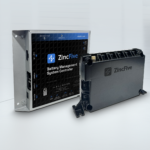
The ZincFive BMS provides real-time visibility into cabinet status, battery health, alarm conditions, and operational trends, helping support more proactive facility operations and faster diagnostics.
Myth: Nickel-zinc batteries take too long to recharge.
Truth: Nickel-zinc batteries recharge differently, not slower.
ZincFive systems intentionally delay recharge initiation until battery temperatures stabilize below defined thresholds. Once recharge begins, nickel-zinc batteries can charge at rates comparable to or faster than alternative technologies while maintaining operational capability at low states of charge.
Additionally, nickel-zinc batteries can continue delivering maximum power output even at low state-of-charge levels, allowing systems to remain operationally effective before recharge is fully completed.
Myth: Nickel-zinc battery systems are more expensive.
Truth: Cabinet cost alone does not reflect total system economics.
Because ZincFive systems deliver extremely high power density, operators typically require fewer cabinets to achieve the same power requirement compared to alternative technologies. Combined with reduced cooling demands, simplified fire suppression requirements, lower infrastructure complexity, and space savings, the total cost of ownership (TCO) can be significantly lower at the system level.
RELATED READING:
ZincFive BC Series UPS Battery Cabinets: Everything You Need to Know (FAQ)
Inside the Evolution of the ZincFive BC Series: What’s New and Why It Matters (FAQ)
ZincFive Battery Management System (BMS): Everything You Need to Know (FAQ)