Inside the Evolution of the ZincFive BC Series: What’s New and Why It Matters (FAQ)
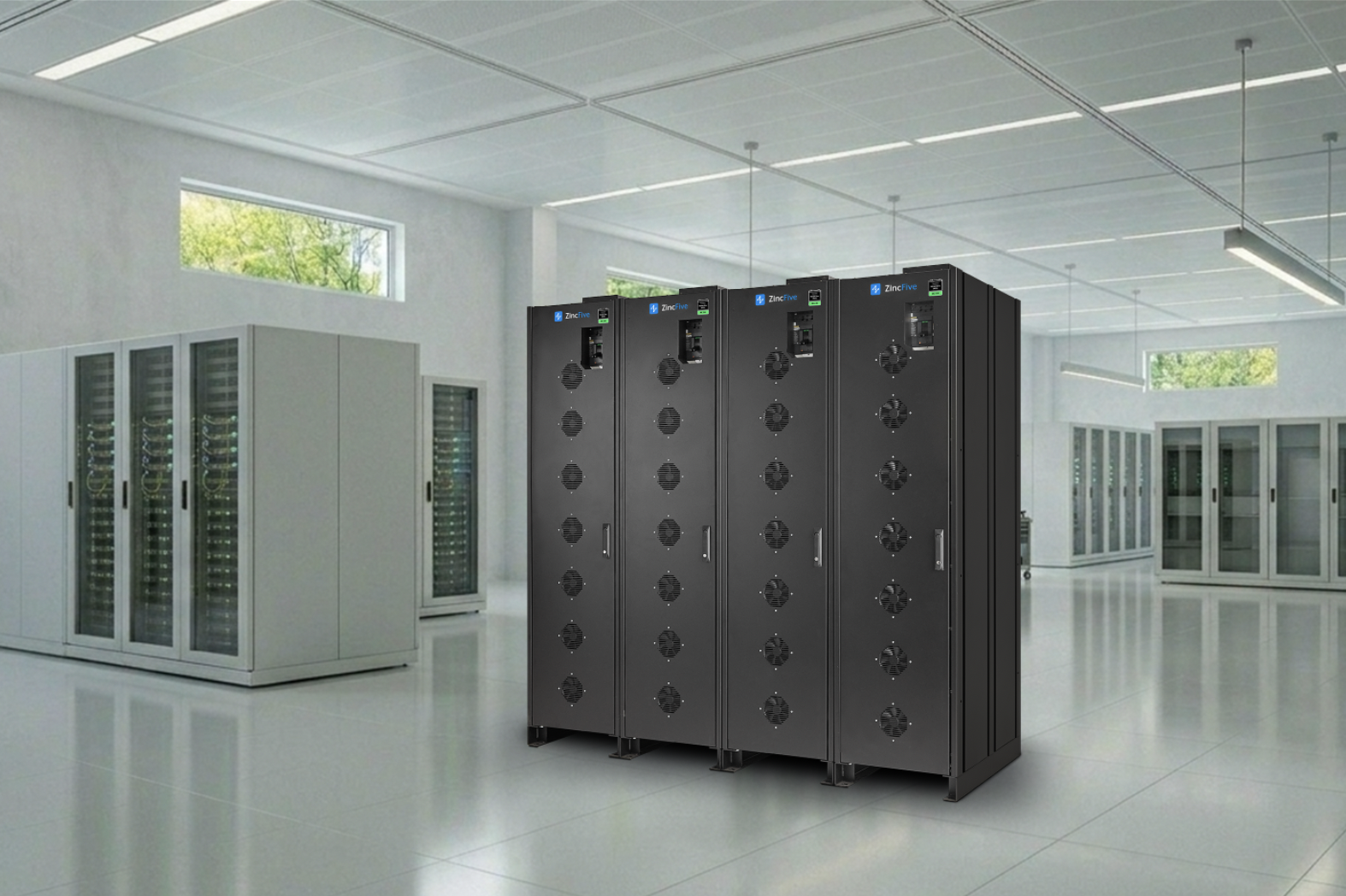
The strongest version of any product is the one that has been through the field.
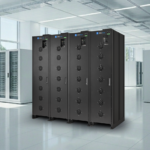
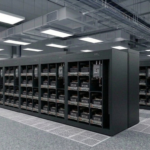
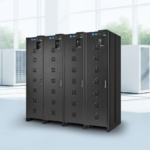
With 2 GW of power delivered or contracted globally, the ZincFive BC Series UPS Battery Cabinet has been deployed, cycled, stressed, and maintained across some of the world’s most demanding data center environments. That scale reveals opportunities for improvement that no laboratory test can replicate, and when it does, we act on them. We believe innovation is never finished, which is why every field insight, customer experience, and engineering lesson becomes an opportunity to make a proven product even better.
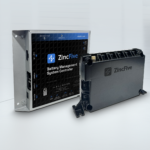
The latest evolution of the BC Series reflects that commitment. Key advancements include a next-generation Battery Management System (BMS) with enhanced analytics, controls, and system integration, a 150% stronger monobloc battery design engineered for increased durability and field reliability, and a polymeric battery tray that eliminates conductive paths to further mitigate ground fault risk and enhance electrical safety.
This FAQ provides a detailed look at these advancements, the engineering decisions behind them, and the value they deliver to data center operators. It also addresses common misconceptions about nickel-zinc battery technology and answers the most frequently asked questions about the current generation of ZincFive BC Series UPS Battery Cabinets.
FAQ: BC Series Product Advancements
What models are included in the recent BC Series UPS Cabinet upgrades?
We’ve made holistic, continuous improvement upgrades across the entire BC Series product line to ensure a standardized, high-performance baseline of reliability. Every cabinet shipping now includes the updated BMS, battery case, and tray. To understand the specific advantages that makes our BC Series the ideal choice for modern data center infrastructure, check out our comprehensive BC Series FAQ.
What changed in the ZincFive monobloc battery case, and why?
The ZincFive NiZn monobloc battery case was re-engineered from the lid and seal down to the polymer blend itself. The goal was to reduce internal mechanical stress generated during manufacturing and operation, further enhancing long-term durability and robustness. The result is a case that is approximately 150% stronger than the previous generation. For cabinets that are shipped long distances, handled in the field, and expected to perform reliably for a decade or more, this advancement further strengthens the durability and reliability of every BC Series cabinet that leaves our factory. To learn more about what makes our NiZn technology the perfect fit for modern data center infrastructure, check out our NiZn FAQ.
Why did ZincFive transition to a new battery tray?
We transitioned to an injection-molded polymeric battery tray to securely house and electrically isolate every battery. This non-conductive tray significantly reduces the electric potential for stray current to travel, mitigating ground fault risks and neutralizing high-current short-circuit hazards before they can manifest.
How has the ZincFive Battery Management System (BMS) been improved?
ZincFive BMS is purpose-built for NiZn technology. The updated system delivers faster, more granular monitoring at the individual battery level — catching deviations earlier and responding to them proportionally before they become operational problems. When something falls outside defined thresholds, the system responds automatically: minor variations trigger informational alerts, more serious conditions disable charging or open the contactor, and critical conditions open the breaker.
Operators get full alarm history with timestamps, CSV export, and real-time visibility into cabinet status across a deployment. Integration with building management systems, Data Center Infrastructure Management (DCIM) tools, and Supervisory Control and Data Acquisition (SCADA) networks is cleaner and more straightforward than the previous generation.
Myths and Truths About Nickel-Zinc Technology
Myth: Ground faults and thermal runaway are the same thing.
Truth: They are fundamentally different events.
Nickel-zinc batteries do NOT go into thermal runaway.
Thermal runaway is an exothermic chemical reaction associated with certain volatile battery chemistries that can result in rapid temperature escalation and propagation between cells. Nickel-zinc chemistry does not exhibit thermal runaway, as validated through UL 9540A testing.
A ground fault, by contrast, is an unintended electrical connection between stored electrochemical potential and ground. Ground faults can occur in any battery chemistry and are addressed through proper electrical system and cabinet-level safety design.
Misinterpreting ground faults as thermal runaway can lead to incorrect conclusions about battery safety characteristics.
Myth: Battery Management System alarms are just nuisance alerts.
Truth: Modern BMS platforms provide critical operational intelligence.
Advanced battery systems generate meaningful analytics, alarming, diagnostics, and historical performance data designed to help operators maintain uptime and identify potential issues before they escalate.
The ZincFive BMS provides real-time visibility into cabinet status, battery health, alarm conditions, and operational trends, helping support more proactive facility operations and faster diagnostics.
Myth: Nickel-zinc batteries take too long to recharge.
Truth: Nickel-zinc batteries recharge differently, not slower.
ZincFive systems intentionally delay recharge initiation until battery temperatures stabilize below defined thresholds. Once recharge begins, nickel-zinc batteries can charge at rates comparable to or faster than alternative technologies while maintaining operational capability at low states of charge.
Additionally, nickel-zinc batteries can continue delivering maximum power output even at low state-of-charge levels, allowing systems to remain operationally effective before recharge is fully completed.
Myth: Nickel-zinc battery systems are more expensive.
Truth: Cabinet cost alone does not reflect total system economics.
Because ZincFive systems deliver extremely high power density, operators typically require fewer cabinets to achieve the same power requirement compared to alternative technologies. Combined with reduced cooling demands, simplified fire suppression requirements, lower infrastructure complexity, and space savings, the total cost of ownership (TCO) can be significantly lower at the system level.
RELATED READING:
ZincFive BC Series UPS Battery Cabinets: Everything You Need to Know (FAQ)
Everything You Need to Know About Nickel-Zinc Batteries (FAQ)
ZincFive Battery Management System (BMS): Everything You Need to Know (FAQ)