2026 Data Center Energy Storage Industry Insights Report
Executive Summary
As the data center industry evolves, energy storage is emerging as a critical element of infrastructure strategy, driven by AI workload growth, rising sustainability expectations, and the need for highly reliable power systems. Conducted by Endeavor Business Intelligence on behalf of ZincFive, this report captures insights from 150 global data center professionals on energy storage usage, technology priorities, and shifting industry perceptions. The findings highlight how operators are rethinking power strategies to support the performance, efficiency, and resilience requirements of AI-driven data centers.
Key Findings and Trends
- Total Cost of Ownership and Safety Remain Top Priorities: When selecting an energy storage solution, more than four out of five respondents in 2026 (84%) cite lifetime cost or total cost of ownership (TCO) as a top or high priority feature, continuing a steady rise from 79% in 2025 and 65% in 2024. Safety of chemistry also remains a critical factor, with 76% identifying it as a top or high priority, consistent with 78% last year and notably higher than in 2024 (69%).
- AI Dynamic Power Emerges as a Major Technology Driver: Cost remains the most common driver of changes organizations are considering for energy storage technology (58%), consistent with 2025. However, AI dynamic power — added to the survey in 2026 — immediately ranks as the second most prevalent driver at 49%, underscoring how AI workloads are reshaping power system requirements.
- Sustainability Continues to Influence Buying Decisions: Seven in ten respondents (70%) say sustainability criteria are important to their power system purchasing decisions. At the same time, 46% report that their organization’s sustainability initiatives have resulted in moderate or significant cost reductions.
- AI Workloads Are Increasing Power Density and Power Quality Demands: In 2026, 57% of respondents cite higher power density requirements and smaller footprints as a major AI‑driven impact on power and energy storage needs, consistent with 54% last year. More than half (52%) also highlight the importance of managing AI dynamic power and maintaining power quality — a notable increase from 37% in 2025.
- Modular and Emerging Infrastructure Approaches: Nearly half of respondents (47%) report that their organizations currently use modular power solutions and plan to continue doing so, reflecting ongoing demand for flexible and scalable infrastructure. Meanwhile, views on DC‑only data center designs are divided: 34% indicate likely adoption within three years, while 36% indicate a low likelihood.
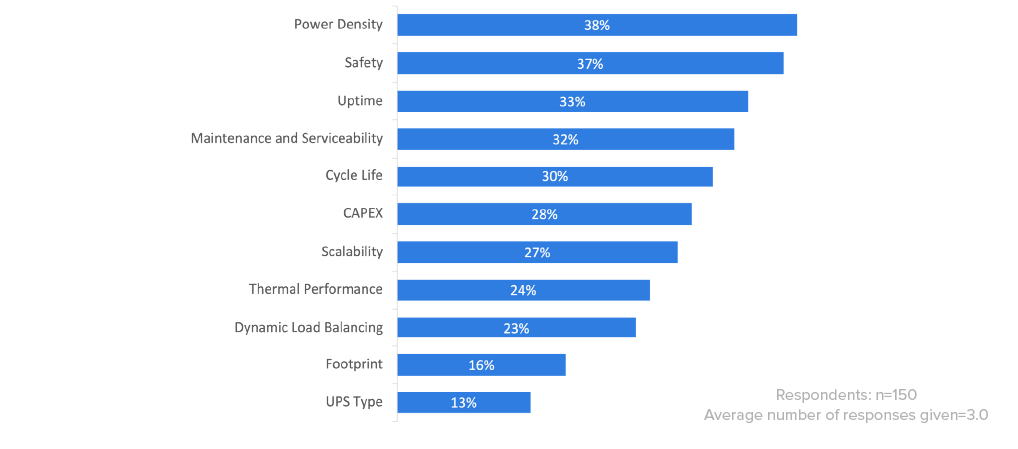
- Growing Importance of AI Dynamic Power Mitigation: Two‑thirds of respondents (66%) say AI dynamic power mitigation capabilities within the UPS battery system are valuable. When selecting battery chemistries to address AI dynamic power challenges, respondents point primarily to power density (38%), safety (37%), uptime (33%), and maintenance and serviceability (32%).
Together, these findings highlight how AI workloads are introducing rapid load spikes and power transients that place new demands on UPS systems and batteries. As a result, data center operators are increasingly evaluating technologies that can maintain power quality, reliability, and operational resilience under highly dynamic workloads while supporting denser computing environments.
At the same time, perceptions around newer battery chemistries continue to evolve. Technologies such as nickel-zinc have gained increased recognition in recent years for their safety profile and space efficiency, reflecting growing industry interest in solutions that can deliver high-power performance while enabling safer and more compact infrastructure. As AI adoption accelerates, the industry is steadily moving toward more innovative, efficient, and resilient energy storage solutions.
Demographics
Respondent Job Level
One-third of 2026 respondents (33%) identify as senior managers, VPs, directors, or department heads, followed by owner or C-level roles (19%).
Which of the following best describes your job level?

Organizational Demographics
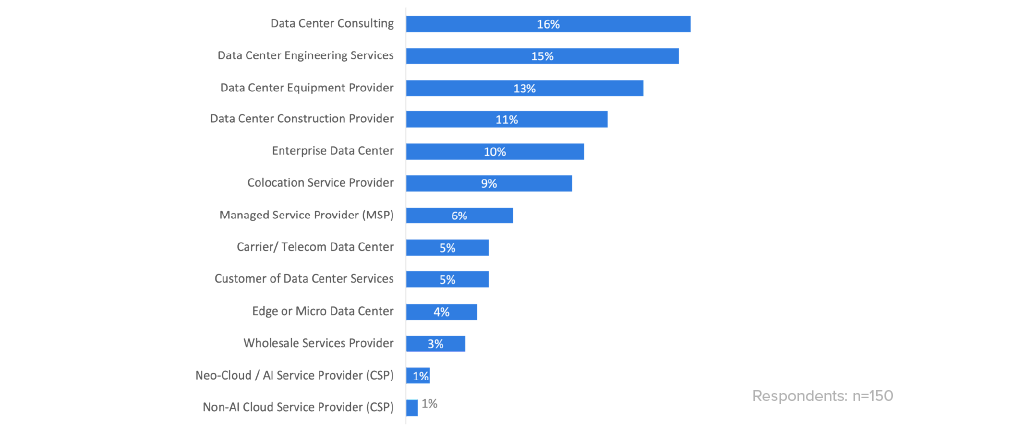
The largest percentage of respondents describe their organization as data center consulting (16%). More than one in ten describe their organization as: Data center engineering services (15%), Data center equipment provider (13%), Data center construction provider (11%).
Which of the following best describes your organization?
Data Center Demographics
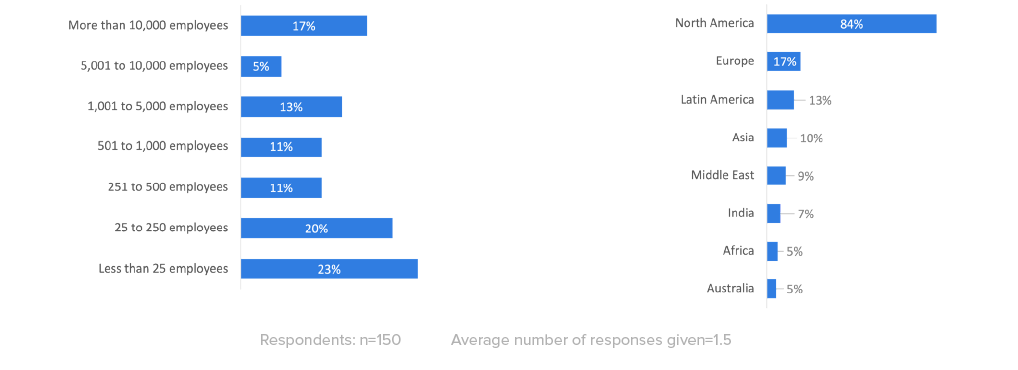
The respondent base spans a wide range of organization sizes, from small teams to global enterprises. Nearly one in four (23%) report fewer than 25 employees, while 17% represent organizations with more than 10,000 employees. The majority of respondents (84%) are located in North America.
How many employees are in your organization, including all locations?
In what region(s) are you located?
Data Center Load & Typical Deployment UPS Size
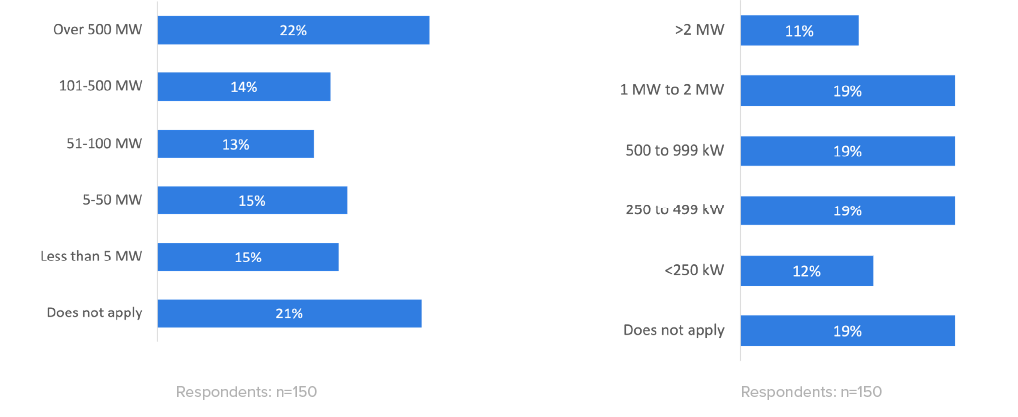
More than one in five respondents (22%) say their data centers use over 500 megawatts of load across all their campuses. Nearly one in five respondents say their typical deployment UPS size is 250 to 499 kW (19%), 500 to 999 kW (19%), or 1 MW to 2 MW (19%).
How many megawatts of total load do your data centers use across all campuses?
What is your typical deployment UPS size?
Evolving Challenges in Data Centers
Challenges Impacting the Data Center Industry
Power availability (51%), thermal and cooling management (33%), and energy efficiency (26%) are the top three challenges respondents believe will have the greatest impact on the data center industry in the next ten years.
Which 3 challenges do you foresee having the greatest impact on the data center industry in the next 10 years?

Centralized UPS Energy Storage or Battery Usage
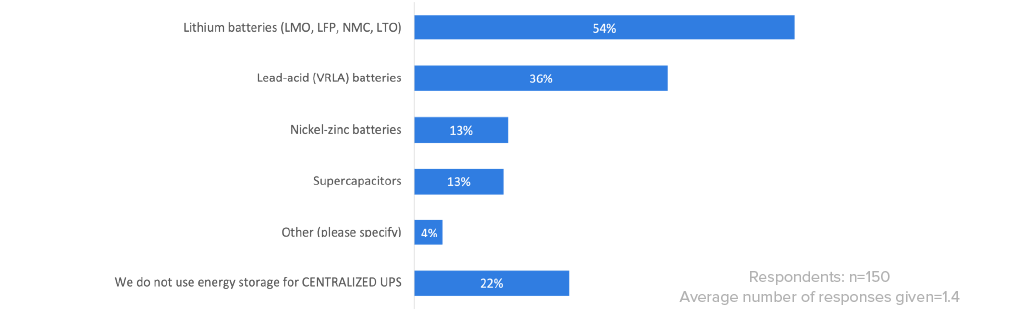
Over half of the respondents (54%) use lithium batteries for energy storage for their centralized UPS. More than a third (36%) use lead-acid batteries. Use of nickel-zinc batteries in centralized UPS systems has shown a strong upward trend over the past three years, almost doubling in 2025 and continuing to increase in 2026.
If you use energy storage for your CENTRALIZED UPS, what type of energy storage or battery type does your organization use?
Energy Storage Solutions
Energy Storage Solution Feature Priorities
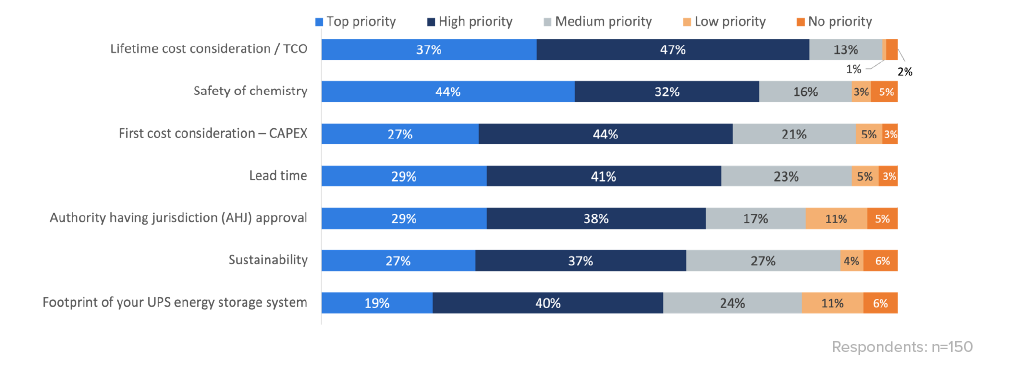
When selecting an energy storage solution, more than four out of five 2026 respondents (84%) say lifetime cost or total cost of ownership (TCO) is a top or high priority feature, up from 79% in 2025 and 65% in 2024. More than three-fourths (76%) say safety of chemistry is a top or high priority, in line with 78% last year but up notably from 2024 (69%).
When selecting an energy storage solution, what priority does your organization place on the following features?
Year-Over-Year, Top Priority Comparison
Comparing the three years reveals notable shifts in feature prioritization. Since 2024, the top priority percentage for safety of chemistry has increased by 21 percentage points. Lead time in 2026 shows a notable increase compared to last year, while sustainability shows a notable decline versus 2025.
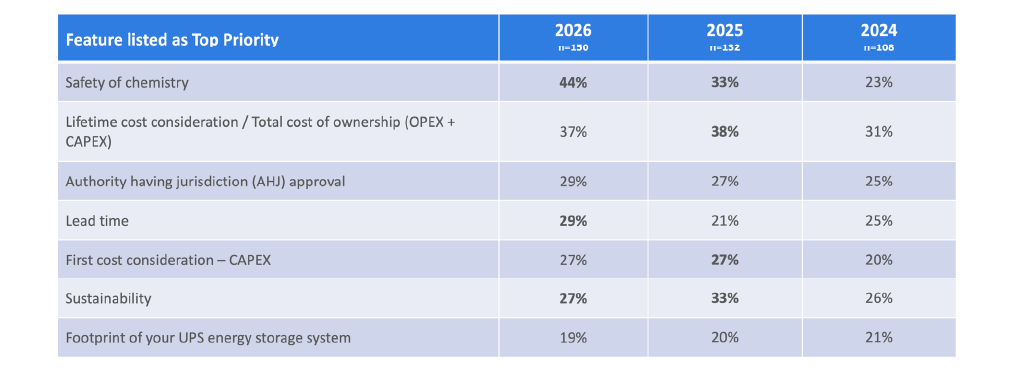
Bold indicates a notable change compared to the previous year.
Safety
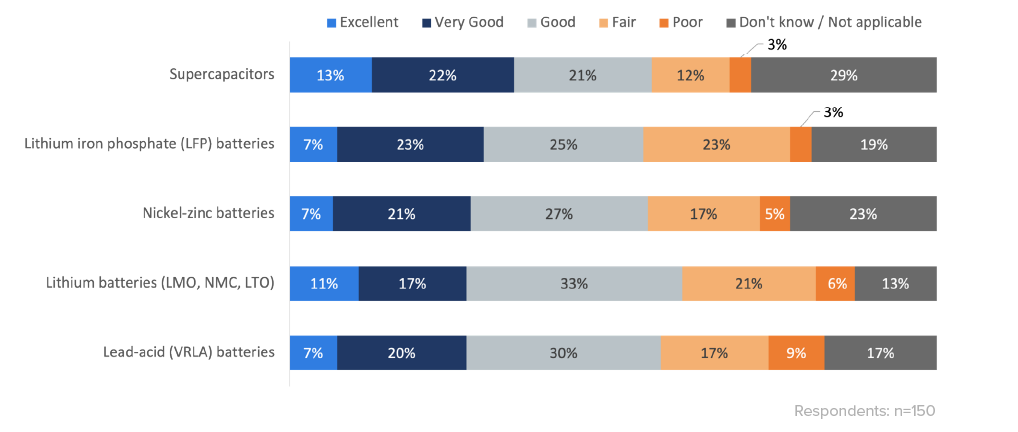
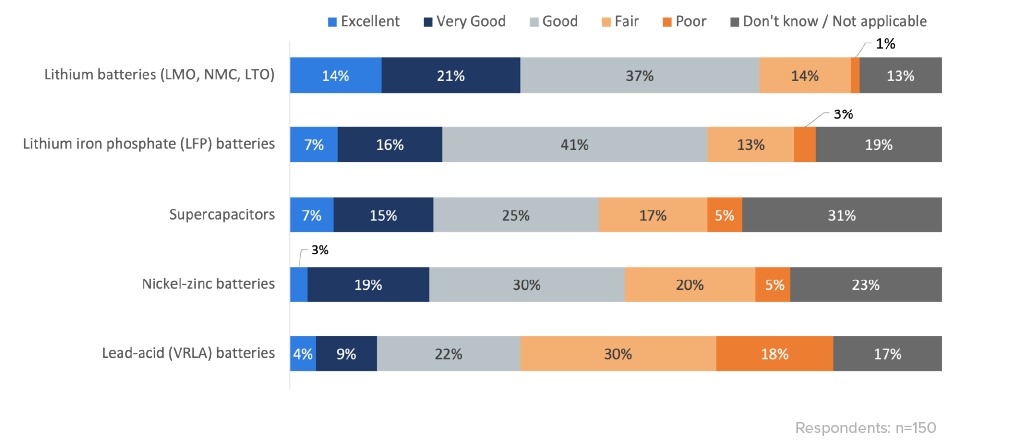
More than one-third of respondents (35%) rate supercapacitors highly for safety (excellent or very good). Lithium iron phosphate (30%) and nickel-zinc (28%) follow closely, ranking second with similar safety ratings.
Please rate each battery type based on SAFETY
Footprint
More than one-third of respondents (35%) rate lithium batteries highly for footprint (excellent or very good). Nickel-zinc batteries (22%) follow, alongside lithium iron phosphate (23%) and supercapacitors (22%), with similar high footprint ratings.
Please rate each battery type based on FOOTPRINT
Sustainability
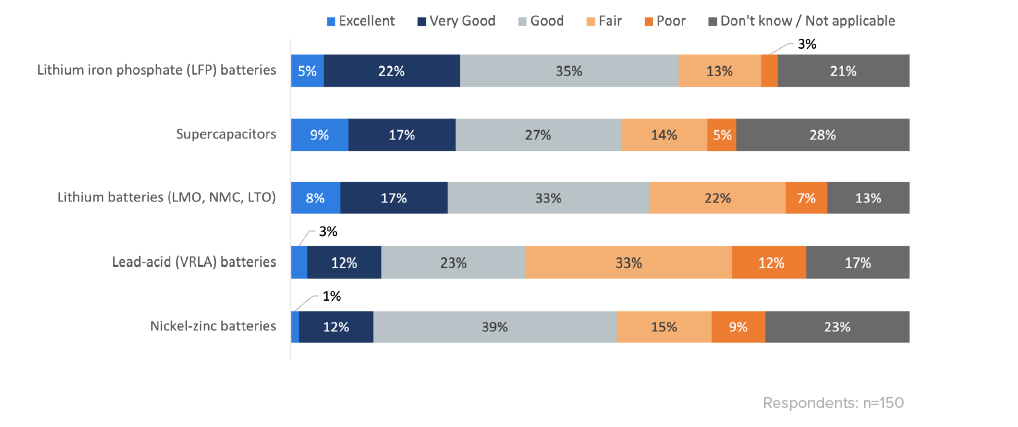
Perceptions of sustainability are relatively even across technologies, led by lithium iron phosphate batteries (27%) and supercapacitors (26%).
Please rate each battery type based on SUSTAINABILITY
Cost
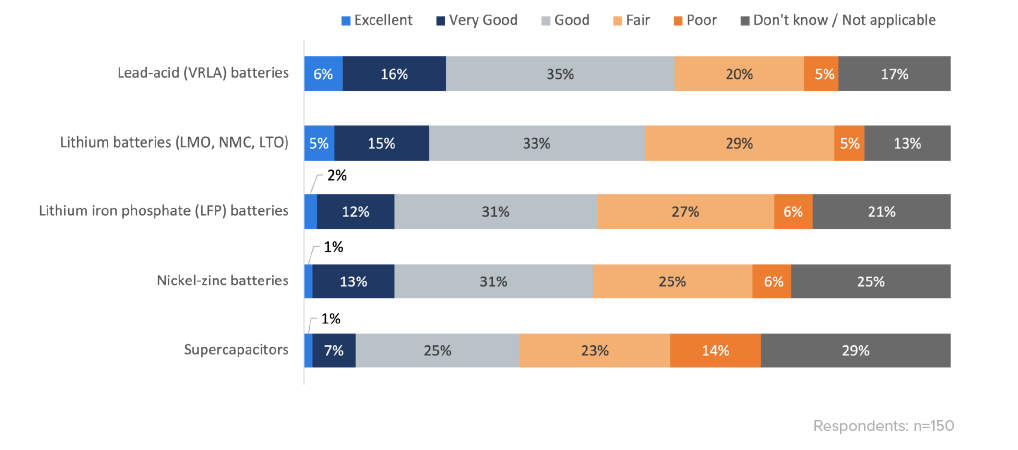
Cost perceptions favor lead-acid batteries, with 22% of respondents rating them highly (excellent or very good), compared with 20% for lithium batteries.
Please rate each battery type based on COST
Effectiveness in Managing AI Dynamic Power
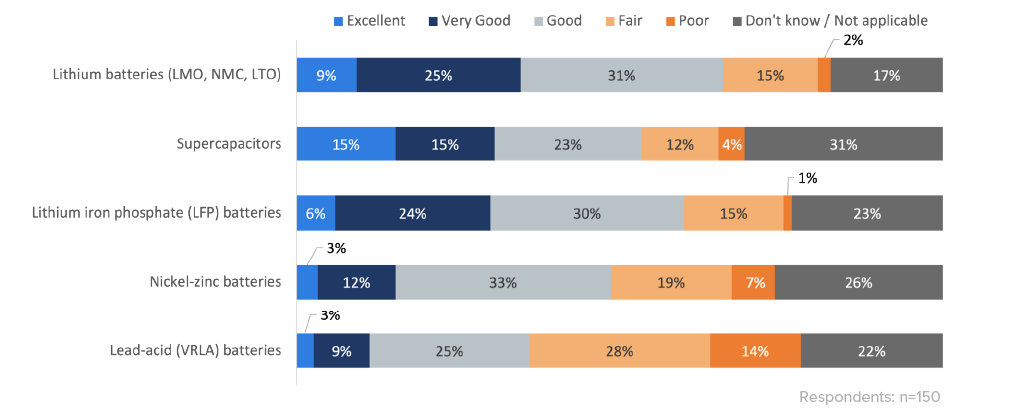
Perceived effectiveness in managing AI dynamic power is led by lithium batteries (34%), with supercapacitors and lithium iron phosphate batteries close behind at 30% each.
Please rate each battery type based on EFFECTIVENESS IN MANAGING AI DYNAMIC POWER
Drivers of Change in Energy Storage Technology
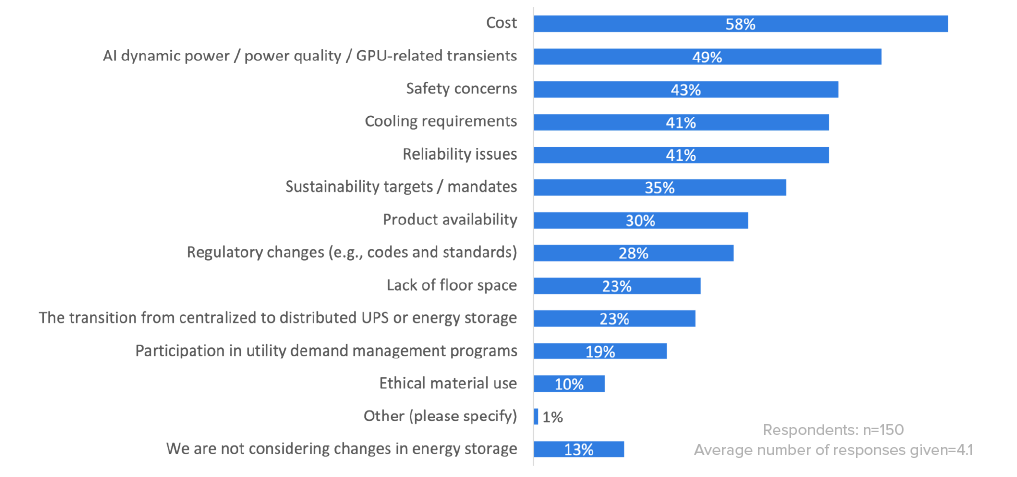
In both 2026 and 2025, nearly three out of five respondents (58% both years) say cost is a driver of the changes they are considering for their energy storage technology. AI dynamic power, added to the survey in 2026, is the next most prevalent driver this year at 49%.
Which of the following are driving the changes you are considering to your energy storage technology?
UPS Battery Backup Run Times
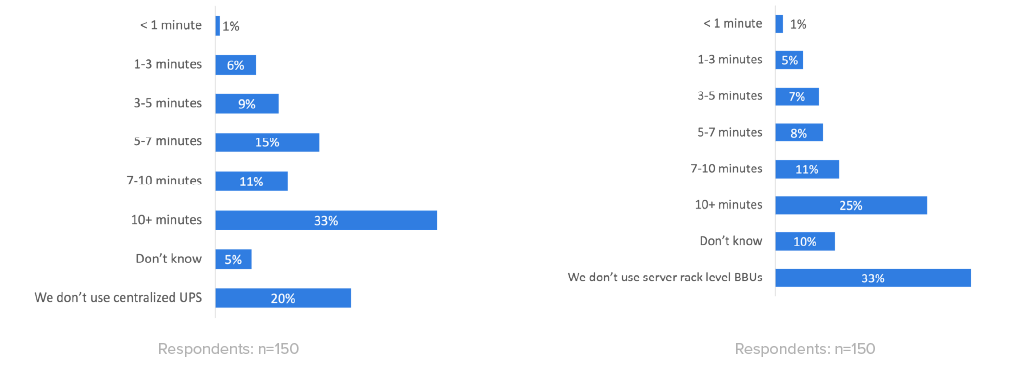
For those using centralized UPS in 2026, a third (33%) say their battery backup run times are more than ten minutes, in line with last year (36%). Among those using server rack level battery backup in 2026, a quarter (25%) say their run times are over ten minutes, in line with 2025 (26%).
If you use centralized UPS, what are your UPS battery backup run times?
If you use server rack level battery backup (BBU), what are your backup run times?
Shifts in UPS Battery Backup Run Times
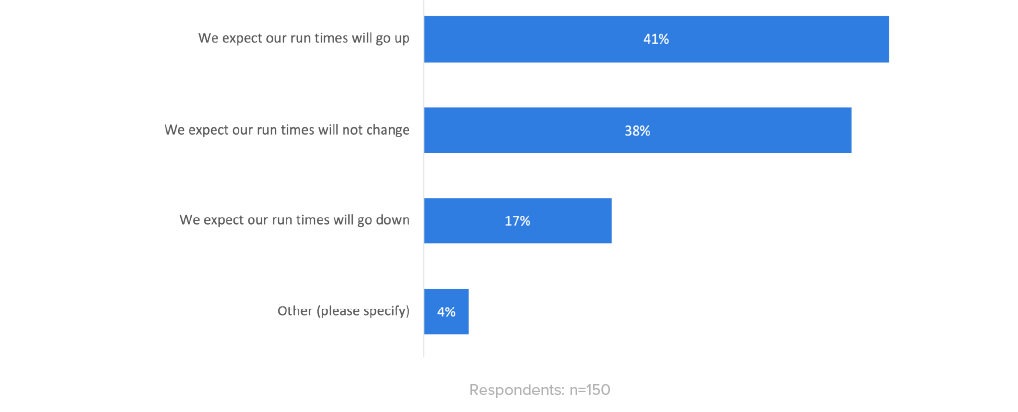
In 2026, more than two in five respondents (41%) say they expect their UPS battery backup run times to go up in the future, which is up 12 percentage points compared to 2025. Fewer than one in five (17%) expect their run times to go down in 2026 compared to nearly two in five last year (37%).
How do you see your UPS battery backup run times changing in the future?
Trust in UPS Backup Systems and Potential Failure Points
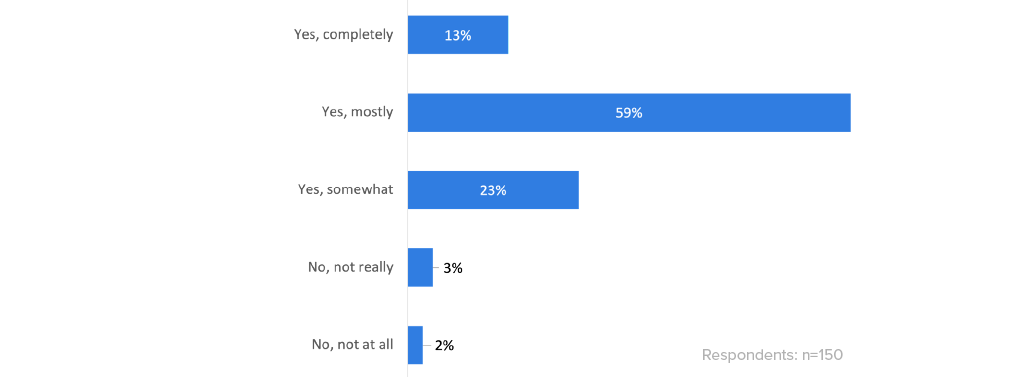
In 2026, nearly nine in ten respondents (87%) do not completely trust their UPS backup system, up from 75% in 2025. Trending since 2024 suggests that trust for existing UPS backup systems continues to erode.
Do you trust your existing UPS backup system?
Battery Backup—Potential Failure Points
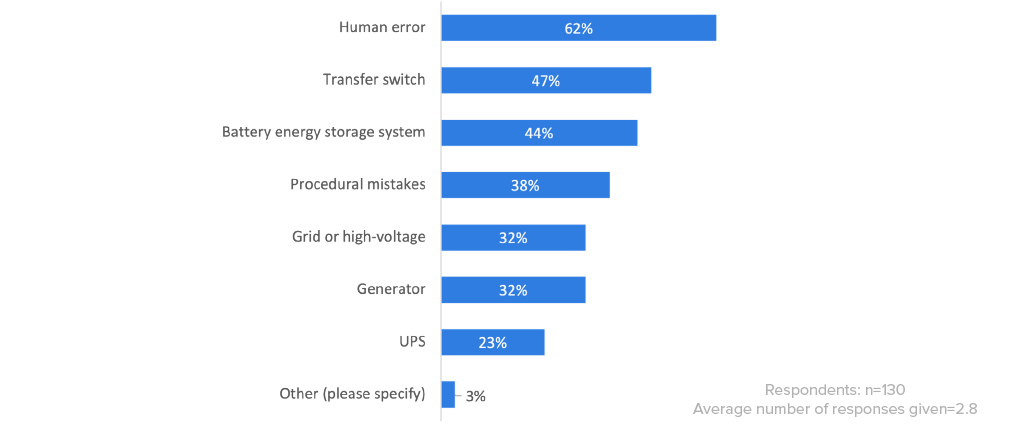
Among those with some doubt in their battery backup system, more than three out of five 2026 respondents (62%) believe human error is a potential failure point in their system, up from 53% in 2025.
Transfer switch as a potential failure point shows the largest increase from last year, going from 30% in 2025 to 47% in 2026.
Where do you believe the potential failure points are in your existing UPS backup system?
Sustainability
Sustainability’s Role in Buying Decisions
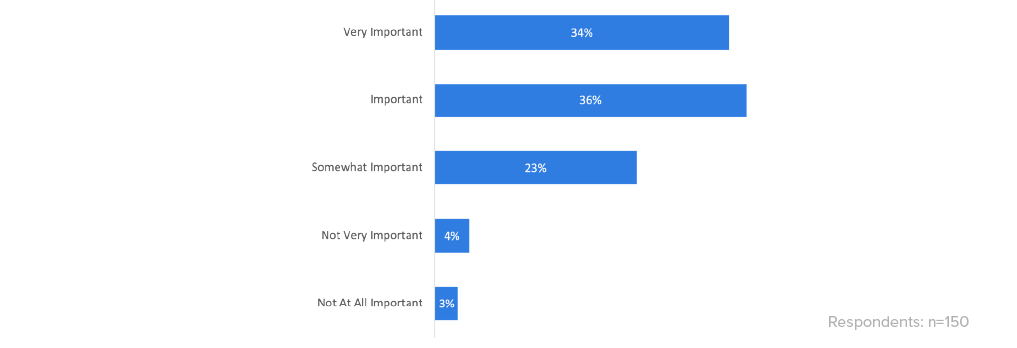
In 2026, seven in ten respondents (70%) say sustainability criteria is important to their power system buying decisions (very important + important).
How important are sustainability criteria in your power system buying decisions?
Cost Savings from Sustainability Initiatives
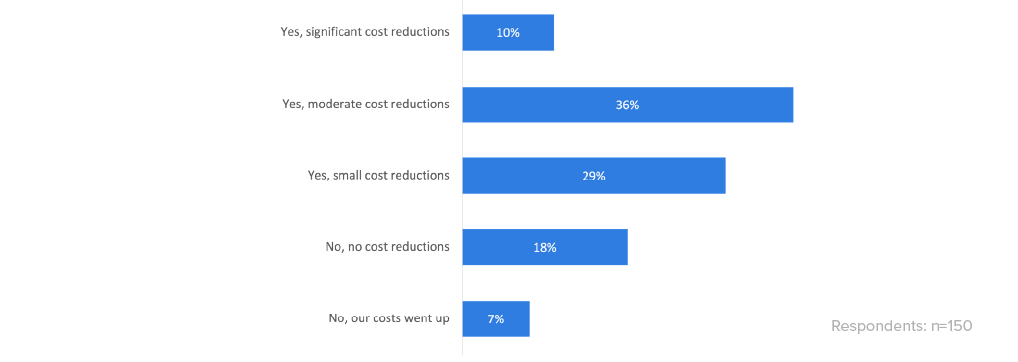
Nearly half of respondents in 2026 (46%) say that their organization’s sustainability programs have resulted in significant or moderate cost reductions, which is down notably from 2025 (seven percentage points).
Have your organization’s sustainability programs / efforts resulted in reduced costs?
Artificial Intelligence
AI’s Biggest Impact on Data Center Power and Energy Storage
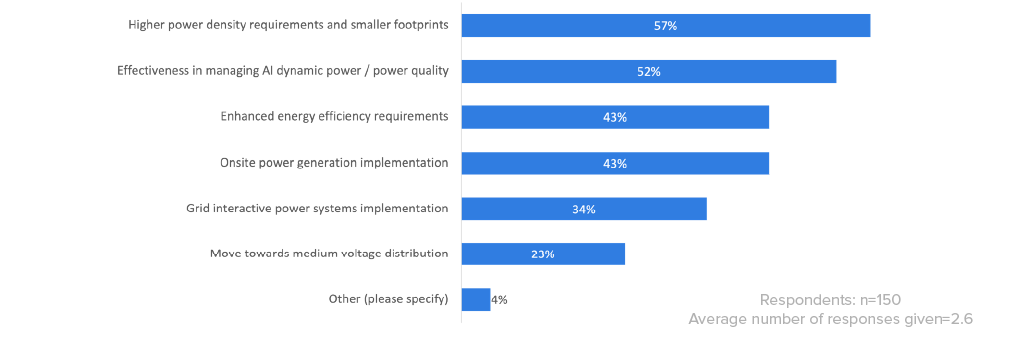
In 2026, nearly three in five respondents (57%) cite higher power density requirements and smaller footprints as a major AI-driven impact on power and energy storage needs, consistent with last year (54%). More than half (52%) also point to the importance of effectively managing AI dynamic power and power quality — up significantly from 37% last year.
What is the biggest impact on power requirements and energy storage technology artificial intelligence (AI) will have on your data center?
Value of AI Dynamic Power Mitigation Capabilities
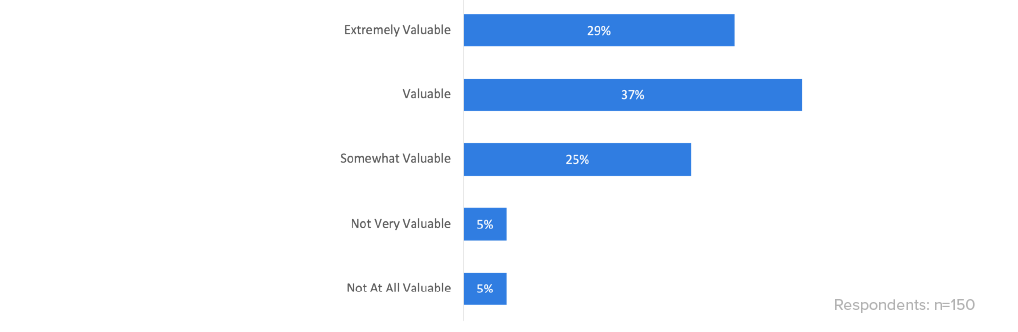
Two-thirds of the respondents (66%) say AI dynamic power mitigation capabilities within the UPS battery system is valuable (extremely valuable + valuable).
How valuable are AI dynamic power mitigation capabilities within the UPS battery system?
Factors Driving Battery Chemistry Selection
Factors ranking the highest for driving battery chemistry selection to mitigate AI dynamic power are: power density (38%), safety (37%), uptime (33%), maintenance & serviceability (32%).
What are the top three factors driving your battery chemistry selection today to mitigate AI dynamic power / power quality?
AI Dynamic Power Affect On UPS Performance*
When asked how AI dynamic power is affecting UPS performance, the most widespread theme concerns AI-driven power transients and load spikes, followed by battery stress, degradation, and reduced life.
How is AI dynamic power (GPU-related transients) affecting your UPS performance today? (Open-ended)
More Frequent Themes
- GPU / AI-Driven Power Transients and Load Spikes: ”AI systems can spike from idle to full load (sometimes 150% of steady state) in milliseconds.”
- Battery Stress, Degradation, and Reduced Battery Life: “Battery life cycle degradation. Overload conditions. Reduced runtime.”
- UPS System Stress, Performance Degradation, and Reliability Margins: ”Reduced efficiency due to frequent inverter adjustments.”
- Power Quality Issues (Voltage Sag, Harmonics, Crest Factor): “Voltage regulation challenges during millisecond spikes.”
- Need for UPS Oversizing, New Architectures, or ‘AI-Ready’ Designs: ”Need compact with energy density type solutions.”
Less Frequent Themes
- Thermal Stress and Cooling Implications: “Capacitor & IGBT Thermal Fatigue.”
- Operational Complexity, Monitoring, and Workforce Impact: “Add uncertainty to daily operations. Requires retraining of personnel.”
- Increasing Power Demand and Infrastructure Scaling: “Rack power density in general is much greater than before.”
- Limited, No, or Not-Yet Observable Impact: ”Not affecting performance as of yet.”
- Uncertainty, Lack of Data, or Not Applicable: “Not enough data.”
*ChatGPT was used to help identify and quantify comment themes.
Data Center Design
Likelihood of Using DC-Only Data Center Design
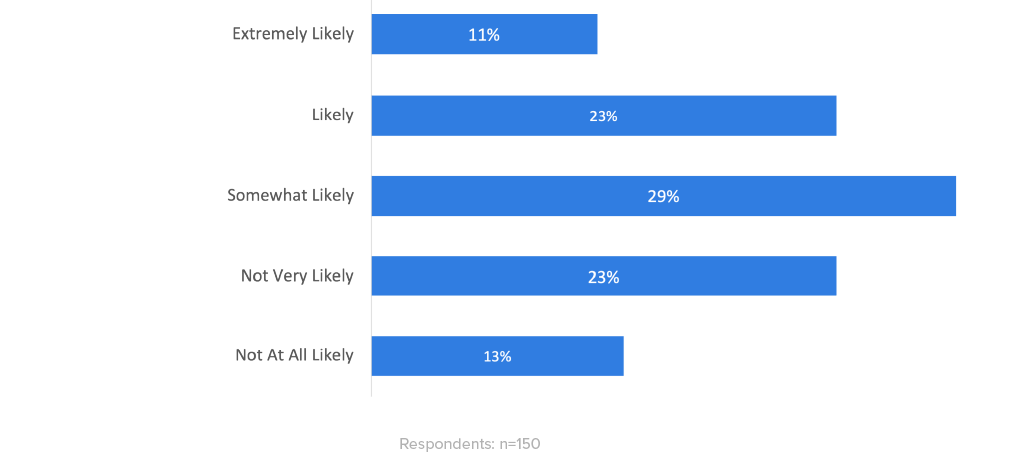
Responses are evenly divided: 34% of respondents indicate likely adoption of a DC-only data center design within three years, compared with 36% who indicate low likelihood.
In the next three years, how likely are you to use a DC-only data center design?
Modular Power Solutions
Modular Power Solutions Usage
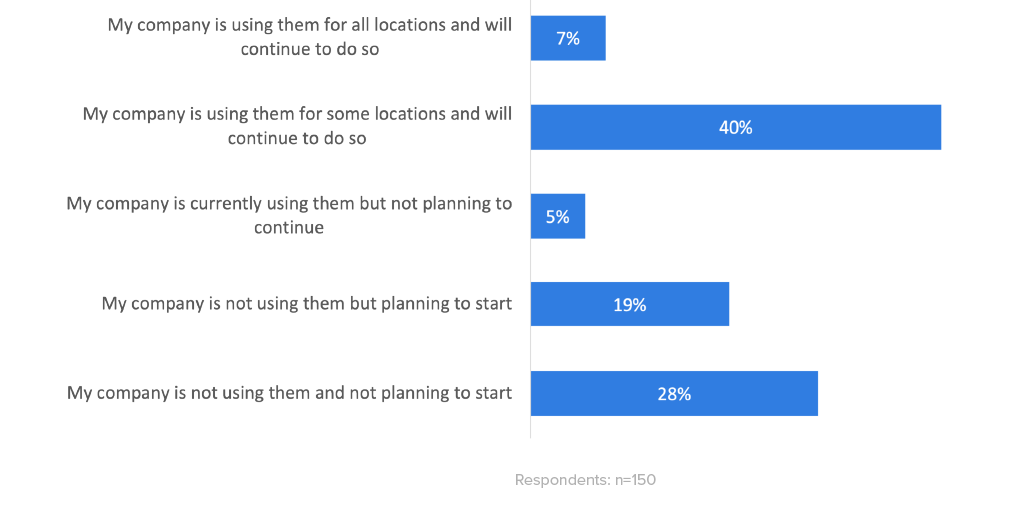
Nearly half of the 2026 respondents (47%) say their organization is currently using and plans to continue using modular power solutions.
How is your organization currently utilizing modular (containerized or skid-mounted) power solutions?
Open Ended Questions & Write-In Responses
Which of the following best describes your job level? (Other responses)
- Account Manager
- Electrical Design Manager
- Investor Relations
- Manager – Strategic Business
- Mechanical Design Engineer
- Sales
- Sales Engineer
- Sr. Data Center Engineer
- Superintendent
Which 3 challenges do you foresee having the greatest impact on the data center industry in the next 10 years? (Other response)
- Compliance with DoD Enterprise
- GOVERNMENT
- Perfecting crash issues which will alleviate many other thing on this list
- Power management systems
- Saturation
If you use energy storage for your centralized UPS, what type of energy storage or battery type does your organization use? (Other responses)
- Does not apply (2)
- Does not apply we manufacture up to 900MVA transformers for DCs
- Flooded lead acid non-VR
- Proprietary “Zynth” liquid batteries
- Varies according to data center
Which of the following are driving the changes you are considering to your energy storage technology? (Other response)
- Renewable Plant
How do you see your ups battery backup run times changing in the future? (Other responses)
- Does not apply / NA (5)
- We schedule periodical maintenance and replacement
Where do you believe the potential failure points are in your existing ups backup system? (Other responses)
- Does not apply / Don’t know (3)
- Varies by data center and site architecture.
What is the biggest impact on power requirements and energy storage technology artificial intelligence (ai) will have on your data center? (Other responses)
- Does not apply / Don’t know / NA (4)
- Hybrid battery–supercapacitor architectures and AI-driven power orchestration.
How is AI dynamic power (GPU-related transients) affecting your ups performance today? (Open end)
- 1. Power anomalies, fluctuations, deviations and outages.
2. Transient Spikes of GPUs.
3. Over feeding power to GPUs can cause damage.
4. Vulnerability to sudden Power Loss due to improper sizing of UPS in first place.
5. AI Based solutions has for sure changed the power consumption patterns. AI is the future for GPUs and TPUs. - A shift in paradigm to GPU based platforms is happening slowly but is expected to increase by 2030.
- Add uncertainty to daily operations. Requires retraining of personnel.
- AI dynamic power from GPU-based workloads is creating rapid load transients and higher peak-to-average power swings that stress traditional UPS architectures. We are seeing:
- Faster and larger step changes in load (sub-second spikes) that require higher C-rate capability and faster control response from the UPS battery system.
- Increased power-quality challenges, including voltage excursions and harmonic distortion, which place more demand on UPS inverters and energy storage controls.
- Reduced margin in legacy systems originally designed for steady, CPU-based loads, making battery chemistry, BMS performance, and control algorithms more critical.
Greater focus on thermal performance and monitoring, as frequent charge/discharge events and higher power density increase localized heat within UPS and battery rooms. As a result, AI workloads are driving the need for faster-responding, higher-power-density energy storage (e.g., lithium/LFP) and more advanced UPS controls to maintain stability, uptime, and generator ride-through without increasing runtime duration.
- Faster and larger step changes in load (sub-second spikes) that require higher C-rate capability and faster control response from the UPS battery system.
- AI dynamic power from GPUs creates fast, high-amplitude load transients that stress UPS systems. This leads to:
- 1. Voltage regulation challenges during millisecond spikes.
2. Oversizing UPS capacity to handle crest factors 2–3× normal load.
3. Reduced efficiency due to frequent inverter adjustments.
4. Battery wear if UPS relies on batteries for transient absorption.
5. Thermal stress from rapid inverter switching.
- 1. Voltage regulation challenges during millisecond spikes.
- AI dynamic power requires very fast response from UPS which affects the UPS performance, also AI needs more frequent backup from UPS which affects the life of UPS.
- AI GPU dynamic power is already stressing many UPS systems through rapid load swings, short‑duration overloads, and increased thermal and electrical wear, but modern “AI‑ready” UPS designs can largely absorb these transients if sized and configured correctly. The net effect today is less about runtime loss and more about efficiency hits, battery and component aging, and tighter design/operating margins around your power train.
- AI GPU power transients create fast, high-amplitude load swings that can trip or stress conventional UPS systems; today the practical fix is to deploy “AI‑tolerant” UPS architectures with input‑power smoothing, faster control loops, and appropriately sized batteries or energy buffers to avoid load drops and excessive battery cycling.
- AI GPU transients are causing higher peak current draws, faster discharge rates, increased thermal stress on batteries, and greater strain on UPS power electronics, requiring tighter power quality control and faster response times to maintain stability.
- AI GPU-driven transients are presenting as tightly correlated, high-dI/dt step loads that are eroding our UPS margin faster than legacy enterprise IT profiles. We are seeing elevated inverter peak-current demand and DC-link stress, which drives more frequent current limiting/derate behavior and reduces effective ride-through headroom under contingency conditions. Power-quality excursions (sag/recovery overshoot, harmonic distortion, and load-sharing “chase” in parallel plants) are increasing nuisance alarms and compressing operating windows. Where storage is in the UPS path, the transients are inducing micro-cycling that accelerates VRLA degradation and can push Li-ion BMS guardrails (current/temperature limits) if the system is not tuned for this duty cycle. ECO/ bypass and source-transfer transitions are less tolerant, because transfers are now occurring under pulsed load conditions with minimal settling time. Net effect: we remain mission-capable, but at higher operator workload and with reduced resilience margin unless we harden the architecture for fast dynamics (buffering closer to the load, tighter controls tuning, and higher-rate telemetry for correlation and action).
- AI is keeping transient and power regulated for increased outage reduced and change over to power
- Modules and radiation power.
- AI systems can spike from idle to full load (sometimes 150% of steady state) in milliseconds. Traditional UPS systems may engage their batteries during these fast transitions to meet the instantaneous demand
- AI use can result in swings in power draw. As a result battery degradation and reduced runtime for battery storage systems. AI use may also affect generator performance
- At this time, AI dynamic power and GPU-related transients have not caused any noticeable impact on our UPS performance. However, we are monitoring load fluctuations closely to ensure stability and reliability.
- Automatic protection unknown issue
- Battery health and inverter stability
- Battery life cycle degradation. Overload conditions. Reduced runtime.
- Battery stress and risk of downtime, outages keep me up at night
- Battery Stress causing degradation. Overload and shutdowns. Thermal and/or electrical stress. Instability of the Generator
- Because there more demand for power it is reducing the battery life
- Capacitor & IGBT Thermal Fatigue
- Challenging
- Currently, no real change to the centers that we service. Supply chain issues and costs over the last year have driven a delay in CAPEX spending on UPS systems or upgrades.
- Data collection for future analysis
- demand of more power and cooling
- Does not apply /Don’t know / NA (16)
- Driving the need for higher performance battery storage solutions. Increased demand for greater performance range.
- Effective power management and remote-controlled deployment to remote sites
- End of Life early depreciation due to rapid changes in response times.
- Fluctuations from GPUs cause frequent load transients, leading to voltage regulation challenges and increased stress on UPS components, which can reduce efficiency and shorten battery life.
- Forcing us to look at more options
- GPU dynamic power transients are a critical factor in UPS performance for modern AI-enabled businesses. The key is to match UPS capabilities to transient characteristics (speed, peak power, predictability) rather than relying on one-size-fits-all solutions.
- Hard to say – it varies for each client
- Has put more strain on the system as density continues to grow.
- Have not measured this data yet.
- High UPS capacity
- Improved monitoring for data collection and analysis
- Inconsistent performance
- Increased bursting loads from server loads have resulted in further derating of UPS and distribution capacity to compensate and ensure power requirements do not crest to an overcurrent situation at feeders or distribution for those affected server racks, Rack power density in general is much greater than before, where at one time 15kVA per rack was high density now it can be multiples of this. With the added bursting for compute and GPU loads, this is a big problem.
- Increasing power requirements that forces the evolution of the UPS in the same space.
- Increasing resiliency required, from grid variations as well as spikes on the demand side.
- Increasing stress on inverters, batteries, and power electronics, reducing effective battery runtime and accelerating aging, reducing power quality (voltage sag, harmonics)
- It can drain faster
- It drives the thermal performance of the server rack and how we design the cooling system(s) to mitigate the heat at a direct-to-chip level. We don’t use UPS battery backup in our products, but at a facility level, the GPU demand management will affect how much energy is required to bring the system as a whole, including the thermal management systems.
- It has placed significant pressure on the entire power train with frequent and abrupt power fluctuations
- It helps power management easily
- It is quite straining. There is high crest factor and harmonics.
- Increased battery stress. The thermal impact is also significant.
- it isn’t, currently.
- It makes it easier to monitor and react to changes.
- It may use power consumption based on the GPU. When a GPU requires more power in the circuit, it will consume high power.
- It reduces performance stressing our systems and forces them to handle fast transitions and causing instability
- It strains the systems and causes overloads and stress.
- It’s drowning it much faster compared to how it was a few years ago.
- Its not affecting.
- It’s not.
- Keeping uptime with small down time and reasonable cost.
- Limited use cases so far and have been able to distribute load to multiple UPS.
- Load can change very quickly.
- Moderately.
- More load. Code restrictions.
- most consumer energy
- Multiple GPUs can cause a surge in power, leading to capacitive overshoots. Battery life also degrades, among many other things; performance degrades, and all of these together can cause costly downtime.
- Need compact with energy density type solutions
- Need more power at reasonable cost
- No direct currently today.
- no effect
- No influence
- Not affecting performance as of yet, but our focus is on using energy storage instead of UPS to handle transients
- not an dynamic as it could and should be
- Not at all at the macro level.
- not enough data . Utilize line reactors and filters to minimize the issues
- Not good performance, latency not good
- Not much
- Not of concern
- Not really
- Not really seeing an impact
- Not very significant
- Overall, it is kind of reliable
- Power load fluctuations
- Ramp up and down times and frequency keep
- rapid power spikes can trick traditional UPS systems into thinking there is a utility outage or overload.
- Reduces transients Increases response times in milliseconds
- Reduction of battery efficiencies and affecting their duration
- Right now, it isn’t a huge impact. I know it will be in the future..
- Slight impact on cycle times
- The extreme load variation imposed by AI Training and Inferencing workload will mandate large centralized UPS to provide sustained power to ensure no downtime and power demand surge/spike mitigation.
- The load demand for the UPS is drastically increased and will continue to do so on most power levels to sustain back up run time.
- The most immediate and damaging effect is on battery plant.
- The rapid high-power shifts can have a significant impact on UPS performance today with large workloads during peak times.
- This behavior will be reduce the cycle of life of the batteries
- This is not a key part of our business model. We manufacture custom designed transformers up to 900MVA on a made to order basis for AI data centers. These are designed and engineered in meetings over Zoom, Google Meetings, etc. for 8-10 months before production begins. Typically, 2-3 trips to Italy during the process. All this precision with industry best lead times of 18-30 months at this time.
- Transient have always been an issue. With the introduction of high-powered GPUs and their performance demand pattern, the incidences of transient, and the type of transient have an increased.
- Transients in a modern AI workloads, especially those using large GPU clusters, create rapid and significant power fluctuations due to dynamic frequency scaling and load changes
- Turn on more often
- unpredictable backup time
- Upstream Instability
- Variable demand created variable available on the battery, important to understand how the system reacts (speed of reaction, battery temps) as demands ramps or subsides.
- Very good
- Very effects it very well in saving power.
- Very important
- Very much
- We are just getting started with installing AI GPU
- we are off grid behind the meter with bloom generators as the primary. We are in predevelopment on 4 million sq ft data park with 3 GWS of power
- We don’t have centralized UPS deployed for AI loads since it is not required for training.
We have noticed changes in utilization that can be difficult to predict and adapt to. - Today, AI-driven workloads are introducing short-duration but high-amplitude power spikes on our GPU-enabled systems, primarily in our e-commerce analytics, personalization, and creative content pipelines. From a UPS performance perspective, we are seeing three concrete impacts:
- 1. Transient load spikes during model inference and batch processing When GPUs spin up for product-recommendation models, demand forecasting, or AI image/content generation, power draw can jump 2–4× within milliseconds. These rapid transients are much steeper than our traditional web or database workloads. Our UPS handles the steady-state load well, but these spikes are now a primary driver for sizing headroom.
- 2. Reduced effective battery runtime under mixed workloads During peak marketing campaigns (product launches, holiday promotions), GPU utilization overlaps with high web traffic. The combined load reduces our real-world battery runtime by ~15–25% compared to non-AI scenarios, which affects how long we can safely ride through short outages or generator startup.
- 3. Higher stress on UPS inverters and power electronics The fast ramp-up / ramp-down behavior of GPUs increases switching activity and thermal stress in the UPS inverter stage. We’ve had to adjust alert thresholds and increase monitoring of harmonic distortion and crest factor to ensure stability during AI job bursts. Operationally, this has led us to: • Oversize new UPS capacity by ~30% for GPU-backed clusters • Segment AI workloads onto dedicated power circuits where possible • Schedule heavy training or rendering jobs outside of peak commerce hours • Re-evaluate battery chemistry and discharge characteristics for high-transient loads In short, AI-driven GPU transients are now one of the dominant factors in how we size, monitor, and operate our UPS systems, rather than just average IT load.
- 1. Transient load spikes during model inference and batch processing When GPUs spin up for product-recommendation models, demand forecasting, or AI image/content generation, power draw can jump 2–4× within milliseconds. These rapid transients are much steeper than our traditional web or database workloads. Our UPS handles the steady-state load well, but these spikes are now a primary driver for sizing headroom.
Methodology
Endeavor Business Intelligence and Data Center Frontier conducted data collection and analysis on behalf of ZincFive Inc. The data was collected from January 8 to January 31, 2026, resulting in 150 qualified survey responses. The methodology adheres to standard marketing research methods, practices, and procedures.