3 Strategies for Data Center Power Savings, Efficiency, and Sustainability

June 26, 2024
3 data center strategies

Data centers have long been known as energy-intensive market players. And thanks to the expansion of remote work, high-speed streaming and the proliferation of many digital and AI tools, U.S. demand for data center capacity has skyrocketed over recent years and expects a 10% increase per year until 2030. 

While data center operators are implementing aggressive actions like efficiency-focused retrofits to help curb energy usage, future-focused data centers must be able to support the increasing demand for more data, faster service, AI, cloud solutions, and more while minimizing their physical footprint. The larger a data center’s footprint, the more expensive it is to build it, maintain it, and manage its environmental impact. 

The Rising Demand vs. Cost Management Challenge 

With this demand increase comes many caveats. Today, data centers are grappling with various obstacles, potentially impacting their ability to operate reliably, manage costs and demonstrate resilience when it matters most. Several factors affecting these data hubs include: 

  • Limited access to power in several locations
  • Rising energy prices due to increased energy consumption
  • Increased pressure from investors, customers and regulatory bodies to reduce carbon emissions
  • The rise in frequency and severity of power outages

Data centers must meet rising compute power demands while practicing operational efficiency and sustainability to aid ambitious clean energy usage targets, drive down costs, tackle corporate responsibility, and improve disaster resilience.  

Here are three ways data centers can save money and prepare themselves for workload-driven energy consumption in 2024:

1. Do More with Less Space 

The more power an operator can fit into a smaller real estate footprint, the lower real estate costs are relative to the revenue generated. Data centers typically categorize space into two categories: ‘white space,’ indicating areas with equipment that increases capacity and so directly makes a profit, and ‘gray space,’ back-end support systems that do not directly generate profit – for instance, generators and uninterruptible power supply (UPS) systems. 

Minimizing gray space with smaller, power-dense equipment allows operators to maximize the profit-driving white space. Profitable upgrades include replacing older, less efficient infrastructure equipment with newer, more efficient technologies. While the initial investment may seem high, upgrading to more efficient equipment will ultimately lower long-term costs.  

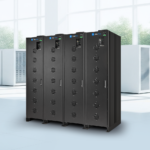
 Upgrading the UPS battery system is a great place to start. Choosing a UPS battery with a higher power density reduces the gray space required, because fewer battery cabinets are needed to meet the data center’s power demand. Look for a battery cabinet with the smallest linear footprint per watt so you can pack more power in less space and free up room for additional servers – or even a smaller overall facility. Non-flammable chemistries, such as nickel-zinc, also eliminate the need for additional safety equipment, permitting, and space considerations required by lithium-ion batteries. This can further lower battery system footprints. 

2. Avoid Expensive Outages 

Research from The Uptime Institute has found that outages are becoming longer and more costly, with one in five organizations reportedly experiencing a significant outage in the past three years. 

However, 43 percent of outages in a data center are caused by the failure of the UPS system itself. Many batteries can fail open or with a high impedance path, which prevents the battery from supporting the critical UPS load. 

Nickel-zinc batteries’ greater reliability makes them ideal for use in a data center. In contrast to other battery chemistries, a weak or depleted cell in the battery string will continue to discharge and carry the load. All that’s needed is a simple battery replacement at the next planned maintenance cycle: little cost, and no operational impact. Nickel-zinc batteries help data centers protect themselves against the high costs of power backup failures. 

Nickel-zinc batteries also do not go into thermal runaway. This safety advantage reduces site risk, which addresses potential insurance concerns and eases the approval process by Authorities Having Jurisdiction (AHJ). As a result, NiZn batteries don’t need the safety equipment for greenfield or retrofits required for lithium-ion batteries. Instead, they are a convenient drop-in replacement for lead-acid batteries in data centers.

3. Run equipment at higher operating temperatures to reduce the need for cooling

Today, data centers dedicate a significant portion of their operating budgets toward facility cooling. Recently, data center operators including colocation giant Equinix, Meta, and Microsoft have begun employing flexible temperature strategiesand operating at higher temperatures to reduce costs. 

While operating cooling systems at higher temperatures can lower energy load and reduce costs, it requires a balancing act to avoid the risk of shortened equipment lifespan, safety issues, and voided product warranties. Fortunately, current technology allows data centers to reduce cooling system investments, improve sustainability, and lower costs while maintaining operational reliability and safety. 

For instance, nickel-zinc UPS battery cabinets can operate at higher temperatures than their counterparts. Modular designs pose an opportunity to create climate-specific environments for the UPS and battery systems. By utilizing nickel-zinc batteries, these rooms can operate at higher temperatures and offer the combined benefits of lower CapEx for lower-capacity cooling systems, and reduced OpEx over the life of the cooling system. As high-temperature events increase in frequency due to climate change, investing in battery systems that can withstand harsher environments in 10-15 years is a distinct advantage for facilities being built today. 

More Resilient, Cost-Effective Data Centers

As data center demand skyrockets, facilities must prioritize actions that will help drive down costs, increase operational efficiency, and help meet sustainability targets. Those who do this first can enjoy the advantages of meeting the growing appetite for data while converting savings and efficiencies into profits.

Previously Published by Intelligent Data Centres

Author
Tim Hysell, ZincFive CEO
Tim Hysell
Co-Founder & CEO, ZincFive
Tim has over three decades of entrepreneurial success in founding, owning, and directing profitable business operations in renewable energy, banking, manufacturing, and medical devices. His companies partnered with global giants such as Siemens, Phillips, and Hewlett-Packard. Prior to owning his own businesses, Tim worked for General Electric, Hewlett-Packard, and Providence Health Systems. Tim is also a co-founder and board member of Pacific West Bank in Oregon.

Rethinking Resilience: Preparing Data Centers for the Next AI Wave

June 4, 2024
BC Series nickel-zinc for AI

Recent high-profile outages have underscored the critical importance of data center resilience. Twitter’s (now X) outage during Rihanna’s Super Bowl Halftime Show and Microsoft’s eight-hour outage affecting Teams, Outlook, and M365 caused widespread disruptions for millions of users. Even more alarming was the outage experienced by Australian telecommunications provider Optus, which led to transport delays, banking issues, and cut hospital phone lines for 12 hours, affecting over 10 million users (nearly 40% of the population) and 400,000 businesses.

The consequences of data center outages are further emphasized by Uptime Intelligence’s 2024 data center outage report. The report reveals that 55% of operators experienced an outage in the past three years, with more than half of respondents reporting that their most recent significant outage cost over $100,000 and 16% stating that these outages cost more than $1 million.

As AI pushes data center energy consumption to unprecedented levels, the need for a resilient power infrastructure has never been more pressing. The International Energy Agency (IEA) projects that data center electricity usage will double by 2026, while training newer AI models consumes 50 times more electricity than previous generations. As various sectors further integrate AI into their operations, the need for the facilities that power these services to maintain resilience grows both in importance and difficulty.

Bridging the Gap: Enterprise Strategies in the Age of Hyperscaler Dominance

Read Post

Faced with these challenges, data center operators must take decisive action to enhance their resilience and adjust to the demanding requirements of AI. By addressing the most common causes of outages, specifically power issues and human error, including inadequate regular, comprehensive uninterruptible power supply (UPS) testing, data center operators can ensure the reliability and stability of their facilities in an increasingly complex and demanding technological landscape.

Resolving these issues requires examining their causes first. Power issues consistently emerge as the most common cause of serious outages, according to Uptime Intelligence’s March 2024 report. A staggering 42% of respondents pointed to UPS failure as the leading cause of power-related outages, while 30% of incidents involved issues with the transfer switch to a generator, and 20% were attributed to generator failure itself.

Human error also plays a significant role in nearly 40% of data outages, highlighting the critical importance of proper training and adherence to established procedures. Among those who reported a human error-caused outage, 48% cited failure of staff to follow procedures, while 45% pointed to incorrect procedures. 

These findings underscore the urgent need for data center operators to prioritize both the modernization and upkeep of their power infrastructure and their staff’s ongoing training and education. Implementing comprehensive staff training and process reviews presents a significant opportunity to reduce human error-related outages.

To limit the risk of power-related outages, data center operators should regularly perform maintenance and rigorous testing under real-world conditions of backup power systems. They can also adopt more advanced and reliable UPS battery technologies, such as nickel-zinc. Unlike lead-acid and lithium-ion backup batteries, nickel-zinc batteries continue to discharge and carry the load even when a cell in the battery string becomes weak or depleted. This allows the battery string to continue operating and makes what would otherwise be an emergency into a simple note for replacement at the next planned maintenance cycle – no added maintenance costs or operational impact.

ZincFive BC 2 UPS Battery Cabinets powered by nickel-zinc

Powering the Future: Nickel-Zinc Batteries Unlock Data Centers’ AI Potential 

Read Post

Nickel-zinc batteries offer several additional benefits to increase data centers’ reliability and efficiency. Unlike lithium-ion batteries, they are incapable of thermal runaway at the cell level and can operate reliably at higher temperatures – which can also lead to lower cooling costs. They also boast a greater power density than their counterparts, delivering the same amount of power in a significantly smaller footprint. This allows operators to save valuable space for income-generating equipment like servers and racks, while still providing ample backup power for intensive AI applications. Nickel-zinc batteries are also more sustainable than lead-acid and lithium batteries and can serve as a convenient drop-in replacement for lead-acid batteries, making a seamless transition to this more advanced technology.

As data center energy consumption continues to soar due to the increasing demands of AI and other power-intensive applications, ensuring a resilient power infrastructure has become more critical than ever. By embracing comprehensive staff training, rigorous testing and maintenance practices, and safe, reliable and sustainable battery technologies like nickel-zinc, data center operators can significantly bolster the resilience of their facilities and ensure they are well-equipped to handle the ever-increasing demands of the digital landscape. Taking proactive steps to address the root causes of outages and implementing innovative solutions helps facility operators ensure that customers can rely on them – no matter what the future holds.

Previously published by Data Center Frontier

Tags:
  • AI, 
  • batteries, 
  • data centers, 
  • immediate power, 
  • nickel-zinc
Author
Tim Hysell, ZincFive CEO
Tim Hysell
Co-Founder & CEO, ZincFive
Tim has over three decades of entrepreneurial success in founding, owning, and directing profitable business operations in renewable energy, banking, manufacturing, and medical devices. His companies partnered with global giants such as Siemens, Phillips, and Hewlett-Packard. Prior to owning his own businesses, Tim worked for General Electric, Hewlett-Packard, and Providence Health Systems. Tim is also a co-founder and board member of Pacific West Bank in Oregon.

The Race to Reduce UPS Runtime: Why Backup Battery Selection Matters More Than Ever

May 20, 2024
BC 2 immediate power

In the high-stakes world of data centers, where downtime can spell disaster, the quest for reliable, uninterrupted power is crucial. When utility power goes down, data center Uninterruptible Power Supply (UPS) systems immediately turn to backup batteries to provide power until the generators come online. This ensures business continuity for servers housed at that facility and prevents costly downtime, loss of revenue, and potential damage to the company’s reputation. 

Known as “battery backup runtime,” this transitional period has been slashed from 30 minutes to under 5 minutes within the last decade by advanced generator technologies and power architectures. Now, many new designs plan to shift their facilities to generator power in 3 minutes or less. The reduction in battery runtime provides a valuable opportunity for data center owners to optimize their UPS systems for reliability and cost savings. 

For instance, many data center UPS systems currently rely on lead-acid batteries – which typically are not optimized for runtimes under 5 minutes. Re-evaluating the “tried and true” backup battery chemistries can reveal better options with greater reliability and safety during short-term, high-power discharges, a reduced footprint, and lower total cost of ownership. 

Harry Handlin, U.S. Data Center Segment Leaders at ABB says: “Many data centers are selecting runtimes less than 5 minutes to optimize cost and minimize footprint. These customers have realized long ago that 5 minutes of UPS battery runtime does not provide added protection. If a generator fails to start, the problem cannot be corrected in 5 minutes or even 15 minutes.”

How ABB and Their Customers Future-Proof Construction Supply Chain with NiZn Technology

Read Post

Due to their chemistries, traditional lead-acid and lithium-ion batteries require data center owners to purchase more cabinets than ultimately needed to provide adequate short-term power. In a lead-acid or lithium-ion battery string, a single failed cell impedes the current flow from surrounding cells in the string, creating an increased voltage drop or open circuit that can bring down the entire string in an outage. Compensating for this weak point requires data center owners to purchase additional redundant battery strings, increasing the overall cost of ownership and taking up valuable real estate within the data center. 

In addition, lithium batteries’ risk of thermal runaway requires their Battery Management System (BMS) to disconnect them if even a single battery cell is out of tolerance. While necessary to prevent safety hazards, this precaution can prevent a battery system from providing runtime for the data center. 

Newer battery technologies, such as nickel-zinc chemistries, eliminate this need for extra space and costs. Unlike lithium-ion and lead-acid cells, a weak or depleted nickel-zinc cell remains conductive and allows the rest of the battery string to continue delivering power. Nickel-zinc batteries are also incapable of thermal runaway, so they don’t need to be disconnected in case of a cell failure – allowing them to provide runtime without any concern of the BMS automatically shutting down a battery string. This inherent reliability reduces the need for (and costs of) redundant battery strings. 

2023 Recap

“Safe enough” is not safe: Assessing battery tradeoffs in data centers

Read Post

Nickel-zinc batteries also boast a winning combination for short–term, high-discharge applications: high power density and a high discharge rate. This allows them to reliably provide vast amounts of short-term power in smaller footprints than lead-acid and lithium battery systems. In contrast, lead-acid batteries have a high discharge rate but relatively low power density, requiring more or larger batteries to handle an equivalent load. Meanwhile, lithium-ion battery cabinets are limited to a low discharge rate, since the BMS shuts them down if their discharge current goes above the level needed to prevent fire hazards. These overcurrent protection limits increase the risk of cutting off the system during use. 

Nickel-zinc batteries offer three times the power density of lead-acid, twice the current carrying capability of industry-leading lithium-ion batteries, and a BMS that won’t interrupt runtime operations (since there’s no risk of thermal runaway). This further reduces the cabinets needed and the UPS room’s space requirements, allowing more room within the data center for revenue-generating equipment like servers. 

For instance, a 3-minute high-power discharge for a 1 MW UPS load would only require 3 cabinets of nickel-zinc batteries, compared to 5 lithium-ion cabinets and 6 lead-acid cabinets. Since nickel-zinc batteries can be optimally sized for runtimes of 5 minutes or less and offer greater reliability, data center operators only need to buy the minimum number of battery cabinets to support their load and runtime requirements – decreasing their UPS systems’ total cost of ownership. 

As data center owners adopt data center designs with faster automatic failover from UPS to generator, they will need a battery that can be right-sized and optimized for shorter runtimes while still delivering a high-power discharge. When choosing these batteries, they should invest in a battery that provides reliable, safe short-term power bursts in a small footprint with cost-of-ownership savings. With higher power density, reliability, safety, and reduced runtime capabilities, nickel-zinc batteries are a smart and cost-effective choice for the future of data center backup power.

Runtime Optimization: As Data Centers Reduce UPS Runtimes, The Right Batteries Become More Critical

Read Paper

Previously published with Data Center Dynamics

Tags:
  • batteries, 
  • high power density, 
  • immediate power, 
  • nickel-zinc, 
  • uninterruptible power supply
Author
Tod Higinbotham, ZincFive CEO
Tod Higinbotham
CEO, ZincFive
Tod has a strong track record of successfully growing advanced materials companies in the energy storage, semiconductor, and solar markets. He served as Executive VP/GM for ATMI and led the rapid growth of the company, which sold more than $1 billion. Tod was an executive member of the leadership team at Advanced Silicon Materials, a world leader in high-purity silicon materials, the business that was sold to REC to form their solar materials business. He was formerly the CEO of PowerGenix, the company that pioneered the novel nickel-zinc battery technology that has become the core of ZincFive’s solution portfolio.

Bridging the Gap: Enterprise Strategies in the Age of Hyperscaler Dominance

April 30, 2024

Every modern data center, whether in the hands of the hyperscalers or the enterprise, will have to reimagine the way power is managed and backed up as part of a broader innovation strategy.

The AI era is poised to reshape the data center landscape. Businesses of every size are looking for ways to leverage generative AI. That means they’ll need more data centers – ones that are higher performing, safer, and more efficient.

The hyperscalers are the ones setting expectations for modern data centers. They have the resources to pursue greenfield opportunities, building new infrastructure with the best technology the market has to offer.

But that doesn’t mean enterprises have to settle for less. With the right technologies that optimize the use of real estate, it’s possible to retrofit a smaller-scale data center for the AI era. This means careful consideration of compute infrastructure to power AI applications, new approaches to rack configurations, cooling technologies, and data storage.

It also means strategically looking at a data center’s power backup systems to ensure a balanced power strategy for brownfield retrofit. Every data needs backup power, but it’s likely your existing power equipment is hogging floor space – without adding a dime of revenue. New technology innovations like nickel-zinc (NiZn) batteries offer more density in power backup, potentially ramping backup capacity while freeing up valuable floor space for increased productivity.

Centralized or Distributed Backup Power

To understand the scale of change occurring, consider the numbers. McKinsey forecasts that data center demand will grow by about 10% a year until 2030. By then, demand will reach a total of 35 GW in the US market alone.

As it stands, data center customers are eating up more real estate than data centers can support. For both hyperscalers building new data centers and enterprises making upgrades, one answer is to drive up density delivering more compute per square foot. It’s no surprise, then, that even major cloud service providers are concerned with the amount of real estate their backup power systems are claiming from income-producing assets.

Outside of a modular data center

Designing for AI: Advancing Modular Builds to Accommodate Higher Demand 

Read Post

Typically, data centers have centralized uninterruptible power supply (UPS) backup systems. In the world of hyperscalers, there’s a move toward distributed backup systems – server rack battery backup units (BBUs).

Non-profits such as the Open Compute Project are pushing new standards that take this distributed approach to backup power. While it’s an approach that has several advantages for hyperscalers, it’s less optimal for colocation facilities or the enterprise. This is because colocation facilities need to accommodate different tenant configurations, making it less feasible. Meanwhile, a decentralized approach would be overkill for enterprise-grade workloads.

There’s also in-server backup power, which ensures the server shuts down properly in the event of an outage.

These backup systems can be complementary to one another, or not. The key is to find the right combination to ensure your power-hungry AI workloads can keep running. Many modern data center retrofits involve modular infrastructure, giving existing facilities the flexibility to add what equipment they need, in an iterative fashion and a constrained space.

The Move Away From Lead-Acid

Unfortunately, the lead-acid batteries that have supported data centers for decades are inefficient and hogging valuable real estate. They also have a limited operating temperature range, requiring even more space for cooling technology.

Lead-acid batteries are relatively cheap at the outset, but more modern battery technologies are worth the investment. Lithium-ion batteries hit the market less than a decade ago, but they already account for a sizable share of the market in new data center construction. They’re more efficient – thus taking up less valuable floor space – and don’t have to be replaced as often as lead-acid.

Sustainable Backup Power with Uncompromised Safety and Reliability

Read Post

Nickel-zinc battery technology is not volatile like both lead-acid and lithium-ion. In fact, it has no thermal runaway and can operate at a wider temperature range than either competing battery chemistry. While lithium-ion batteries offer high energy density, nickel-zinc batters deliver high power density – meaning it has a higher power discharge rate. In a backup scenario, when the sole goal is to run a battery for anywhere from 15 to five minutes or less, you want a small battery that can quickly discharge a large amount of power.

Compatibility With Older Equipment

While hyperscalers have the luxury of starting fresh, the enterprise can’t ignore the incumbent equipment populating its data centers. Up until the introduction of lithium-ion, lead-acid batteries were in every data center.

Utilizing the same UPS charging system, data center operators can more easily retrofit nickel-zinc batteries with existing UPS equipment via drop-in replacements.

Meanwhile, replacing lead-acid batteries with nickel-zinc may be easier than purchasing new lithium batteries, due to the additional safeguards that lithium batteries require. The volatile chemistry of lithium creates more costs around venting, high-capacity fire suppression, enhanced room burn ratings, and other safety features that aren’t necessary for nickel-zinc batteries.

Data center growth with nickel-zinc battery cabinets

Tomorrow’s Growth, Today’s Challenges: The Next Frontier for Data Centers

Read Post

The bottom line is that all businesses, of every size, will need to modernize their data center strategy to keep up with the promise of AI. The opportunity to simply build new data centers doesn’t always exist, but the right retrofitting strategy will give the enterprise the transformative power it needs.

Previously Published by Data Center Knowledge

Tags:
  • AI, 
  • batteries, 
  • data centers, 
  • immediate power, 
  • uninterruptible power supply
Author
Tod Higinbotham, ZincFive CEO
Tod Higinbotham
CEO, ZincFive
Tod has a strong track record of successfully growing advanced materials companies in the energy storage, semiconductor, and solar markets. He served as Executive VP/GM for ATMI and led the rapid growth of the company, which sold more than $1 billion. Tod was an executive member of the leadership team at Advanced Silicon Materials, a world leader in high-purity silicon materials, the business that was sold to REC to form their solar materials business. He was formerly the CEO of PowerGenix, the company that pioneered the novel nickel-zinc battery technology that has become the core of ZincFive’s solution portfolio.

Tomorrow’s Growth, Today’s Challenges: The Next Frontier for Data Centers

March 15, 2024
Data center growth with nickel-zinc battery cabinets

The digital economy is growing – that’s indisputably good news. Developments in AI and growing compute power are creating room for new opportunities and innovations of all kinds. 

This growth, however, hasn’t come easily. The global data center market is stretched to its limits. That doesn’t just mean that demand for capacity is outpacing supply. It also means that IT operators are left with overworked equipment, unable to replace it or acquire new equipment quickly enough – and that leads to critical system outages. In the worst-case scenarios, an overworked data center leads to risky scenarios. 

While there have been bumps in the road, progress isn’t stopping. The demand for data center capacity remains robust, with hyperscalers – cloud titans like Amazon, Google, Meta and Microsoft – leading the way in greenfield deployments. Why are hyperscalers starting from scratch? First, existing infrastructure clearly can’t keep up with demand. Just as critically, hyperscalers have the resources and opportunity now to shape infrastructure to their needs, setting the stage for decades of innovation and economic growth. 

Meeting capacity needs 

Hyperscalers already operate approximately 900 data centers worldwide, Synergy Research Group reported earlier this year – accounting for about 37% of worldwide capacity. By contrast, just five years ago, nearly 60% of data center capacity was in on-premise facilities. In another five years, according to Synergy, overall capacity is expected to double, with hyperscalers claiming more than half of it. 

By one estimate, the global data construction market should grow from $50.34 billion (as of 2022) to $73.43 billion by 2028. The buildout continues, even amid economic headwinds, global political uncertainty and continued supply chain challenges. 

Broadly speaking, this growth continues thanks to the ever-expanding digital world. Commerce, communication and just about all facets of everyday life are increasingly digital. Major business sectors like healthcare, transportation and manufacturing continue to digitize their operations, demanding more data center capacity. 

Meanwhile, the burgeoning possibilities of generative AI are driving demand for more processing power and more storage. Only about one year has passed since the release of OpenAI’s ChatGPT, yet according to one recent survey, 80% of chief data officers believe generative AI is likely to transform their organizations.

ZincFive BC 2 UPS Battery Cabinet with door open showcasing ZincFive's nickel-zinc batteries

Powering the Future: Nickel-Zinc Batteries Unlock Data Centers AI Potential

Read More

The demand for greenfield facilities is also coming from organizations running workloads at the edge. Small yet mighty data centers are powering digital services for retailers, hospitals and countless other entities with distributed operations. 

Agile, efficient, sustainable

Organizations pursuing greenfield projects aren’t just looking for more capacity. Along with more computing power, there’s a whole range of advanced capabilities that new data centers offer. 

For one thing, the data centers of the future have to be exceptionally agile. Unlike the resources found in older facilities, new infrastructure can scale up and scale down as needed to meet the fluctuating requirements of modern workloads. 

Additionally, new infrastructure can offer real-time monitoring and automated maintenance, helping IT administrators maintain seamless operations with less effort. The global data center automation market was valued at $7.6 billion in 2022, according to data from Grand View Research, and it’s expected to hit a whopping $20.9 billion by 2030.

Meanwhile, organizations are facing more and more pressure to build more sustainable data centers. That means building facilities with lower emissions and lower water usage. For instance, Google last year acknowledged that its data centers used 4.3 billion gallons of water in 2021. By Sept. 2023, the company was hyping new facilities (in the desert of Mesa, Arizona, no less) that use innovative air-cooling solutions to drastically cut back on its water usage. 

Then there are advancements in battery technology that can help improve a facility’s power density – a key factor when you want to minimize a data center’s physical footprint while supporting power-hungry workloads. 

Since their initial availability about a decade ago, data center designers have increasingly turned to lithium-ion batteries in lieu of lead-acid batteries. They’re more efficient – thus taking up less of the valuable floor space – and don’t have to be replaced as often as lead-acid. The downside is that lithium-ion batteries are relatively volatile, creating a greater risk of data center fires. 

The latest battery technology, nickel-zinc batteries, takes up even less floor space than lithium. Additionally, while lithium-ion batteries offer high energy density, nickel-zinc batteries deliver high power density – meaning it has a higher power discharge rate. In a backup scenario, when the sole goal is to run a battery for just about five minutes, you want a small battery that can quickly discharge a large amount of power. This combination – a higher power discharge rate combined with a smaller footprint – will be key to the future of data centers. 

Data center technician working on nickel-zinc battery cabinet

Choosing the Right Battery for your Data Center 

Read More

Meanwhile, the nickel-zinc batteries developed by ZincFive aren’t volatile, like lead-acid and lithium-ion. In fact, it has no thermal runaway at the fundamental cell level and can operate at a wider temperature range. Nickel-zinc batteries also have an operating life up to 3x longer than that of lead-acid batteries, making them significantly more sustainable. All told, nickel-zinc batteries are safer, more reliable, longer lasting and offer a smaller footprint than the competition – and that amounts to a low total cost of ownership. 

A better future for everyone

Building the data center of the future will take a great deal of innovation – traditional infrastructure and designs won’t cut it in tomorrow’s world. There will be greater demands for capacity and power, but budgetary realities will require an efficient use of space and more nimble operations. Meanwhile, political pressure and the realities of a warming planet will require safer, more efficient and more sustainable operations. The industry’s hyperscalers are already embarking on the massive projects that will set the standards for decades of digital infrastructure. Let’s hope they get it right. 

Previously published by Data Center Post

  • batteries, 
  • data centers, 
  • high power density, 
  • nickel-zinc, 
  • safety, 
  • small footprint, 
  • sustainability, 
  • uninterruptible power supply
Author
Tod Higinbotham, ZincFive CEO
Tod Higinbotham
CEO, ZincFive
Tod has a strong track record of successfully growing advanced materials companies in the energy storage, semiconductor, and solar markets. He served as Executive VP/GM for ATMI and led the rapid growth of the company, which sold more than $1 billion. Tod was an executive member of the leadership team at Advanced Silicon Materials, a world leader in high-purity silicon materials, the business that was sold to REC to form their solar materials business. He was formerly the CEO of PowerGenix, the company that pioneered the novel nickel-zinc battery technology that has become the core of ZincFive’s solution portfolio.

Efficient and Flexible: The Power of Modular Construction in Data Centers  

February 27, 2024
Outside of a modular data center

Driven by the need for increased efficiency, flexibility, and sustainability, the data center industry is pivoting to modular data centers. As modular construction becomes the new standard, facilities are under pressure to take full advantage of the benefits offered by this paradigm shift. Those who are late to embrace these advantages risk losing their edge to competitors in attracting customers, investors, and employees. 

Modular vs. Traditional Data Centers: Understanding the Differences

Modular data centers are pre-fabricated, scalable units that can be easily assembled, modified, and reconfigured as needed. These units consist of standardized modules including power, cooling, and IT systems, which allow quick deployment and hassle-free expansion.  

In contrast, traditional data centers are custom-built, fixed structures that require significant time, resources, and planning for construction and expansion. A recent survey of 228 data center executives found that over half had already deployed modular facilities, while 99% shared that they have plans to use modular data center designs in the coming years. 

Inside of a modular data center

Designing for AI: Advancing Modular Builds to Accommodate Higher Demand 

Read More
The Key Advantages: Efficiency and Scalability 

Modular data centers’ inherent efficiency is one of their primary benefits. By using standardized components, operators can optimize modular data centers for specific power, cooling, and space requirements. These adaptations lower both operational costs and the amount of waste. From the beginning, modular data centers are easier to work with: they can be built off-site in a controlled, indoor environment, which reduces delays and eliminates weather concerns. 

Modular data centers also offer unparalleled scalability. As a company’s IT needs grow, it can rapidly deploy additional modules without disrupting existing operations. This flexibility not only saves time and money, but also ensures that businesses can adapt to changing demands with minimal downtime. 

Upgrading UPS Systems and Alternative Battery Chemistries 

A critical component of any data center is the Uninterruptible Power Supply (UPS) system, which ensures continuous operation during power outages or fluctuations. Modular data centers provide a significant advantage when it comes to upgrading UPS systems, as they can easily accommodate alternative battery chemistries such as lithium-ion and nickel-zinc. These alternative chemistries offer higher power density, smaller footprints, lower weight,  and faster recharge times compared to traditional lead-acid batteries. 

Choosing the Right Battery for Your Data Center 

Read More

For instance, nickel-zinc battery chemistries’ high power density allows operators to reduce the space (and associated costs) needed for backup power supplies. Some nickel-zinc UPS battery cabinets can deliver the same power as lead-acid battery cabinets twice their size and weight, which significantly reduces the number of cabinets required and the linear size of the overall container. Nickel-zinc batteries can also operate at higher temperatures, which enables a lower-capacity cooling system with lower up-front and operating costs. Since they can’t go into thermal runaway, nickel-zinc batteries don’t need the additional safety infrastructure that lithium-ion batteries require – making them ideal for modular data centers. 

Environmental Impact and Sustainability: The Green Benefits of Modular Data Centers 

Increased demands for scope 3 emissions transparency are gaining momentum, driven by pressure from investors, regulators and the general public. Data centers that stay ahead of the competition in reporting and addressing scope 3 emissions will attract customers and investors who are seeking comprehensive disclosure and commitments to sustainability. This applies to the climate impact of both the data center companies and their customers (as happens with colocation facilities). 

Modular data centers have a significantly smaller environmental footprint compared to traditional data centers. Due to their scalable nature, modular data centers can be tailored to meet specific energy requirements, resulting in reduced energy consumption and lower greenhouse gas emissions. They can be also easily upgraded to incorporate technologies with lower environmental footprints, such as the previously discussed sustaimable batteries for UPS systems. 

The manufacturing of containerized/modular data centers

Why Modular Data Centers are Good for the Environment

Read More
The Bottom Line: Embracing the Future of Data Center Infrastructure 

With greater efficiency, scalability, flexibility, and sustainability, modular data centers are the new norm for data center infrastructure. As the demand for data storage and processing grows, savvy enterprises will recognize and act on the benefits of adopting modular data center solutions to remain competitive, reduce costs, and minimize their environmental impact. By not only adopting modular construction, but fully embracing its advantages, businesses can ensure that they are well-equipped to adapt to the ever-changing technological landscape while contributing to a greener, more sustainable future. 

Previously published by Digitalisation World

Tags:
  • high power density, 
  • modular data center, 
  • safety, 
  • small footprint, 
  • sustainability
Author
Tod Higinbotham, ZincFive CEO
Tod Higinbotham
CEO, ZincFive
Tod has a strong track record of successfully growing advanced materials companies in the energy storage, semiconductor, and solar markets. He served as Executive VP/GM for ATMI and led the rapid growth of the company, which sold more than $1 billion. Tod was an executive member of the leadership team at Advanced Silicon Materials, a world leader in high-purity silicon materials, the business that was sold to REC to form their solar materials business. He was formerly the CEO of PowerGenix, the company that pioneered the novel nickel-zinc battery technology that has become the core of ZincFive’s solution portfolio.

How to achieve sustainable data center backup systems

February 26, 2024

Data center reliability and resilience are non-negotiable. These facilities, which house vital digital assets and support critical business operations, must maintain high uptime to meet the demands of an increasingly connected world.

At the heart of this reliability is the center’s uninterruptible power supply (UPS) system, which ensures consistent power flow and protects against potentially catastrophic downtime.

A UPS system failure can lead to significant financial losses, damage to equipment, loss of data, and erosion of customer trust. According to the Uptime Institute, more than two-thirds of all outages cost data centers over $100,000.

Backup power systems have another increasingly urgent imperative: sustainability. Investors, customers, and regulators are exerting pressure on industries, including the data center sector, to adopt environmentally friendly practices and ultimately achieve net zero GHG emissions.

The failure to embrace sustainability carries risks that extend beyond environmental harm. Reputational damage, regulatory penalties, and loss of business from eco-conscious clients can all impact the bottom line.

Conversely, the adoption of sustainable practices can enhance a company’s reputation, attract investment, and provide a competitive edge in an increasingly green market. Sustainable UPS systems can help data centers achieve these goals by reducing their environmental impact.

Choosing the Right Battery for your Data Center 

Read More

So how can UPS systems be made more sustainable? One key lies in the choice of batteries used in these systems. Traditional UPS systems often rely on valve-regulated lead-acid (VRLA) batteries.

While these technologies have long been considered a standard, alternative battery chemistries can offer a path to more sustainable UPS systems, taking into consideration a variety of characteristics:

Material use: The materials used in different battery chemistries vary in their lifecycle environmental impact. For instance, nickel and zinc are safe and abundant materials that mitigate battery hazards, health risks, and scarcity concerns compared to the lead and lithium used in lead-acid and lithium batteries. This advantage carries through to the end of the battery lifecycle; recycling nickel and zinc batteries uses less energy than lead, which requires energy-intensive high heat smelting.

Greenhouse gas (GHG) emissions: The production, use, and disposal of batteries all contribute to GHG emissions, which drive climate change. Certain battery chemistries and designs, such as nickel-zinc batteries, have a lower manufacturing carbon footprint than other battery types. They’re also energy-efficient with a long lifespan, further reducing these emissions.

Carbon payback time: This is the time it takes for a product to ‘pay back’ the carbon emitted during its production through its operational life. A shorter carbon payback time means the product used less carbon in its manufacture and is more beneficial for the environment.

Volatile organic compounds (VOCs): VOCs are often used during the production of batteries and can contribute to air pollution and health problems. Batteries that minimize the use of VOCs in their production processes are more sustainable.

Water footprint: This refers to the total volume of freshwater used to produce a product. Battery manufacturing can be water-intensive, so choosing batteries that prioritize water efficiency in their manufacturing processes contributes to their sustainability.

Energy footprint: This is the total energy consumed over a product’s lifecycle, including its manufacturing process. The less energy used over the battery’s lifecycle, the lower its energy footprint and the more environmentally friendly it is.

These characteristics play a crucial role in determining the sustainability of UPS batteries in data centers. By understanding these factors, data center operators can make informed choices that favor sustainability, reducing their environmental impact while maintaining reliable power supply.

For instance, nickel-zinc (NiZn) batteries fulfill all these requirements by using abundant raw materials with a low carbon manufacturing footprint, yielding a shorter carbon payback time than lead-acid and lithium-ion batteries.

ZincFive paper on NiZn battery climate impact

Nickel-Zinc Climate Impact Profile

Read More

Over their lifetime, nickel-zinc batteries use 95 percent less water than lithium batteries, and 22-33 percent less energy than lithium-ion and lead batteries.

Data center operators including Corscale and Wyoming Hyperscale have chosen to utilize NiZn-powered UPS systems for their facilities, driven in large part by their sustainability metrics.

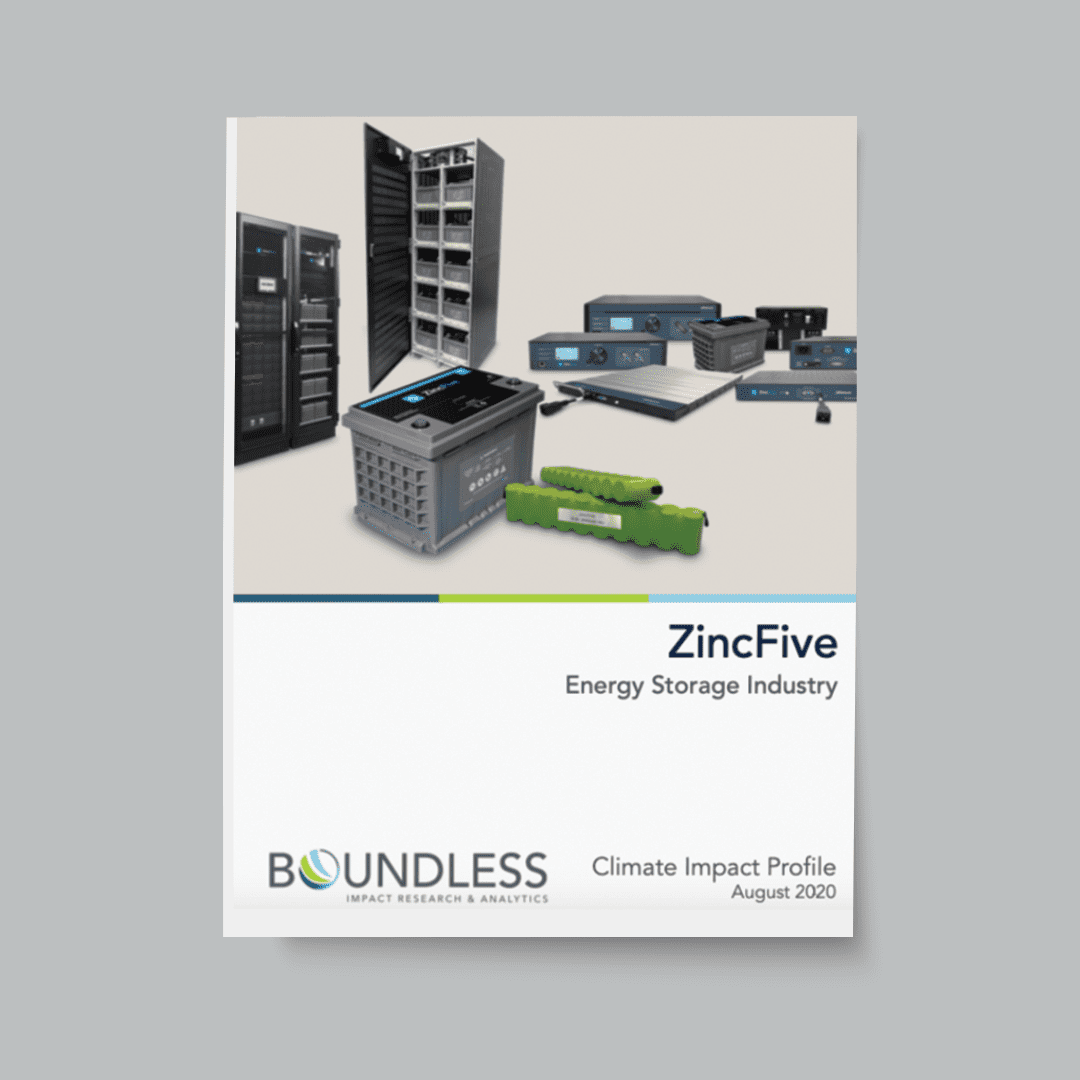
According to Boundless Impact Research and Analytics’ analysis, nickel-zinc batteries have achieved the highest climate rating of 9.4 out of 10, making them an ideal option for data centers looking to reduce their scope 3 emissions and reach their sustainability goals.

Considering sustainability when implementing resilience strategies is not just good for the environment – it’s good for business. Environmental responsibility is becoming a necessity rather than a choice.

By choosing sustainable UPS energy storage systems, data centers can improve their environmental performance, meet growing stakeholder expectations, and ensure their operations remain resilient and reliable.

Previously published by Data Center Dynamics.

Tags:
  • batteries, 
  • nickel-zinc, 
  • safety, 
  • small footprint, 
  • sustainability
Author
Tim Hysell, ZincFive CEO
Tim Hysell
Co-Founder & CEO, ZincFive
Tim has over three decades of entrepreneurial success in founding, owning, and directing profitable business operations in renewable energy, banking, manufacturing, and medical devices. His companies partnered with global giants such as Siemens, Phillips, and Hewlett-Packard. Prior to owning his own businesses, Tim worked for General Electric, Hewlett-Packard, and Providence Health Systems. Tim is also a co-founder and board member of Pacific West Bank in Oregon.

Sustainable Backup Power with Uncompromised Safety and Reliability

January 4, 2024

As AI becomes mainstream, rack server density demands are increasing more than ever before – just as growing climate awareness is putting pressure on data centers to become more sustainable. How can operators balance all these challenges without compromising uptime? 

ZincFive’s Aaron Schott joined Carsten Baumann, the Director of Strategic Initiatives of Schneider Electric, and Alex Dickins of Datacenter Dynamics (DCD), to discuss this very question in the DCD event, “Choosing sustainable backup power without compromising on safety & reliability.” They dove into solutions that can help data centers both provide reliable increased server rack density and meet sustainability goals. 

Listen to the entire session to explore how robust battery solutions can allow data centers to navigate market pressures to advance towards net-zero, and read on for our chief insights and takeaways: 

Sustainability Is a Top Priority for Data Center Customers

The data center industry is confronting a sustainability imperative as capacity expands rapidly. Currently, data centers consume around 2% of global energy demand.

By 2040, just 16 years from now, global data center capacity will double. If we double capacity, this becomes a bigger portion, so creating a more sustainable data center is critical.” 

Schneider Electric’s Carsten Baumann

In response, leading companies, including Schneider Electric, are evaluating their entire supply chain and product lifecycles. Baumann disclosed that in 2022, over 99% of Schneider Electric’s 61 million tonnes of emissions stemmed from scope three, or supply chain, emissions. In response, they initiated a Zero Carbon Project with their top thousand suppliers, encouraging them to review and reduce emissions by 50% by 2025 for Schneider Electric to continue sourcing from them. Such initiatives indicate that large clients are seeking ESG-conscious suppliers – including data centers – that can prove lower emissions.  

Standard ISO sustainability metrics are also emerging to drive improvements. “Having an internationally standardized framework to measure against is very valuable, since we can evaluate suppliers based on the same consistent ISO standards,” said  Baumann.  

If we make sustainability metrics easy and standardized, data centers will optimize and compete to be the most sustainable, and quickly move the industry forward.”  

ZincFive’s Aaron Schott

Nickel-Zinc Batteries Can Help Quantify Sustainability from Cradle to Grave 

One area in which data centers can prove greater sustainability to clients lies in their UPS battery sourcing. For instance, Baumann noted that while lead-acid and lithium batteries rely on materials with limited supply chains and intensive, controversial mining practices (including cobalt and lithium), ZincFive batteries rely on abundant metals like nickel and zinc.  

Schott added that ZincFive batteries score well – literally – across their full lifetime environmental impact, from sourcing to manufacturing to deployment. A third-party study analyzed ZincFive batteries’ climate impact metrics, including greenhouse gas production, water usage in manufacturing, volatile organic compounds, and other sustainability factors. He pointed out that, with 10 representing the highest positive environmental impact, ZincFive’s NiZn batteries scored a 9.4 – significantly higher than lead-acid and lithium-ion batteries. 

Closing the Emissions Gap: Data Center Sustainability

Read More

More Than Sustainable: Reliable and Space-Efficient 

Of course, sustainability isn’t the only priority for data centers considering UPS solutions. To be competitive, batteries must also address other concerns as well: safety, reliability, and – as data centers try to pack more capacity to support growing client needs – efficient use of space.  

Fortunately, nickel-zinc batteries specialize in those areas too. Nickel-zinc chemistry enables power-dense designs, which enables fewer, smaller cabinets and footprint – bolstering sustainability while maintaining backup time. 

“As data centers scale up with 1.5-2MW+ UPS units, we increased battery power density in our recently expanded BC 2 battery cabinet line,” Schott shared. “This reduces their installation size while continuing to support growing UPS power. With increased cabinet power density, our footprint can now be 50% of lithium-ion batteries’, which is already 40-50% less than lead acid.”  

2023 Recap

“Safe Enough” is not Safe: Assessing Battery Tradeoffs in Data Centers

Read More

These higher-density designs reduce batteries’ data center footprint, materials, and costs all at once. As facilities grow larger, examining aspects to cut size helps greatly. “For a 100MW facility with 50 modular UPS buildings, even stacked for space efficiency – if we can shrink each one by a foot, we save substantial materials,” shared Schott. 

Nickel-zinc batteries are not only incapable of thermal runaway, but can also reliably operate at higher temperatures than lead-acid and lithium batteries – reducing cooling costs. “It’s advantageous to design data centers to safely run hotter without warranty concerns,” said Schott. “This efficiency gained from higher battery operating temperatures enables more free cooling.” 

One consideration for data centers when choosing batteries is that UPS batteries generally only need to operate for a few minutes at a time. Aaron recommended matching higher power density batteries to this shorter runtime need. This helps them meet runtime needs with fewer cabinets, preventing oversized solutions and improving efficiency. 

Holistic Metrics Show the Way to Net Zero 

All three panelists agreed that achieving more sustainable data centers requires a holistic approach.

We need to address the sustainability challenge collectively across disciplines – batteries, UPS, cement, steel, IT equipment, etc. Looking at all these components can get us closer to net zero data centers,” said  Baumann. “Collectively we’re setting data center baselines now. Once established, we can make incremental improvements towards a net zero future.” 

Schneider Electric’s Carsten Baumann
  • AI, 
  • batteries, 
  • data centers, 
  • nickel-zinc, 
  • reliability, 
  • safety, 
  • sustainability

2023 Highlights: Product Launches, Partnerships and Good Chemistry  

December 21, 2023
2023 recap

Across the data center industry, 2023 brought sustainable backup power solutions into the spotlight. Industry-wide conversations and events placed renewed priority on technologies that balance safety, cost efficiencies, and environmental impact. As the effects of climate change become more severe, milestones from COP28 to rising private sector commitments gave momentum to accelerate the adoption of cleaner, safer backup capacity.  

As 2023 comes to a close, we want to take this opportunity to highlight ZincFive’s major achievements, milestones, and collaborations that made the year such a success!   

Breakthrough Products Offer Unmatched Power Density 

This year, we proudly launched two new product offerings within the BC Series UPS Battery Cabinet lineup: the BC 2 – 500 and the BC 2 – 300X. We also announced a new ultra-high-rate battery, the Z5 13-90, which will power the new battery cabinet models.   

The latest BC 2 – 500 and BC 2 – 300X products demonstrate our unwavering commitment to delivering the most compact footprint per kilowatt, showcasing consistent advancements with each new release, and surpassing the already industry-leading footprint of ZincFive’s original BC 2 battery cabinet.

Both new models are powered by a new ultra-high-rate monobloc battery from ZincFive – the Z5 13-90. This ultra-high-rate battery, while maintaining the same case size as its predecessor, now delivers even greater energy and power thanks to a boost in both amp-hour capacity and a remarkable 50% increase in maximum current carrying capability.


We also expanded our presence in the electric vehicle (EV) charging and microgrid markets through our EV Charging solution collaborations with Kaizen Clean Energy (KCE) and Advanced Power & Energy (AP&E).  

Joining Forces with Industry Leaders 

This year cemented ZincFive’s status as the go-to provider for sustainable backup power solutions as we formed major partnerships with globally recognized leaders across critical industries. In October, electrification and automation technology leader ABB added ZincFive as an approved supplier, allowing ABB to deliver UPS systems that include safe, green ZincFive NiZn battery solutions.  

ABB adds ZincFive as an approved supplier

ZincFive and ABB Work Together to Bring Safe, Sustainable Energy Storage to the Data Center UPS Market 

Read More

ZincFive also signed an agreement to license our nickel-zinc-based UPS technology to Econolite, part of Umovity and the leader in One-Stop-Shop advanced traffic management solutions. Econolite will have worldwide rights to manufacture, sell, and service ZincFive’s industry-leading nickel-zinc based UPS technology to the intelligent transportation market. This global reach will use our safe, reliable, and sustainable technology to improve mobility worldwide 

Industry Awards Honor Pioneering Innovation 

This year, we were honored to have our technology, innovations and sustainability leadership recognized by awards from Mission Critical Magazine and S&P Global. We won the 2023 Mission Critical Magazine Top Tier Product Award in the UPS Systems category for our BC 2 UPS Battery Cabinet. The BC 2 Battery Cabinet was selected for the unparalleled power density, reliability, industry-leading footprint, and unmatched safety it offers in UPS applications for data centers and other mission-critical environments.   

ZinFive wins Mission Critical Top Tier Product Award for BC 2 Battery Cabinet

ZincFive Wins Mission Critical 2023 Top Tier Product Award in the UPS Category

Read More

We were also named a finalist for the S&P Global 2023 Platts Global Energy Awards, with our BC Series Battery Cabinets competing for the title of Commercial Technology of the Year. As we continue our work to pioneer safer, cleaner backup power solutions, accolades like these validate our progress and push us to keep raising the bar to realize our vision of a more sustainable future. 

Growth  

This year, we announced a strategic partnership with Orion Infrastructure Capital (OIC). The capital investment will provide ZincFive up to $80 million via a term loan to fuel the company’s global commercial adoption in existing and new markets, including mission-critical applications in data centers, industrial engine starting, and other high-power energy storage markets. This collaboration will accelerate global channel development, advance the company’s new product pipeline, and expedite the establishment of US-based high-volume production capacity to meet customer demand.  

zincfive press release thumbnail

ZincFive Closes an $80 Million Capital Partnership with Orion Infrastructure Capital

Read More

ZincFive also expanded in two ways: geographically into Europe, and as a team ending the year with many more faces than it began! We’re thrilled to have added so many talented, enthusiastic professionals to our mission this year. We’re growing fast – if you’re interested in an exciting career that helps make the world more sustainable, check out our open positions. Watch what our team has to say about life at ZincFive! 


In conclusion, 2023 was an incredible year for ZincFive, and we couldn’t have done it without support from our partners, customers, and of course, our growing team. This is a testament to the Power of Good Chemistry, and we can’t wait to see what 2024 holds!  

  • Good Chemistry, 
  • Immediate Power Solutions, 
  • nickel-zinc, 
  • partners

How ABB and Their Customers Future-Proof Construction Supply Chain with NiZn Technology

November 27, 2023

A key challenge in the data center environment is the need to future-proof and scale operations. As organizations strive to remain at the cutting edge of technology, having a comprehensive plan for procurement helps ensure that their supply chains can meet current and future demand.

Strengthening this process was crucial for Corscale Data Centers and KW Mission Critical Engineering, who partnered with ZincFive and ABB to bring a data center in Northern Virginia to completion. This project was discussed in detail during a panel at the 7×24 Spring 2023 Conference, moderated by Harry Handlin, ABB U.S. Data Center Manager. The discussion featured Aaron Schott, Director of Product Management of Data Center Solutions at ZincFive, Nic Bustamante, Chief Technology Officer at Corescale, and Gary Russinko, Managing Pricipal at KW Mission Critical Engineering.

Corscale’s main project goal was to focus on improving sustainability, which becomes even more of a challenge when supply chains are constrained. 

The project is a five-building campus providing 300-400 megawatts on a 130-acre property. The data center was designed to use modular equipment for generators and UPS rooms in order to have flexibility in their function, which would allow the data center to rapidly scale its capacity and services in order to meet any changes in customer demands. Corscale chose ZincFive’s nickel-zinc batteries for their impressive sustainability benefits in addition to reliability and unparalleled safety.  

Why Data Center Operators Prefer Nickel-Zinc Batteries

Procurement is an important step in navigating supply chain challenges, as organizations must source components that are aligned with their project goals and are reliable and compatible with their existing infrastructure, without compromising project timelines. Circularity was a common theme of this project, in terms of the design, equipment, and use of materials. ZincFive’s nickel-zinc batteries use materials that are more commonly sourced from the Earth and do not use conflict minerals. 

At the scale that Corescale plays at, circularity becomes a central theme for us. Looking at ZincFive, we’re using materials that are far more common in the Earth, designing a battery that in itself is easy to recycle. The fact that the product also lasts longer for us means that the life cycle model gets much better for us.

Nic Bustamante, Chief Technology Officer at Corescale

The teams looked into ways to reduce waste and optimize processes throughout the supply chain. ZincFive’s batteries have higher recyclability, and longer life cycles, which are favorable features for operators to minimize maintenance times. They also weigh less, which makes it easier to transport via roadways, and they are safe for air freight. In this case, Nic Bustamante explains one of the most important characteristics of nickel-zinc batteries: 

“A big thing for customers is that [NiZn batteries] fail closed. Which I think is something people don’t talk about enough; almost all batteries fail open, so we love that.” 

Failing closed allows other batteries in the cell to continue to discharge. This poses the question: what do data centers really need? To make sure their batteries can sustain high currents, safely, reliably, and consistently for long periods of time. 

The inherent safety of ZincFive’s battery technology provides an additional layer of flexibility during the construction phase. 

That’s the neat thing about having a chemistry that is inherently safe. You can take the chemistry and design it for maximum output power and push the limits of what batteries can do.

Aaron Schott, Director of Product Management at ZincFive

UPS battery cabinets can be populated before they even leave the factory, and can be shipped to a container manufacturer. This saves time on assembly and allows the containers to be shipped to the project site fully assembled.

“One of the drawbacks that is perceived of factory witness testing is that we have to ship all this equipment to one place, then when we’re done take it all apart, ship it to the site, and reinstall it,” Gary Russinko explains. 

The ability to install all components in the container, test it, and then ship it tested to the project site avoids the traditional factory witness testing process, significantly reducing delivery timelines.

Transparency Between Suppliers and Customers

Data centers must have optimized and transparent inventory planning, as well as enhanced workflow processes. This ensures that all equipment is up to date and functioning properly, ensuring maximum efficiency and uptime. To ensure compatibility, teams should research and invest in components from reputable vendors and should factor future expansions into their purchasing plans to minimize disruption during upgrades and expansions. 

Organizations should also ensure that their suppliers are adhering to industry standards and proactively managing risks in the supply chain. This includes evaluating components for quality and compatibility, verifying compliance with safety regulations, developing relationships with trusted vendors, and performing regular audits of suppliers.

The completed property features an expanded electric infrastructure to minimize downtime, optimize uptime, and maximize sustainability goals. The end result is a highly efficient, flexible data center that can support numerous applications with reliability and scalability. By taking these procurement steps, the teams at Corscale and KW Mission Critical ensured they were making smart investments in their supply chain management and created a more reliable system for their customer. 

ZincFive BC 2 - 500 UPS Battery Cabinets

A reliable data center is essential to any organization’s success. ZincFive ensures all necessary steps are taken to create a secure and dependable UPS battery system. Future-proofing the supply chain is critical in an environment where the demand for data centers is growing exponentially.

BC 2 – 500 Blog Post
  • batteries, 
  • data centers, 
  • nickel-zinc, 
  • safety, 
  • supply chain, 
  • sustainability