
New Battery Capability for Dual-Use UPS and AI Factory Dynamic Power Management

October 16, 2026
New Battery Capability for Dual-Use UPS and AI Factory Dynamic Power Management

Description

As GPU-centric Artificial Intelligence architectures push rack power densities to unprecedented levels, data center operators face severe power supply stability challenges from dynamic power transients that spike 50% or more above continuous loads. While traditional lithium-ion batteries and supercapacitors solutions are available, groundbreaking research from ZincFive demonstrates how Nickel-Zinc (NiZn) battery chemistry provides a true dual-use capability—simultaneously handling core Uninterruptible Power Supply (UPS) backup and active AI factory dynamic power management. Delivering sub-millisecond response times and inherent thermal safety without runaway risks, NiZn technology offers a proven, cost-effective blueprint to mitigate dynamic load fluctuations without compromising space, safety, or budget. Download this white paper to review empirical test data and future-proof your high-density AI data center power strategy.

Key Takeaways

  • Ultra-Fast Response Rates: Nickel-zinc delivers 60 W per cell of AI pulse mitigation power in just 25 µs at a current ramp rate of 2 A/µs.
  • Exceptional Cycle Life: Maintains an 87% recoverable State of Health (SOH) and 73% State of Charge (SOC) after over 10 Million dynamic power discharge cycles (50 ms load pulses), representing more than 2,777 total capacity turnovers.
  • Greater Flexibility: Extends nickel-zinc technology across both backup power and dynamic power applications, including transient mitigation and pulse power support.
  • Thermal Safety & Cost Efficiency: Inherent safety of nickel-zinc eliminates thermal runaway and fire propagation risks, offering operators a safer, footprint-optimized, and more economical alternative to supercapacitors and lithium-ion batteries.

Register to read full paper

Abstract

Artificial Intelligence (AI) data centers with Graphics Processing Unit (GPU)-centric designs create increasing IT rack power density and power supply stability challenges. The cyclical nature of GPU-centric AI processing creates dynamic power demand that is 50% or greater than the average continuous IT rack load power, with load transients that typically last up to a total of 50 milliseconds (ms) per second, and transient load occurrence rates ranging from very infrequently to multiple times per second. This paper assesses the dual-use capability of nickel-zinc (NiZn) battery chemistry to mitigate AI dynamic loads while complementing well-established NiZn Uninterruptible Power Supply (UPS) backup power functionality. The conclusion is NiZn does exhibit required dual-use capability with demonstrated dynamic power cycle life performance exceeding 10 Million (M) cycles.

Keywords— AI data center, GPU, nickel-zinc battery, power transients, power density, AI pulse load mitigation, safety

Introduction

The emergence of Graphics Processing Unit (GPU)-centric Artificial Intelligence (AI) data centers poses significant energy and power management challenges for data center operators. Exponential increases in GPU rack power density, coupled with an increasing need for larger clusters of GPUs to support advanced AI training models, are the main drivers of increasing dynamic power requirements in AI data centers1. Adding to this burden is the nature of accelerated computing via GPUs, which results in dynamic power transients of 50% or greater than average continuous load power, typically, for up to a total of 50 milliseconds (ms) per second. Depending on the computational task, GPU load power transients may not occur, may occur only intermittently, or may repeat multiple times per second2. Operating GPU clusters in this fashion requires data center designers and operators to rethink the management of power transient impact, which varies based on GPU workloads and existing data center power infrastructures. One key question facing data center designers is where, in the power distribution system, is best to intercept dynamic power transients to minimize the impact of transient GPU loads on data center primary power sources. The answer to this question is based in part on the economics and technical feasibility of extending existing Uninterruptible Power Supply (UPS), in-rack Battery Backup Unit (BBU), or future sidecar AI data center infrastructure to provide desired dual-use backup power and dynamic power mitigation functionality. The urgency to find a dual-use solution is driven by the inability of lithium batteries or supercapacitors to provide dual-use functionality.

Motivation of Work

Storing available energy in batteries and releasing it to support intermittent loads is a common solution for buffering the dynamics of renewable energy sources like solar or wind power. This work assesses the capability of nickel-zinc (NiZn) battery chemistry to similarly address AI data center dynamic power challenges. AI data center storage solutions require sub-millisecond response times, acceptable power and energy density, safe operation under all conditions, and sufficient dynamic power cycle life to support practical use in high-performance AI data center environments. NiZn battery chemistry is a well-known option for high-rate discharge applications like UPS, with fully demonstrated power density and reliability3. The motivation of this study was to evaluate the following key performance characteristics for assessing the suitability of NiZn battery chemistry as an AI data center dynamic power mitigation alternative to lithium batteries4 or supercapacitors.

  • Cycle Life: What is the cycle life performance of NiZn battery chemistry for a 50 ms per second load profile?
  • Response Time: What is the discharge response time (e.g., on/off) of NiZn battery chemistry compared to the target of < 1 millisecond target?
  • Discharge Power: Can NiZn battery chemistry provide acceptable discharge power for a 50 ms per second load profile?

Experimental Setup

The test circuits shown in Fig. 1 were used to characterize the pulse power performance of a 1.8 Amp-hour (Ah), 3 Watt-hour (Wh) cylindrical model Z5 1.7-2 H X SC NiZn SubC cell with 2.2 cm diameter by 4.2 cm length dimensions. The initial 4.5 Million (M) pulse power cycles were conducted using a constant resistive load and a >60 watts per cell discharge target for 50 ms. The secondary 4.5 M to >10 M pulse cycle life tests were conducted using a standard Arbin LBT cycler programmed to provide a minimum 60 watts per cell constant power load. Both the 50 ms constant resistance and constant power discharges were followed by 950 ms of float recharge before the subsequent 50 ms discharge. The two sets of sequential test results are described below.
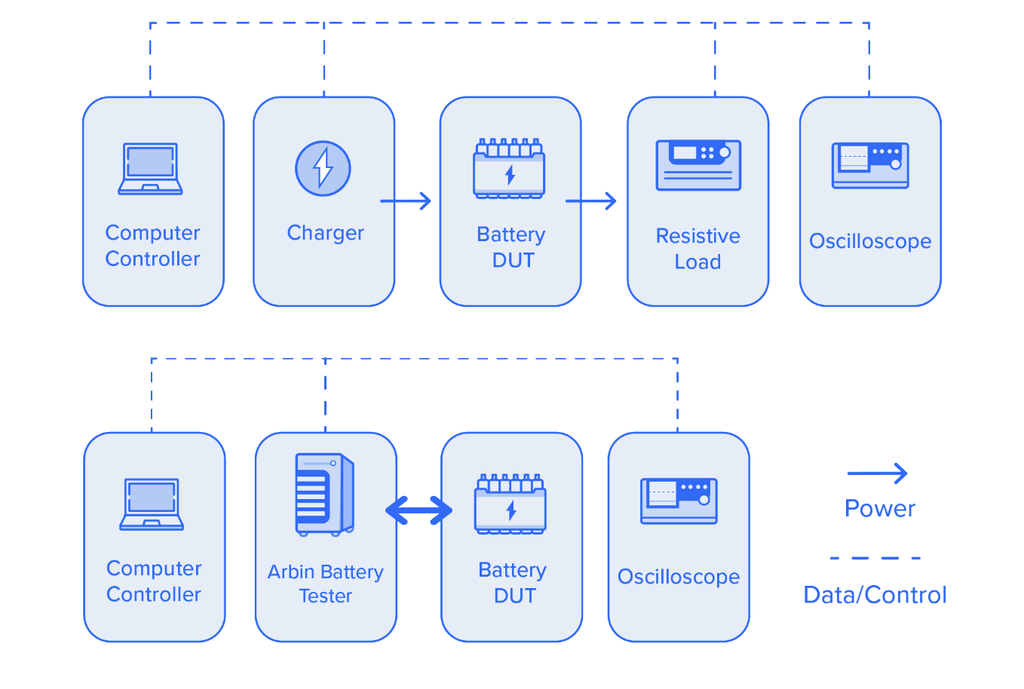
Figure 1: NiZn SubC cell Test Equipment

Investigation and Results

Fig. 2 illustrates the average 50 ms per second discharge voltage and current characteristics of the DUTs 1, 2, and 3 at 1 M, 5 M, and 10 M pulse cycles, respectively. The average discharge voltage decreases with cycle count, with a concomitant increase in average current to maintain the imposed constant power pulse. Table 1 shows the temperature rise for the DUTs at all three cycle life check points. The DUTs were initially connected in a string, which is why the 1 M cycle results for temperature rise above ambient are the same for all three DUTs. The temperature of all DUTs increases with cycling which is consistent with expected aging effects and with the measured reduction in coulombic efficiency.

Total measured Capacity Turnovers (CTOs) for all three DUTs was >2,777 for 10 M cycles of 60 Watts Per Cell (WPC), 50 ms discharges from the 3 Wh NiZn cell. Actual CTOs exceeded this calculated result because average power discharged into the resistive load was greater than 60 WPC. At 10 M cycles, the State of Charge (SOC) was approximately 73% and recoverable State of Health (SOH) was 87%. This equates to the ability to support >2400, 50 ms per second discharge pulses (40 minutes maximum pulse load mitigation) without the need for recharging. Current ramp rate (di/dt) measurements conducted at the University of Texas, Arlington exhibited 2 A/µs response times, which equates to the delivery of 60 WPC (20 Energy Rate) of AI pulse load mitigation power in 25 µs, far exceeding the 1 ms response time requirement.
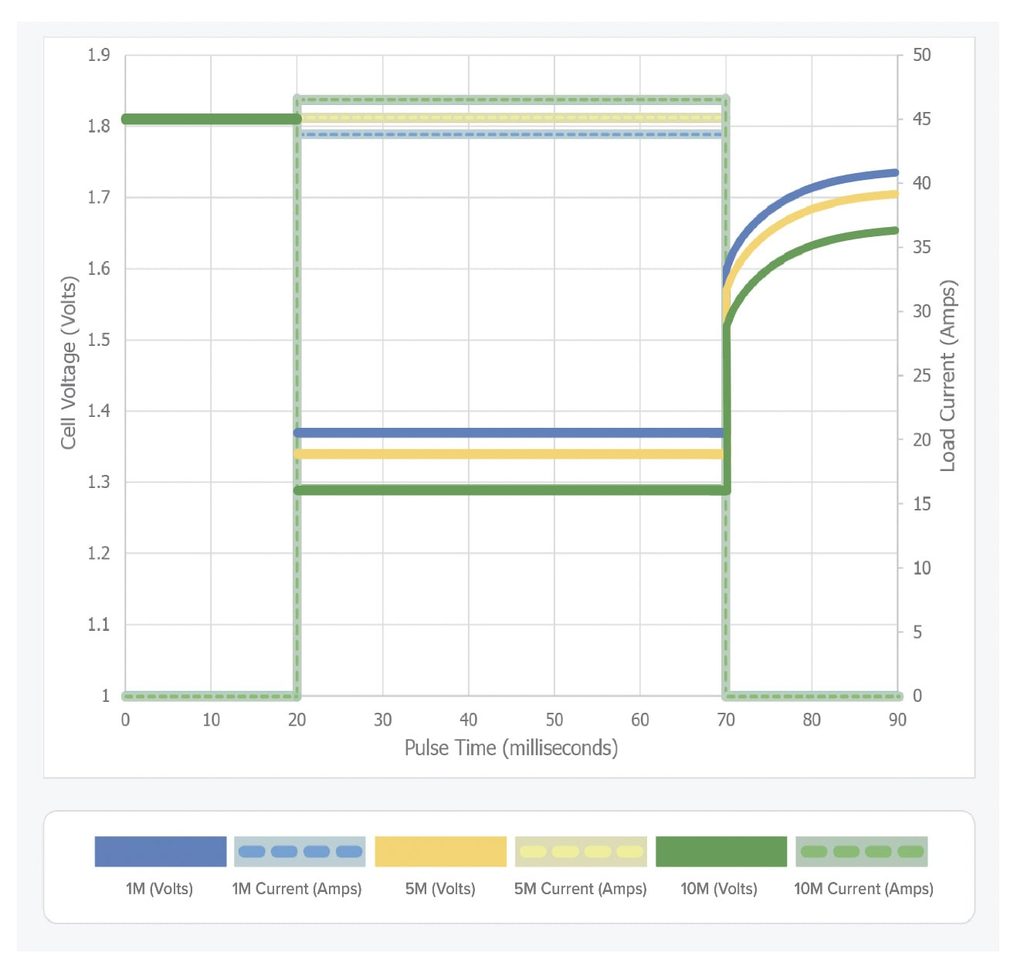
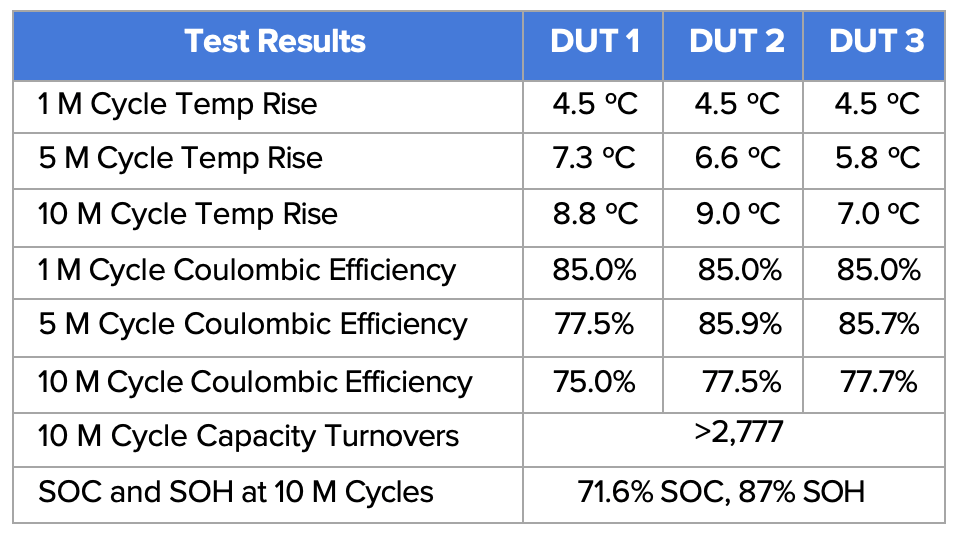
Figure 2: Cell 50 ms per second Cycle Life IV Curves
Table 1: Cell 50 ms per second Cycle Life Performance

Conclusion

GPU-centric data centers need safe, dual-use energy storage technology options to provide both UPS backup power and AI dynamic power mitigation. This research shows NiZn battery chemistry has the power density, energy density, and cycle life potential to economically achieve the desired dual-use AI system performance. The fast response performance of NiZn, combined with exceptional cycle life and a lack of thermal runaway or fire propagation risks, enables the next generation of large-scale and higher power density energy storage options for AI data centers. The next steps for dual-use NiZn battery AI applications research are:

  • Improvement of the NiZn power, response time, and cycle life performance shown in this paper
  • Dual-use BBUs with higher power density and lower costs than single-use BBU alternatives
  • Dual-use ±400 V and 800 V sidecar cabinets without need for DC-DC converters5
  • Integration into power electronics to improve system flexibility, cost, and performance

Acknowledgment

ZincFive extends our gratitude to Dr. David Wetz and the research team at the University of Texas, Arlington Pulse Power and Energy Laboratory for the high frequency test support that made this study possible.

References

  1. Deloitte, “GenAI power consumption creates need for more sustainable data centers,” Deloitte Insights, 2025. [Online]. Available: https://www2.deloitte.com/us/en/insights/industry/technology/technology-media-and-telecom-predictions/2025/genai-power-consumption-creates-need-for-more-sustainable-data-centers.html. [Accessed: Jun. 14, 2025].
  2. Schneider Electric, “Data center power infrastructure for AI applications,” White Paper 126. [Online]. Available: https://www.se.com/ww/en/download/document/SPD_WP126_EN/. [Accessed: Jun. 14, 2025].
  3. ZincFive, “Home,” [Online]. Available: https://www.zincfive.com. [Accessed: Jun. 14, 2025].
  4. Skeleton Technologies, “Why AI data centers need supercapacitors,” Skeleton Blog. [Online]. Available: https://www.skeletontech.com/skeleton-blog/why-ai-data-centers-need-supercapacitors. [Accessed: Jun. 16, 2025].
  5. NVIDIA, “NVIDIA 800V HVDC architecture will power the next generation of AI factories,” NVIDIA Developer Blog, Apr. 2024. [Online]. Available: https://developer.nvidia.com/blog/nvidia-800-v-hvdc-architecture-will-power-the-next-generation-of-ai-factories. [Accessed: Jun. 16, 2025].
Tags:
  • batteries, 
  • data centers, 
  • uninterruptible power supply
  • Featured Papers

    A Comprehensive Guide to the U.S. Codes and Standards for Energy Storage Systems (ESS)

    This white paper provides an informational guide to the United States Codes and Standards regarding Energy Storage Systems (ESS), including battery storage systems for uninterruptible power supplies and other battery backup systems.

    June 28, 2024
    1 / 2
  • Featured Papers

    Climate Impact Profile

    Advanced energy storage solutions are increasingly needed to transition the electricity grid, transportation, building and industrial sectors towards renewable energy sources. ZincFive’s nickel-zinc battery is a high-capacity battery with environmental and safety advantages.

    June 28, 2024
    2 / 2

ZincFive Battery Management System (BMS): Everything You Need to Know (FAQ) 

October 7, 2026

Elevating Battery Management to a Strategic Differentiator

As critical power environments and modern data centers evolve to meet the compute demands of artificial intelligence, high-density GPU racks, and mission-critical cloud workloads, battery infrastructure can no longer rely on generic or background monitoring systems. Power density, system availability, cybersecurity compliance, and operational simplicity are now fundamental requirements for data center operators, UPS OEM channel partners, and system integrators alike. At ZincFive, our commitment to continuous improvement drives us to refine not only our core electrochemistry, but also the intelligence layer that manages it.  

The ZincFive Battery Management System (BMS) is a purpose-built battery management system designed specifically for nickel-zinc (NiZn) technology. Assembled in the U.S., designed and supported entirely in-house by ZincFive across hardware, software, and firmware, every ZincFive BC Series UPS Battery Cabinet ships with the ZincFive BMS as its primary operational interface. Built upon years of real-world NiZn deployment experience in mission-critical facilities, the ZincFive BMS transforms battery management from a back-end technical component into a strategic differentiator.  

This comprehensive FAQ guide provides an in-depth look at the architecture, NiZn-native intelligence, enterprise cybersecurity, AI pulse capability, and deployment benefits of the ZincFive BMS. 

Frequently Asked Questions

FAQ: System Architecture & Hardware Engineering  

What is the ZincFive BMS, and why is it purpose-built for Nickel-Zinc? 

The ZincFive BMS is a purpose-built battery management system designed specifically for nickel-zinc electrochemistry, serving as the foundational intelligence platform across present and future ZincFive battery products.Unlike other platforms calibrated for lead-acid or lithium-ion chemistries, the ZincFive BMS features alarm logic, protection thresholds, and State-of-Charge (SOC) / State-of-Health (SOH) algorithms natively calibrated to the physical behavior of NiZn. Because ZincFive designs, develops, and supports the complete system—including hardware, software, and firmware—customer requirements and system enhancements are addressed directly without third-party delay.  

How does the two-tier hardware architecture simplify system monitoring? 

The ZincFive BMS introduces a streamlined two-tier hardware architecture comprising two primary components:  

  • ZincFive Controller: Serves as the central intelligence hub for the cabinet, aggregating system data, managing communications, executing protection logic, and interfacing directly with building management systems and cloud platforms.  
  • ZincFive Tray Monitor: Monitors battery performance at the tray level,  

This telemetry feeds accurate, real-time SOC and SOH data to both the ZincFive Controller and the UPS.  

How does the architecture reduce installation complexity and hardware overhead? 

In traditional battery monitoring setups, system cabling often requires external unmanaged network switches, data aggregation hardware, and complex intermediate wiring harnesses. The ZincFive BMS eliminates these requirements at the battery system level through built-in Ethernet ports on every cabinet. Cabinets daisy-chain directly to one another via standard network cabling. This streamlined design significantly reduces cabinet wiring complexity, eliminates third-party network hardware overhead, minimizes potential human wiring errors, and decreases total installation time on-site.   


FAQ: NiZn-Native Intelligence & AI Pulse Capability

How do NiZn-calibrated SOC and SOH algorithms benefit operators? 

Approximating State-of-Charge (SOC) or State-of-Health (SOH) using algorithms designed for lead-acid or lithium platforms can lead to inaccurate battery status reporting, unnecessary nuisance alarms, or mismanaged maintenance schedules. By using algorithms calibrated directly to NiZn chemical charge/discharge curves and operational parameters, the ZincFive BMS delivers exact, reliable battery status metrics. Operators gain true visibility into available runtime and battery health without operational complexity.   

Is the ZincFive BMS standard across all ZincFive cabinets? 

Yes. Every ZincFive battery cabinet ships with the ZincFive BMS pre-installed and configured, making it the standard primary interface through which operators, service technicians, and partners interact with ZincFive technology. It acts as the core platform upon which all current and future ZincFive battery innovations are developed.  


FAQ: Enterprise-Grade Cybersecurity & System Integration 

How does the ZincFive BMS meet modern data center cybersecurity standards?   

Rising cybersecurity threats to Operational Technology (OT) and Building Management Systems (BMS) require robust security measures beyond basic network access. The ZincFive BMS is engineered from the ground up with enterprise-grade security features:  

  • Data Encryption: Protects internal and external data transmissions against interception.  
  • Device Authentication: Ensures only authorized devices can communicate with the system.  
  • Hardened Communications: Protects management interfaces against unauthorized network intrusions.  
  • Access Control: Provides a multi-tiered user permissions hierarchy to control access rights for operators, integrators, and service personnel.  

These features deliver an audit-ready, security-compliant battery monitoring infrastructure suitable for hyperscale, enterprise, and colocation requirements.  

What protocols and management interfaces are supported for system integration? 

The ZincFive BMS supports industry-standard industrial and facility communication standards:  

  • Modbus TCP/IP: Standardized communication interface for seamless integration with UPS OEM systems, DCIM platforms, and industrial SCADA networks.  
  • Web User Inerface (UI) An intuitive web interface allowing operators and system integrators to commission cabinets, configure parameters, and manage battery fleets across single or multi-site deployments.  
  • Remote Firmware Updates: Enables secure, centralized firmware updates across the fleet without requiring physical technician intervention at every individual cabinet.  

Conclusion: Purpose-Built Intelligence for Mission-Critical Power 

The ZincFive BMS elevates battery management from a basic background component into a strategic operational capability. By combining NiZn-native algorithms, a streamlined two-tier hardware architecture, built-in AI pulse handling, and enterprise cybersecurity, the ZincFive BMS delivers a smarter, safer, and easier-to-manage battery infrastructure for mission-critical facilities. Fully supported and developed in-house, it reflects ZincFive’s years of operational deployment experience and engineering maturity.  

To learn more about integrating ZincFive BC Series UPS battery cabinets equipped with the ZincFive BMS into your facility, contact our application engineering team today to request product documentation, arrange a technical demonstration, or evaluate system specifications. 

RELATED READING:  

 ZincFive BC Series UPS Battery Cabinets: Everything You Need to Know (FAQ)

Everything You Need to Know About Nickel-Zinc Batteries (FAQ)

Inside the Evolution of the ZincFive BC Series: What’s New and Why It Matters (FAQ)

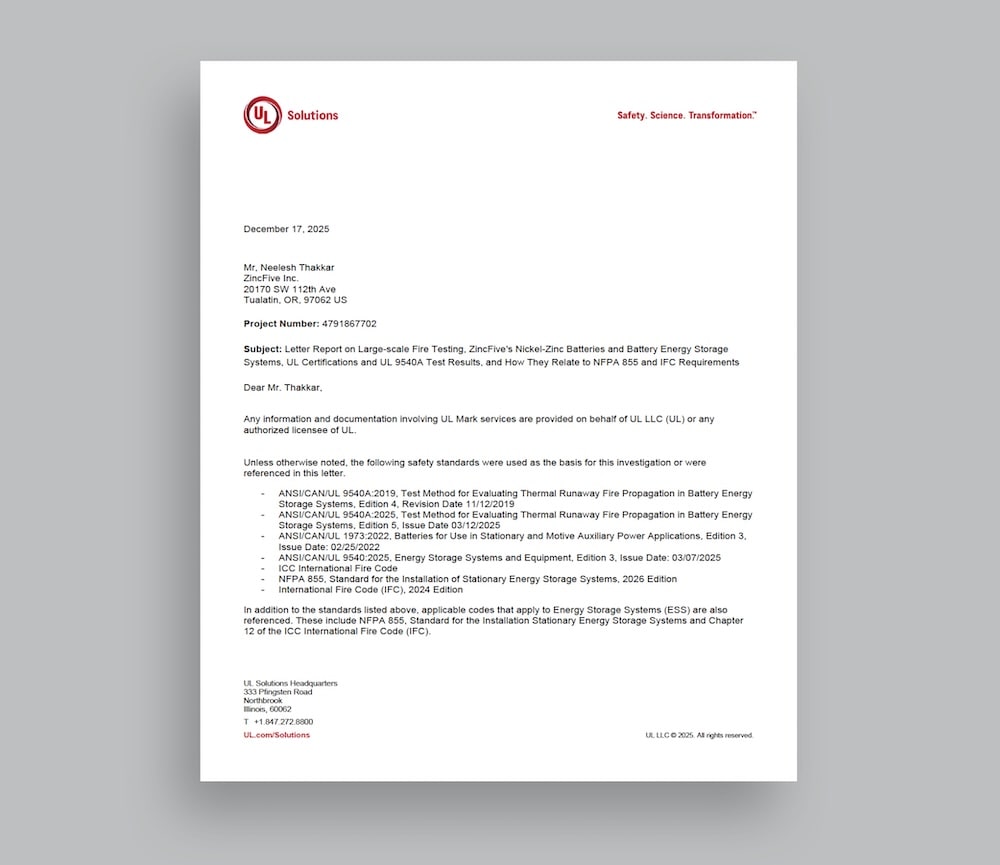
UL Solutions Position on Large Scale Fire Testing for Nickel-Zinc

October 6, 2026

Description

This letter from UL Solutions provides clarification on the application of UL 9540A and Large-Scale Fire Testing (LSFT) requirements for ZincFive’s nickel-zinc battery technology.

During UL 9540A cell-level testing, ZincFive’s nickel-zinc monobloc batteries were subjected to multiple abuse methods intended to induce thermal runaway, including external heating, nail penetration, overcharge, overdischarge, and short circuit. The batteries did not enter thermal runaway under any of these conditions. Based on these results, a Large-Scale Fire Test was not required for nickel-zinc under UL 9540A .

The testing also identified hydrogen generation, a known characteristic of aqueous battery chemistries. Hydrogen accumulation is addressed through established ventilation requirements under applicable UL standards, NFPA 855, and the International Fire Code. As outlined in the letter, the 2026 edition of NFPA 855 exempts qualifying aqueous nickel-based batteries, including ZincFive’s nickel-zinc chemistry, from UL 9540A and large-scale fire testing requirements.

Register to read full letter

December 17, 2025

Mr, Neelesh Thakkar
ZincFive Inc.
20170 SW 112th Ave
Tualatin, OR, 97062 US

Project Number: 4791867702

Subject: Letter Report on Large-scale Fire Testing, ZincFive’s Nickel-Zinc Batteries and Battery Energy Storage Systems, UL Certifications and UL 9540A Test Results, and How They Relate to NFPA 855 and IFC Requirements

Dear Mr. Thakkar,

Any information and documentation involving UL Mark services are provided on behalf of UL LLC (UL) or any authorized licensee of UL.
Unless otherwise noted, the following safety standards were used as the basis for this investigation or were referenced in this letter.

  • ANSI/CAN/UL 9540A:2019, Test Method for Evaluating Thermal Runaway Fire Propagation in Battery Energy
    Storage Systems, Edition 4, Revision Date 11/12/2019
  • ANSI/CAN/UL 9540A:2025, Test Method for Evaluating Thermal Runaway Fire Propagation in Battery Energy
    Storage Systems, Edition 5, Issue Date 03/12/2025
  • ANSI/CAN/UL 1973:2022, Batteries for Use in Stationary and Motive Auxiliary Power Applications, Edition 3,
    Issue Date: 02/25/2022
  • ANSI/CAN/UL 9540:2025, Energy Storage Systems and Equipment, Edition 3, Issue Date: 03/07/2025
  • ICC International Fire Code
  • NFPA 855, Standard for the Installation of Stationary Energy Storage Systems, 2026 Edition
  • International Fire Code (IFC), 2024 Edition

In addition to the standards listed above, applicable codes that apply to Energy Storage Systems (ESS) are also referenced. These include NFPA 855, Standard for the Installation Stationary Energy Storage Systems and Chapter 12 of the ICC International Fire Code (IFC).

The information in this letter is based on the documented test results from ZincFive’s UL 9540A Cell Level Test Reports that were issued by UL Solutions. This information is also based on ZincFive’s ANSI/CAN/UL 1973 Listing (File Number MH62563) for their battery systems and ANSI/CAN/UL 9540 Listing (File Number E540538) for their Energy Storage Equipment Subassembly – DC ESS that utilize ZincFive’s nickel-zinc monobloc batteries and were issued by UL Solutions.

ZincFive manufactures nickel-zinc monobloc batteries for use in stationary applications. Their monobloc batteries were submitted for the UL 9540A Cell Level Test. The batteries were subjected to the following cell abuse methods of UL 9540A to achieve a thermal runaway condition: external thin film heating, nail penetration, overcharge, overdischarge, and short-circuit. After each of the methods, the monobloc batteries did not go into thermal runaway. Based on these results, continued testing under UL 9540A is not required.

The 2026 edition of NFPA 855 exempts aqueous nickel-based batteries as well as lead-acid and aqueous metal-air batteries that are vented or are listed to UL 1973 from UL 9540A testing and large-scale fire testing. ZincFive’s nickelzinc monobloc batteries have an aqueous electrolyte that meets this exemption. Additionally, any battery energy storage system (BESS) or uninterruptible power supply (UPS) or other energy storage application that utilizes this chemistry are exempt from UL 9540A and large-scale fire testing.

The off-gassing from the monoblocs when subjected to the ANSI/CAN/UL 9540A Cell Level Test showed a concentration of hydrogen greater than the LFL (Lower Flammability Limit) of 4.0%. The high concentration of hydrogen is due to the fact that the electrolyte is water-based, and hydrogen is a byproduct of the internal chemical reaction.

As previously mentioned, battery energy storage systems that employ the nickel-zinc monobloc batteries are Listed to ANSI/CAN/UL 1973 and to ANSI/CAN/UL 9540. Both standards require battery systems to employ ventilation openings having a minimum opening area to prevent accumulation of flammable gases within an enclosure. Specifically mentioned is hydrogen gas, due to electrolysis of aqueous electrolytes for applicable battery technologies, such as vented or valve regulated lead acid and nickel batteries.

Chapter 12 of the International Fire Code covers Electrical Energy Storage Systems (ESS). Section 1207.6, “Electrochemical ESS technology-specific protection”, addresses requirements for exhaust ventilation in a room or area with electrochemical ESS. NFPA 855, Paragraph 9.7.6, “Technology-Specific Requirements” also highlights requirements for exhaust ventilation for electrochemical ESS that employ nickel-zinc battery chemistry.

Based on the IFC and NFPA 855, design of an adequate ventilation system shall be coordinated with the site designer to ensure that the exhaust ventilation for the ZincFive battery systems is capable of maintaining a flammable gas concentration below a maximum concentration of 25% of the LFL of hydrogen.

ANSI/CAN/UL 9540A (cell, module, and unit) testing and large-scale fire testing are not required for battery systems that utilize nickel-zinc batteries as indicated in NFPA 855. The ANSI/CAN/UL 9540A Cell Level Test previously conducted on the nickel-zinc monobloc batteries have demonstrated the inability of this chemistry to experience a thermal runaway event.

This concludes the work anticipated for this investigation and we are closing this project with this letter. No samples were provided for this investigation.

If you have any questions on the information provided in this letter or about UL processes, do not hesitate to contact the undersigned.

Sincerely,
LaTanya Schwalb Joe Bablo
Principal Engineer Principal Engineer Manager
Energy & Industrial Automation Energy & Industrial Automation
UL Solutions UL Solutions
LaTanya.Schwalb@ul.com

Tags:
  • batteries, 
  • data centers, 
  • uninterruptible power supply
  • Featured Papers

    A Comprehensive Guide to the U.S. Codes and Standards for Energy Storage Systems (ESS)

    This white paper provides an informational guide to the United States Codes and Standards regarding Energy Storage Systems (ESS), including battery storage systems for uninterruptible power supplies and other battery backup systems.

    June 28, 2024
    1 / 2
  • Featured Papers

    Climate Impact Profile

    Advanced energy storage solutions are increasingly needed to transition the electricity grid, transportation, building and industrial sectors towards renewable energy sources. ZincFive’s nickel-zinc battery is a high-capacity battery with environmental and safety advantages.

    June 28, 2024
    2 / 2

Nickel-Zinc Redefines Power for the AI Era

June 18, 2026
bc 2 ai UPS battery cabinet

Artificial Intelligence (AI) workloads don’t behave like traditional data center loads. They spike, collapse, and surge again in milliseconds. That volatility is forcing a fundamental rethink of how power infrastructure is designed, sized, and deployed.

For decades, uninterruptible power supply (UPS) systems were built around a single moment: the loss of grid power. Everything about their architecture, from battery selection to capacity planning, assumed a relatively stable load interrupted only by rare events.

That assumption no longer holds.

AI Dynamic Power introduces a new operating reality. Workloads can swing from idle to peak demand in milliseconds, with repeated step-load events that stress systems far beyond what they were designed to handle. This is not an edge case. It is becoming the dominant power profile inside modern data centers.

The industry’s default response has been to overbuild. More battery capacity. More headroom. More layers added to absorb volatility.

It works, but at a cost.

According to Data Center Energy Storage Industry Insights Report, total cost of ownership is now a top priority for 84% of operators, while 70% say sustainability criteria are critical in infrastructure decisions. At the same time, 57% cite the need for higher power density in smaller footprints. The margin for inefficiency is shrinking.

Overbuild is a common response today, but it is increasingly difficult to sustain.

What is needed instead is a shift in function. Power systems must move from passive backup to active stabilization. They must absorb and release energy in real time, shaping demand before it propagates through the facility and into the grid.

In effect, data center power infrastructure is no longer just backing up a site; it is enabling the controlled distribution of high-density energy.

ZincFive BC Series UPS Battery Cabinets: Everything You Need to Know (FAQ)

Read Post

This is the role of Immediate Power Solutions.

ZincFive’s BC 2 AI UPS Battery Cabinet is designed to operate at that intersection. It intercepts transient load at the UPS, absorbs high-speed power spikes, and recharges during low-demand intervals, combining dynamic load management and backup runtime in a single system.

This dual-purpose approach eliminates the need to stack separate technologies to solve different parts of the same problem. It also enables operators to stabilize peak demand at the source, rather than designing entire systems around worst-case conditions.

The result is performance without compromise.
                                                                                                                                                                    

The advantage is not only architectural. It is chemical.

Nickel-zinc (NiZn) batteries are purpose-built for high-power, rapid-response applications, delivering consistent performance under repeated, high-intensity cycling. That capability translates directly into more usable power in a smaller footprint, a function of NiZn’s high-power density and ability to deliver peak performance without oversizing infrastructure.

Footprint is no longer a secondary consideration. As AI workloads drive higher power density, space inside the data center becomes a constraint. Systems built on high-power chemistries like NiZn enable operators to deliver more power per square foot, reducing not only physical infrastructure requirements, but also the associated costs across cooling, installation, and long-term operations.

Smaller, more efficient systems are not just a design advantage; they are a total cost of ownership advantage.

Instead of oversizing infrastructure to manage volatility, operators can right-size systems to actual workload demands, reducing both capital expenditure and ongoing operational burden.

Safety is equally foundational.

NiZn uses a non-flammable, aqueous electrolyte and does not present the same thermal risks associated with other battery chemistries. This chemistry-driven safety profile simplifies deployment, reduces the need for complex fire suppression systems, and enables installation closer to critical equipment.

In mission-critical environments, fewer layers of mitigation reduce system complexity and total cost of ownership.

Sustainability follows the same principle of efficiency.

Independent, third-party lifecycle analyses show that nickel-zinc systems can deliver 25-50% lower lifecycle GHG emissions compared to alternative chemistries, with more than 90% of base materials recyclable. More importantly, by reducing the need for excess capacity and redundant systems, these architectures minimize the overall material and energy footprint of the data center itself.

nickel-zinc battery

Everything You Need to Know About Nickel-Zinc Batteries (FAQ)

Read Post

The most sustainable system is not the one with the most components. It is the one that delivers performance, safety, and resilience with the least amount of infrastructure.

The shift toward modular, adaptable infrastructure reinforces this direction. Nearly half of operators already rely on modular power solutions, with many planning to expand that approach as AI demands evolve. Flexibility is becoming as important as performance.

Beyond the data center, utilities are taking notice.

In power-constrained regions, how a facility behaves at the point of interconnection is increasingly important. Large, unmanaged load swings can impact grid stability and influence interconnection timelines. Systems that smooth and stabilize demand internally can change how capacity is allocated and how quickly projects move forward.

AI is not just increasing power demand. It is changing the shape of that demand.

The infrastructure that succeeds will not be defined by how much capacity it can stack, but by how intelligently it can manage power in real time.From backup to immediate power. From overbuild to precision. From static design to dynamic response. Delivering performance, safety, and sustainability without compromise is no longer aspirational. It is the new requirement for powering the AI era.

Previously published in Data Center Knowledge

Author
Brandon Smith
VP of Global Sales and Product
Brandon Smith is the Vice President of Global Sales and Product at ZincFive, where he leads global go-to-market strategy and product direction for the company’s nickel-zinc (NiZn) battery systems, including BC Series battery cabinets and in-rack backup solutions for mission-critical environments. With a background spanning engineering, business development, and product leadership, he brings a practical, end-to-end understanding of how power systems are designed, deployed, and scaled in real-world data center operations. At ZincFive, Brandon partners with hyperscale, colocation, and enterprise operators to deploy power systems that deliver reliability, performance, and sustainability at scale.

Inside the Evolution of the ZincFive BC Series: What’s New and Why It Matters (FAQ)

June 3, 2026

The strongest version of any product is the one that has been through the field. 

With 2 GW of power delivered or contracted globally, the ZincFive BC Series UPS Battery Cabinet has been deployed, cycled, stressed, and maintained across some of the world’s most demanding data center environments. That scale reveals opportunities for improvement that no laboratory test can replicate, and when it does, we act on them. We believe innovation is never finished, which is why every field insight, customer experience, and engineering lesson becomes an opportunity to make a proven product even better. 

The latest evolution of the BC Series reflects that commitment. Key advancements include a next-generation Battery Management System (BMS) with enhanced analytics, controls, and system integration, a 150% stronger monobloc battery design engineered for increased durability and field reliability, and a polymeric battery tray that eliminates conductive paths to further mitigate ground fault risk and enhance electrical safety.

This FAQ provides a detailed look at these advancements, the engineering decisions behind them, and the value they deliver to data center operators. It also addresses common misconceptions about nickel-zinc battery technology and answers the most frequently asked questions about the current generation of ZincFive BC Series UPS Battery Cabinets. 

FAQ: BC Series Product Advancements 

What models are included in the recent BC Series UPS Cabinet upgrades? 

We’ve made holistic, continuous improvement upgrades across the entire BC Series product line to ensure a standardized, high-performance baseline of reliability. Every cabinet shipping now includes the updated BMS, battery case, and tray. To understand the specific advantages that makes our BC Series the ideal choice for modern data center infrastructure, check out our comprehensive BC Series FAQ. 

What changed in the ZincFive monobloc battery case, and why? 

 The ZincFive NiZn monobloc battery case was re-engineered from the lid and seal down to the polymer blend itself. The goal was to reduce internal mechanical stress generated during manufacturing and operation, further enhancing long-term durability and robustness. The result is a case that is approximately 150% stronger than the previous generation. For cabinets that are shipped long distances, handled in the field, and expected to perform reliably for a decade or more, this advancement further strengthens the durability and reliability of every BC Series cabinet that leaves our factory. To learn more about what makes our NiZn technology the perfect fit for modern data center infrastructure, check out our NiZn FAQ. 

Why did ZincFive transition to a new battery tray?  

We transitioned to an injection-molded polymeric battery tray to securely house and electrically isolate every battery. This non-conductive tray significantly reduces the electric potential for stray current to travel, mitigating ground fault risks and neutralizing high-current short-circuit hazards before they can manifest. 

How has the ZincFive Battery Management System (BMS) been improved?  

ZincFive BMS is purpose-built for NiZn technology. The updated system delivers faster, more granular monitoring at the individual battery level — catching deviations earlier and responding to them proportionally before they become operational problems. When something falls outside defined thresholds, the system responds automatically: minor variations trigger informational alerts, more serious conditions disable charging or open the contactor, and critical conditions open the breaker. 

Operators get full alarm history with timestamps, CSV export, and real-time visibility into cabinet status across a deployment. Integration with building management systems, Data Center Infrastructure Management (DCIM) tools, and Supervisory Control and Data Acquisition (SCADA) networks is cleaner and more straightforward than the previous generation. 

Myths and Truths About Nickel-Zinc Technology  

Myth: Ground faults and thermal runaway are the same thing.   

Truth: They are fundamentally different events.  

Nickel-zinc batteries do NOT go into thermal runaway.   

Thermal runaway is an exothermic chemical reaction associated with certain volatile battery chemistries that can result in rapid temperature escalation and propagation between cells. Nickel-zinc chemistry does not exhibit thermal runaway, as validated through UL 9540A testing.  

A ground fault, by contrast, is an unintended electrical connection between stored electrochemical potential and ground. Ground faults can occur in any battery chemistry and are addressed through proper electrical system and cabinet-level safety design.  

Misinterpreting ground faults as thermal runaway can lead to incorrect conclusions about battery safety characteristics.  

Myth: Battery Management System alarms are just nuisance alerts.   

Truth: Modern BMS platforms provide critical operational intelligence.  

Advanced battery systems generate meaningful analytics, alarming, diagnostics, and historical performance data designed to help operators maintain uptime and identify potential issues before they escalate.  

The ZincFive BMS provides real-time visibility into cabinet status, battery health, alarm conditions, and operational trends, helping support more proactive facility operations and faster diagnostics.  

Myth: Nickel-zinc batteries take too long to recharge.   

Truth: Nickel-zinc batteries recharge differently, not slower.  

ZincFive systems intentionally delay recharge initiation until battery temperatures stabilize below defined thresholds. Once recharge begins, nickel-zinc batteries can charge at rates comparable to or faster than alternative technologies while maintaining operational capability at low states of charge.  

Additionally, nickel-zinc batteries can continue delivering maximum power output even at low state-of-charge levels, allowing systems to remain operationally effective before recharge is fully completed.  

Myth: Nickel-zinc battery systems are more expensive.   

Truth: Cabinet cost alone does not reflect total system economics.  

Because ZincFive systems deliver extremely high power density, operators typically require fewer cabinets to achieve the same power requirement compared to alternative technologies. Combined with reduced cooling demands, simplified fire suppression requirements, lower infrastructure complexity, and space savings, the total cost of ownership (TCO) can be significantly lower at the system level. 

RELATED READING:  

 ZincFive BC Series UPS Battery Cabinets: Everything You Need to Know (FAQ)

Everything You Need to Know About Nickel-Zinc Batteries (FAQ)

ZincFive Battery Management System (BMS): Everything You Need to Know (FAQ)

Nickel-Zinc: A Smarter Approach to Lead-Acid UPS Retrofits

June 2, 2026
ZincFive retrofit kit

More than 70% of global data center capacity resides in existing facilities. As permitting delays, power constraints, and extended construction timelines slow new builds, operators are increasingly focused on extracting more value from brownfield environments. In many cases, retrofits offer a faster, more cost-effective path—often 30% to 50% less expensive than new construction—while avoiding the delays tied to greenfield development.

But those advantages only hold if the scope remains contained.

In practice, what begins as a battery replacement can quickly expand into something far more complex. Replacing aging lead-acid (VRLA) systems with alternative chemistries can trigger enclosure redesigns, battery room modifications, additional compliance requirements, and operational disruption, eroding both the economic and timing benefits of retrofit.

This is where many approaches break down.

Nickel-zinc (NiZn) offers a different path. ZincFive’s NiZn Retrofit Kit is designed specifically to upgrade VRLA systems within existing UPS cabinet footprints without forcing broader infrastructure changes. Delivered as a turnkey solution, it enables operators to modernize battery performance while preserving the surrounding environment.

The result is a contained upgrade that improves lifecycle economics, simplifies deployment, and enhances both safety and sustainability.

Why Nickel-Zinc

Nickel-zinc delivers high-power performance in a compact footprint, with up to three times the power density of lead-acid systems. Its non-flammable aqueous chemistry provides a fundamentally safer alternative, while maintaining compatibility with existing UPS environments. Unlike traditional batteries, it is designed for longer service life, reducing replacement frequency and operational disruption. Nickel-zinc also offers a more sustainable lifecycle, with 25–50% lower greenhouse gas emissions compared to lead-acid and lithium-ion, and high recyclability of core materials. The result is a battery technology that improves performance, safety, and sustainability—without tradeoffs.

nickel-zinc battery

Everything You Need to Know About Nickel-Zinc Batteries (FAQ)

Read Post


Why Retrofit Strategies Fail in Brownfield Environments

The challenge in brownfield UPS environments is not replacing batteries, it is doing so without disrupting everything around them.

While like-for-like VRLA replacements are relatively straightforward, transitioning to other chemistries, particularly lithium-ion, often introduces new layers of complexity. Changes to enclosures, fire protection systems, and compliance requirements can extend timelines, introduce permitting delays, and increase execution risk.

Instead of preserving the simplicity of retrofit, these approaches turn into broader infrastructure projects, limiting scalability and increasing uncertainty across sites.

ZincFive’s NiZn Retrofit Kit avoids this by fitting directly into existing VRLA cabinets. It enables a chemistry upgrade without altering enclosure strategy or triggering large-scale facility modifications while keeping retrofit aligned with its original intent: a targeted, repeatable upgrade.

Breaking the Replacement Cycle

Traditional VRLA systems require replacement every five to seven years, creating a recurring cycle of cost, labor, and disruption.

The NiZn retrofit approach breaks that cycle. Backed by a 10-year warranty and up to a 15-year service life, it reduces replacement frequency, lowers maintenance demands, and minimizes planned downtime across multi-system environments.

Over time, the impact extends beyond fewer battery swaps. Avoiding repeated infrastructure changes—such as cooling upgrades, fire suppression modifications, and associated downtime—further reduces total cost of ownership.

Because the system fits within existing cabinet structures, it aligns with established installation models and maintenance workflows, allowing upgrades to proceed within the constraints of live facilities.

Safety, Compliance, and Permitting

Battery selection in retrofit environments extends beyond performance.

Under NFPA 855, lithium-ion and flow batteries may be subject to capacity limits and additional fire protection requirements. These often introduce permitting complexity and extend project timelines, factors that can quickly shift retrofit economics.

Nickel-zinc provides a more straightforward path. ZincFive’s batteries did not exhibit thermal runaway at the cell level in UL 9540A testing and operate within the same regulatory framework as VRLA, helping avoid many of the additional compliance burdens associated with alternative chemistries.

At the same time, nickel-zinc offers a strong sustainability profile, with high recyclability and lower lifecycle environmental impact, supporting broader environmental and operational goals.

Turnkey Retrofit at Scale

For retrofit to scale, it must be repeatable.

The NiZn Retrofit Kit is engineered around a flexible shelf architecture compatible with legacy VRLA enclosures, with units shipped pre-assembled on trays. Installation is streamlined to standard electrical connections, keeping deployment close to a conventional VRLA replacement.

This turnkey model allows service providers and integrators to deploy consistently across sites—without custom engineering at each location—improving predictability, reducing variability, and accelerating timelines.

Higher Power Density, Smaller Footprint

Modern data centers require more power in less space.

With up to three times the power density of VRLA, the NiZn Retrofit Kit reduces the physical footprint required for battery backup while delivering the high-rate performance needed for today’s UPS environments. In some cases, this can eliminate the need for additional cabinets, improving space utilization and overall infrastructure efficiency.

The system is built on the same nickel-zinc cell technology used in ZincFive’s BC Series, providing a foundation already proven in production environments.

How Nickel-Zinc Is Powering the Future of Data Centers

Read Post


The Next Replacement Cycle Is a Strategic Decision

For operators managing aging VRLA infrastructure, the next replacement cycle is no longer just a maintenance event—it is a strategic decision.

ZincFive’s nickel-zinc retrofit kit provides a turnkey path to modernization within existing environments. It enables operators to extend infrastructure life, reduce disruption, lower total cost of ownership, and improve safety and sustainability without rebuilding the facility around the battery system.

Previously published by Datacenter Dynamics

Author
Brandon Smith
VP of Global Sales and Product
Brandon Smith is the Vice President of Global Sales and Product at ZincFive, where he leads global go-to-market strategy and product direction for the company’s nickel-zinc (NiZn) battery systems, including BC Series battery cabinets and in-rack backup solutions for mission-critical environments. With a background spanning engineering, business development, and product leadership, he brings a practical, end-to-end understanding of how power systems are designed, deployed, and scaled in real-world data center operations. At ZincFive, Brandon partners with hyperscale, colocation, and enterprise operators to deploy power systems that deliver reliability, performance, and sustainability at scale.
  • data centers, 
  • high power density, 
  • nickel-zinc, 
  • retrofit kit, 
  • safety

ZincFive BC Series UPS Battery Cabinets: Everything You Need to Know (FAQ)

April 21, 2026
BC 2 AI with Nickel-Zinc

AI is rewriting the power requirements of data centers faster than most infrastructure teams can keep up. GPU racks that used to draw steady, predictable loads now pulse at 120% of rated power in milliseconds—and the conventional answer, oversizing your UPS and bolting on super capacitors, is getting expensive, fast. ZincFive’s nickel-zinc battery cabinets take a different approach: a chemistry that was purpose-built for exactly this kind of high-rate, repetitive cycling, without the thermal runaway risk that makes lithium-ion so infrastructure-intensive to deploy. Whether you’re evaluating your first AI rack deployment or rethinking a data center floor that was designed before AI Dynamic Power existed, this FAQ covers what you actually need to know. 

Why is Nickel-Zinc the Best Choice for Data Center? 

Nickel-zinc (NiZn) is the ‘Goldilocks’ chemistry of the energy storage world, exceeding the power density of lithium-ion and the safety and reliability of lead-acid. Due to the inherent characteristics of the chemistry, it is the best choice for operational flexibility. It can operate at much higher ambient temperatures (up to 35°C/95°F), does not require extensive fire suppression or thermal management that Lithium-ion requires, and has twice the usable life of VRLA. Combining these characteristics with attributes like lighter weight and an industry-leading sustainability profile reduces the operational expenditures associated with housing and maintaining energy storage within data centers, resulting in a lower Total Cost of Ownership (TCO). 

NiZn is a superior choice for NeoCloud facilities and Colocation facilities running a mix of IT and AI loads because it can handle high-rate, shallow cycling extremely well, while still providing traditional IT backup power. With a power density that is twice that of Lithium and three times that of VRLA, NiZn can deliver immediate power and absorb power quickly, which is a necessary capability to support demand profiles of this type.  

For a deeper look at what makes nickel-zinc uniquely suited for modern data center infrastructure, explore our dedicated NiZn FAQ. 

How the BC Series UPS Battery Cabinets Work

The BC Series is designed to function as an “Immediate Power Solution (IPS).” In traditional centralized UPS data centers, the battery cabinets are paired with a megawatt-class UPS. The battery cabinets perform as a high-power, short-duration power support system that bridges the gap between a power disturbance and the activation of backup generators. 

Benefits of the BC Series UPS Battery Cabinets 

The primary benefit of the BC Series is its ability to provide unrivaled power density. In the data center industry, space is directly tied to revenue. By offering a high-power short duration solution in a small footprint, the BC Series allows operators to minimize gray space and maximize white space (server racks).

Beyond spatial efficiency, the BC Series offers unmatched safety. Because the NiZn chemistry is non-flammable and does not exhibit thermal runaway, it eliminates the need for expensive fire suppression systems and specialized cooling infrastructure.

Furthermore, the reliability of the system is superior to legacy technologies; NiZn cells fail in a “closed” state, meaning the battery string remains conductive and operational even if a cell is depleted. This prevents emergency outages often caused by a single failed lead-acid or lithium-ion cell.   

Finally, the sustainability profile of these cabinets helps operators meet aggressive ESG goals, offering a significantly lower carbon footprint and higher recyclability than competing chemistries.  

Product Lineup – BC Series UPS Battery Cabinets 

The BC Series product line has 5 models, each designed for a different operating requirement.  

BC: The first nickel-zinc immediate power solution (IPS) in the BC Series. Featuring ZincFive’s 80Ah high-rate battery, the BC introduced data centers and enterprises to the safe, reliable and sustainable benefits of a nickel-zinc battery solution.

BC 2: The baseline cabinet. High-rate discharge, up to 280 kW, runtime up to 15 minutes. Best for standard UPS backup applications with lower power demands. 

BC 2 – 300X: Extended runtime and higher power than the standard BC 2, up to 325 kW with up to 15-minute runtime. Suited for applications needing more endurance per cabinet. 

BC 2 – 500: Ultra high-rate, under 400 kW, optimized for short-duration (5-minute) high-power applications. Fewer cabinets per MW of power — typically 3 cabinets per MW. 

BC 2 AI: Purpose-built for AI workload environments. Handles both traditional UPS backup and active AI pulse smoothing. Includes AI Pulse Power Intelligence in the BMS and ships with a pulse-specific warranty.  

Inside the Advancements Behind ZincFive BC Series 

Continuous innovation and product refinement are fundamental to how ZincFive engineers, tests, and evolves its technology platforms. Recent advancements across the BC Series portfolio include a next-generation Battery Management System (BMS) with enhanced analytics, controls, and system integration, a 150% stronger monobloc battery design engineered for increased durability and field reliability, and a polymeric battery tray designed to eliminate conductive paths to help mitigate ground fault risk and enhance electrical safety (covered in more detail further in the FAQ section below). 

Frequently Asked Questions

FAQ: NiZn Battery Cabinets vs. Lead-Acid and Lithium-Ion 

How much space can I save using the BC Series verses lead-acid or Lithium Ion systems?  

To deliver 1250kW of power, lead-acid batteries require approximately 240 inches of linear width. Lithium-ion requires about 153 inches. The ZincFive BC 2 cabinets can deliver that same power in just 84 inches of linear width. That is a 65% footprint reduction versus lead-acid. 

For AI-specific deployments, BC 2 AI adds one more cabinet to the footprint, covering the same role as 12 cabinets of competing solutions. 

Does temperature affect the performance of the BC Series?  

NiZn is temperature-resilient. While VRLA batteries lose half their life for every 8°C (15°F) rise above 25°C, ZincFive cabinets are warranted to operate at 35°C (95°F) and can withstand short-term excursions up to 50°C (122°F). 

What if one of the batteries in the BC Series cabinet becomes weak or depleted?  

NiZn batteries fail “closed,” meaning they remain conductive. If a cell reaches the end of its life or is depleted, current continues to flow through the string. This is a significant reliability advantage over VRLA and Lithium-Ion, which fail “open” and take the whole string offline. 

I have legacy lead-acid systems in my data center, can I use nickel-zinc technology in my existing data center without a full replacement project?   

Yes. ZincFive’s Retrofit Kit is a drop-in NiZn replacement designed for compatible UPS cabinets that have top-terminal VRLA batteries. Installation requires no permits, no downtime, and no structural modifications. It is the fastest path to NiZn for customers who are not ready for a full cabinet replacement cycle. 


FAQ: Deployment & Maintenance of BC Series 

How difficult is the installation process? 

The cabinets ship fully assembled and tested. This “plug-and-play” design reduces onsite installation time and prevents the wiring errors that often occur when assembling systems in the field.

What maintenance is required for the BC Series?

Maintenance is minimal. The BMS provides continuous monitoring, so there is no need for the frequent manual voltage and impedance testing required by lead-acid systems. Routine visual inspections and periodic firmware updates for the BMS are typically all that is required.

How much do the cabinets weigh?

A BC Series cabinet weighs about one-third as much as an equivalent lead-acid system. This makes it much easier for them to move with standard warehouse equipment and reduces the structural load on the data center floor.

How many BC Series UPS Battery Cabinets are deployed in the field?

As of April 2026, ZincFive has surpassed 2 gigawatts (GW) in power delivered or contracted globally, reinforcing the growing adoption of nickel-zinc as a preferred alternative to legacy battery technologies in data center infrastructure.


FAQ: Safety and Regulatory Compliance of BC Series

What certifications does the BC Series have? 

Yes on both counts. ZincFive’s batteries have been tested to UL 9540A — the industry standard for thermal runaway propagation — with a confirmed result of no thermal runaway at the cell level. ZIncFive’s NiZn technology has also been tested by leading insurers of data centers, also ran a direct side-by-side test of NiZn with alternatives under identical conditions and did not find evidence of thermal runaway. 

The BC Series certifications include UL 540, UL 1973, UL 1778 , CAN/CSA C22.2 No. 107.3, IEC 62040-1. IEC 62040-2, CE, UKCA and RoHS, with the cabinet being compliant to IBC 2021 · ICC AC156 – S_DS 2.29 for Seismic. 

UL 9540 is the system-level certification most AHJs require for permitting approval. UL 1778 confirms the cabinet meets the UPS equipment standard for mission-critical applications. And the IBC 2021 / ICC AC156 seismic rating gives facility engineers in high-seismic zones a recognized standard to reference during site approval. 

Do these cabinets require specialized fire suppression (like Clean Agent or Pre-action)?

No. Because NiZn chemistry does not exhibit thermal runaway, the fire suppression requirements that NFPA 855 and local AHJs impose on lithium-ion installations — clean agent systems, pre-action sprinklers, fire barriers, and separation distances — are significantly reduced. This simplifies permitting, reduces construction cost, and expands where cabinets can be physically located in the facility.

How does ZincFive’s BMS work, and how does it differ from other Battery Management Systems? 

In alternative systems, the BMS is largely defensive — its primary job is to prevent the battery from doing something catastrophic. Alternatives will be unstable under stress: overcharge it, overheat it, or push it too hard and you risk thermal runaway. The BMS is there to hold the system back from the edge. 

NiZn does not have that edge. Because the chemistry itself doesn’t exhibit thermal runaway, ZincFive’s BMS can focus on optimizing performance, extending battery life, and giving operators genuine visibility into what’s happening inside the cabinet. 

In practice that means continuous monitoring of voltage, temperature, state of charge, and state of health across every cell in the string — not just at the string level, but at the individual battery level. When something falls outside defined thresholds, the BMS responds automatically and proportionally. Minor variations trigger informational alerts. More serious conditions trigger protective actions — disabling charging, opening the contactor, or taking the cabinet offline — without waiting for human intervention. 

Operators also get full alarm history with timestamps, exportable data, and a UI that provides real-time visibility into cabinet status across a deployment. For data center teams, that means fewer surprises, faster diagnostics, and a clear record of system behavior over time. 


FAQ: Sustainability and Lifecycle of BC Series

How does ZincFive BC Series Battery Cabinets help with ESG (Environmental, Social, and Governance) reporting? 

Data centers using ZincFive cabinets can report lower Scope 3 embodied carbon compared to lithium-ion alternatives, based on third-party lifecycle analysis showing meaningful reductions in water footprint, energy footprint, and CO2e during manufacturing. The elimination of fire suppression infrastructure that lithium-ion requires also reduces material consumption and construction carbon. The 10-year battery string warranty means fewer replacement cycles over the facility’s operational life — reducing both material consumption and maintenance labor compared to lead-acid systems that typically require replacement every 3–5 years.

How recyclable are BC Series UPS Battery Cabinets? 

The BC Series UPS Battery Cabinets contain highly recyclable content by weight.  For comparison, commercial-scale lithium battery recycling remains limited (roughly 5% of lithium batteries are recycled); lead-acid recycling uses as much energy to process as the batteries produce. NiZn recycling uses established hydrometallurgical processes and generates a material credit. 

For more information, the BC 2 is registered on the PEP Eco Passport database and holds an Environmental Product Profile certified by UL.  

What types of sustainability endorsements does BC Series have?

NiZn technology, specifically within the ZincFive BC Series, is highly decorated with third-party sustainability endorsements that validate its environmental benefits from production through disposal.

Formal Certifications & Registrations

  • UL Environmental Declaration: The BC Series features a “cradle-to-grave” Life Cycle Assessment (LCA) certified to the UL EPD standard. This UL Environmental stamp validates the total environmental impact of the product throughout its entire lifespan, ensuring our data is transparent and verified.
  • PEP EcoPassport: The products are registered in this prestigious international database, which provides a standardized “Environmental Product Profile” (EPD) specifically for electrical and electronic equipment.

Superior Circularity (End-of-Life)

  • Material Recovery: Unlike lithium-ion systems, which face significant scaling challenges in recycling, NiZn systems allow for the vast majority of materials to be recovered and reused.
  • Recycling Volume: Each BC 2 UPS battery cabinet directs over 600 kg of material back into recycling streams rather than landfills.

Quantifiable Carbon & Energy Savings

The environmental “credits” earned at the end of the BC Series life are substantial:

  • CO₂ Offset: Recycling a single cabinet offsets more than 2 metric tons of CO₂-equivalent emissions.
  • Energy Conservation: Material recovery reduces fossil energy demand by approximately 26,800 MJ per cabinet.

What happens to the NiZn batteries at the end of their life? 

ZincFive has established recycling partnerships globally as part of its take-back program. 100% of nickel and zinc can be recovered and reused in new batteries or other industrial processes, ensuring a circular lifecycle.


FAQ: Continuous Product Innovation  

Continuous innovation and product refinement are fundamental to how ZincFive engineers, tests, and evolves its technology platforms. This philosophy is embedded into every stage of product design, engineering, and manufacturing. 

What recent innovations have been introduced across the BC Series product line?

Recent enhancements across the BC Series product line include next-generation Battery Management System (BMS) upgrades, a redesigned monobloc battery architecture engineered for increased durability, and a new polymeric battery tray system designed to improve electrical isolation and safety. 

These enhancements improve system intelligence, operational visibility, field reliability, manufacturability, and long-term performance across the BC 2, BC 2-300X, BC 2-500, and BC 2 AI product families. 

How has ZincFive advanced its Battery Management System (BMS)?

The latest generation ZincFive BMS expands analytics, controls, monitoring, alarming, and integration capabilities across the cabinet platform. 

The system provides enhanced visibility into battery health, operational status, and long-term performance trends while simplifying integration with building management and facility monitoring systems. The platform is also designed to support future software, analytics, and operational intelligence enhancements as customer requirements evolve. 

Unlike traditional battery monitoring approaches that focused primarily on reactive maintenance, modern BMS platforms provide meaningful operational intelligence designed to support uptime, diagnostics, and proactive system management. 

What changes were made to the BC Series battery design?  

ZincFive optimized several aspects of the monobloc battery manufacturing process, including the lid, seal, molding design, and material formulation. 

These changes significantly reduce in-situ mechanical stress generated during manufacturing and operation, resulting in a monobloc design that is approximately 150% stronger than previous generations. The result is improved durability, resilience, and long-term reliability under real-world operating conditions. 

Why did ZincFive introduce a polymeric battery tray design?  

The polymeric battery tray was developed to improve electrical isolation and reduce conductive pathways within the cabinet. 

Unlike conductive metal tray systems, the polymeric design removes conductive paths between batteries and between the batteries and cabinet structure. This helps mitigate the potential for unintended electrical discharge events associated with ground fault conditions and enhances overall cabinet-level electrical safety. 

Watch the BC Series Product Innovation Overview below for a deeper look at the engineering enhancements, electrical safety design considerations, and operational innovations shaping the latest generation of ZincFive UPS battery cabinets. 


Myths and Truths About Nickel-Zinc Technology 

Myth: Ground faults and thermal runaway are the same thing.  

Truth: They are fundamentally different events. 

Nickel-zinc batteries do NOT go into thermal runaway.  

Thermal runaway is an exothermic chemical reaction associated with certain volatile battery chemistries that can result in rapid temperature escalation and propagation between cells. Nickel-zinc chemistry does not exhibit thermal runaway, as validated through UL 9540A testing. 

A ground fault, by contrast, is an unintended electrical connection between stored electrochemical potential and ground. Ground faults can occur in any battery chemistry and are addressed through proper electrical system and cabinet-level safety design. 

Misinterpreting ground faults as thermal runaway can lead to incorrect conclusions about battery safety characteristics. 

Myth: Battery Management System alarms are just nuisance alerts.  

Truth: Modern BMS platforms provide critical operational intelligence. 

Advanced battery systems generate meaningful analytics, alarming, diagnostics, and historical performance data designed to help operators maintain uptime and identify potential issues before they escalate. 

The ZincFive BMS provides real-time visibility into cabinet status, battery health, alarm conditions, and operational trends, helping support more proactive facility operations and faster diagnostics. 

Myth: Nickel-zinc batteries take too long to recharge.  

Truth: Nickel-zinc batteries recharge differently, not slower. 

ZincFive systems intentionally delay recharge initiation until battery temperatures stabilize below defined thresholds. Once recharge begins, nickel-zinc batteries can charge at rates comparable to or faster than alternative technologies while maintaining operational capability at low states of charge. 

Additionally, nickel-zinc batteries can continue delivering maximum power output even at low state-of-charge levels, allowing systems to remain operationally effective before recharge is fully completed. 

Myth: Nickel-zinc battery systems are more expensive.  

Truth: Cabinet cost alone does not reflect total system economics. 

Because ZincFive systems deliver extremely high power density, operators typically require fewer cabinets to achieve the same power requirement compared to alternative technologies. Combined with reduced cooling demands, simplified fire suppression requirements, lower infrastructure complexity, and space savings, the total cost of ownership (TCO) can be significantly lower at the system level.

RELATED READING:  

Everything You Need to Know About Nickel-Zinc Batteries (FAQ)

Inside the Evolution of the ZincFive BC Series: What’s New and Why It Matters (FAQ)

ZincFive Battery Management System (BMS): Everything You Need to Know (FAQ) 

Immediate Power Solutions (IPS): Definition, Benefits, and Impact

November 15, 2025

Description

The expansion in segmentation and applications is revolutionizing energy storage, moving beyond traditional long-duration storage (hours to days) to include short-duration storage (minutes to microseconds) through advanced mechanical, thermal, electromagnetic, and electrochemical technologies.

Long duration energy storage applications have traditionally been labeled ESS (Energy Storage Systems) and long duration electrochemical (battery) technologies logically evolved to be known as BESS (Battery Energy Storage Systems). In this electrified everywhere age, short duration energy storage segments and applications have expanded rapidly based on the surge in use cases and new enabling technologies.

The widening gap between long and short-duration energy storage segments and applications, along with the emergence of new technologies tailored to each, necessitates the creation of a new category aptly named Immediate Power Solutions (IPS).

A requirement of short duration energy storage applications is the availability of instantaneous, high-rate power for a range of minutes to microseconds. The IPS group of technologies and applications are vital to the growth of all power infrastructure with many of these applications being categorized as critical, mission critical, or life safety.

A fundamental difference between long and short duration energy storage is that storage capacity (i.e., energy density) is the highest value characteristic in long duration applications and discharge capacity (i.e., C rate or power density) is the highest value characteristic in short duration applications.

This white paper delves into the significance, definition, and impact of IPS as a category.

Register to read full paper

Introduction

The relentless advancement of modern technology is made possible by an electrical infrastructure that supplies the essential power and energy needed for future progress. Macro trends in computing, AI, mobile devices, and the electrification of transportation have combined to bring power generation and delivery to the forefront of public consciousness. 

The electrification of everything is now spurring innovation across all segments of electrical infrastructure, emphasizing the importance of energy storage. What was once in the background is now at the forefront. New requirements and technologies are building on each other, resulting in an explosion of new products and applications.

Examples abound:

  • Rooftop solar installations are now large enough to cause load defection.
  • In the opposing direction, significant increases in electricity demand are jolting the global electric utility industry out of traditional growth rates.
  • Energy storage technologies—mechanical, thermal, electromagnetic (capacitors), or electrochemical (batteries/fuel cells) —are rapidly advancing.

Among these, energy storage, batteries in particular, have swiftly transitioned from being overlooked for nearly a century to becoming the focus of major technological advancements, global investments, massive deployments, and even Nobel prizes. Batteries for electric vehicles (EVs), long-duration grid storage, and short-duration applications are now a central concern for technologists, general users, and governments worldwide.

This paper focuses on the expansion in segmentation and applications beyond traditional long duration energy storage (hours to days) to include short duration energy storage (minutes to microseconds) utilizing mechanical, thermal, electromagnetic, and electrochemical technologies. Note that all energy storage and short duration power systems share the characteristics of being charged and discharged when desired. This is distinct from power conversion systems which have no storage: examples of converters are wind turbines, solar panels, or diesel generators that convert wind, solar, and chemical power into electricity. Long duration energy storage applications have traditionally been labeled ESS (Energy Storage Systems) and long duration electrochemical (battery) technologies logically evolved to be known as BESS (Battery Energy Storage Systems). In this electrified everywhere age, short duration energy storage segments and applications have expanded rapidly based on the surge in use cases and new enabling technologies.

A fundamental difference between long and short duration energy storage is that storage capacity (i.e., energy density) is the highest value characteristic in long duration applications and discharge capacity (i.e., C rate or power density) is the highest value characteristic in short duration applications. Short duration energy storage examples here include mission critical power backup systems, commercial and military pulse power applications, and short duration industrial and grid power stabilization support. The widening gap between long and short-duration energy storage segments and applications, along with the emergence of new technologies tailored to each, necessitates the creation of a new category aptly named Immediate Power Solutions (IPS).

Under the umbrella of IPS, the short duration energy storage stakeholder community can now effectively identify and differentiate their requirements from the long duration labels used incorrectly due to lack of an alternative. An example of the effect of this overlap is the ever-growing family of lithium-ion rechargeable battery technologies, which are inherently high energy density chemistries. These products work well in long duration energy storage applications such as renewables grid storage and EVs. Due to familiarity or cost, or both, they have also been applied to short duration applications where high energy density is a poor fit or even a disadvantage. In this new era, one-size-fits-all application of battery technologies has become obsolete in favor of optimizing products and technologies for the specific applications.

The IPS category helps short duration users, technology providers and services suppliers self-identify and come together to optimize short duration energy storage implementations.

Immediate Power Solutions Defined

A requirement of short duration energy storage applications is the availability of instantaneous, high-rate power for a range of minutes to microseconds.

Applications for this type of short duration power delivery exist across multiple verticals including industrial and manufacturing, data center, electric vehicle charging infrastructure and even support of long duration energy storage and generation products as they ramp up to peak power. The IPS group of technologies and applications are vital to the growth of all power infrastructure with many of these applications being categorized as critical, mission critical, or life safety. The presence of instantaneous, high-rate power in a mission critical application requires the additional characteristic of safety for IPS technology to remain viable. Further, mission critical applications demand high reliability along with sustainability, which are now prime factors in all short duration energy storage use cases.

Given the above characterization, Immediate Power Solutions (IPS) can be concisely defined as: safe, reliable and sustainable, short duration, high-rate power technologies for critical applications.

Immediate Power Solutions (IPS) address the needs of electrical applications that are defined by the power levels and typically short duration response time required to maintain desired system operation. For example, a 480 VAC three phase UPS system in a datacenter that must provide 1 Megawatt of power within 10 milliseconds and for up to 2 minutes to assure the successful start and synchronization of backup generators. This is an Immediate Power Solution that requires AC and DC power, real and reactive power considerations, and energy typically discharged by mechanical, electromagnetic, or electro-chemical means. IPS is not a new idea, but frequency and severity of problems caused by power outages in computer systems, electric vehicles, medical monitoring equipment, etc. brought forth the importance of the category. As is often the case, new IPS challenges spur the development of new, innovative IPS solutions. Moreover, each new IPS solution will not only address its target application but will also be applicable to a range of similar challenges and applications.

Immediate Power Solutions (IPS): Applications and a Look Ahead

Now that we have defined Immediate Power Solutions (IPS), we can explore their current state and future directions. As illustrated in the previous section, there are multiple technological approaches to IPS, each with its own set of performance characteristics. This allows users to identify applications that fall into the IPS category and compare their requirements to the available technologies.

Understanding the IPS distinction is critical for matching the right technology to the use case. While the world demands more power and energy, not every application requires a long-duration Energy Storage System. Using ESS technology where it’s not the best fit is inefficient. Conversely, employing an IPS product for a 4-hour grid support application is impractical and costly.

Technologies within the IPS space are designed to serve immediate high-power needs for applications such as EV charging infrastructure, mechanical temporary overloads, critical power for data centers, and artificial intelligence (AI)/machine learning (ML) power influxes.

These use cases would be inadequately served by ESS products. For instance, ZincFive nickel-zinc (NiZn) batteries can bridge short duration power gaps (1 minute to 5 minutes) in multi-megawatt data center installations with a small footprint, and supercapacitors can fill millisecond voids for electronics to ensure proper function. There are IPS products tailored to each of these needs.

All examples discussed in this paper so far are existing applications with new challenges associated with immediacy, power, and duration. Consider electronic power supplies used for many applications. Power supplies typically have surge power specifications supported on a limited basis by internal capacitance. When placed in an IPS application, traditional power supplies don’t have the ability to respond properly to the new high variability loads. The additional challenges of meeting reliability requirements while safely supporting high variability loads create the opportunity to look to IPS technology as a solution.

New IPS technologies like batteries that exhibit superior power and energy density compared to capacitors, similar cycle life, and simple battery management characteristics are gaining traction in applications like power supply surge capacity.

Another common future IPS application example is microgrid power stabilization when exposed to unpredictable loads and availability of power sources. Microgrids have the same problems as utility scale grids, but on a small enough scale that introduction of a single stabilizing microgrid component can make a significant overall performance difference. IPS technology enables easy management of hybridized fuel cells, diesel, and gas turbine generators by allowing any type of generator to provide immediate power at “time zero.”

A final unique category of the issues IPS can resolve includes unrecognized problems associated with the status quo. Consider a factory that sequentially starts all its process motors to avoid power surges that exceed utility-supplied power limits. An IPS solution can help this factory achieve the operational efficiency benefits of simultaneous motor starting. This type of IPS application example highlights the direct benefits of an IPS solution to both known problems and yet-to-be discovered future IPS application opportunities.

Conclusion

The IPS technologies and applications are essential for the expansion of power infrastructure, with many being classified as critical or mission critical. Clearly differentiating between ESS and IPS is just as significant for addressing power infrastructure challenges effectively. Consequently, this significance necessitates its own distinct category in the market to address the unique demands and ensure robust solutions for these vital applications. Selecting the right IPS solution for each application is essential as we continue to face and solve the power issues created by and resolved by the developing IPS infrastructure.

Tags:
  • batteries, 
  • data centers, 
  • uninterruptible power supply
  • Featured Papers

    A Comprehensive Guide to the U.S. Codes and Standards for Energy Storage Systems (ESS)

    This white paper provides an informational guide to the United States Codes and Standards regarding Energy Storage Systems (ESS), including battery storage systems for uninterruptible power supplies and other battery backup systems.

    June 28, 2024
    1 / 2
  • Featured Papers

    Climate Impact Profile

    Advanced energy storage solutions are increasingly needed to transition the electricity grid, transportation, building and industrial sectors towards renewable energy sources. ZincFive’s nickel-zinc battery is a high-capacity battery with environmental and safety advantages.

    June 28, 2024
    2 / 2

How Nickel-Zinc Is Powering the Future of Data Centers

June 19, 2025

Data centers face the challenge of balancing industry demands—telecom, e-commerce, AI, and more—with rising sustainability expectations. As critical infrastructure, even seconds of downtime can mean lost data and revenue, making reliable UPS backup systems essential.

For many decades, lead-acid batteries remained at the core of backup power, providing the reliability and power required for an always-on world, at an accessible price point. The absence of shipping restrictions, and ability to provide back-up power, additionally ensured this chemistry’s stake in the market. Though, despite its legacy of consistency, the low-energy density, space requirements, and shorter lifespan of lead-acid left an opening for a more compact and long-lasting solution.

Lithium-ion chemistry, commonly used in consumer products, quickly gained popularity as a UPS solution due to its high-energy density and long lifespan. Able to provide the same power at a much smaller size and weight than lead-acid, lithium-ion remains a strong contender and stalwart choice in many data centers. However, safety remains a major concern with this chemistry, as demonstrated by incidents across several industries. Any number of factors, including high temperature or cell failure, can lead to thermal runaway and the output of flammable, toxic gases. This, in addition to the challenging extraction process of a limited lithium supply, provided an opportunity for alternative chemistry. In the last decade, nickel-zinc (NiZn) has challenged traditional solutions as a highly power-dense technology that meets the reliability demands of a data center, while touting many safety, cost, and sustainability benefits. 

Higher Power, Smaller Footprint

Nickel-zinc delivers up to three times the power density of legacy chemistries, at half the footprint and one-third of the weight. Every square foot in a data center is valuable, and as power demands continue to increase, packing more into a smaller space translates to better performance with significant cost savings. The industry-leading footprint of NiZn ultimately allows data centers to allocate more space to revenue-generating equipment.  

ZincFive BC 2 UPS Battery Cabinet with AI

Nickel-Zinc: High Power Density Backup Power for Data Centers

Read Post

Safety and Reliability at a Lower TCO

NiZn chemistry offers exceptional operational flexibility, withstanding a broader temperature range than lead-acid or lithium-ion – without the risk of thermal runaway at the cell level. This inherently safe, non-toxic chemistry reduces the need for intensive cooling, lowering operational costs while offering critical peace of mind for data center operators.

Nickel-zinc batteries deliver reliable performance without compromising safety. Unlike lithium-based chemistries – which may require system shutdowns via battery management systems (BMS) to prevent thermal events – NiZn systems remain operational even when individual cells become weak or depleted, ensuring uninterrupted performance and minimal downtime.

Thanks to their stable chemistry, NiZn batteries don’t force a tradeoff between reliability and safety. Even in the event of a cooling system failure, they continue to operate safely and are warrantied for their full-service life. They’re also warrantied to perform reliably during occasional temperature excursions up to 50°C, providing added assurance in high-demand environments.

Fewer replacements, less downtime, and a safer solution – nickel-zinc is a chemistry data centers can count on, year after year.

Sustainability & Low Carbon: A Chemistry That Cares

In addition to the safety, reliability, and cost-effectiveness that data centers require from their UPS backup system, sustainability is an increasing priority for many organizations. According to the 2025 Data Center Energy Storage Industry Insights Report, 87% of respondents consider sustainability a priority in their power system buying decisions, up from 81% in 2024. Moreover, 72% indicated that their organization’s sustainability efforts have resulted in cost reductions, nearly a 10% increase from last year.

ZincFive’s nickel-zinc (NiZn) technology offers a sustainable, recyclable backup power solution for data centers with a significantly lower climate impact than lead-acid and lithium, as validated by third-party analysis. With an operating life up to 3x longer than lead-acid batteries, NiZn reduces waste and replacement frequency. Plus, NiZn’s lifetime greenhouse gas emissions are 25-50% lower than lead-acid or lithium-ion alternatives, making it a safer, more environmentally responsible choice. Nickel-zinc solutions use common, highly available, conflict-free materials which are also highly recyclable. In fact, nickel and zinc are four to five times more abundant in the Earth’s crust than lithium and lead respectively, making NiZn a safer, more sustainable, and resource-efficient energy storage choice.

BC 2 data center AI

AI’s impact on data center power requirements

Read Post

Navigating AI’s Power Surges

Perhaps the greatest demand of the moment, though, is the rapid adoption of AI. In the new normal, an AI-powered search requires at least ten times the energy of a traditional web search, meaning there is a large increase in the overall power demand required to support AI properly. Another growing challenge is the frequent, rapid power spikes, up to millions per month, that stem from GPU clusters operating at peak capacity. These pulses require a high-density, fast-discharging and re-charging chemistry to mitigate and reduce impacts on the grid. Despite its overall reliability, this is where lead-acid becomes less effective, as the chemistry does not perform well in high cycle environments. Lithium on the other hand responds well to typical battery cycling but struggles to maintain that advantage under these high-power peak load spikes. Of the three solutions, nickel-zinc chemistry clearly demonstrates the most effective load management for rapid pulsing present in AI load profiling. With its high-power density and rapid discharge capabilities, NiZn solutions can provide high bursts of power with near instantaneous response time. 

A Lasting Future with Nickel-Zinc

While legacy battery chemistries remain competitive in UPS backup systems, nickel-zinc—proven with millions of operating hours across multiple industries—has emerged as a strong, viable solution in the rapidly evolving data center landscape. In short, nickel-zinc batteries offer a long life, reliable performance, and low maintenance while delivering higher power density in a smaller footprint. Capable of managing the peak loads of today’s automated world, NiZn batteries reduce footprint, ensure safety, support corporate sustainability goals, and lower the total cost of ownership—all without compromise.

Previously published by Data Center Dynamics

Tags:
  • batteries, 
  • data centers, 
  • immediate power, 
  • nickel-zinc, 
  • power density, 
  • safety, 
  • sustainability, 
  • uninterruptible power supply
Author
Tod Higinbotham, ZincFive CEO
Tod Higinbotham
CEO, ZincFive
Tod has a strong track record of successfully growing advanced materials companies in the energy storage, semiconductor, and solar markets. He served as Executive VP/GM for ATMI and led the rapid growth of the company, which sold more than $1 billion. Tod was an executive member of the leadership team at Advanced Silicon Materials, a world leader in high-purity silicon materials, the business that was sold to REC to form their solar materials business. He was formerly the CEO of PowerGenix, the company that pioneered the novel nickel-zinc battery technology that has become the core of ZincFive’s solution portfolio.

The Critical Shift to Immediate Power Solutions (IPS) in Data Centers

May 19, 2025

In the ever-evolving landscape of energy storage, the choice of battery chemistry is a pivotal factor that can determine the success of our applications. Different battery technologies offer distinct advantages and disadvantages: some excel in delivering high power for brief intervals, while others provide sustained energy over longer durations at lower discharge rates. Additionally, these batteries vary in safety, reliability, and sustainability. As energy storage becomes increasingly integral to the 21st-century economy, it is critical to select the most appropriate battery solution for each application, rather than relying on a one-size-fits-all mentality.

Traditionally, long-duration energy storage has been encapsulated within the framework of Energy Storage Systems (ESS), commonly used for applications such as powering electric vehicles and consumer electronics. Conversely, short-duration applications, which prioritize immediate power output, fall under the category of Immediate Power Solutions (IPS). IPS applications demand instantaneous, high-rate power for durations ranging from minutes to microseconds. These solutions are vital across various sectors, including industrial manufacturing, electric vehicle charging infrastructure, and support systems that help long-duration energy storage and generation products achieve peak power.

One of the most fitting applications for IPS is in the realm of uninterruptible power supply (UPS) systems, where a battery backup temporarily supplies power for a system until a longer-term power source comes online. These short but pivotal moments can have significant financial and reputational implications, especially for data centers.

AI's impact on power

AI’s impact on data center power requirements

Read Post

With the exponential growth of consumer electronics, IoT, and AI, our reliance on digital infrastructure is at an all-time high, making data center uptime absolutely critical. To meet these escalating demands, data center operators must contend with workplace safety, rising real estate costs, and increased sustainability expectations from regulators, investors, and clients. These pressures are driving a transition toward backup power solutions that deliver greater reliability, space efficiency, and environmental responsibility.

The mounting demands on data centers have created an environment where reliance on traditional UPS systems, often powered by ESS, results in suboptimal performance. While legacy IPS solutions have historically been used, they frequently compromise on benefits such as footprint and sustainability. Fortunately, innovative IPS battery solutions have emerged, designed specifically to provide immediate, high-rate power essential for managing the critical transition between an outage and backup generator activation—all while improving on the shortcomings of legacy IPS and current ESS systems.

Lead-acid batteries, a long-standing IPS technology, are often seen as a familiar and reliable choice for UPS in data centers. However, they are increasingly recognized for their limitations in size, sustainability, and power output, making them less suitable in today’s context. Many data centers have relied on lead-acid due to its affordability and widespread availability in the past, but the good news is that enhanced alternatives are now on the market.

Lithium-ion batteries are another option frequently considered by data center operators for UPS systems, and their popularity grew due to their favorable weight and size compared to lead-acid solutions. As real estate costs escalate, the physical footprint of UPS systems has become a critical concern for operators looking to optimize space for revenue-generating servers. However, lithium-ion batteries are still classified as ESS because their limited discharge rates are designed to mitigate safety concerns, thus failing to fully meet the immediate power needs of UPS systems.

In contrast, nickel-zinc batteries present a compelling IPS solution, boasting significantly higher power density than both lead-acid and lithium-ion batteries. They can deliver immediate power to an entire data center while occupying less than half the space of traditional lead-acid systems, thus allowing for additional servers and increased revenue potential. Furthermore, nickel-zinc batteries enhance reliability and sidestep the thermal runaway risks associated with lithium batteries. Their lifecycle emissions are also substantially lower than those of lithium and lead-acid alternatives, with reduced resource consumption and environmental impact.

BC 2 immediate power

The Race to Reduce UPS Runtime: Why Backup Battery Selection Matters More Than Ever

Read Post

Transitioning to advanced battery technologies previously posed challenges, including compatibility issues and high retrofitting costs, often stemming from the specialized safety equipment required for lithium-ion systems. However, recent developments in UPS cabinets designed for seamless integration into existing setups have changed the game. These innovations facilitate the straightforward replacement of ESS with IPS, enabling data centers to enhance efficiency, safety, and sustainability without the need for extensive system overhauls.

As data centers continue to be crucial players in driving the global economy, reliable UPS systems are indispensable.  The need to increase power density and eliminate outage risks efficiently has shown that we need to look beyond traditional ESS systems. With the barriers to adopting advanced technology now addressed, data centers are well-positioned to maximize their reliability, safety, and efficiency by embracing Immediate Power Solutions in their UPS systems.

Previously published by Data Centre Review

  • batteries, 
  • data centers, 
  • immediate power, 
  • nickel-zinc, 
  • power density, 
  • safety, 
  • sustainability, 
  • uninterruptible power supply
Author
Tod Higinbotham, ZincFive CEO
Tod Higinbotham
CEO, ZincFive
Tod has a strong track record of successfully growing advanced materials companies in the energy storage, semiconductor, and solar markets. He served as Executive VP/GM for ATMI and led the rapid growth of the company, which sold more than $1 billion. Tod was an executive member of the leadership team at Advanced Silicon Materials, a world leader in high-purity silicon materials, the business that was sold to REC to form their solar materials business. He was formerly the CEO of PowerGenix, the company that pioneered the novel nickel-zinc battery technology that has become the core of ZincFive’s solution portfolio.