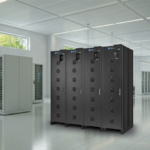
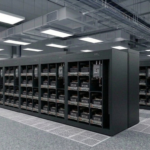
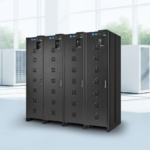
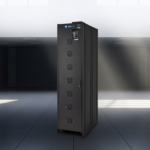
Its chemistry is inherently safe: nickel-zinc operates across a wide temperature range without the risk of thermal runaway, even during cooling failures. It’s sustainable: with a lower lifecycle carbon footprint, recyclable materials, and a 3x longer lifespan than lead-acid. And it’s resilient: remaining operational even when individual cells weaken, ensuring continuous power delivery without forced shutdowns.
Data Center Rack Power Trends and What They Mean for Build-Outs
November 25, 2025

The insatiable global appetite for compute – intensified by the AI era – continues to drive exceptional demands on data center infrastructure, prompting many enterprises to build new data centers and/or retrofit existing ones.
This rapid deployment of new data centers presents challenges as companies grapple with availability of real estate, utilities and power, particularly in prime locations. Addressing these challenges means rethinking traditional infrastructure approaches and data center designs with a particular focus on rack power demands.
Power density has become a critical metric for data center operators in a world where some GPUs designed for AI workloads consume more power at peak usage than the average American household. Open AI estimates that the compute demand for AI training has doubled every 3.4 months since 2012, seven times the speed of Moore’s Law, and shows no signs of abating. This unprecedented pace of growth is driving a surge in power requirements, highlighting the need for data centers to support high-density racks that can accommodate powerful equipment.
The Growing Need for Higher Rack Power Density
U.S. data center power consumption is expected to reach 35GW by 2030, nearly doubling its 2022 level, according to a report by Newmark. Hyperscalers such as Amazon Web Services, Microsoft Azure and Google Cloud, which support large-scale cloud and enterprise workloads, will need to handle 40-60kW per rack or more to keep pace with demand.
In this environment, power density emerges as a strategic imperative for data center operators looking to future-proof their infrastructure.

Data Center Modernization: Building for Power Density
Read PostChallenges in Prime Locations
The constraints of power and real estate in high-demand regions amplify the importance of density. As the world’s largest data center market, Northern Virginia exemplifies these challenges. With over 300 data centers and more than 2,500 MW of capacity, the region has reached a saturation point. In 2022, development paused due to limited power availability and growing opposition to new projects encroaching on residential areas and historic sites.
This scenario is not unique to Northern Virginia. Across the globe, data center operators grapple with similar constraints in prime locations. The solution lies in maximizing power efficiency and density to extract more value from existing facilities and minimize the need for expansive real estate footprints.
Benefits & Challenges of High-Density Racks
By increasing power per rack, data centers gain flexibility in how they expand and optimize resources. Higher-density racks allow operators to either scale up within an existing footprint or reduce the total number of racks required to achieve the same computing output.
For organizations looking to maximize their existing space, deploying high-density racks enables more computing power within the same physical footprint. This approach allows data centers to delay or even avoid costly real estate expansions while making better use of available infrastructure. It also supports growth without requiring major modifications to the facility layout. However, this strategy intensifies challenges related to heat dissipation, necessitating advanced cooling solutions such as liquid cooling or rear-door heat exchangers, which come with higher upfront costs and ongoing maintenance demands. Additionally, increased power density may push existing electrical infrastructure beyond its capacity, requiring upgrades to power distribution units, circuit breakers, and backup power systems.

Artificial intelligence is challenging rack power density and battery backup
Read PostAlternatively, organizations can choose to reduce the number of racks while maintaining the same overall capacity. This consolidation minimizes the data center’s physical footprint. However, concentrating more workloads into fewer racks also increases the potential impact of failures, making redundancy and reliability planning even more critical.
The Role of Uninterruptible Power Supply
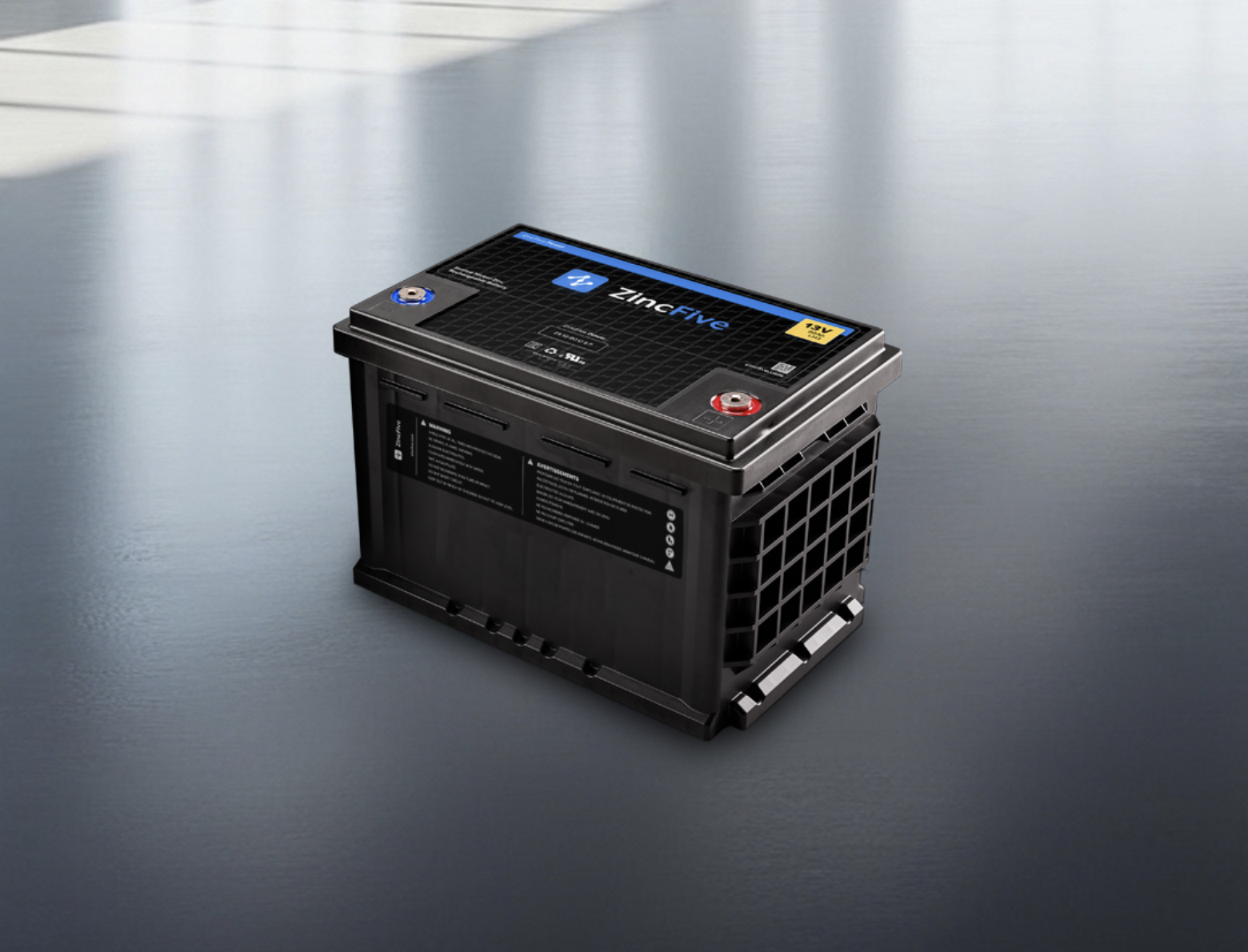
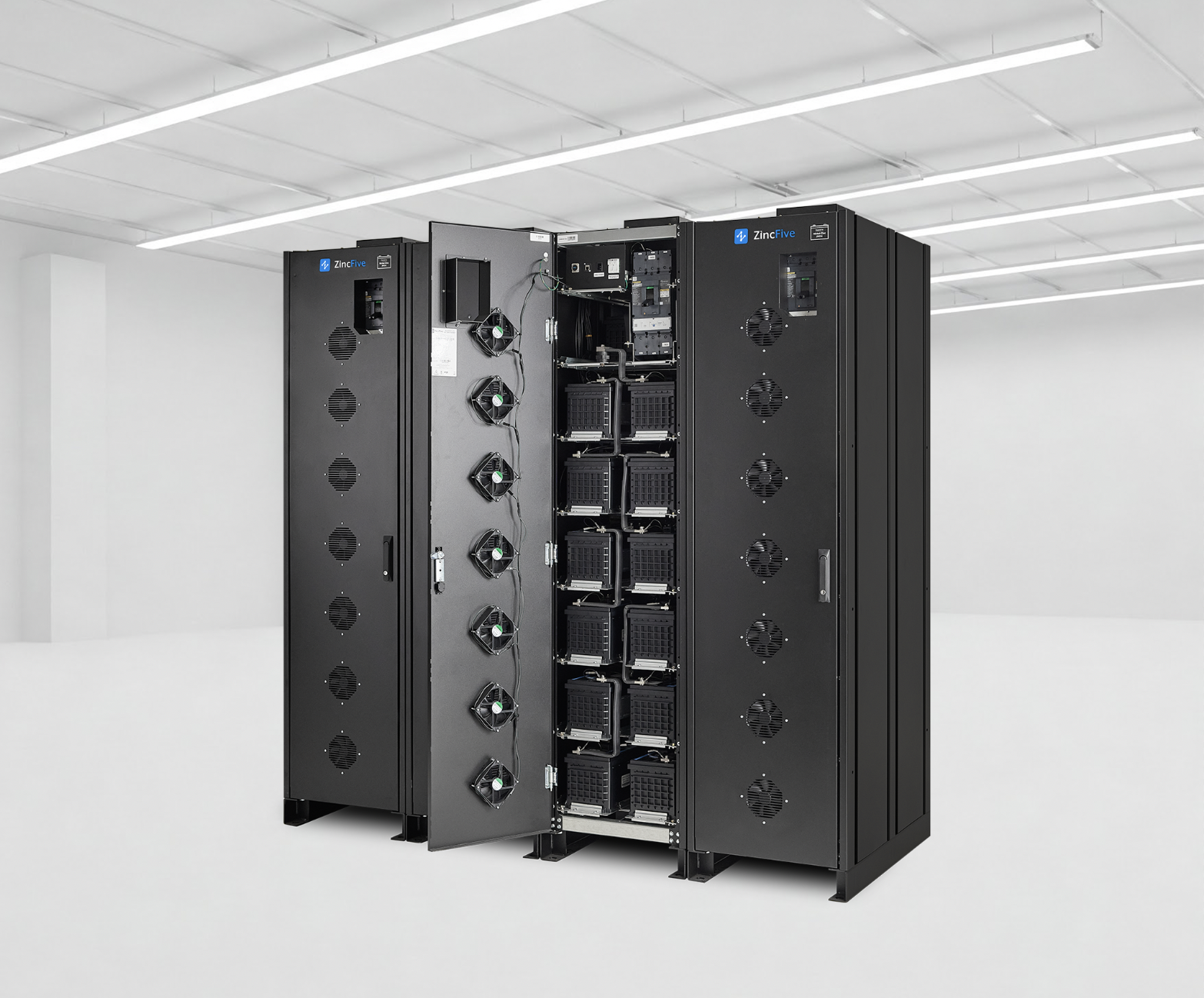
As data centers continue to support higher and higher power densities, the role of uninterruptible power supply (UPS) systems becomes increasingly critical. UPS systems ensure seamless operations during power outages, safeguarding critical data and applications. Traditionally, lead-acid batteries have been the go-to choice for UPS systems. However, advancements in battery technology are presenting more efficient and sustainable alternatives, such as nickel-zinc (NiZn) battery technology. ZincFive is leading the charge in nickel-zinc immediate power solution innovation, with batteries that deliver three times the power density of traditional lead-acid batteries in a smaller footprint, making them ideal for high-density environments. Their ability to discharge at high rates of power ensures rapid response times, a crucial factor for maintaining continuity in mission-critical operations.
Nickel-zinc batteries are also non-flammable, eliminating the risk of thermal runaway at a cell level — a common safety concern with lithium-ion batteries. This intrinsic safety reduces the need for extensive cooling and fire suppression systems, which traditionally consume around 40% of a data center’s power. By minimizing these auxiliary systems, data center operators can achieve significant improvements in power usage efficiency (PUE), and lower overall Total Cost of Ownership (TCO).
Moreover, NiZn immediate power technology offers a sustainable, recyclable backup power solution for data centers with a significantly lower climate impact than lead-acid and lithium, as validated by third-party analysis. Nickel-zinc’s lifetime greenhouse gas emissions are 25-50% lower than lead-acid or lithium-ion alternatives, making it a safer, more environmentally responsible choice.
How Nickel-Zinc Is Powering the Future of Data Centers
Read PostPreparing for the Future
As the digital era evolves, high-density racks, efficient power solutions, and forward-thinking designs will enable tomorrow’s data centers to deliver the performance and reliability that modern businesses require. As AI, HPC, and other advanced workloads continue to drive the need for more power in increasingly compact spaces, embracing innovative solutions like alternative battery chemistries and newer technology solutions, such as nickel-zinc, as well as adopting complementary strategies, data center operators can build future-ready infrastructure.
Previously published by EnergyTech

Rethinking Power for AI-Driven Data Centers
November 3, 2025
Artificial intelligence is rewriting the rules of data center power. The very systems designed to fuel the next wave of innovation are also pushing infrastructure to its breaking point.
The AI Dynamic Power Challenge
Today’s AI systems – from large language models to GPU clusters and high-performance training environments – don’t behave like traditional IT workloads. Instead of drawing steady, predictable power, AI workloads are highly variable. GPU clusters can spike to 15 times their idle power levels in milliseconds, sometimes multiple times per second.
These rapid surges, known as AI Dynamic Power, strain infrastructure in ways legacy systems were never built to handle. Traditional UPS and grid power are designed for smooth curves, not jagged spikes. When these surges hit, their impact ripples from the data center floor all the way back to the grid, creating instability, degrading power quality, and elevating operational risk.
Maintaining stability now requires addressing volatility where it begins – inside the data center. That means intercepting the spikes before they become problems.
Why Batteries Are the First Line of Defense
When utilizing a centralized UPS design, placing high-performance batteries capable of supporting AI dynamic load at the UPS level allows data centers to absorb surges in real time. These batteries can respond in milliseconds, smoothing out sharp pulses and recharging during low-demand periods.
But not all battery chemistries are created equal.
- Lead-acid is reliable but struggles with rapid cycling and short lifespan under AI loads.
- Lithium-ion is energy dense but faces heat buildup, accelerated degradation, and thermal-runaway risk under repeated surges.
- Supercapacitors respond quickly but can’t sustain runtime or scale cost-effectively.
What the AI era demands is a power solution built for responsiveness, reliability, and responsibility – not tradeoffs.
Nickel-Zinc: A Smarter Chemistry for Modern Power
Nickel-zinc (NiZn) technology is purpose-built to meet the demands of modern data centers. With up to three times the power density of legacy chemistries at half the footprint and one-third the weight, NiZn delivers the high-intensity performance required to handle AI surges – in real time.
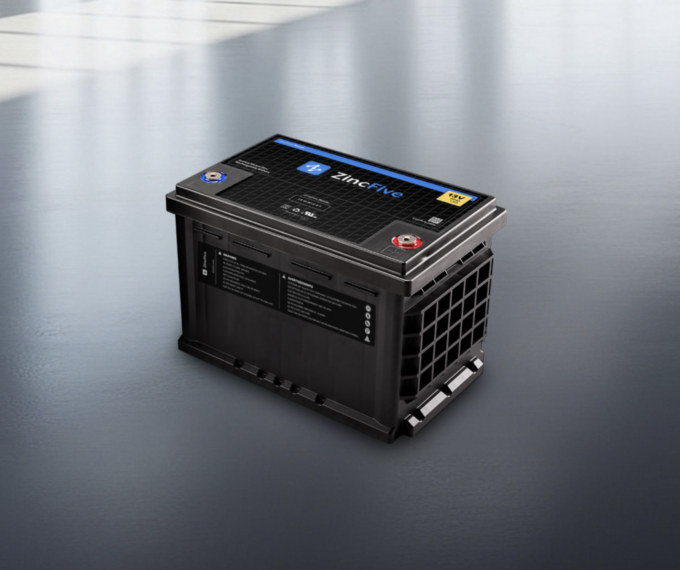
NiZn also minimizes infrastructure risk and cost by eliminating the need for complex fire suppression systems and specialized thermal management—reducing both insurance exposure and operational overhead.
For data centers navigating the convergence of rising energy demands and tightening sustainability goals, NiZn provides power without compromise. And because NiZn technology aligns with emerging ESG reporting frameworks and new regulatory standards such as the EU Battery Regulation and Scope 3 emissions accounting, it helps operators meet both performance and compliance targets.
BC 2 AI: Engineered for the AI Power Profile
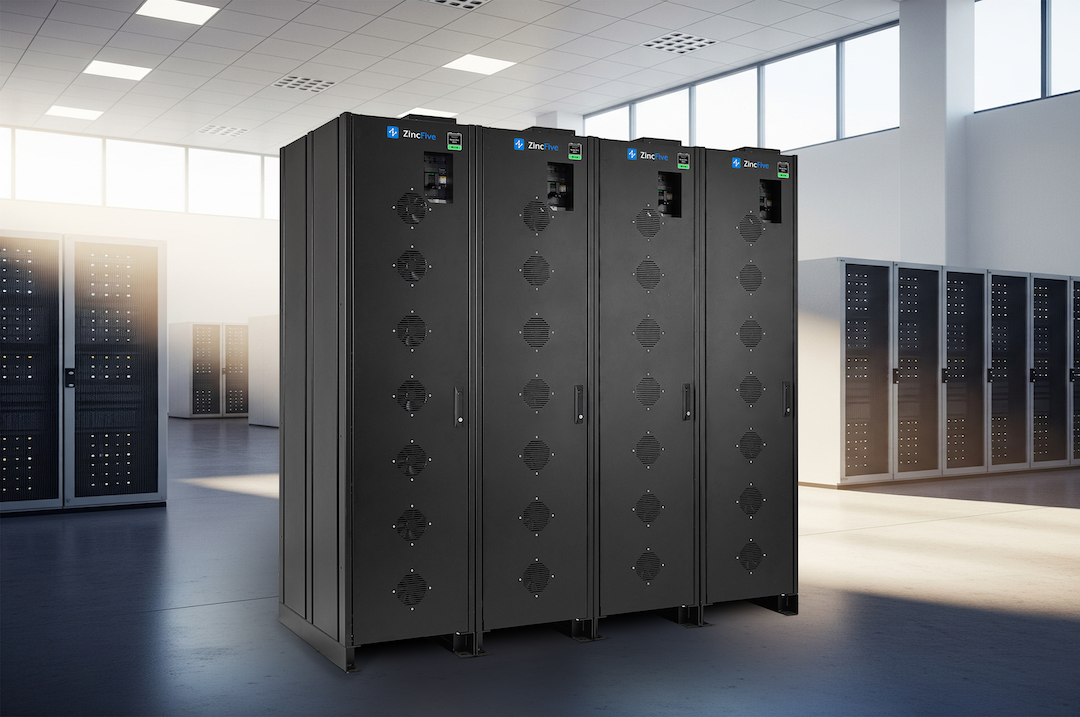
Building on its proven BC Series platform, ZincFive developed the BC 2 AI, a breakthrough nickel-zinc battery cabinet designed specifically to address the unique power demands of AI workloads.
BC 2 AI features:
- Advanced BMS, enabling millisecond response to transient surges.
- Dual-use capability for both fast pulse handling and runtime assurance in one compact system.
- A 90Ah NiZn battery supporting thousands of high-intensity cycles with a 10-year warranty.
- A field-upgradable design to evolve with future AI power requirements.
- Seamless integration with megawatt-class UPS systems – backward and forward compatible to minimize disruption.
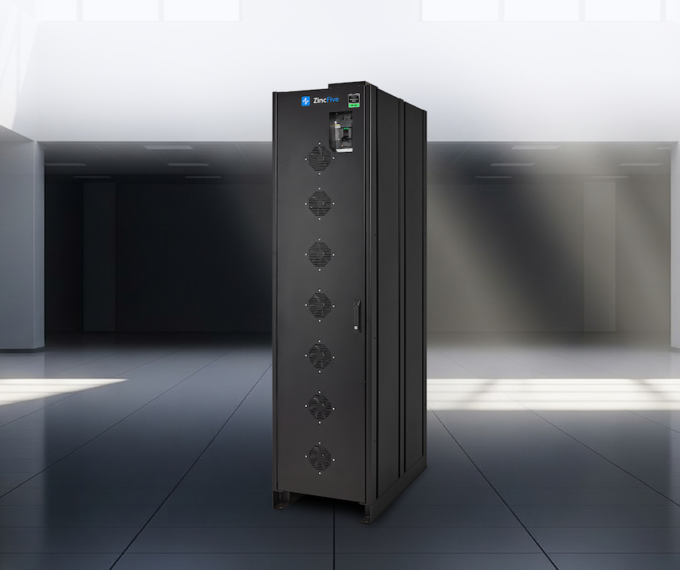
This modular architecture allows operators to scale capacity as AI workloads evolve, avoiding full system replacement and reducing long-term lifecycle costs. BC 2 AI also integrates smoothly with modern grid-interactive UPS platforms and renewable sources, enabling more flexible and sustainable energy strategies.
A More Sustainable Foundation
Sustainability is no longer a side note in power strategy – it’s a business driver. According to the 2025 Data Center Energy Storage Industry Insights Report, 87% of operators now rank sustainability as a top consideration when selecting power systems and nearly three-quarters (72%) report significant or moderate cost reductions from their organization’s sustainability efforts.
NiZn aligns with this shift:
- 25-50% lower lifecycle emissions compared to lithium-ion or lead-acid
- Highly recyclable materials with global availability
- Fewer replacements, reducing waste and downtime
- No hazardous or flammable components, simplifying operations and compliance
By combining high-performance power with a low-carbon, circular design, NiZn technology allows data centers to meet operational and sustainability goals in parallel – not at the expense of one another.
And as AI power profiles intensify, NiZn’s unique combination of high power density, safety, and sustainability positions it as a future-proof foundation for next-generation data center infrastructure.
Ready for What’s Next
AI isn’t just changing workloads; it’s reshaping the energy architecture of the data center. The transition ahead isn’t incremental – it’s fundamental. Power systems can no longer just sit in the background waiting for outages. They need to actively support daily operations, smooth out unpredictable spikes, and keep infrastructure stable as demand grows.
NiZn technology and BC 2 AI are built for this new reality: fast, scalable, and sustainable by design. As AI becomes the backbone of digital infrastructure, the ability to stabilize power in real time will separate those who keep pace from those who lead.
The future of data center power won’t be defined by compromise – but by chemistry built for what comes next.
For full details, read ZincFive’s press release announcing the product.
Previously published by Data Center Frontier
Can Europe build AI infrastructure without breaking its grid?
August 26, 2025
When Ireland’s EirGrid imposed a de facto moratorium on new data centers, it sent shockwaves through the European tech industry. But this wasn’t an isolated policy decision – it was a canary in the coal mine, signaling a harsh reality that European artificial intelligence (AI) infrastructure builders can no longer ignore. The continent’s aging power grids simply weren’t designed for the explosive energy demands of AI, and traditional backup power solutions are proving inadequate for the task ahead.
Unlike the Middle East, where nations like the UAE and Saudi Arabia are building AI infrastructure from the ground up with seemingly unlimited resources, Europe faces a more complex equation: how to satisfy AI’s voracious appetite for power while navigating strict regulatory frameworks, aging grid infrastructure, and increasingly ambitious sustainability targets.
The numbers tell a stark story. European data center IT load demand is projected to grow from 10 GW in 2023 to approximately 35 GW by 2030, representing a staggering 20% compound annual growth rate. Even more sobering, data center loads could account for 15-25% of all electricity demand across the continent. Despite European data centers expanding capacity by 22% this year, operators still struggle to meet surging demand.
The strain is already visible across key markets. In Ireland, data centers are projected to reach 30% of electricity demand by 2030 – a trajectory that forced EirGrid’s hand. The pressure has become so intense that data centers are now connecting to gas networks to circumvent power network constraints, highlighting just how desperate the situation has become.
This crisis is reshaping Europe’s traditional data center geography. Major hubs such as FLAPD have reached their highest capacity, leading to electricity grid and land constraints, with Amsterdam and Dublin – once cornerstones of the traditional markets – now facing significant expansion limitations. Meanwhile, Germany has emerged as a powerhouse, experiencing its strongest year ever for data center development in 2023, while the UK now dominates upcoming European capacity with nearly 25% of total power capacity.
Balancing AI’s potential and pitfalls in data center operations
Read PostThe fundamental challenge isn’t just about generating more power – it’s about rethinking how power is delivered and managed at the infrastructure level. Traditional UPS systems were designed for predictable workloads with gradual power ramps, but AI workloads are different. They demand microsecond-scale power delivery to handle unpredictable spikes, while GPU racks are expected to reach 600kW within 12 to 24 months. This reality is forcing European operators to innovate on the power layer, transforming UPS from simple backup systems into intelligent energy management platforms.
This innovation imperative is converging with Europe’s increasingly stringent regulatory environment, creating both challenges and opportunities for forward-thinking operators. The new Energy Efficiency Directive requires data center operators to report key performance indicators to a European database, adding transparency requirements that will expose inefficiencies in legacy power systems. Additionally, the EU Battery Regulation 2023/1542 mandates 95% recycling rates for lead-acid batteries and 70% for lithium-ion by 2035, while starting in 2026, all batteries in the EU must carry labels detailing manufacture date, weight, and chemical composition.
These regulatory pressures aren’t obstacles – they’re catalysts for adopting next-generation power solutions that can meet both performance and compliance requirements simultaneously.
Enter Immediate Power Solutions (IPS), a category of power delivery architecture designed specifically for the AI era. Unlike traditional UPS systems that ramp power over seconds or minutes, IPS delivers high-rate power instantly, allowing infrastructure to be right-sized for normal operation while still meeting peak demand during microsecond-scale power surges.
The Critical Shift to Immediate Power Solutions (IPS) in Data Centers
Read PostZincFive is pioneering this approach with its nickel-zinc (NiZn) battery technology, which offers compelling advantages for European operators navigating the continent’s unique constraints. The technology’s pulse-ready architecture aligns perfectly with AI workloads’ unpredictable power demands, giving it a unique capability to support AI dynamic workloads and traditional IT demands, in one compact footprint.
Its superior safety profile alleviates European concerns around lithium-ion thermal runaway in urban deployments, while its sustainability advantages make NiZn battery systems a practical choice for environmentally friendly data center operations. With a design that prioritizes recyclability, NiZn battery technologies are well suited to meet the requirements of the EU Battery Regulation and align well with circular economy principles. The environmental impact of NiZn is also significantly lower than other battery chemistries, producing up to approximately 50% lower greenhouse gas emissions than lead-acid or lithium-ion batteries over their lifetime. To support operators in meeting sustainability benchmarks, ZincFive provides detailed life cycle assessments like the EcoPassport PEP declaration, to inform greener infrastructure decisions. Additionally, the technology operates at ambient temperatures, reducing cooling demands that strain already constrained power budgets, while its high power density in an industry-leading footprint makes it ideal for space-constrained European facilities.
Perhaps most importantly for European operators, ZincFive’s solutions are designed to integrate with existing UPS architectures, making them retrofit-friendly for facilities that can’t afford complete infrastructure overhauls for both traditional and AI pulse load applications. The company’s partnerships with industry leaders such as Vertiv and ABB demonstrate a collaborative, system-level approach that European integrators will find appealing.
This partnership-oriented strategy is crucial as European operators seek solutions that work within existing ecosystems rather than requiring wholesale infrastructure replacement. With carbon footprint labeling requirements arriving in 2026 and recycling mandates tightening through 2035, operators need power solutions that are forward-compatible with evolving regulations.

How Nickel-Zinc Is Powering the Future of Data Centers
Read PostAs Europe grapples with the intersection of AI ambitions and energy realities, the continent faces a choice: innovate on the power layer or fall behind in the global AI race. Traditional approaches that worked for legacy workloads simply won’t scale for AI’s demands, especially within Europe’s regulatory and grid constraints.
The operators who recognize this reality and embrace advanced power solutions like ZincFive’s NiZn technology won’t just solve immediate infrastructure challenges – they’ll position themselves as leaders in sustainable, safe, and high-performing AI infrastructure. In a region where regulatory compliance and environmental responsibility are non-negotiable, the power layer may well become Europe’s secret weapon in building AI infrastructure that’s both powerful and sustainable.
The question isn’t whether Europe can build AI infrastructure without breaking its grid – it’s whether European operators will embrace the innovations that make it possible.
Previously published by DataCenter Dynamics

How Nickel-Zinc Is Powering the Future of Data Centers
June 19, 2025
Data centers face the challenge of balancing industry demands—telecom, e-commerce, AI, and more—with rising sustainability expectations. As critical infrastructure, even seconds of downtime can mean lost data and revenue, making reliable UPS backup systems essential.
For many decades, lead-acid batteries remained at the core of backup power, providing the reliability and power required for an always-on world, at an accessible price point. The absence of shipping restrictions, and ability to provide back-up power, additionally ensured this chemistry’s stake in the market. Though, despite its legacy of consistency, the low-energy density, space requirements, and shorter lifespan of lead-acid left an opening for a more compact and long-lasting solution.
Lithium-ion chemistry, commonly used in consumer products, quickly gained popularity as a UPS solution due to its high-energy density and long lifespan. Able to provide the same power at a much smaller size and weight than lead-acid, lithium-ion remains a strong contender and stalwart choice in many data centers. However, safety remains a major concern with this chemistry, as demonstrated by incidents across several industries. Any number of factors, including high temperature or cell failure, can lead to thermal runaway and the output of flammable, toxic gases. This, in addition to the challenging extraction process of a limited lithium supply, provided an opportunity for alternative chemistry. In the last decade, nickel-zinc (NiZn) has challenged traditional solutions as a highly power-dense technology that meets the reliability demands of a data center, while touting many safety, cost, and sustainability benefits.
Higher Power, Smaller Footprint
Nickel-zinc delivers up to three times the power density of legacy chemistries, at half the footprint and one-third of the weight. Every square foot in a data center is valuable, and as power demands continue to increase, packing more into a smaller space translates to better performance with significant cost savings. The industry-leading footprint of NiZn ultimately allows data centers to allocate more space to revenue-generating equipment.

Nickel-Zinc: High Power Density Backup Power for Data Centers
Read PostSafety and Reliability at a Lower TCO
NiZn chemistry offers exceptional operational flexibility, withstanding a broader temperature range than lead-acid or lithium-ion – without the risk of thermal runaway at the cell level. This inherently safe, non-toxic chemistry reduces the need for intensive cooling, lowering operational costs while offering critical peace of mind for data center operators.
Nickel-zinc batteries deliver reliable performance without compromising safety. Unlike lithium-based chemistries – which may require system shutdowns via battery management systems (BMS) to prevent thermal events – NiZn systems remain operational even when individual cells become weak or depleted, ensuring uninterrupted performance and minimal downtime.
Thanks to their stable chemistry, NiZn batteries don’t force a tradeoff between reliability and safety. Even in the event of a cooling system failure, they continue to operate safely and are warrantied for their full-service life. They’re also warrantied to perform reliably during occasional temperature excursions up to 50°C, providing added assurance in high-demand environments.
Fewer replacements, less downtime, and a safer solution – nickel-zinc is a chemistry data centers can count on, year after year.
Sustainability & Low Carbon: A Chemistry That Cares
In addition to the safety, reliability, and cost-effectiveness that data centers require from their UPS backup system, sustainability is an increasing priority for many organizations. According to the 2025 Data Center Energy Storage Industry Insights Report, 87% of respondents consider sustainability a priority in their power system buying decisions, up from 81% in 2024. Moreover, 72% indicated that their organization’s sustainability efforts have resulted in cost reductions, nearly a 10% increase from last year.
ZincFive’s nickel-zinc (NiZn) technology offers a sustainable, recyclable backup power solution for data centers with a significantly lower climate impact than lead-acid and lithium, as validated by third-party analysis. With an operating life up to 3x longer than lead-acid batteries, NiZn reduces waste and replacement frequency. Plus, NiZn’s lifetime greenhouse gas emissions are 25-50% lower than lead-acid or lithium-ion alternatives, making it a safer, more environmentally responsible choice. Nickel-zinc solutions use common, highly available, conflict-free materials which are also highly recyclable. In fact, nickel and zinc are four to five times more abundant in the Earth’s crust than lithium and lead respectively, making NiZn a safer, more sustainable, and resource-efficient energy storage choice.
AI’s impact on data center power requirements
Read PostNavigating AI’s Power Surges
Perhaps the greatest demand of the moment, though, is the rapid adoption of AI. In the new normal, an AI-powered search requires at least ten times the energy of a traditional web search, meaning there is a large increase in the overall power demand required to support AI properly. Another growing challenge is the frequent, rapid power spikes, up to millions per month, that stem from GPU clusters operating at peak capacity. These pulses require a high-density, fast-discharging and re-charging chemistry to mitigate and reduce impacts on the grid. Despite its overall reliability, this is where lead-acid becomes less effective, as the chemistry does not perform well in high cycle environments. Lithium on the other hand responds well to typical battery cycling but struggles to maintain that advantage under these high-power peak load spikes. Of the three solutions, nickel-zinc chemistry clearly demonstrates the most effective load management for rapid pulsing present in AI load profiling. With its high-power density and rapid discharge capabilities, NiZn solutions can provide high bursts of power with near instantaneous response time.
A Lasting Future with Nickel-Zinc
While legacy battery chemistries remain competitive in UPS backup systems, nickel-zinc—proven with millions of operating hours across multiple industries—has emerged as a strong, viable solution in the rapidly evolving data center landscape. In short, nickel-zinc batteries offer a long life, reliable performance, and low maintenance while delivering higher power density in a smaller footprint. Capable of managing the peak loads of today’s automated world, NiZn batteries reduce footprint, ensure safety, support corporate sustainability goals, and lower the total cost of ownership—all without compromise.
Previously published by Data Center Dynamics