Both new models are powered by a new ultra-high-rate monobloc battery from ZincFive – the Z5 13-90. This ultra-high-rate battery, while maintaining the same case size as its predecessor, now delivers even greater energy and power thanks to a boost in both amp-hour capacity and a remarkable 50% increase in maximum current carrying capability.
2023 Highlights: Product Launches, Partnerships and Good Chemistry
December 21, 2023

Across the data center industry, 2023 brought sustainable backup power solutions into the spotlight. Industry-wide conversations and events placed renewed priority on technologies that balance safety, cost efficiencies, and environmental impact. As the effects of climate change become more severe, milestones from COP28 to rising private sector commitments gave momentum to accelerate the adoption of cleaner, safer backup capacity.
As 2023 comes to a close, we want to take this opportunity to highlight ZincFive’s major achievements, milestones, and collaborations that made the year such a success!
Breakthrough Products Offer Unmatched Power Density
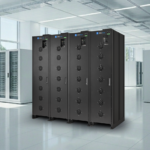
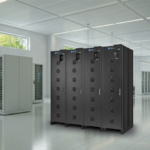
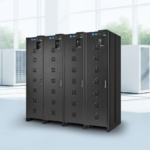
This year, we proudly launched two new product offerings within the BC Series UPS Battery Cabinet lineup: the BC 2 – 500 and the BC 2 – 300X. We also announced a new ultra-high-rate battery, the Z5 13-90, which will power the new battery cabinet models.
The latest BC 2 – 500 and BC 2 – 300X products demonstrate our unwavering commitment to delivering the most compact footprint per kilowatt, showcasing consistent advancements with each new release, and surpassing the already industry-leading footprint of ZincFive’s original BC 2 battery cabinet.

We also expanded our presence in the electric vehicle (EV) charging and microgrid markets through our EV Charging solution collaborations with Kaizen Clean Energy (KCE) and Advanced Power & Energy (AP&E).
Joining Forces with Industry Leaders
This year cemented ZincFive’s status as the go-to provider for sustainable backup power solutions as we formed major partnerships with globally recognized leaders across critical industries. In October, electrification and automation technology leader ABB added ZincFive as an approved supplier, allowing ABB to deliver UPS systems that include safe, green ZincFive NiZn battery solutions.

ZincFive and ABB Work Together to Bring Safe, Sustainable Energy Storage to the Data Center UPS Market
Read MoreZincFive also signed an agreement to license our nickel-zinc-based UPS technology to Econolite, part of Umovity and the leader in One-Stop-Shop advanced traffic management solutions. Econolite will have worldwide rights to manufacture, sell, and service ZincFive’s industry-leading nickel-zinc based UPS technology to the intelligent transportation market. This global reach will use our safe, reliable, and sustainable technology to improve mobility worldwide
Industry Awards Honor Pioneering Innovation
This year, we were honored to have our technology, innovations and sustainability leadership recognized by awards from Mission Critical Magazine and S&P Global. We won the 2023 Mission Critical Magazine Top Tier Product Award in the UPS Systems category for our BC 2 UPS Battery Cabinet. The BC 2 Battery Cabinet was selected for the unparalleled power density, reliability, industry-leading footprint, and unmatched safety it offers in UPS applications for data centers and other mission-critical environments.

ZincFive Wins Mission Critical 2023 Top Tier Product Award in the UPS Category
Read MoreWe were also named a finalist for the S&P Global 2023 Platts Global Energy Awards, with our BC Series Battery Cabinets competing for the title of Commercial Technology of the Year. As we continue our work to pioneer safer, cleaner backup power solutions, accolades like these validate our progress and push us to keep raising the bar to realize our vision of a more sustainable future.
Growth
This year, we announced a strategic partnership with Orion Infrastructure Capital (OIC). The capital investment will provide ZincFive up to $80 million via a term loan to fuel the company’s global commercial adoption in existing and new markets, including mission-critical applications in data centers, industrial engine starting, and other high-power energy storage markets. This collaboration will accelerate global channel development, advance the company’s new product pipeline, and expedite the establishment of US-based high-volume production capacity to meet customer demand.

ZincFive Closes an $80 Million Capital Partnership with Orion Infrastructure Capital
Read MoreZincFive also expanded in two ways: geographically into Europe, and as a team ending the year with many more faces than it began! We’re thrilled to have added so many talented, enthusiastic professionals to our mission this year. We’re growing fast – if you’re interested in an exciting career that helps make the world more sustainable, check out our open positions. Watch what our team has to say about life at ZincFive!
In conclusion, 2023 was an incredible year for ZincFive, and we couldn’t have done it without support from our partners, customers, and of course, our growing team. This is a testament to the Power of Good Chemistry, and we can’t wait to see what 2024 holds!
Powering the Future: Nickel-Zinc Batteries Unlock Data Centers’ AI Potential
October 23, 2023

At this point, most people have heard of AI’s breathtaking potential via ChatGPT, industrial applications, and more. But data centers are looking under the hood of these shiny new features and finding the lesser-known truth: AI’s power demands are equally breathtaking.
As data centers face escalating power needs driven by AI and numerous other emerging technologies, rack densities continue to climb and force data center operators to rethink their battery backup strategies. Rather than relying on familiar but less powerful lead-acid batteries to back up increasingly vast applications and power, they’re turning to new chemistries that better balance resiliency, reliability, footprint, and sustainability under intensifying demands.
At this year’s Data Center Dynamics (DCD) Towards Net Zero virtual discussion, ZincFive’s Director of Product Management, Aaron Schott, joined Harry Handlin, Data Center Segment Leader at ABB, and Dave Buckner, Director of Engineering at Sabey Data Centers, in a panel moderated by DCD’s CTO Steven Warren to discuss guidance on data center power innovations, emerging trends, battery options, and strategies to meet intensifying capacity needs sustainably.
You can watch the full presentation for additional insights; meanwhile, we’ve summarized below the key takeaways from the discussion on optimizing data center power to meet future demand.
What’s Happening Now: Surging Densities Strain Existing Strategies
Many data centers are struggling to support the high-powered computing capabilities required by AI and machine learning applications. AI is driving demands for higher rack densities as data centers pack more compute power into servers. This additional need for power translates to the need for more powerful backup power systems, including uninterruptible power supply (UPS) equipment.
“We’re seeing a need for more powerful UPS modules, up to 1.5 megawatts, to support these densified racks,” notes Harry Hamlin, the data center segment manager at ABB. “This strains data centers’ space and power limits.”
Harry went on to note how some batteries used for UPS systems are unable to keep up with evolving demands.
Lead-acid systems have a relatively low power density, so they become impractical at such large UPS capacities. While lithium-ion batteries have been the primary alternative until now, they have supply chain, safety, and regulation issues. Some jurisdictions prohibit lithium batteries entirely, and at ABB we anticipate lithium costs rising substantially in the future given the enormous demand from energy storage and transportation electrification.
Harry Handlin, Data Center Segment Manager at ABB
Harry shared that, at ABB, he’s been leading research into more sustainable, cost-effective battery solutions for the AI era.
How to Optimize Backup Power with the Right Battery Chemistries
The panel agreed that data centers can optimize resiliency and sustainability by selecting targeted battery solutions for their ideal use cases. In particular, Harry said that nickel-zinc batteries offer distinct advantages for space-pressed data centers running intensive workloads. Their unmatched power density provides the same runtime capacity in significantly less space than lead-acid or lithium-ion options, freeing up precious data center real estate.
Nickel-zinc is a great product because of its circularity, cost, and sustainability benefits. Most of our customers see nickel-zinc as a no-brainer when evaluating total cost of ownership and return on investment.
Having the rack assembled with nickel zinc, instead of assembling on site as with other technologies, saves significantly on labor. They can also operate at higher temperatures than other batteries – up to 35°C / 95°F – which helps reduce cooling costs and related emissions.
We’re adopting nickel-zinc technology in our facilities. It offers at least twice the life of traditional lead-acid batteries. Getting ZincFive systems energized faster through prefab shipping and installation puts us into commissioning sooner. We’ve seen major cost savings from shipping, labor, and accelerated delivery.”
Dave Buckner, Director of Engineering at Sabey Data Centers.
Nickel-zinc batteries’ smaller size also further reduces their space claim, allowing more room for revenue-driving servers. They eliminate safety hazards posed by lead-acid and lithium-ion alternatives: they’re incapable of thermal runaway and contain no toxic materials such as lead, lithium, or cobalt.
Better for the Planet
As data center customers pursue ambitious ESG goals, sustainability has become a priority for them – and nickel-zinc batteries deliver.
Over the last few years, sustainability has become a much bigger part of my conversations with data center customers. We’ve seen increased interest from them in understanding scope 2 and scope 3 emissions, including from battery manufacturers like us.
Aaron Schott, Director of Product Management at ZincFive
Manufacturers need to consider batteries’ full sustainability picture – from materials to shipping to recyclability. Optimizing these factors for essential data center power infrastructure will be crucial moving forward. Nickel-zinc batteries’ lifecycle climate impact is significantly smaller than lead-acid and lithium batteries’ impact, making them an ideal solution for data centers looking to attract climate-concious clients.
“Nickel zinc is a great product for sustainability, using common metals like nickel and zinc that have great circularity and recyclability,” noted Harry. “It complements the sustainability story of data centers very well.”
“I visited ZincFive’s factory,” shared Dave, “They have a good sustainability story, as well as a good recycling story with those batteries… it contributes in many ways to sustainability.”
The Future of Data Center Backup Power
While lead-acid batteries sufficed for data center power demands in the past, the new AI era calls for solutions beyond just adding more – it’s neither space nor cost-efficient at today’s scales.
“Nickel-zinc technology has been around for over a hundred years – it’s just more readily available now because recent innovations made it economically viable,” concluded Harry. “It’s a well known, thoroughly tested technology embraced by many customers with great success.”
Nickel-zinc batteries’ unparalleled power density optimizes data center resiliency, delivering ample backup capacity at a fraction of the footprint. Their straightforward integration and operation ensure power continuity without introducing new hazards or expenses. And their sustainable qualities align with data centers’ growing environmental commitments.
For data centers pursuing reliable, efficient backup power at scale, the future is nickel-zinc. That’s The Power of Good Chemistry!
Closing the Emissions Gap: Data Center Sustainability
September 14, 2023

Tim Hysell, Co-founder and CEO of ZincFive, shares how data centers can reduce their customer’s scope 3 emissions.
Although scope 3 emissions form the vast majority of many organizations’ carbon footprints, they’re also the most difficult to track. As a result, many organizations have been hesitant to disclose this category of emissions. However, investor pressure to disclose scope 3 emissions is growing, and as companies look to reduce their emissions, data centers are increasingly under the microscope as an opportunity for impactful reductions, considering they are one of the most energy-intensive components of their customer’s supply chains.
The data center industry, and its associated energy use, is in the midst of rapid growth. In the US market alone, data center demand — measured by power consumption to reflect the number of servers a data center can house — is expect to reach 35 gigawatts (GW) by 2030, up from 17 GW in 2022. According to the iMasons Climate Accord, data centers currently account for around 2.4% of today’s global energy consumption.
When data center services are contracted out to outside parties, these emissions are classified under the data center clients’ scope 3 emissions. Data centers looking to address scope 3 emissions can leverage vendors that employ environmentally friendly practices and thus offer a reduced carbon footprint compared to their competitors.

Making The Most of Your Modular Data Center Power System
Read BlogData centers can practice several methods to reduce their carbon footprint, such as modular construction, optimizing cool airflow, and alternative fuels for generators. Alternative battery chemistries for backup power systems can also help data centers improve their sustainability. For instance, nickel-zinc batteries save an average of 112kg of CO2 per kWh compared to lithium-ion batteries, and 36kg of CO2 relative to lead-acid batteries. They’re also manufactured more sustainably, with fewer emissions per kWh of stored energy. Over their lifecycle, nickel-zinc batteries provide four times the greenhouse gas avoidance of lead-acid batteries and six times that of lithium-ion, giving the technology a 9.4 out of a possible 10 Climate Impact Score according to Boundless Impact Research and Analytics.
As the appetite for scope 3 emissions disclosure increases, data centers should look to improve their value by adopting sustainable practices. Data center operations offer various opportunities for emission reductions, and those who want an edge in attracting and retaining customers should embrace and promote their sustainable practices, letting businesses know that they’re ready to support their data needs while also helping meet their ESG targets.
Previously published with Data Center Frontier

Hydrogen vs BEVs: Refuelling Stations Shouldn’t Have to Choose
May 30, 2023

Automotive industry experts have spent the last decade comparing the pros and cons of battery electric (BEVs) and hydrogen fuel cell electric vehicles (FCEVs), particularly medium- and heavy-duty trucks. Several insist that either one or the other is the transportation fuel of the future, leading to a heated debate.
But this is like pitting solar against wind in the fight to clean up power sources. When both have proven their place in a robust clean energy grid, isn’t the actual competition between zero-carbon fuels and polluting fossil fuels? Why should the industry choose between BEVs and FCEVs when it can have both?
Pros, cons, and best uses for FCEVs and BEVs
FCEVs and BEVs carry distinct features that suit different use cases. For example, FCEVs’ range is equivalent to similarly sized internal combustion engine vehicles, while BEVs’ range per charge varies according to the size of the onboard battery. FCEVs generally refuel faster than BEVs (three to five minutes vs 30 minutes to hours for BEVs). This often makes FCEVs the best choice for long-haul, heavy-duty use cases, especially for travel in areas where electric infrastructure is outdated or otherwise unable to meet increased charging demand.
Why should the industry choose between BEVs and FCEVs when it can have both?
Tod Higinbotham
However, faster refuelling doesn’t mean easier. Hydrogen fueling requires significant investment in production and fuelling facilities, including high-cost compressors and pressure tanks, as well as expensive transportation. This hinders the rapid expansion of infrastructure nationwide.
In contrast, BEV charging infrastructure leverages existing distributed electric grid infrastructure and has a more extensive, continually growing national infrastructure of charging stations. Many owners can charge their BEV at home or, in the case of fleet operators, install charging stations at their depot or warehouse.
Assuming the necessary infrastructure is in place (as in California), the long-range of hydrogen transport can be better suited for medium- and heavy-duty travel such as trucking. Electric vehicles’ more variable range, longer charge time, and layperson-friendly charging process make them ideal for lighter-duty travel such as personal vehicles.
Both have a place on the road
FCEVs and BEVs both use zero-emissions technologies that can play pivotal roles in the clean energy transition. Instead of pitting the two against each other, let’s find ways for them to complement each other in creating a cleaner road.
One solution is for manufacturers to develop a new kind of hybrid vehicle that can run on both energy sources: hydrogen fuel cells for longer distances, and an electric battery for shorter ones. For example, car manufacturer Renaut recently unveiled an electric-hydrogen hybrid concept car.
Another option is to utilise dual fuelling stations that provide the infrastructure to serve both hydrogen and electric trucks, such as the portable microgrid solution recently announced by Kaizen Clean Energy (KCE). Since it’s portable, widespread adoption doesn’t require excessive upfront infrastructure investment by station owners. It also eliminates the cost of hydrogen transportation by generating hydrogen on-site with commonly available methanol, which can be both used for hydrogen fuel and converted to electricity for EV charging. In this way, methanol lowers the overall cost of hydrogen and electric fuelling.
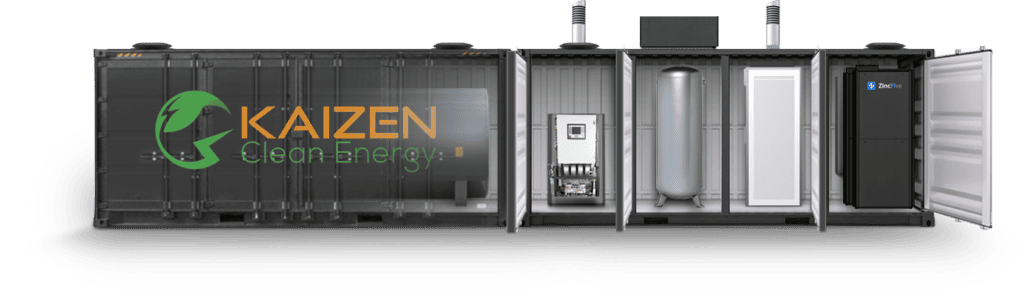
This microgrid solution can both connect to the grid to supplement available power, and be completely islanded for resiliency during grid outages. As an added safety measure, these stations utilise nickel-zinc batteries, which eliminate the risk of fires due to thermal runaway. The nickel-zinc chemistry also provides high power in a small footprint, allowing the system to fuel on-demand.
By pursuing both hydrogen and electric solutions aggressively and simultaneously, each in the area to which it’s best suited, we can accelerate the transportation sector’s decarbonisation. Let’s create and implement more solutions like these, which help to win the bigger battle against climate change by deploying the full portfolio of clean energy solutions and erasing the false dichotomy in fuel choice.
ZincFive to Accelerate the Deployment of EV Charging and Microgrid Solutions for DC Fast Charging, Utility and Industrial Applications
Read Press ReleasePreviously published in Automotive World
