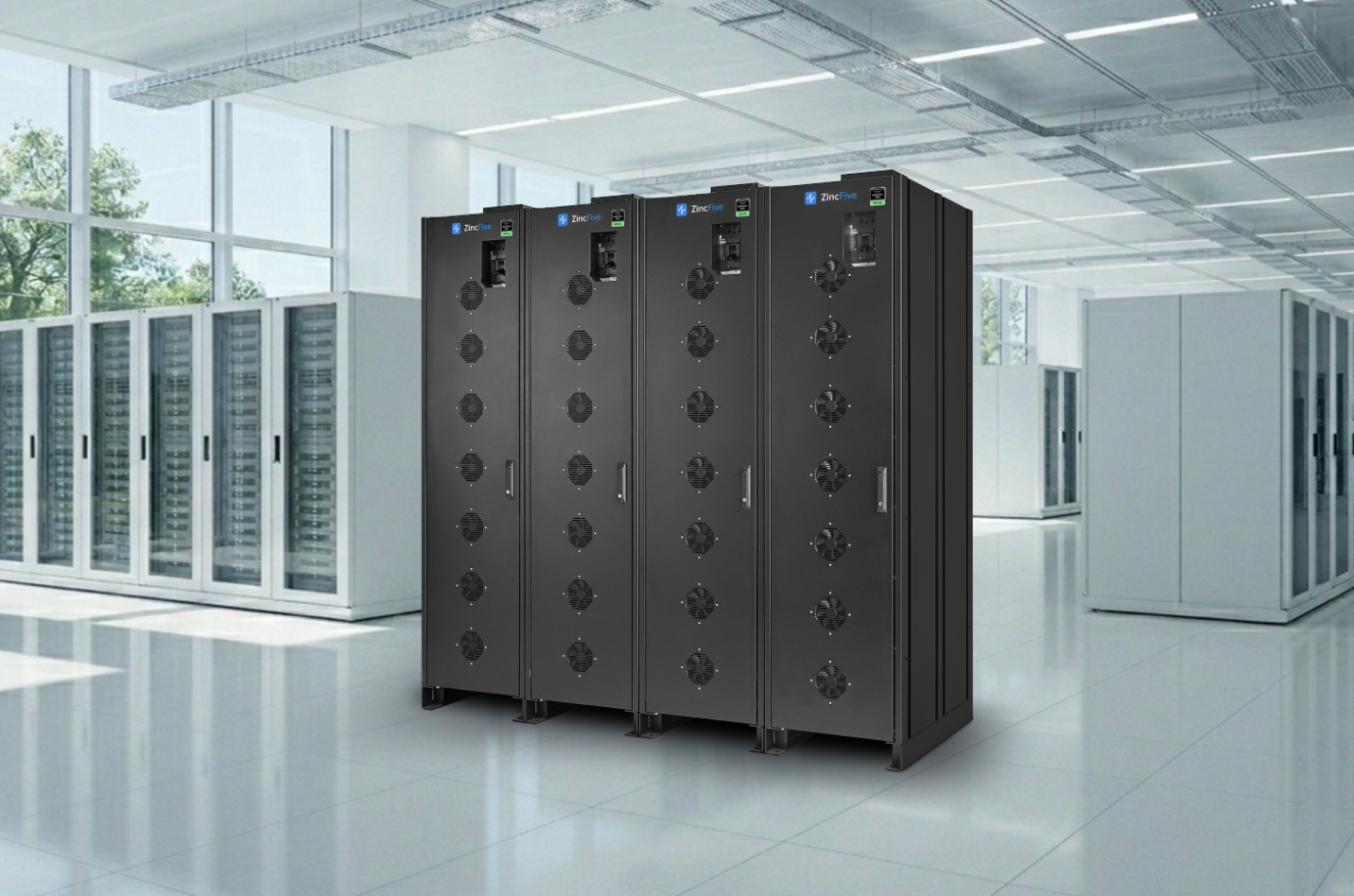
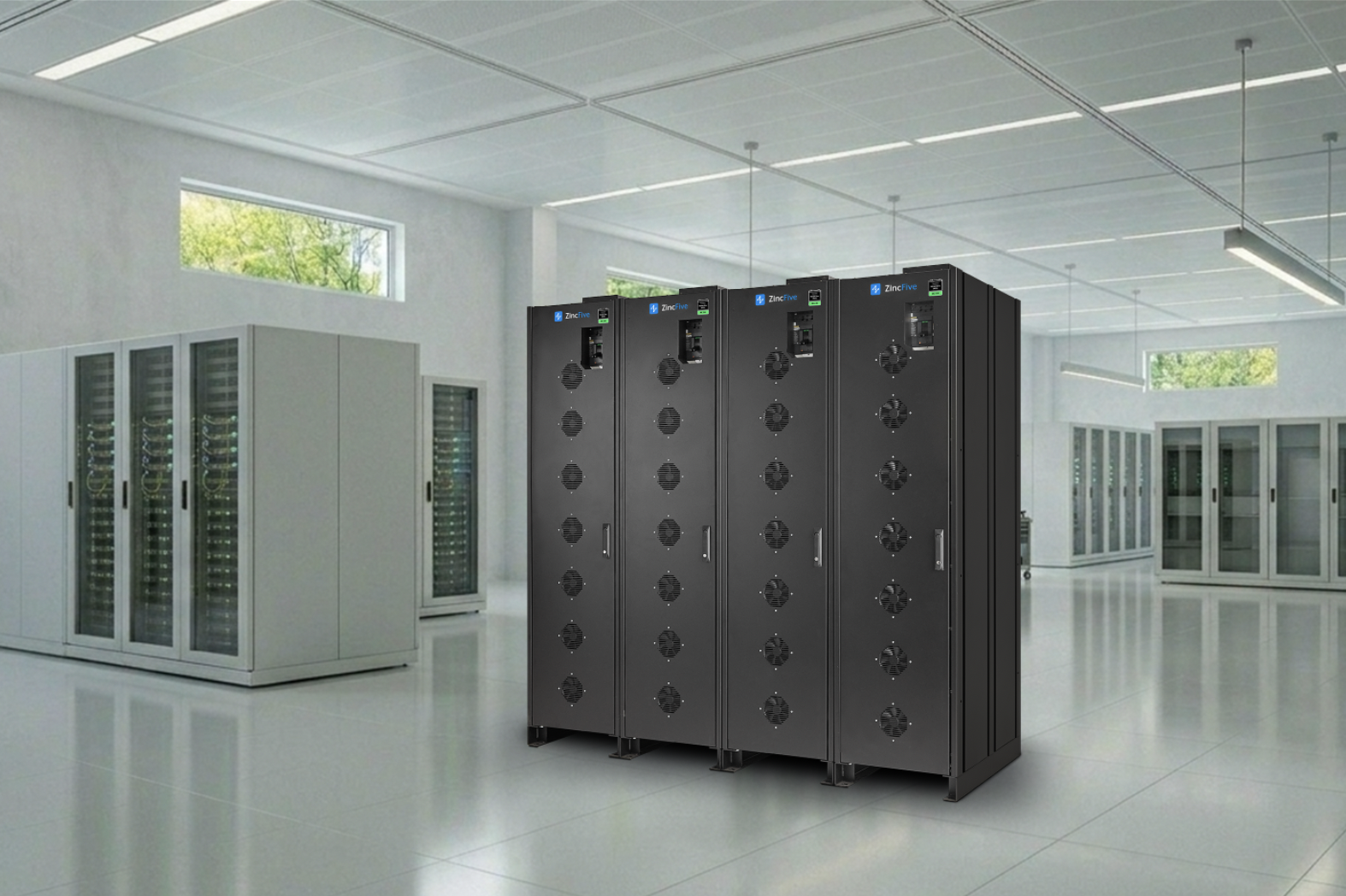
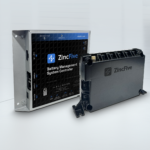
The primary benefit of the BC Series is its ability to provide unrivaled power density. In the data center industry, space is directly tied to revenue. By offering a high-power short duration solution in a small footprint, the BC Series allows operators to minimize gray space and maximize white space (server racks).
Nickel-Zinc Redefines Power for the AI Era
Artificial Intelligence (AI) workloads don’t behave like traditional data center loads. They spike, collapse, and surge again in milliseconds. That volatility is forcing a fundamental rethink of how power infrastructure is designed, sized, and deployed.
For decades, uninterruptible power supply (UPS) systems were built around a single moment: the loss of grid power. Everything about their architecture, from battery selection to capacity planning, assumed a relatively stable load interrupted only by rare events.
That assumption no longer holds.
AI Dynamic Power introduces a new operating reality. Workloads can swing from idle to peak demand in milliseconds, with repeated step-load events that stress systems far beyond what they were designed to handle. This is not an edge case. It is becoming the dominant power profile inside modern data centers.
The industry’s default response has been to overbuild. More battery capacity. More headroom. More layers added to absorb volatility.
It works, but at a cost.
According to Data Center Energy Storage Industry Insights Report, total cost of ownership is now a top priority for 84% of operators, while 70% say sustainability criteria are critical in infrastructure decisions. At the same time, 57% cite the need for higher power density in smaller footprints. The margin for inefficiency is shrinking.
Overbuild is a common response today, but it is increasingly difficult to sustain.
What is needed instead is a shift in function. Power systems must move from passive backup to active stabilization. They must absorb and release energy in real time, shaping demand before it propagates through the facility and into the grid.
In effect, data center power infrastructure is no longer just backing up a site; it is enabling the controlled distribution of high-density energy.
ZincFive BC Series UPS Battery Cabinets: Everything You Need to Know (FAQ)
Read PostThis is the role of Immediate Power Solutions.
ZincFive’s BC 2 AI UPS Battery Cabinet is designed to operate at that intersection. It intercepts transient load at the UPS, absorbs high-speed power spikes, and recharges during low-demand intervals, combining dynamic load management and backup runtime in a single system.
This dual-purpose approach eliminates the need to stack separate technologies to solve different parts of the same problem. It also enables operators to stabilize peak demand at the source, rather than designing entire systems around worst-case conditions.
The result is performance without compromise.
The advantage is not only architectural. It is chemical.
Nickel-zinc (NiZn) batteries are purpose-built for high-power, rapid-response applications, delivering consistent performance under repeated, high-intensity cycling. That capability translates directly into more usable power in a smaller footprint, a function of NiZn’s high-power density and ability to deliver peak performance without oversizing infrastructure.
Footprint is no longer a secondary consideration. As AI workloads drive higher power density, space inside the data center becomes a constraint. Systems built on high-power chemistries like NiZn enable operators to deliver more power per square foot, reducing not only physical infrastructure requirements, but also the associated costs across cooling, installation, and long-term operations.
Smaller, more efficient systems are not just a design advantage; they are a total cost of ownership advantage.
Instead of oversizing infrastructure to manage volatility, operators can right-size systems to actual workload demands, reducing both capital expenditure and ongoing operational burden.
Safety is equally foundational.
NiZn uses a non-flammable, aqueous electrolyte and does not present the same thermal risks associated with other battery chemistries. This chemistry-driven safety profile simplifies deployment, reduces the need for complex fire suppression systems, and enables installation closer to critical equipment.
In mission-critical environments, fewer layers of mitigation reduce system complexity and total cost of ownership.
Sustainability follows the same principle of efficiency.
Independent, third-party lifecycle analyses show that nickel-zinc systems can deliver 25-50% lower lifecycle GHG emissions compared to alternative chemistries, with more than 90% of base materials recyclable. More importantly, by reducing the need for excess capacity and redundant systems, these architectures minimize the overall material and energy footprint of the data center itself.
Everything You Need to Know About Nickel-Zinc Batteries (FAQ)
Read PostThe most sustainable system is not the one with the most components. It is the one that delivers performance, safety, and resilience with the least amount of infrastructure.
The shift toward modular, adaptable infrastructure reinforces this direction. Nearly half of operators already rely on modular power solutions, with many planning to expand that approach as AI demands evolve. Flexibility is becoming as important as performance.
Beyond the data center, utilities are taking notice.
In power-constrained regions, how a facility behaves at the point of interconnection is increasingly important. Large, unmanaged load swings can impact grid stability and influence interconnection timelines. Systems that smooth and stabilize demand internally can change how capacity is allocated and how quickly projects move forward.
AI is not just increasing power demand. It is changing the shape of that demand.
The infrastructure that succeeds will not be defined by how much capacity it can stack, but by how intelligently it can manage power in real time.From backup to immediate power. From overbuild to precision. From static design to dynamic response. Delivering performance, safety, and sustainability without compromise is no longer aspirational. It is the new requirement for powering the AI era.
Previously published in Data Center Knowledge
Inside the Evolution of the ZincFive BC Series: What’s New and Why It Matters (FAQ)
The strongest version of any product is the one that has been through the field.
With 2 GW of power delivered or contracted globally, the ZincFive BC Series UPS Battery Cabinet has been deployed, cycled, stressed, and maintained across some of the world’s most demanding data center environments. That scale reveals opportunities for improvement that no laboratory test can replicate, and when it does, we act on them. We believe innovation is never finished, which is why every field insight, customer experience, and engineering lesson becomes an opportunity to make a proven product even better.
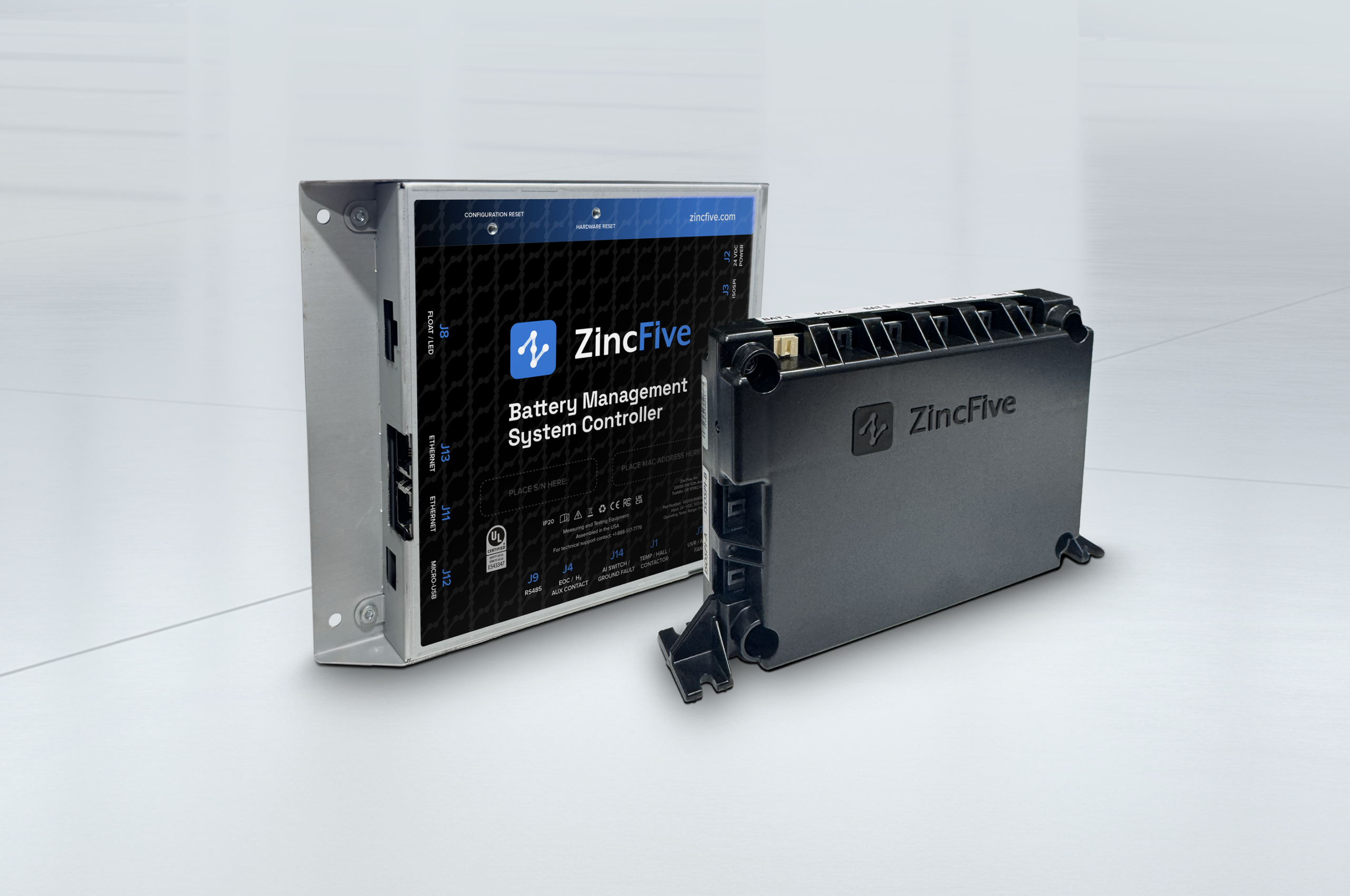
The latest evolution of the BC Series reflects that commitment. Key advancements include a next-generation Battery Management System (BMS) with enhanced analytics, controls, and system integration, a 150% stronger monobloc battery design engineered for increased durability and field reliability, and a polymeric battery tray that eliminates conductive paths to further mitigate ground fault risk and enhance electrical safety.
This FAQ provides a detailed look at these advancements, the engineering decisions behind them, and the value they deliver to data center operators. It also addresses common misconceptions about nickel-zinc battery technology and answers the most frequently asked questions about the current generation of ZincFive BC Series UPS Battery Cabinets.
FAQ: BC Series Product Advancements
What models are included in the recent BC Series UPS Cabinet upgrades?
We’ve made holistic, continuous improvement upgrades across the entire BC Series product line to ensure a standardized, high-performance baseline of reliability. Every cabinet shipping now includes the updated BMS, battery case, and tray. To understand the specific advantages that makes our BC Series the ideal choice for modern data center infrastructure, check out our comprehensive BC Series FAQ.
What changed in the ZincFive monobloc battery case, and why?
The ZincFive NiZn monobloc battery case was re-engineered from the lid and seal down to the polymer blend itself. The goal was to reduce internal mechanical stress generated during manufacturing and operation, further enhancing long-term durability and robustness. The result is a case that is approximately 150% stronger than the previous generation. For cabinets that are shipped long distances, handled in the field, and expected to perform reliably for a decade or more, this advancement further strengthens the durability and reliability of every BC Series cabinet that leaves our factory. To learn more about what makes our NiZn technology the perfect fit for modern data center infrastructure, check out our NiZn FAQ.
Why did ZincFive transition to a new battery tray?
We transitioned to an injection-molded polymeric battery tray to securely house and electrically isolate every battery. This non-conductive tray significantly reduces the electric potential for stray current to travel, mitigating ground fault risks and neutralizing high-current short-circuit hazards before they can manifest.
How has the ZincFive Battery Management System (BMS) been improved?
ZincFive BMS is purpose-built for NiZn technology. The updated system delivers faster, more granular monitoring at the individual battery level — catching deviations earlier and responding to them proportionally before they become operational problems. When something falls outside defined thresholds, the system responds automatically: minor variations trigger informational alerts, more serious conditions disable charging or open the contactor, and critical conditions open the breaker.
Operators get full alarm history with timestamps, CSV export, and real-time visibility into cabinet status across a deployment. Integration with building management systems, Data Center Infrastructure Management (DCIM) tools, and Supervisory Control and Data Acquisition (SCADA) networks is cleaner and more straightforward than the previous generation.
Myths and Truths About Nickel-Zinc Technology
Myth: Ground faults and thermal runaway are the same thing.
Truth: They are fundamentally different events.
Nickel-zinc batteries do NOT go into thermal runaway.
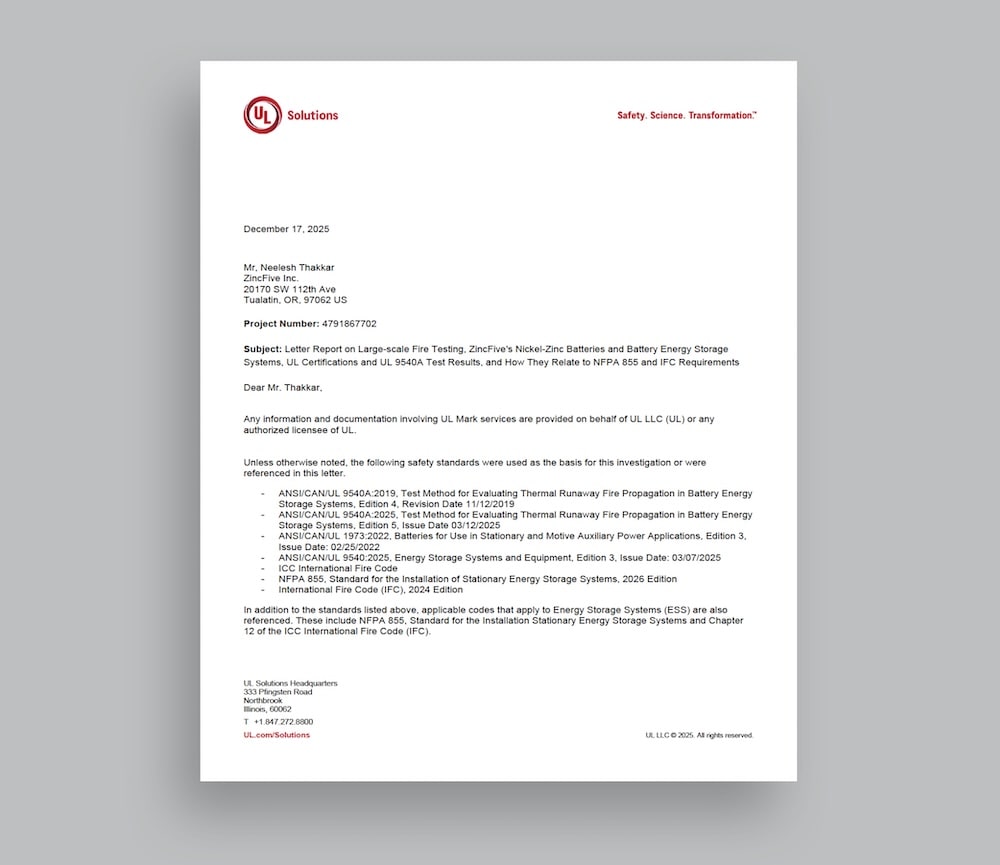
Thermal runaway is an exothermic chemical reaction associated with certain volatile battery chemistries that can result in rapid temperature escalation and propagation between cells. Nickel-zinc chemistry does not exhibit thermal runaway, as validated through UL 9540A testing.
A ground fault, by contrast, is an unintended electrical connection between stored electrochemical potential and ground. Ground faults can occur in any battery chemistry and are addressed through proper electrical system and cabinet-level safety design.
Misinterpreting ground faults as thermal runaway can lead to incorrect conclusions about battery safety characteristics.
Myth: Battery Management System alarms are just nuisance alerts.
Truth: Modern BMS platforms provide critical operational intelligence.
Advanced battery systems generate meaningful analytics, alarming, diagnostics, and historical performance data designed to help operators maintain uptime and identify potential issues before they escalate.
The ZincFive BMS provides real-time visibility into cabinet status, battery health, alarm conditions, and operational trends, helping support more proactive facility operations and faster diagnostics.
Myth: Nickel-zinc batteries take too long to recharge.
Truth: Nickel-zinc batteries recharge differently, not slower.
ZincFive systems intentionally delay recharge initiation until battery temperatures stabilize below defined thresholds. Once recharge begins, nickel-zinc batteries can charge at rates comparable to or faster than alternative technologies while maintaining operational capability at low states of charge.
Additionally, nickel-zinc batteries can continue delivering maximum power output even at low state-of-charge levels, allowing systems to remain operationally effective before recharge is fully completed.
Myth: Nickel-zinc battery systems are more expensive.
Truth: Cabinet cost alone does not reflect total system economics.
Because ZincFive systems deliver extremely high power density, operators typically require fewer cabinets to achieve the same power requirement compared to alternative technologies. Combined with reduced cooling demands, simplified fire suppression requirements, lower infrastructure complexity, and space savings, the total cost of ownership (TCO) can be significantly lower at the system level.
RELATED READING:
ZincFive BC Series UPS Battery Cabinets: Everything You Need to Know (FAQ)
Everything You Need to Know About Nickel-Zinc Batteries (FAQ)
Nickel-Zinc: A Smarter Approach to Lead-Acid UPS Retrofits
More than 70% of global data center capacity resides in existing facilities. As permitting delays, power constraints, and extended construction timelines slow new builds, operators are increasingly focused on extracting more value from brownfield environments. In many cases, retrofits offer a faster, more cost-effective path—often 30% to 50% less expensive than new construction—while avoiding the delays tied to greenfield development.
But those advantages only hold if the scope remains contained.
In practice, what begins as a battery replacement can quickly expand into something far more complex. Replacing aging lead-acid (VRLA) systems with alternative chemistries can trigger enclosure redesigns, battery room modifications, additional compliance requirements, and operational disruption, eroding both the economic and timing benefits of retrofit.
This is where many approaches break down.
Nickel-zinc (NiZn) offers a different path. ZincFive’s NiZn Retrofit Kit is designed specifically to upgrade VRLA systems within existing UPS cabinet footprints without forcing broader infrastructure changes. Delivered as a turnkey solution, it enables operators to modernize battery performance while preserving the surrounding environment.
The result is a contained upgrade that improves lifecycle economics, simplifies deployment, and enhances both safety and sustainability.
Why Nickel-Zinc
Nickel-zinc delivers high-power performance in a compact footprint, with up to three times the power density of lead-acid systems. Its non-flammable aqueous chemistry provides a fundamentally safer alternative, while maintaining compatibility with existing UPS environments. Unlike traditional batteries, it is designed for longer service life, reducing replacement frequency and operational disruption. Nickel-zinc also offers a more sustainable lifecycle, with 25–50% lower greenhouse gas emissions compared to lead-acid and lithium-ion, and high recyclability of core materials. The result is a battery technology that improves performance, safety, and sustainability—without tradeoffs.
Everything You Need to Know About Nickel-Zinc Batteries (FAQ)
Read PostWhy Retrofit Strategies Fail in Brownfield Environments
The challenge in brownfield UPS environments is not replacing batteries, it is doing so without disrupting everything around them.
While like-for-like VRLA replacements are relatively straightforward, transitioning to other chemistries, particularly lithium-ion, often introduces new layers of complexity. Changes to enclosures, fire protection systems, and compliance requirements can extend timelines, introduce permitting delays, and increase execution risk.
Instead of preserving the simplicity of retrofit, these approaches turn into broader infrastructure projects, limiting scalability and increasing uncertainty across sites.
ZincFive’s NiZn Retrofit Kit avoids this by fitting directly into existing VRLA cabinets. It enables a chemistry upgrade without altering enclosure strategy or triggering large-scale facility modifications while keeping retrofit aligned with its original intent: a targeted, repeatable upgrade.
Breaking the Replacement Cycle
Traditional VRLA systems require replacement every five to seven years, creating a recurring cycle of cost, labor, and disruption.
The NiZn retrofit approach breaks that cycle. Backed by a 10-year warranty and up to a 15-year service life, it reduces replacement frequency, lowers maintenance demands, and minimizes planned downtime across multi-system environments.
Over time, the impact extends beyond fewer battery swaps. Avoiding repeated infrastructure changes—such as cooling upgrades, fire suppression modifications, and associated downtime—further reduces total cost of ownership.
Because the system fits within existing cabinet structures, it aligns with established installation models and maintenance workflows, allowing upgrades to proceed within the constraints of live facilities.
Safety, Compliance, and Permitting
Battery selection in retrofit environments extends beyond performance.
Under NFPA 855, lithium-ion and flow batteries may be subject to capacity limits and additional fire protection requirements. These often introduce permitting complexity and extend project timelines, factors that can quickly shift retrofit economics.
Nickel-zinc provides a more straightforward path. ZincFive’s batteries did not exhibit thermal runaway at the cell level in UL 9540A testing and operate within the same regulatory framework as VRLA, helping avoid many of the additional compliance burdens associated with alternative chemistries.
At the same time, nickel-zinc offers a strong sustainability profile, with high recyclability and lower lifecycle environmental impact, supporting broader environmental and operational goals.
Turnkey Retrofit at Scale
For retrofit to scale, it must be repeatable.
The NiZn Retrofit Kit is engineered around a flexible shelf architecture compatible with legacy VRLA enclosures, with units shipped pre-assembled on trays. Installation is streamlined to standard electrical connections, keeping deployment close to a conventional VRLA replacement.
This turnkey model allows service providers and integrators to deploy consistently across sites—without custom engineering at each location—improving predictability, reducing variability, and accelerating timelines.
Higher Power Density, Smaller Footprint
Modern data centers require more power in less space.
With up to three times the power density of VRLA, the NiZn Retrofit Kit reduces the physical footprint required for battery backup while delivering the high-rate performance needed for today’s UPS environments. In some cases, this can eliminate the need for additional cabinets, improving space utilization and overall infrastructure efficiency.
The system is built on the same nickel-zinc cell technology used in ZincFive’s BC Series, providing a foundation already proven in production environments.
How Nickel-Zinc Is Powering the Future of Data Centers
Read PostThe Next Replacement Cycle Is a Strategic Decision
For operators managing aging VRLA infrastructure, the next replacement cycle is no longer just a maintenance event—it is a strategic decision.
ZincFive’s nickel-zinc retrofit kit provides a turnkey path to modernization within existing environments. It enables operators to extend infrastructure life, reduce disruption, lower total cost of ownership, and improve safety and sustainability without rebuilding the facility around the battery system.
Previously published by Datacenter Dynamics
ZincFive BC Series UPS Battery Cabinets: Everything You Need to Know (FAQ)
AI is rewriting the power requirements of data centers faster than most infrastructure teams can keep up. GPU racks that used to draw steady, predictable loads now pulse at 120% of rated power in milliseconds—and the conventional answer, oversizing your UPS and bolting on super capacitors, is getting expensive, fast. ZincFive’s nickel-zinc battery cabinets take a different approach: a chemistry that was purpose-built for exactly this kind of high-rate, repetitive cycling, without the thermal runaway risk that makes lithium-ion so infrastructure-intensive to deploy. Whether you’re evaluating your first AI rack deployment or rethinking a data center floor that was designed before AI Dynamic Power existed, this FAQ covers what you actually need to know.
Why is Nickel-Zinc the Best Choice for Data Center?
Nickel-zinc (NiZn) is the ‘Goldilocks’ chemistry of the energy storage world, exceeding the power density of lithium-ion and the safety and reliability of lead-acid. Due to the inherent characteristics of the chemistry, it is the best choice for operational flexibility. It can operate at much higher ambient temperatures (up to 35°C/95°F), does not require extensive fire suppression or thermal management that Lithium-ion requires, and has twice the usable life of VRLA. Combining these characteristics with attributes like lighter weight and an industry-leading sustainability profile reduces the operational expenditures associated with housing and maintaining energy storage within data centers, resulting in a lower Total Cost of Ownership (TCO).
NiZn is a superior choice for NeoCloud facilities and Colocation facilities running a mix of IT and AI loads because it can handle high-rate, shallow cycling extremely well, while still providing traditional IT backup power. With a power density that is twice that of Lithium and three times that of VRLA, NiZn can deliver immediate power and absorb power quickly, which is a necessary capability to support demand profiles of this type.
For a deeper look at what makes nickel-zinc uniquely suited for modern data center infrastructure, explore our dedicated NiZn FAQ.
How the BC Series UPS Battery Cabinets Work
The BC Series is designed to function as an “Immediate Power Solution (IPS).” In traditional centralized UPS data centers, the battery cabinets are paired with a megawatt-class UPS. The battery cabinets perform as a high-power, short-duration power support system that bridges the gap between a power disturbance and the activation of backup generators.
Benefits of the BC Series UPS Battery Cabinets
Beyond spatial efficiency, the BC Series offers unmatched safety. Because the NiZn chemistry is non-flammable and does not exhibit thermal runaway, it eliminates the need for expensive fire suppression systems and specialized cooling infrastructure.
Furthermore, the reliability of the system is superior to legacy technologies; NiZn cells fail in a “closed” state, meaning the battery string remains conductive and operational even if a cell is depleted. This prevents emergency outages often caused by a single failed lead-acid or lithium-ion cell.
Finally, the sustainability profile of these cabinets helps operators meet aggressive ESG goals, offering a significantly lower carbon footprint and higher recyclability than competing chemistries.
Product Lineup – BC Series UPS Battery Cabinets
The BC Series product line has 5 models, each designed for a different operating requirement.
BC: The first nickel-zinc immediate power solution (IPS) in the BC Series. Featuring ZincFive’s 80Ah high-rate battery, the BC introduced data centers and enterprises to the safe, reliable and sustainable benefits of a nickel-zinc battery solution.
BC 2: The baseline cabinet. High-rate discharge, up to 280 kW, runtime up to 15 minutes. Best for standard UPS backup applications with lower power demands.
BC 2 – 300X: Extended runtime and higher power than the standard BC 2, up to 325 kW with up to 15-minute runtime. Suited for applications needing more endurance per cabinet.
BC 2 – 500: Ultra high-rate, under 400 kW, optimized for short-duration (5-minute) high-power applications. Fewer cabinets per MW of power — typically 3 cabinets per MW.
BC 2 AI: Purpose-built for AI workload environments. Handles both traditional UPS backup and active AI pulse smoothing. Includes AI Pulse Power Intelligence in the BMS and ships with a pulse-specific warranty.
Inside the Advancements Behind ZincFive BC Series
Continuous innovation and product refinement are fundamental to how ZincFive engineers, tests, and evolves its technology platforms. Recent advancements across the BC Series portfolio include a next-generation Battery Management System (BMS) with enhanced analytics, controls, and system integration, a 150% stronger monobloc battery design engineered for increased durability and field reliability, and a polymeric battery tray designed to eliminate conductive paths to help mitigate ground fault risk and enhance electrical safety (covered in more detail further in the FAQ section below).
Frequently Asked Questions
FAQ: NiZn Battery Cabinets vs. Lead-Acid and Lithium-Ion
How much space can I save using the BC Series verses lead-acid or Lithium Ion systems?
To deliver 1250kW of power, lead-acid batteries require approximately 240 inches of linear width. Lithium-ion requires about 153 inches. The ZincFive BC 2 cabinets can deliver that same power in just 84 inches of linear width. That is a 65% footprint reduction versus lead-acid.
For AI-specific deployments, BC 2 AI adds one more cabinet to the footprint, covering the same role as 12 cabinets of competing solutions.
Does temperature affect the performance of the BC Series?
NiZn is temperature-resilient. While VRLA batteries lose half their life for every 8°C (15°F) rise above 25°C, ZincFive cabinets are warranted to operate at 35°C (95°F) and can withstand short-term excursions up to 50°C (122°F).
What if one of the batteries in the BC Series cabinet becomes weak or depleted?
NiZn batteries fail “closed,” meaning they remain conductive. If a cell reaches the end of its life or is depleted, current continues to flow through the string. This is a significant reliability advantage over VRLA and Lithium-Ion, which fail “open” and take the whole string offline.
I have legacy lead-acid systems in my data center, can I use nickel-zinc technology in my existing data center without a full replacement project?
Yes. ZincFive’s Retrofit Kit is a drop-in NiZn replacement designed for compatible UPS cabinets that have top-terminal VRLA batteries. Installation requires no permits, no downtime, and no structural modifications. It is the fastest path to NiZn for customers who are not ready for a full cabinet replacement cycle.
FAQ: Deployment & Maintenance of BC Series
How difficult is the installation process?
The cabinets ship fully assembled and tested. This “plug-and-play” design reduces onsite installation time and prevents the wiring errors that often occur when assembling systems in the field.
What maintenance is required for the BC Series?
Maintenance is minimal. The BMS provides continuous monitoring, so there is no need for the frequent manual voltage and impedance testing required by lead-acid systems. Routine visual inspections and periodic firmware updates for the BMS are typically all that is required.
How much do the cabinets weigh?
A BC Series cabinet weighs about one-third as much as an equivalent lead-acid system. This makes it much easier for them to move with standard warehouse equipment and reduces the structural load on the data center floor.
How many BC Series UPS Battery Cabinets are deployed in the field?
As of April 2026, ZincFive has surpassed 2 gigawatts (GW) in power delivered or contracted globally, reinforcing the growing adoption of nickel-zinc as a preferred alternative to legacy battery technologies in data center infrastructure.
FAQ: Safety and Regulatory Compliance of BC Series
What certifications does the BC Series have?
Yes on both counts. ZincFive’s batteries have been tested to UL 9540A — the industry standard for thermal runaway propagation — with a confirmed result of no thermal runaway at the cell level. ZIncFive’s NiZn technology has also been tested by leading insurers of data centers, also ran a direct side-by-side test of NiZn with alternatives under identical conditions and did not find evidence of thermal runaway.
The BC Series certifications include UL 540, UL 1973, UL 1778 , CAN/CSA C22.2 No. 107.3, IEC 62040-1. IEC 62040-2, CE, UKCA and RoHS, with the cabinet being compliant to IBC 2021 · ICC AC156 – S_DS 2.29 for Seismic.
UL 9540 is the system-level certification most AHJs require for permitting approval. UL 1778 confirms the cabinet meets the UPS equipment standard for mission-critical applications. And the IBC 2021 / ICC AC156 seismic rating gives facility engineers in high-seismic zones a recognized standard to reference during site approval.
Do these cabinets require specialized fire suppression (like Clean Agent or Pre-action)?
No. Because NiZn chemistry does not exhibit thermal runaway, the fire suppression requirements that NFPA 855 and local AHJs impose on lithium-ion installations — clean agent systems, pre-action sprinklers, fire barriers, and separation distances — are significantly reduced. This simplifies permitting, reduces construction cost, and expands where cabinets can be physically located in the facility.
How does ZincFive’s BMS work, and how does it differ from other Battery Management Systems?
In alternative systems, the BMS is largely defensive — its primary job is to prevent the battery from doing something catastrophic. Alternatives will be unstable under stress: overcharge it, overheat it, or push it too hard and you risk thermal runaway. The BMS is there to hold the system back from the edge.
NiZn does not have that edge. Because the chemistry itself doesn’t exhibit thermal runaway, ZincFive’s BMS can focus on optimizing performance, extending battery life, and giving operators genuine visibility into what’s happening inside the cabinet.
In practice that means continuous monitoring of voltage, temperature, state of charge, and state of health across every cell in the string — not just at the string level, but at the individual battery level. When something falls outside defined thresholds, the BMS responds automatically and proportionally. Minor variations trigger informational alerts. More serious conditions trigger protective actions — disabling charging, opening the contactor, or taking the cabinet offline — without waiting for human intervention.
Operators also get full alarm history with timestamps, exportable data, and a UI that provides real-time visibility into cabinet status across a deployment. For data center teams, that means fewer surprises, faster diagnostics, and a clear record of system behavior over time.
FAQ: Sustainability and Lifecycle of BC Series
How does ZincFive BC Series Battery Cabinets help with ESG (Environmental, Social, and Governance) reporting?
Data centers using ZincFive cabinets can report lower Scope 3 embodied carbon compared to lithium-ion alternatives, based on third-party lifecycle analysis showing meaningful reductions in water footprint, energy footprint, and CO2e during manufacturing. The elimination of fire suppression infrastructure that lithium-ion requires also reduces material consumption and construction carbon. The 10-year battery string warranty means fewer replacement cycles over the facility’s operational life — reducing both material consumption and maintenance labor compared to lead-acid systems that typically require replacement every 3–5 years.
How recyclable are BC Series UPS Battery Cabinets?
The BC Series UPS Battery Cabinets contain highly recyclable content by weight. For comparison, commercial-scale lithium battery recycling remains limited (roughly 5% of lithium batteries are recycled); lead-acid recycling uses as much energy to process as the batteries produce. NiZn recycling uses established hydrometallurgical processes and generates a material credit.
For more information, the BC 2 is registered on the PEP Eco Passport database and holds an Environmental Product Profile certified by UL.
What types of sustainability endorsements does BC Series have?
NiZn technology, specifically within the ZincFive BC Series, is highly decorated with third-party sustainability endorsements that validate its environmental benefits from production through disposal.
Formal Certifications & Registrations
- UL Environmental Declaration: The BC Series features a “cradle-to-grave” Life Cycle Assessment (LCA) certified to the UL EPD standard. This UL Environmental stamp validates the total environmental impact of the product throughout its entire lifespan, ensuring our data is transparent and verified.
- PEP EcoPassport: The products are registered in this prestigious international database, which provides a standardized “Environmental Product Profile” (EPD) specifically for electrical and electronic equipment.
Superior Circularity (End-of-Life)
- Material Recovery: Unlike lithium-ion systems, which face significant scaling challenges in recycling, NiZn systems allow for the vast majority of materials to be recovered and reused.
- Recycling Volume: Each BC 2 UPS battery cabinet directs over 600 kg of material back into recycling streams rather than landfills.
Quantifiable Carbon & Energy Savings
The environmental “credits” earned at the end of the BC Series life are substantial:
- CO₂ Offset: Recycling a single cabinet offsets more than 2 metric tons of CO₂-equivalent emissions.
- Energy Conservation: Material recovery reduces fossil energy demand by approximately 26,800 MJ per cabinet.
What happens to the NiZn batteries at the end of their life?
ZincFive has established recycling partnerships globally as part of its take-back program. 100% of nickel and zinc can be recovered and reused in new batteries or other industrial processes, ensuring a circular lifecycle.
FAQ: Continuous Product Innovation
Continuous innovation and product refinement are fundamental to how ZincFive engineers, tests, and evolves its technology platforms. This philosophy is embedded into every stage of product design, engineering, and manufacturing.
What recent innovations have been introduced across the BC Series product line?
Recent enhancements across the BC Series product line include next-generation Battery Management System (BMS) upgrades, a redesigned monobloc battery architecture engineered for increased durability, and a new polymeric battery tray system designed to improve electrical isolation and safety.
These enhancements improve system intelligence, operational visibility, field reliability, manufacturability, and long-term performance across the BC 2, BC 2-300X, BC 2-500, and BC 2 AI product families.
How has ZincFive advanced its Battery Management System (BMS)?
The latest generation ZincFive BMS expands analytics, controls, monitoring, alarming, and integration capabilities across the cabinet platform.
The system provides enhanced visibility into battery health, operational status, and long-term performance trends while simplifying integration with building management and facility monitoring systems. The platform is also designed to support future software, analytics, and operational intelligence enhancements as customer requirements evolve.
Unlike traditional battery monitoring approaches that focused primarily on reactive maintenance, modern BMS platforms provide meaningful operational intelligence designed to support uptime, diagnostics, and proactive system management.
What changes were made to the BC Series battery design?
ZincFive optimized several aspects of the monobloc battery manufacturing process, including the lid, seal, molding design, and material formulation.
These changes significantly reduce in-situ mechanical stress generated during manufacturing and operation, resulting in a monobloc design that is approximately 150% stronger than previous generations. The result is improved durability, resilience, and long-term reliability under real-world operating conditions.
Why did ZincFive introduce a polymeric battery tray design?
The polymeric battery tray was developed to improve electrical isolation and reduce conductive pathways within the cabinet.
Unlike conductive metal tray systems, the polymeric design removes conductive paths between batteries and between the batteries and cabinet structure. This helps mitigate the potential for unintended electrical discharge events associated with ground fault conditions and enhances overall cabinet-level electrical safety.
Watch the BC Series Product Innovation Overview below for a deeper look at the engineering enhancements, electrical safety design considerations, and operational innovations shaping the latest generation of ZincFive UPS battery cabinets.
Myths and Truths About Nickel-Zinc Technology
Myth: Ground faults and thermal runaway are the same thing.
Truth: They are fundamentally different events.
Nickel-zinc batteries do NOT go into thermal runaway.
Thermal runaway is an exothermic chemical reaction associated with certain volatile battery chemistries that can result in rapid temperature escalation and propagation between cells. Nickel-zinc chemistry does not exhibit thermal runaway, as validated through UL 9540A testing.
A ground fault, by contrast, is an unintended electrical connection between stored electrochemical potential and ground. Ground faults can occur in any battery chemistry and are addressed through proper electrical system and cabinet-level safety design.
Misinterpreting ground faults as thermal runaway can lead to incorrect conclusions about battery safety characteristics.
Myth: Battery Management System alarms are just nuisance alerts.
Truth: Modern BMS platforms provide critical operational intelligence.
Advanced battery systems generate meaningful analytics, alarming, diagnostics, and historical performance data designed to help operators maintain uptime and identify potential issues before they escalate.
The ZincFive BMS provides real-time visibility into cabinet status, battery health, alarm conditions, and operational trends, helping support more proactive facility operations and faster diagnostics.
Myth: Nickel-zinc batteries take too long to recharge.
Truth: Nickel-zinc batteries recharge differently, not slower.
ZincFive systems intentionally delay recharge initiation until battery temperatures stabilize below defined thresholds. Once recharge begins, nickel-zinc batteries can charge at rates comparable to or faster than alternative technologies while maintaining operational capability at low states of charge.
Additionally, nickel-zinc batteries can continue delivering maximum power output even at low state-of-charge levels, allowing systems to remain operationally effective before recharge is fully completed.
Myth: Nickel-zinc battery systems are more expensive.
Truth: Cabinet cost alone does not reflect total system economics.
Because ZincFive systems deliver extremely high power density, operators typically require fewer cabinets to achieve the same power requirement compared to alternative technologies. Combined with reduced cooling demands, simplified fire suppression requirements, lower infrastructure complexity, and space savings, the total cost of ownership (TCO) can be significantly lower at the system level.