Battery Energy Storage Trends for the Electrification of Everything

June 10, 2022
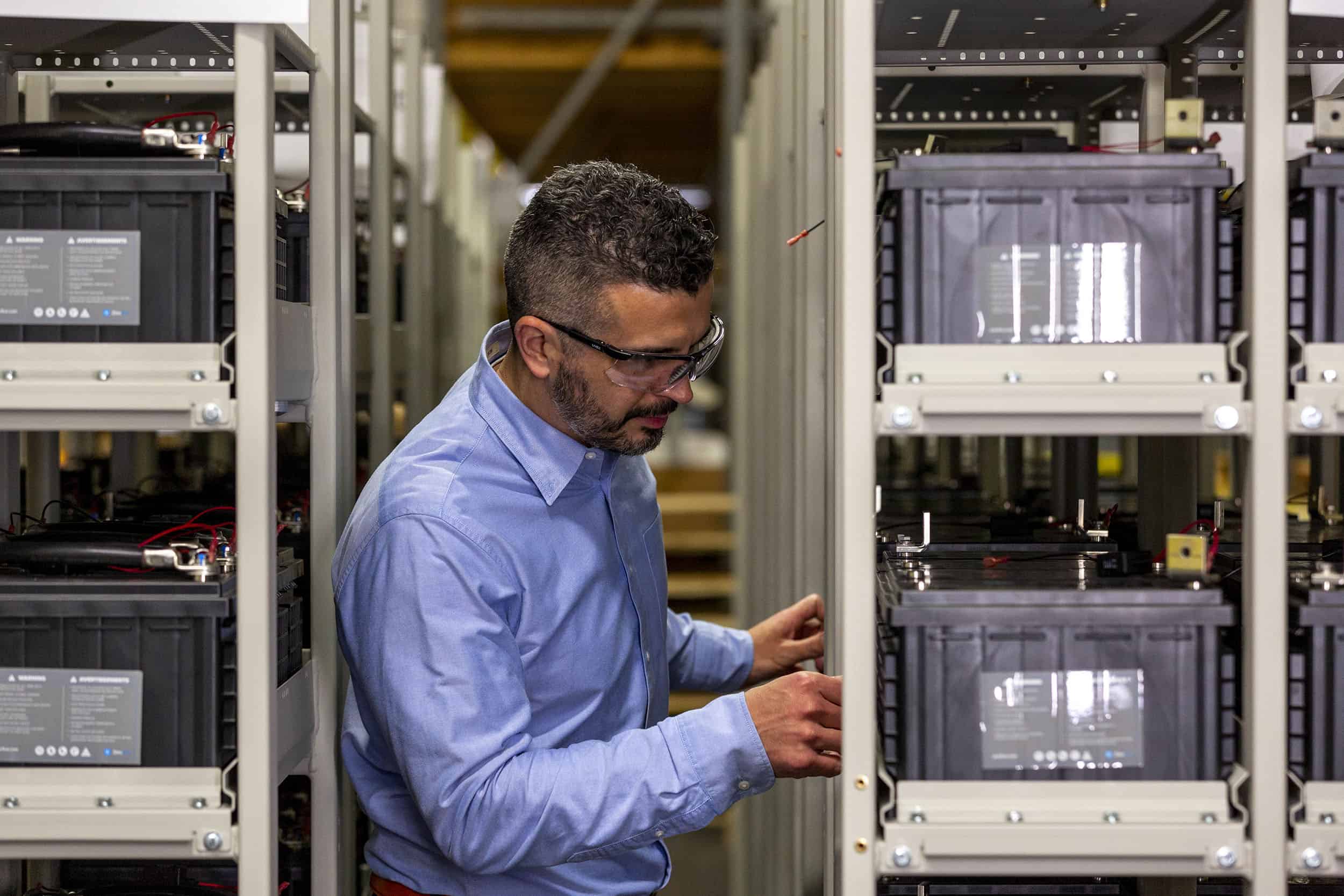
Data center technician working on nickel-zinc battery cabinet
As we closed out the first quarter of 2022, the energy storage industry continued to show stunning growth. When scrolling through the news, reading studies, and attending events, one can’t help but notice how critical battery energy storage is to a myriad of markets and industries. As innovative technologies emerge at a breakneck pace, they reveal key trends in both market priorities and the sector’s current and future direction.


Sustainability Under the Microscope: Solutions Themselves Are Put to the Test

Energy storage has been, and will continue to remain, a key tool for those seeking to decarbonize. In order to meet their sustainability targets, companies and municipalities are turning to cleantech such as renewable energy, electric vehicles (EVs), and green buildings. All of these rely on batteries and other energy storage technologies to ensure their effectiveness and reliability. One key trend in this push towards sustainability is that the energy storage solutions themselves, including batteries, are not immune to questions concerning their environmental footprints.

For example, emissions tied to the footprint of batteries used in an organization’s facilities can be included in the carbon accounting for their operations. In the Greenhouse Gas (GHG) Protocol, energy storage systems fall under scope 1 and scope 3 emissions.

Accounting for Scope 1 emissions is often easier because much of the data is available within the organization. In contrast, Scope 3 emissions are more difficult to account for because they 3result from activities from assets neither owned nor controlled by the reporting entity itself. These emissions typically stem from the organization’s supply chain and their assets’ end of life process, which together contributes 65-95% of the company’s carbon emissions. So, if scope 3 emissions are excluded from carbon accounting, the majority of their emissions remain unreported.

Companies that report on their scope 3 emissions stand out from their competitors who lag behind in their disclosure, and can identify and act upon areas for improvement within their supply chain. Leaders in reporting and acting on scope 3 emissions are also better equipped to manage existing and potential regulations.

The demand is growing more urgent for disclosure of scope 3 emissions tied to energy storage systems. For batteries, this disclosure includes data on their GHG, energy, water, and volatile organic compound footprints. Fortunately, up-to-date research now helps users make quantitative comparisons across battery chemistries. In energy-heavy industries such as data centers, where facilities race to showcase their sustainability, this offers a key opportunity to stand out by reducing scope 3 emissions through battery choices.

Energy storage has clearly established its role in the clean energy transition, and the importance of sustainability as a whole is hardly news. But the increase in attention to the environmental footprint of these energy storage technologies is fascinating. Companies and municipalities are no longer able to rely on surface level decisions as they set and meet their climate targets. As the role of storage in decarbonization strategies grows, so does the importance of choosing the most sustainable batteries.


Alternative Battery Chemistries Challenge Incumbents

Another reason why battery sustainability has become such a hot topic is the increasing number of different battery options. Gone are the days where a single battery chemistry could consider their foothold on an industry secure. Now, both established and new companies fiercely compete to capitalize on alternative battery technologies’ advantages over the incumbents.

For instance, many data centers once considered lead-acid batteries the standard for meeting their uninterruptible power supply (UPS) needs. Then, lithium-ion batteries’ market entrance triggered a migration as data center operators realized the advantages of lithium’s longer life and lower maintenance needs. Following this disruption, the market became more open to additional chemistries, such as nickel-zinc (NiZn), that provide even more advantages – for example, greater safety, more reliability, and a higher power density that delivers a smaller footprint in a real-estate focused industry.

Of course, change isn’t quick, and many of these alternative chemistries have existed for decades. Incumbent technologies have the advantage of existing infrastructure built with these batteries in mind. Even if a company were to consider swapping out a lead-acid battery for lithium-ion, they would have to address not only the batteries themselves but also the connected systems, which may not be compatible with the replacements.

Fortunately, technological advancements address this obstacle by enabling drop-in replacements for incumbents. UPS solutions include advanced battery cabinets that offer backwards and forwards compatibility with existing UPS infrastructure. With this barrier to battery replacement removed, more data centers can adopt alternative battery chemistries without overhauling their backup power infrastructure.

Alternative battery chemistries are challenging incumbents on a variety of characteristics: safety, sustainability, cost, abuse tolerance, space requirements, and more. As new technologies are tailored to excel in these areas, the energy storage industry grows increasingly competitive – making the customer the ultimate winner.


A Hybrid Approach: Microgrids are Increasingly Incorporating Multiple Battery Chemistries

With the commercialization of alternative batteries, markets are realizing that no single battery chemistry exists that is perfect for every use case. As the concept of a “one size fits all” energy storage solution is retired, organizations can creatively incorporate multiple batteries to best meet their needs. Developers have begun to diversify the types of batteries being used in their operations, taking advantage of each chemistry’s unique strengths.

A key distinguishing factor between different batteries is whether they offer high power density or energy density. If a battery has a high power density, it can release large amounts of energy for a short period of time (also known as a high discharge rate). In contrast, a battery with high energy density may have a moderate to low discharge rate, but can supply this amount of energy for a prolonged period of time.

These separate battery types, with differing power and energy densities, can be used together for the same application in a complementary hybrid approach. Microgrids are being developed that have the option of pulling power from a power battery or energy battery, depending on the circumstance. Such an approach is particularly useful for peak power shaving and EV charging systems.

Peak power shaving is the use of battery storage to supply power to a microgrid when power demand and its ensuing costs are highest. This strategy helps operations save money while maintaining disruption-free microgrid functionality. As the transportation economy electrifies, it increases power supply stress on the grid, which in turn increases the grid’s reliance on battery energy storage. While high energy-density batteries (such as lithium-ion) are well adapted to support long duration power demand, they often are not powerful enough to meet short-term peak power demand. At these times, high-power density batteries like NiZn can respond on demand to support those types of short-term microgrid power requirements.

Another example is the power battery use case for EV charging in environments with fluctuating demand. Most battery-powered EV charging stations can support simultaneous demand for only a few level 2 charge sessions, which are slower than level 3. The increase in demand for high power level 3 charging, and simultaneous level 3 charging of multiple EVs, is driving the need for high power batteries. By incorporating multiple battery chemistry options into a single charging station, the system can adjust between providing longer duration, lower power charging or faster, higher power charging based on the needs of the situation.

The varying demands of an electrified economy now require operations to be smart about the batteries they utilize, identifying the best resources based on specific situations. These hybrid approaches show how different battery chemistries don’t always have to compete; instead, they can complement each other and provide a more effective solution.


The Future of Energy Storage

These interconnected trends will intensify. The desire for more sustainable batteries has helped spark the exploration of new chemistries that allow developers and users to take hybrid approaches for their operations. These trends stand true across multiple industries as energy storage use becomes even more widespread. As new technologies emerge and compete, these trends can be expected to bolster the sustainability, efficiency, and value of the energy storage industry.


This post originally appeared in PV Magazine.

Author
Tod Higinbotham, ZincFive CEO
Tod Higinbotham
CEO, ZincFive
Tod has a strong track record of successfully growing advanced materials companies in the energy storage, semiconductor, and solar markets. He served as Executive VP/GM for ATMI and led the rapid growth of the company, which sold more than $1 billion. Tod was an executive member of the leadership team at Advanced Silicon Materials, a world leader in high-purity silicon materials, the business that was sold to REC to form their solar materials business. He was formerly the CEO of PowerGenix, the company that pioneered the novel nickel-zinc battery technology that has become the core of ZincFive’s solution portfolio.
Tags:
  • batteries, 
  • data centers, 
  • immediate power, 
  • reliability, 
  • Scope 3 emissions, 
  • uninterruptible power supply

Scope 3 Reporting is Critical to Reducing Data Center Emissions

May 20, 2022
Data center technician reviewing nickel-zinc battery cabinet

Investors, clients, and partners increasingly expect organizations to provide comprehensive environmental impact disclosure. But despite companies’ good-faith efforts to provide accurate reporting, many are failing to account for a full 65-95% of their greenhouse gas (GHG) footprint: Scope 3 emissions. As a result, stakeholders receive only an incomplete picture of the business’ sustainability, and the organization misses an opportunity to assess and minimize the most significant source of their GHG footprint.

It’s time for data centers to resolve this gap in coverage, and showcase to stakeholders and clients their commitment to achieving their sustainability goals.

Why Scope 3 Emissions are an Underreported Opportunity

By their nature, Scope 3 emissions are both the largest contributors to a given organization’s carbon footprint, and the most difficult to track. They comprise all emissions that are caused by activities from assets not owned or controlled by the reporting organization, but that the organization indirectly impacts through its value chain. Since the reporting organization doesn’t own or operate these assets, accessing their emission records can be a challenge – hence the frequent underreporting.

However, leaders have already emerged to overcome this lack of transparency: over 3,000 companies have reported scope 3 emissions under the Carbon Disclosure Project. Such companies are taking advantage of the economic, reputational and environmental benefits of improved transparency before others. These leaders are also better equipped to manage existing and potential regulations, such as Germany’s mandate that companies show responsibility for social and environmental issues tied to their global supply chain networks by 2023. Investors and other stakeholders are paying attention to these global developments, and seeking reassurance that companies can manage any potential risks from potential U.S. regulations.

As supply chain sustainability draws increased attention from stakeholders, scope 3 emissions data must be included in carbon accounting to provide an accurate assessment of a data center’s climate impact. Once this data is widely available, companies can then act to reduce these emissions: for example, improving the sustainability of their energy storage practices through the use of battery chemistries with low climate impact (such as nickel-zinc).

Such reporting and actions will help resolve the significant gap in stakeholders’ ability to understand and compare carbon footprints.

The Right Batteries Can Reduce Data Center Scope 3 Emissions

As data centers and their customers undergo growing expectations to disclose scope 3 emissions, their energy storage systems that are part of the Uninterruptible Power Supply (UPS) offers an opportunity to stand out by both reporting and lowering their greenhouse gas footprint. The battery chemistry tied to a data center’s UPS offers significant trade-offs for their supply chain’s sustainability.

For example, nickel-zinc (NiZn) batteries are a more sustainably sourced and environmentally friendly alternative to other battery chemistries used in data centers, such as lead-acid and lithium-ion. Boundless Impact Research and Analytics prepared a f lead-acid, lithium and ZincFive’s NiZn batteries that, for the first time, quantitatively compared the environmental impact of these battery chemistries at a scope 3 level. In multiple ways including GHG emissions, water footprint, energy footprint, and volatile organic compounds, NiZn batteries proved a more climate-friendly option.

Each of the IEEE 1679 child documents are Guide documents. They are frameworks for developers and manufacturers to describe their products to provide standardized, objective criteria for buyers. The four child documents include two published guides, one each for lithium and sodium-beta battery technologies in stationary applications. Two other energy storage technologies, flow and alkaline batteries, have draft guides under development.

Material Use
Nickel and zinc are respectively four and five times more abundant in the earth’s crust than lithium and lead. In addition, while lead exposure is a global health concern and lithium’s reactivity to air and water makes it a fire hazard, nickel and zinc are non-toxic and nonflammable.

Greenhouse Gas Emissions
Since nickel and zinc sourcing require fewer emissions and NiZn battery manufacturing’s carbon footprint is lower, users purchasing $1MM of ZincFive batteries receive 148,255 tons of CO2e savings – a 537% improvement over lithium, and a 1,700% improvement over lead-acid batteries.

Carbon Payback Time
Carbon Payback Time (CPT) measures the time it takes for a battery to offset its GHG Footprint by supplying more renewable resources to the electricity grid. NiZn chemistry’s CPT is between 0.16 and 0.21 years – four times faster than lithium-ion and lead-acid batteries.

Volatile Organic Compounds (VOCs)
Emitted as gases from solids – including those used to produce lithium-ion and lead-acid batteries – VOCs are infamous for causing short-and long-term adverse health effects. A healthier alternative, the ZincFive battery does not use VOCs in production.

Water Footprint
Even including water requirements for raw material extraction, the ZincFive battery still demands 96% less water than the average lithium-ion battery.

Energy Footprint
The energy footprint for ZincFive’s battery is 23-33% less than that of lithium-ion batteries and lead-acid pure lead batteries. The results of a formulaic comparison measuring relative performance across all metrics showed that ZincFive’s technology scores a 9.4 out of 10 impact score on its overall performance, with higher scores representing higher positive environmental impact. This score compares favorably to other battery chemistry options.

Quantifiable Impact for Reporting and Reducing

Driven by pressure from investors, regulators and the general public, demands for scope 3 emission transparency are gaining momentum. Data centers who stay ahead of the competition in reporting and addressing scope 3 emissions will attract customers and investors seeking comprehensive disclosure and commitment to sustainability. This not only improves data centers’ own sustainability, but attracts environmentally aware clients to them.

As efforts continue to make scope 3 accounting more straightforward and widespread, the availability of scope 3 level emission data for energy storage systems has created a welcome opportunity for data centers to reduce their climate impact. NiZn batteries have shown across a myriad of sustainability metrics that they help companies minimize their supply chain impacts. This set of sustainability data for battery sources helps data centers compare existing battery chemistries, as well as potential ones.

Already one of the largest industrial adopters of green energy, data center operators’ logical next step as energy sustainability leaders is to pioneer the accounting and reduction of scope 3 emissions. By helping quantifiably reduce scope 3 emissions, NiZn batteries will let early reporters showcase that advantage and set an example for other industries worldwide.


This post originally appeared in Data Center Dynamics.

Author
Steve Jennings, ZincFive SR VP Sales & Marketing
Steve Jennings
Sr. VP Sales & Marketing, ZincFive
Steve leads the ZincFive sales and marketing team and brings senior executive experience in technology companies serving the energy, clean tech, communications, computing and semiconductor industries. Steve and his team are focused on providing superior performing, safer and greener energy storage solutions based on nickel-zinc batteries to mission critical applications in the data center, IT and intelligent transportation markets.
Tags:
  • batteries, 
  • data centers, 
  • immediate power, 
  • reliability, 
  • Scope 3 emissions, 
  • uninterruptible power supply

ZincFive BC Series Battery Cabinets Introduction

This webinar introduces the groundbreaking ZincFive BC Series Battery Cabinets and discuss the reliable, safe, powerful and green nickel-zinc batteries that provide modern data centers with performance, safety and sustainability advantages.

Length
30 minutes with Q/A

Speakers
Steve Jennings – Sr. VP
Dan Lambert – Product Manager

Register to Watch


Codes & Standards Impacting Energy Storage Systems

ZincFive is offering a 30-minute webinar detailing information regarding NFPA 855 and how the various UL Standards will impact the selection, sizing and placement of electrochemical energy storage systems. Specifically covering UL 1778, UL 9540 and the UL 9540A Test methodology and how they relate to NFPA 855.

Length
30 minutes with Q/A

Speakers
Dan Lambert – Product Manager, Data Center Solutions

ZincFive webinar on codes and standard for energy storage solutions

Register to Watch


Battery Technology Climate Impact and Sustainability

ZincFive is offering a 30-minute webinar featuring ZincFive’s Sr. VP, Steve Jennings, and Boundless Research Analyst Andreas van Giezen, who present Boundless’ independent analysis of the Climate Impact Profile for nickel-zinc, lead-acid, lithium-ion and sodium sulphur batteries. The life cycle assessment details key parameters such as greenhouse gas emissions, water footprint, energy footprint and carbon payback of these battery chemistries. Join this deep dive into battery sustainability factors to determine the best choices for your organization.

Length
30 minutes with Q/A

Speakers
Steve Jennings – ZincFive
Andreas van Giezen – Boundless Research Analyst

ZincFive webinare on nickel-zinc climate impact report

Register to Watch


How IEEE’s Energy Storage Documents Help Users Choose the Best Battery

November 22, 2021
Stock image

Energy storage technology has come a long way since the days of watermills and the first rechargeable battery. We now have a wide range of battery technologies to choose from, including lithium-ion, sodium-beta, lead-acid, nickel-zinc and others.

As the number of options on the market continues to grow, choosing the storage technology that is best suited for your particular application has major impacts on cost, energy efficiency and safety. The modern grid, data centers and smart devices all share the need for reliable energy storage solutions, and so also share the need for guidance on which technology is the best fit.

That’s why the Energy Storage and Stationary Battery (ESSB) Committee, which is part of the Institute of Electrical and Electronics Engineers (IEEE) Power and Energy Society (PES), provides the industry with the most comprehensive guides, recommended practices, and standards for the major categories of stationary energy storage technology. IEEE’s 1679 document family helps users, integrators and servicing organizations compare traditional stationary battery technologies with newer, advanced technologies, helping to guide the user in the selection of the best battery type for their needs.

The Parent Document for Energy Storage Comparisons: IEEE 1679-2020

Originally published in 2010 and updated in 2020, IEEE 1679-2020: Recommended Practice for the Characterization and Evaluation of Energy Storage Technologies in Stationary Applications provides a foundation to objectively evaluate and compare different available energy storage technologies. These publications lead battery storage buyers through data and decisions to help them understand key principles and make prudent decisions according to the performance envelope of an energy storage product. Such data includes, but is not limited to:

  • Evaluation techniques
  • Description and characterization of the technologies
  • Qualification testing
  • Applications

IEEE 1679-2020 is an overarching “parent” document: it is a Recommended Practice document and must be used to properly utilize the following “child” documents, each of which provides information and guidance for a specific energy storage technology or family of technologies.

IEEE 1679’s Children

Each of the IEEE 1679 child documents are Guide documents. They are frameworks for developers and manufacturers to describe their products to provide standardized, objective criteria for buyers. The four child documents include two published guides, one each for lithium and sodium-beta battery technologies in stationary applications. Two other energy storage technologies, flow and alkaline batteries, have draft guides under development.

Each guide helps buyers understand and compare a storage technology by including the technology’s:

  • Intended applications
  • Aging mechanisms and failure modes
  • Testing for abuse tolerance and fault tolerance

Evaluation techniques:

  •  Application considerations
  •  Safety
  •  Life-cycle costs

Each guide also includes its subject’s unique needs and strengths. For example, the sodium-beta battery guide addresses those batteries’ high-temperature design and need for specific control systems. The flow battery guide explains flow batteries’ unusual ability to grow energy storage capacity without affecting the power rating.

Where do ZincFive’s nickel-zinc batteries fit in? Our product type is covered in the alkaline battery draft, which addresses zinc-based and alkaline electrochemistries other than nickel-cadmium (which the IEEE has already documented). This guide includes nickel-iron, nickel-zinc, nickel-metal hydride, and zinc-manganese technologies. Guidance on nickel-zinc batteries can prove especially useful for those in the data center, intelligent transportation system and other standby uninterruptible power supply industries.

Is the Family Expecting an Addition? Several, hopefully!

Currently, all energy storage technologies documented in the IEEE 1679 family are electrochemical. As other energy storage products (e.g. supercapacitors, flywheels, “gravity”-based devices besides pumped hydro, and other battery technologies) are commercialized and begin to be deployed in higher numbers, we can look forward to potential child documents for them as well.

For now, if you’re considering an energy storage purchase for stationary applications, IEEE 1679-2020 and its children are an invaluable tool to help you effectively evaluate which technology is the best choice for you.

Author
Dan Lambert, ZincFive Codes & Standards Specialist
Dan Lambert
Senior Product Manager, ZincFive
Dan has over 40 years of commercial and industrial electrical experience and has worked with AC and DC power systems, with a primary focus on mission-critical power systems. Working with stationary battery systems since 1985, Dan has worked with many battery chemistries and has contributed to large scale energy storage analysis projects, as well as testing other storage systems. Dan is currently a member of the IEEE Power and Energy Society serving as the chairperson for the IEEE Energy Storage and Stationary Battery Committee’s IEEE 1679.4 Alkaline Chemistries Working Group and is a member of the Battcon conference Technical Committee.
Tags:
  • batteries, 
  • data centers, 
  • high power density, 
  • IEEE, 
  • immediate power, 
  • reliability, 
  • uninterruptible power supply

How AI is driving up density requirements and the energy storage needed to support this

November 1, 2021
ZincFive thumbail for blog

At the recent DCD>San Francisco event, we sat down to discuss hyperscale energy storage and sustainability in light of increasing rack-density needs. This seems to be a point of anxiety frequently raised in the data center industry, and unfortunately not one that can be ignored into submission.

One of the technologies that are driving this need for increased density is Artificial Intelligence (AI), a technology reliant upon high-performance computing (HPC), and not showing any signs of slowing down.

Steve Jennings, Senior Vice President at ZincFive Inc initiated the discussion around this high computing demand, and the obstacles it may present.

“We’re seeing server rack power-density climbing steadily across all kinds of application types. We’re also seeing the adoption rate for in-rack energy storage increasing, and of course, the data center footprint, as always, is remaining at a premium.

“We’re trying to get more power into the same amount of space, and that has challenges. How do you upgrade existing facilities to support increased loads? How do you maximize the ROI of high power density racks, versus the need for energy storage infrastructure in the rack? There’s a compromise there.”

A complex debate, but a conversation that needs to be had in order for the industry to keep up.

“Let’s start at the bottom, what the device level trends are that are driving this. So we’ve got new application-specific devices that are driven by the applications in artificial intelligence, machine learning, and deep learning. They’re not only HPC, high-performance computing devices, they’re also HPC, high power consumption devices, relative to traditional server device architectures. So as we see the speed go up, we can also see the power consumption go up.

In 2021, the AI industry was worth $327.5 billion, and this is predicted to reach over half a trillion by 2024. This is a prediction that is panic-inducing for a variety of reasons. The potential loss of jobs, the restructuring of entire industries, and the question of how we will successfully power these initiatives without compromising the wellbeing of the planet.

It is important to consider who is going to be impacted by this movement. In many small ways, the global population will be impacted in their day-to-day life. Their decisions will be automated and optimized through algorithms, the articles they read created by AI, rather than written by a journalist. But in terms of business decisions, data centers will take the brunt of the hit.

In light of this, data center operators need to be asking themselves important questions: how are they going to produce the energy required, and just as importantly, how are they going to store it?

Download the DCD>San Francisco episode to find out about energy storage options in the era of high rack density and demand.

Author
Steve Jennings, ZincFive SR VP Sales & Marketing
Steve Jennings
Sr. VP Sales & Marketing, ZincFive
Steve leads the ZincFive sales and marketing team and brings senior executive experience in technology companies serving the energy, clean tech, communications, computing and semiconductor industries. Steve and his team are focused on providing superior performing, safer and greener energy storage solutions based on nickel-zinc batteries to mission critical applications in the data center, IT and intelligent transportation markets.
Tags:
  • batteries, 
  • data centers

Zinc Technology Advances Across Energy Storage Markets – And Not Just Our Own

October 6, 2021
ZincFive nickel-zinc cyclinderical batteries that are safe, powerful, reliable and sustainable

It’s an exciting time to be in the energy storage business!

In a prior blog post, A New Initiative Celebrates Performance, Safety and Sustainability of Zinc Batteries, we talked about our membership in the Zinc Battery Initiative (ZBI), an initiative created by the International Zinc Association to educate about the advantages and uses of rechargeable zinc batteries across a variety of applications.

Today we want to celebrate some good news from another ZBI company, Eos Energy Enterprises. Eos recently announced a $100 million investment to support its strategic growth initiatives. That’s quite a show of support!

Eos Znyth® technology is an excellent choice for long duration (3-12 hour) energy storage. Long-duration batteries can smooth out the variability of renewable energy by providing reliable power to entities throughout the electricity ecosystem: from utilities to industrial and commercial sites. Their zinc technology helps to lower the levelized cost of storage and increase the amount of renewable energy that electric grids and power uses can access around the clock.

Zinc’s strategic advantages for energy storage

Eos is not the only player in the long-duration energy storage market. What’s behind their momentum and this big new investment? It’s the strategic advantages that zinc brings to Eos batteries – and to ZincFive’s nickel-zinc battery solutions designed for data centers, intelligent transportation and more.

Safety

With energy storage becoming more widely used and energy dense, safety of personnel and facilities is a top concern. Eos technology uses aqueous technology that is less flammable than lithium-ion chemistries, reducing the risks to store and provide power in hot, dense places. Being nonflammable and free of thermal runaway risk, they do not require fire suppression systems, and there are lower restrictions for ship and installation.

NiZn technology is inherently safer than lithium-ion and lead-acid in applications such as data centers. NiZn batteries do not exhibit thermal runaway, as proven through testing at the cell level using the Underwriters Laboratories UL 9540A test method[1]. These batteries are also non-flammable and exhibit a reduced volume of out-gassing in abusive situations.

Efficiency

Since the Eos product is less complex than other long-duration systems, it is inherently more efficient. It is fast to install, easy to maintain, and cost-effective to run across a wide temperature range. In addition, it is designed for 100% depth of discharge, allowing use of the full rating of the system.

ZincFive’s NiZn batteries improve efficiency in similar ways. To start, ZincFive NiZn batteries have the highest operating temperature of available data center technologies which reduces the need for cooling equipment and power. In addition, ZincFive’s NiZn batteries have twice the power density of lead-acid batteries, and so can reduce battery footprint and weight by as much as 50%. These and other advantages reduce up-front and ongoing costs associated with energy storage.

“These are the start of a long list of reasons why zinc technology is very competitive in today’s energy storage markets.”

Sustainability

Sustainability is becoming a requirement across many large industries, so the growth of energy storage must reflect this priority. ZincFive’s NiZn chemistry is easier on the environment than the alternatives for data centers. In a recent Climate Impact Report performed by Boundless Impact Research & Analysis, ZincFive’s NiZn batteries ranked higher than lead-acid and lithium-ion chemistries in several criteria including avoided greenhouse gases (GHGs), carbon return on purchase and carbon payback time.

Eos technology is a much more eco-friendly option than lithium-ion systems. No toxic materials are used in manufacture, and all components are fully recyclable. According to Eos, the residual value from recycling covers all end-of-life costs, an important economic consideration for some public utilities.

Scalability

Interestingly, using a sustainable supply chain also makes a technology more scalable. As Eos puts it, “Less precious materials = more scalability.” Its systems use off-the shelf components with no precious or conflict materials. As a result, Eos claims its manufacturing process can scale up deployment of a gigawatt-scale factory in just six to nine months.

ZincFive’s NiZn battery technology is also based on highly available materials, so it avoids concerns around finding reliable, conflict-free sources. The technology can be produced using manufacturing lines already producing similar chemistries. The sky’s the limit for ZincFive NiZn.

These are the start of a long list of reasons why zinc technology is very competitive in today’s energy storage markets. As you can see in Eos and ZincFive, zinc is often the best battery choice for the criteria that matters most. Now there’s an exciting business to be in!

Tags:
  • batteries, 
  • design, 
  • high power density, 
  • reliability, 
  • uninterruptible power supply

The Better Server Rack Battery Backup For DC Power Distribution

August 25, 2021
Stock image

DC power distribution opens the door to rack-level battery backup. Which battery chemistry should you invite in?

The hyperscale providers[1] are leading the adoption of DC distribution at the rack level, rather than a pure AC power distribution architecture. The economic drivers are straightforward: save space and save power.

First, with DC power distribution, data center operators are able to reduce or eliminate the massive central UPS systems and their associated battery strings in favor of in-the-rack AC/DC conversion power supplies and high power density batteries in the rack. This saves space as, once AC power is rectified, DC power distribution has a limited need for additional rectifiers or transformers.

Second, about half of the power supplied to the traditional data center is lost in power conversion and distribution as well as managing the heat from these losses and the IT equipment[2]. DC power distribution improves energy efficiency through a reduction in power conversions, each of which loses energy, mostly as heat. These resulting energy savings reduce costs and the site’s carbon footprint.

“Battery backup units installed within each rack of IT hardware can improve facility reliability because an issue with any one BBU only affects a single rack.”

Now, with DC distribution, backup power can be provided by battery backup units (BBUs) installed within each rack of IT hardware. This approach can improve facility reliability because an issue with any one BBU only affects a single rack, while a centralized UPS approach can impact a variety of downstream equipment. To implement rack-level BBUs, many data center operators have the Open Compute Project (OCP) Open Rack V3 (ORV3) BBU specification[3] to use for guidance.

Rack-level battery backup

The trick is that BBUs are facing stiff competition for space within the server racks. The drive towards digital transformation, and its associated requirement for data analysis applications including artificial intelligence, machine learning and deep learning, have sharply increased demand for computing power and density. Dell, for example, expects that future rack densities will far exceed those of today, while hosting hardware components such as CPUs/GPUs that consume over 300W each[4].

So, at the rack level, BBUs may be seen as ‘necessary overhead,’ denying space to income-producing IT hardware. As rack power density increases, so does the pressure to reduce BBU footprint.

This is the argument for power density.

The safe high-density option

Up until OCP and DC distribution, the industry has relied on lead-acid backup batteries for data center backup. This familiar technology was adequate when the UPS facility was separate from the server racks, and overall data center backup requirements were less rigorous.

Today’s increasing demands for higher power and smaller footprint are making newer technologies, especially lithium-ion and nickel-zinc (NiZn), more competitive. These alternatives have higher energy and power density than lead-acid batteries, the first key advantages for these battery technologies in rack-level backup.

“Power density, safety and reliability advantages are important in any part of the data center, but especially in the rack.”

The close proximity of these dense batteries to staff and servers highlights a key difference between lithium-ion and nickel-zinc: safety. While some operators have considered lithium-ion as an alternative to lead-acid, many are concerned about reports of indoor thermal runaway events at utility energy storage system (ESS) facilities.

With its demonstrated lack of thermal runaway potential even at the cell level, NiZn is an inherently safer chemistry to deploy in the rack. For a quick explanation of how to evaluate the relative safety of different battery chemistries, see our blog post Ensuring ESS Safety in Data Centers with NFPA 855 – Part 2.

Reliability at the rack level

We mentioned earlier how rack-level BBUs can have a positive impact on data center reliability. This highlights another important distinction between NiZn and other battery chemistries.

Reliability is in large part a function of battery string operation. When a lead-acid or lithium-ion battery cell fails, it creates a high impedance or an open circuit that halts string operation. A weak or depleted NiZn cell, on the other hand, remains conductive, allowing the string to continue operating.

There’s more. NiZn battery strings tolerate string imbalances better and maintain constant power output at significantly lower states of charge and health than the other technologies. And they have the widest operating temperature range of the three BBU options, and so are more tolerant of the higher temperatures inside the server rack.

These power density, safety and reliability advantages are important in any part of the data center, but especially in the rack.

More sustainable too, so learn more

While we are comparing chemistries, it’s also important to consider sustainability, an increasingly important criterion for data center operations. NiZn chemistry provides environmental impact advantages over both lead-acid and lithium-ion batteries. You can see an independent analysis of the options in the blog post Comparing the Climate Impact of Batteries on Data Center Sustainability.

If you are considering DC power distribution in your data center, contact ZincFive to to discuss how nickel-zinc batteries can provide rack-level backup, safely and reliably.

[1] DC distribution is not just for the giants https://www.datacenterdynamics.com/en/analysis/dc-distribution-is-not-just-for-the-giants/

[2] Direct current in the data center: are we there yet? https://www.abb-conversations.com/2020/01/dc-in-the-data-center-are-we-there-yet/

[3] OpenRack/SpecsAndDesigns https://www.opencompute.org/wiki/Open_Rack/SpecsAndDesigns

[4] Dell EMC’s 2020 Server Trends & Observations, page 13

Author
Steve Jennings, ZincFive SR VP Sales & Marketing
Steve Jennings
Sr. VP Sales & Marketing, ZincFive
Steve leads the ZincFive sales and marketing team and brings senior executive experience in technology companies serving the energy, clean tech, communications, computing and semiconductor industries. Steve and his team are focused on providing superior performing, safer and greener energy storage solutions based on nickel-zinc batteries to mission critical applications in the data center, IT and intelligent transportation markets.
Tags:
  • batteries, 
  • data centers, 
  • high power density, 
  • immediate power, 
  • reliability, 
  • uninterruptible power supply

Hard Facts About Data Center Reliability

June 30, 2021
Stock image

One hard fact about data center Uninterruptible Power Supplies (UPS) is that the very system that is supposed to prevent an outage – the UPS – is too often the cause of it.

In its Annual Outage Analysis 2021, Uptime Institute referenced its 2020 global survey that shows on-site power failure is still the biggest cause of significant outages, accounting for 37% of the total.[1]

Of those power-related outages, the number one root cause at 53% was failure of the UPS.

This is an increasingly serious issue, as the Uptime Institute research also suggests that the cost of outages is rising, with over half of the those studied saying their outages cost them more than $100,000. “Each year, there are certainly many cases that cost several million dollars, or tens of millions,” the Uptime Institute reports.

“The number one root cause of on-site power failures within data centers is failure of the UPS. – Uptime Institute, 2021”

So when considering data center reliability and its impact on the business bottom line, it’s important to take a hard look at the UPS, and the batteries that power it.

What Happens When Battery Strings Fail

While lead-acid batteries have been the workhorse technology for decades, data center operators have new choices, particularly lithium-ion and nickel-zinc, with distinctly different reliability characteristics.

One distinct reliability advantage is the ability to sustain battery discharge despite failure of an individual battery cell. In a UPS system, individual batteries are connected in a serial string (often paralleled) to support the required system voltage, power output and run time. When a lead-acid and lithium-ion cell fails, it creates a high impedance or an open circuit that halts battery string operation. The UPS system has then lost some or all of its back-up capacity and the data center is at unnecessary risk.

Unlike lead-acid and lithium-ion, NiZn cells remain conductive when they are weak or depleted, which allows for continuous string operation and uninterrupted uptime. This capability delivers a distinct increase in battery string reliability.

Moreover, this critical difference in string operation changes what would be an emergency situation due to a lead-acid or lithium-ion battery cell failure into a simple replacement of a NiZn battery at the next planned maintenance cycle with no operational impact along the way. Maintenance costs are managed, along with the risk of outage.

“NiZn cells remain conductive even when they are weak or depleted, a capability that delivers a distinct increase in battery string reliability.”

Reliability and Long Life Reduce OpEx Costs

There are other characteristics of NiZn batteries that make UPS systems more reliable. First, NiZn is an alkaline chemistry that does not sulfate over time, a contributing factor to an operational life as long as three lead-acid battery replacement cycles. Longer product life and fewer replacements naturally leads to a more reliable UPS system.

Moreover, ZincFive NiZn batteries operate over a wider operating temperature range, so they can endure accidental high heat excursions, such as a cooling system failure, without compromising the performance or voiding the warranty. Unlike lead-acid batteries, they do not require trickle charging to maintain capacity performance, which simplifies system design and increases energy efficiency.

In sum, less maintenance, fewer replacements, simpler design and higher efficiency all serve to reduce the operating expenditure (OpEx) costs.

Greater reliability and lower OpEx? That’s not hard to appreciate.

[1] https://uptimeinstitute.com/annual-outage-analysis-2021

Author
Steve Jennings, ZincFive SR VP Sales & Marketing
Steve Jennings
Sr. VP Sales & Marketing, ZincFive
Steve leads the ZincFive sales and marketing team and brings senior executive experience in technology companies serving the energy, clean tech, communications, computing and semiconductor industries. Steve and his team are focused on providing superior performing, safer and greener energy storage solutions based on nickel-zinc batteries to mission critical applications in the data center, IT and intelligent transportation markets.
Tags:
  • batteries, 
  • data centers, 
  • high power density, 
  • immediate power, 
  • reliability, 
  • uninterruptible power supply