


A recent survey of data center executives revealed that over half have already deployed modular data centers, and 99% plan to in the future. Made from prefabricated units and preconfigured equipment, prefabricated modular data center systems (PMDCs) can be deployed in a much wider array of locations than traditional facilities, and offer multiple benefits: reduced costs, faster construction, greater customization, and easier scaling of the data center’s equipment and systems over time.
“Safe enough” is not safe: Assessing battery tradeoffs in data centers
September 26, 2023

Safety in data centers goes beyond the immediate concerns of uptime and data protection; it encompasses aspects such as potential fire hazards, risk of equipment damage, and environmental harm caused by toxic leaks.
Data centers’ uninterruptible power supply (UPS) systems play a crucial role in ensuring reliable backup power – and some battery chemistries are safer than others.
The choice of battery chemistry not only impacts these critical systems’ efficiency and longevity, but also plays a significant role in defining their safety profile.
In this search for reliable and safe energy storage, different battery chemistries present different trade-offs. For instance, many data center operators have traditionally leaned towards lead-acid batteries for their familiarity and known safety risks.

Data Center Power Disruptions are Expensive — The Right Batteries Can Prevent Them
Read moreFor most of the industry’s history, lead-acid chemistries have been the only choice. Lithium-ion batteries have recently become more widely adopted in the industry, but there is concern over thermal runaway, in which battery heat can build up faster than it can be dissipated.
NFPA standards and fire codes are outlining clear mitigation steps, including lithium battery placement restrictions as well as the installation of additional fire prevention, ventilation and explosion control equipment. These requirements can motivate some data center operators to remain with their traditional lead-acid battery choice.
However, lead-acid batteries have other drawbacks: higher maintenance needs, lower efficiency, a shorter lifetime, and less reliability than newer storage battery chemistries. Moreover, they pose safety risks of their own: potential for swelling, cracks, venting due to overheating, and potential electrolyte leakage.
Fortunately, newer chemistries are breaking this dilemma: they offer both greater safety and the convenience of a drop-in replacement for lead-acid, without the need for expensive retrofits and additional safety-related equipment.
One alternative, nickel-zinc (NiZn) batteries, are made of abundant materials and do not go into thermal runaway. This safety advantage reduces site risk, which addresses potential insurance concerns and eases the approval process by Authorities Having Jurisdiction (AHJ).
As a result, NiZn batteries don’t need the safety equipment for greenfield or retrofits required for lithium-ion batteries. Instead, they are a convenient drop-in replacement for lead-acid batteries in data centers.

Nickel-Zinc UPS Battery Cabinets are Built For an Easy Upgrade at Data Centers Worldwide
Read PaperNickel-zinc batteries’ benefits extend beyond safety too, they offer higher power density than lead-acid and lithium batteries, packing more power into a smaller footprintthat saves data centers valuable space. They’re also more reliable, longer lived, and more sustainable than other chemistries, which makes NiZn batteries an excellent fit for data center UPS systems.
Ensuring data center safety is crucial to protect valuable data and infrastructure. Nickel-zinc batteries are a compelling alternative to address many of the safety concerns associated with traditional battery types, promising superior safety profiles and a straightforward installation along with greater efficiency, sustainability, reliability, and longevity. They’re a solid option for operators to pave the way for a safer future in data center energy storage.
Previously Published with Data Center Dynamics

Choosing the Right Battery for Your Data Center
September 19, 2023

For data centers, few things rival the importance of ensuring service reliability 24-7. Without this consistency, the day-to-day operations of countless critical sectors — from telecommunications to emergency medical services — can be severely disrupted, risking individuals’ safety and hampering economic growth.
This underlines why data centers are cautious about protecting their assets, and why choosing the right uninterruptible power supply (UPS) system is particularly important. To ensure that these systems can support the data center’s needs at any time, they require the best battery technology to power them.
Lead-acid batteries have a long history as the default choice, but the proliferation of new innovations and technologies has changed this in recent years. Now, data center operators have the option of choosing between a variety of battery chemistries, each of which comes with unique advantages.
When analyzing what battery type is best for their data center workflow, managers should keep in mind these key components:
Physical Footprint
The physical size of a UPS system plays a significant role in the layout and internal organization of data centers. Out of the commercial battery varieties, lead-acid has the largest footprint: it possesses the lowest power density, and therefore requires significantly more space than lithium-ion or nickel zinc (NiZn) technology to accommodate the same amount of storage. While this doesn’t pose a challenge for every facility, it does mean that lead-acid batteries are poorly suited for modular facilities, as well as for data centers in expensive urban areas. In comparison, NiZn batteries use up to 65% less linear footprint and thus allow modular builders and construction teams to better optimize their buildouts.

Improving Data Center Profits with Compact and Safe Backup Batteries
Read BlogTotal Cost
Cost inevitably plays a decisive role in selecting the right battery type. It’s important for data center managers to factor both capital expenditures and long-term operational costs into their investment decision.
Lead-acid batteries have the distinct advantage of being the lowest upfront-cost option on the market. They do, however, require regular maintenance to preserve their average 5-year lifespan. Though an attractive option because of their low initial capital cost, lead-acid batteries are the most expensive to operate in the long run — an important consideration for data center managers.
On the other hand, lithium-ion and NiZn batteries have a higher upfront cost but have a longer life and require less maintenance once installed. For example, by lowering operating expenses (OpEx), NiZn solutions reduce ownership costs by up to 28% over lead-acid based UPS products across the total UPS useful life.
Sustainability
The environmental impact of data centers has gained increasing attention in recent years as businesses face growing pressures from investors, consumers, and regulatory agencies to integrate sustainability into their operations. A third-party expert analysis was conducted to assess the sustainability of various battery chemistries. The study compared factors such as GHG emissions, water footprint, energy use footprint, and volatile organic compounds. The study also provides GHG Protocol Scope 3 level emissions analysis. This information helps data center operators make sustainability one of the top factors in picking a technology – the best choice for both the environment and their company’s reputation.

Closing the Emissions Gap: Data Center Sustainability
Read BlogReliability
Unfortunately, the very UPS system meant to prevent an outage too often causes one; accounting for 37% of data center outages, on-site power failure is still the most common cause of significant data center outages. The majority of these on-site outages (53%) are caused by UPS failure and often cost over $100,000 to repair.
One distinct reliability advantage is the ability to sustain battery discharge despite failure of an individual battery cell. In a UPS system, individual batteries are connected in a serial string (with multiple strings often paralleled) to support the required system voltage, power output, and run time. When a lead-acid or lithium-ion cell fails, it creates a high impedance or an open circuit that halts battery string operation. One single cell could be the difference between having the backup capacity needed or none at all, leaving the data center at unnecessary risk. Unlike lead-acid and lithium-ion, NiZn cells remain conductive when weak or depleted, allowing for continuous string operation and uninterrupted uptime.
Safety
The safety of data center workers and equipment is paramount when choosing batteries. Selecting a battery type that’s inherently non-flammable removes significant risks and makes the data center safer. For example, cell-level testing with the UL 9540A test method has revealed that NiZn batteries do not exhibit thermal runaway and are non-flammable, making them a safe choice for data centers and their workers alike.
Whichever battery type they choose, data center operators can help ensure their batteries’ safety by having them adhere to the National Fire Protection Association (NFPA) 1 (National Fire Code), the NFPA 855 standard, and the International Code Council’s (ICC) International Fire Code (IFC) 2021. These standards list both the installation safety rules for energy storage systems and testing procedures for batteries.
Additional Resources
As the number of options on the market grows, choosing the storage technology best suited for your data center has major impacts on cost, energy efficiency, sustainability, and safety. That’s why the Institute of Electrical and Electronics Engineers’ (IEEE’s) 1679 document family helps users, integrators, and servicing organizations compare traditional stationary battery technologies with newer, advanced technologies. These documents guide the user to select the best battery type for their needs. If you’re considering an energy storage purchase, the IEEE 1679-2020 document and its child documents (IEEE 1679.1, 1679.2, 1679.3 and 1679.4) are invaluable tools.
Previously Published with Energy Storage Journal
Closing the Emissions Gap: Data Center Sustainability
September 14, 2023

Tim Hysell, Co-founder and CEO of ZincFive, shares how data centers can reduce their customer’s scope 3 emissions.
Although scope 3 emissions form the vast majority of many organizations’ carbon footprints, they’re also the most difficult to track. As a result, many organizations have been hesitant to disclose this category of emissions. However, investor pressure to disclose scope 3 emissions is growing, and as companies look to reduce their emissions, data centers are increasingly under the microscope as an opportunity for impactful reductions, considering they are one of the most energy-intensive components of their customer’s supply chains.
The data center industry, and its associated energy use, is in the midst of rapid growth. In the US market alone, data center demand — measured by power consumption to reflect the number of servers a data center can house — is expect to reach 35 gigawatts (GW) by 2030, up from 17 GW in 2022. According to the iMasons Climate Accord, data centers currently account for around 2.4% of today’s global energy consumption.
When data center services are contracted out to outside parties, these emissions are classified under the data center clients’ scope 3 emissions. Data centers looking to address scope 3 emissions can leverage vendors that employ environmentally friendly practices and thus offer a reduced carbon footprint compared to their competitors.

Making The Most of Your Modular Data Center Power System
Read BlogData centers can practice several methods to reduce their carbon footprint, such as modular construction, optimizing cool airflow, and alternative fuels for generators. Alternative battery chemistries for backup power systems can also help data centers improve their sustainability. For instance, nickel-zinc batteries save an average of 112kg of CO2 per kWh compared to lithium-ion batteries, and 36kg of CO2 relative to lead-acid batteries. They’re also manufactured more sustainably, with fewer emissions per kWh of stored energy. Over their lifecycle, nickel-zinc batteries provide four times the greenhouse gas avoidance of lead-acid batteries and six times that of lithium-ion, giving the technology a 9.4 out of a possible 10 Climate Impact Score according to Boundless Impact Research and Analytics.
As the appetite for scope 3 emissions disclosure increases, data centers should look to improve their value by adopting sustainable practices. Data center operations offer various opportunities for emission reductions, and those who want an edge in attracting and retaining customers should embrace and promote their sustainable practices, letting businesses know that they’re ready to support their data needs while also helping meet their ESG targets.
Previously published with Data Center Frontier

Making the Most of Your Modular Data Center Power System
June 14, 2023
The demands on data centers constantly change. On top of the ever-expanding need for data services, the very operations they’re supporting also evolve rapidly. In the U.S. market alone, data center demand — measured by power consumption to reflect the number of servers a data center can house — is expected to reach 35 gigawatts (GW) by 2030. That’s over twice the 17 GW demand in 2022. In just a few years, data centers currently addressing the needs of A.I., cryptocurrency, and other cutting-edge technologies may be serving sectors that don’t even exist yet.
As companies adapt to a new era of digital transformation, data centers have also adapted to meet this increasing demand and unpredictability. Due to the constant improvements needed to adjust and expand data center capacity, new construction for data centers has rapidly shifted from traditional construction to prefabricated modular data center systems (PMDCs).
PMDCs are a design approach in which prefabricated units are assembled and outfitted with preselected, preconfigured equipment. This approach allows more flexibility in location and timing, and easier as-needed scaling and replacement of the center’s equipment and systems over time – perfect for the ever-shifting needs of data centers.
Organizations are already taking advantage of the cost savings, locational flexibility, and quicker construction periods of PMDCs. A recent survey of 228 data center executives found that over half had already deployed PMDCs, while 99% shared that they have plans to use modular data center designs in the coming years.
Modular Data Centers Offer Increased Efficiency and Flexibility
Modular data centers can be deployed in nearly any geographical location and avoid some of the more complicated aspects of traditional construction such as labor, transportation, and material constraints. Modular designs also allow for elements to be added over time as needed, aligning realistically and in real-time with capital and operational resources. This helps the site avoid the costs of maintaining underutilized or completely unused equipment.
A modular power system’s preselected, preconfigured equipment includes components like switchgear, power distribution units, and uninterruptible power supplies (UPS). Operators can take the flexibility of PMDC design to ensure that the best equipment for their facilities are selected. By selecting power system products that boast strong synergy with modular design, data center power systems can be smaller and more efficient enabling a significant reduction in total cost of ownership (TCO).

Improving Data Center Profits with Compact and Safe Backup Batteries
Read BlogFor instance, nickel-zinc UPS batteries’ high-power density reduces the space needed for backup power supplies. Some nickel-zinc UPS battery cabinets can deliver as much power as lead-acid battery cabinets twice their size and weight. This allows data centers to reduce cabinet count, which can make a major difference when modular power systems can average a cost of $10,000 per linear foot of container. The small footprint of these systems makes them ideal for incorporation into PMDCs.
Nickel-zinc UPS battery cabinets can also operate at higher temperatures than their counterparts. Modular designs pose an opportunity to create climate specific environments for the UPS and battery systems. By utilizing nickel-zinc batteries, these rooms can operate at higher temperatures and offer the combined benefits of lower CapEx for lower capacity cooling systems, and reduced OpEx over the life of the cooling system. As high temperature events increase in frequency due to climate change, investing in battery systems that can withstand harsher environments in 10-15 years is a distinct advantage for facilities being built today.
Battery safety can also be a strong contributor to lower TCO of modular power systems. Nickel-zinc batteries do not exhibit thermal runaway and don’t require the safety infrastructure needed with other volatile battery chemistries. The infrastructure savings include lower capacity fire suppression systems, decreased structural burn rated materials, no deflagration venting, and more. Additionally, the safety enables lower cost shipping and transportation costs because the batteries do not need to ship separately and get re-installed at the final site.
PMDCs Also Offer Improved Sustainability
In addition to the benefits listed above, modular design also supports sustainable construction and operation of a data center. Increased demands for scope 3 emissions transparency are gaining momentum, driven by pressure from data center customers, investors, regulators and the general public. Data centers who stay ahead of the competition in reporting and addressing emissions through scope 3 will attract customers and investors who are seeking comprehensive disclosure and commitments to sustainability. This not only applies to the sustainability of the data center companies themselves, but to the climate impact of the customers who utilize these data centers as part of their operations.
The Sustainability Advantages of Nickel-Zinc Batteries
Read BlogAlternative battery chemistries such as nickel-zinc have shown advantages across a myriad of sustainability metrics, and offer users a method of minimizing their supply chain impacts and overall container material due to a battery system footprint reduction compared to other chemistries. PMDCs offer a greater opportunity to implement and enjoy such sustainability benefits.
To fully maximize these benefits, selecting the equipment that best aligns with modular design will set operators apart from their competition, and showcase the readiness to adapt that has remained an essential key to success for the sector.
Previously Published by Data Center Dynamics
Improving Data Center Profits with Compact and Safe Backup Batteries
June 6, 2023
Data centers are facing aggressive growth in demand, which in the U.S. alone is expected to double by 2030, according to McKinsey. To meet this demand, operators are constructing new data centers and retrofitting existing ones to improve efficiency. However, it’s important for data center designs to use space more efficiently and minimize their physical footprint to keep costs down, especially in urban areas that traditionally have higher real estate prices and taxes.
Data centers need to support increasing customer demand for more data, faster service, AI, IoT, digital content, and hybrid cloud solutions, which requires more equipment, to increase capacity. But the larger the data center’s footprint, the more expensive it is to manage and maintain. To maximize profitability, it’s essential to do more with less space.
Maximizing physical space leads to more efficient operations. Data centers categorize space into “white space,” which includes equipment that increases capacity and generates profits, and “gray space,” which includes back-end support systems that do not directly generate profit. Minimizing gray space with smaller, power-dense equipment allows operators to maximize the profit-driving white space. Upgrading to more efficient infrastructure equipment can be costly initially but leads to significant reduction in total cost of ownership (TCO).
Upgrading to a UPS battery system with a smaller footprint is a great place to start. You can choose a UPS battery with a smaller footprint to minimize gray space and create more white space. It is advisable to look for a battery cabinet with the smallest linear footprint so that you can use more power in a smaller space. By selecting batteries with higher power density, you can reduce the number of required battery cabinets, which creates more room for additional servers or a smaller facility.

Why Modular Data Centers are Good for the Environment
Read BlogFor example, modular data centers can reduce the footprint and cost of containerized electrical rooms by using smaller, more power-dense equipment. Modular data centers offer flexibility, scalability, faster and more cost-effective construction, better quality, and greater customization. They can be deployed in almost any location and can be added to over time, allowing for real-time alignment with capital and operational resources. They are built and tested in the factory, providing more consistent quality and lower cost. They also allow for more customization, with owners able to mix and match components to meet their needs and adapt to cost, space, and other considerations. In addition, a modular design supports sustainable construction and operation of a data center since components are only added when needed.
In addition to small footprint, non-flammable battery chemistries like nickel-zinc eliminate the need for additional safety equipment, permitting, and space requirements of lithium-ion batteries, reducing the footprint of batteries even further. Nickel-zinc batteries are safe, and non-flammable – they don’t exhibit thermal runaway. They can reliably deliver more power faster, at high temperatures, and do it safely, year after year. Compared to lead-acid and lithium chemistries, nickel-zinc batteries’ greater safety lowers energy storage infrastructure as well as costs for battery shipping and installation. This safety advantage delivers savings in materials, lower shipping weight, no transportation restrictions, and ability to ship energy storage systems completely assembled.
For instance, ZincFive UPS battery cabinet offers the industry-leading footprint with the smallest cabinet and fewest cabinets per megawatt in the industry while providing the same amount of power as larger lithium and lead-acid battery solutions. With an 84″ linear width, ZincFive UPS battery cabinets can deliver 1250kW of power, compared to lead-acid and lithium batteries, which require 65% and 45% more width respectively to provide the same amount of power.

The BC 2: Innovative Cabinet Design Meets Unrivaled Battery Performance
Read BlogThis not only saves space in the data center for equipment that generates revenue but also makes shipping, installation, and maintenance more straightforward. Additional space can be used for revenue-generating equipment, such as installing more servers or other IT equipment, resulting in higher profits.
Using smaller, more efficient equipment helps data centers save energy costs, reduce overall carbon footprints, and offer more affordable, sustainable services, which is a significant advantage in attracting and retaining customers in an increasingly competitive industry.
Previously Published by Data Center Frontier
Smaller Footprint, Big Impact: Saving Space and Increasing Profits in Data Centers
May 3, 2023
Data center demand is poised for continued, aggressive growth. In the U.S. alone, McKinsey’s analysis shows that demand is expected to increase from 17 GW in 2022 to 35 GW by 2030. While operators try to keep up with this growing demand through new construction of data centers and efficiency-focused retrofits, it’s crucial for these designs to utilize space more efficiently so they can minimize their physical footprint.
Data centers built for the future need to support the increasing customer demand for more data, faster service, AI, edge computing, IoT, increasing digital content, and hybrid cloud solutions. This will require more equipment, mainly servers, to increase capacity. But the larger the data center’s footprint, the more expensive it is to manage and maintain. This is especially true for the rising number of data centers constructed in urban areas, with higher real estate prices and related taxes. The key: do more with less space.
The more power one can fit into a smaller real estate footprint, the less expensive real estate costs are relative to the revenue generated. For instance, modular data centers can reduce the footprint and cost of containerized electrical rooms by using smaller, more power-dense equipment. Smaller equipment footprints, especially for infrastructure, make more room for servers and for profits.
Maximizing physical space leads to more efficient operations. In data centers, we categorize space into ‘white space’ and ‘gray space’. White space includes equipment that increases capacity and thus directly makes a profit, such as servers, storage, and network gear. Gray space refers to back-end support systems that usually do not directly generate profit. Gray space equipment includes supporting mechanical and electrical infrastructure: generators, uninterruptible power supply (UPS) systems, switchgear, chillers, and transformers.
Minimizing gray space with smaller, power-dense equipment allows operators to maximize the profit-driving white space. Replacing older, less efficient infrastructure equipment presents an opportunity for profitable upgrades as newer, more efficient technologies become available. While the initial investment into equipment upgrades may seem high, utilizing efficient equipment will lower long-term costs.
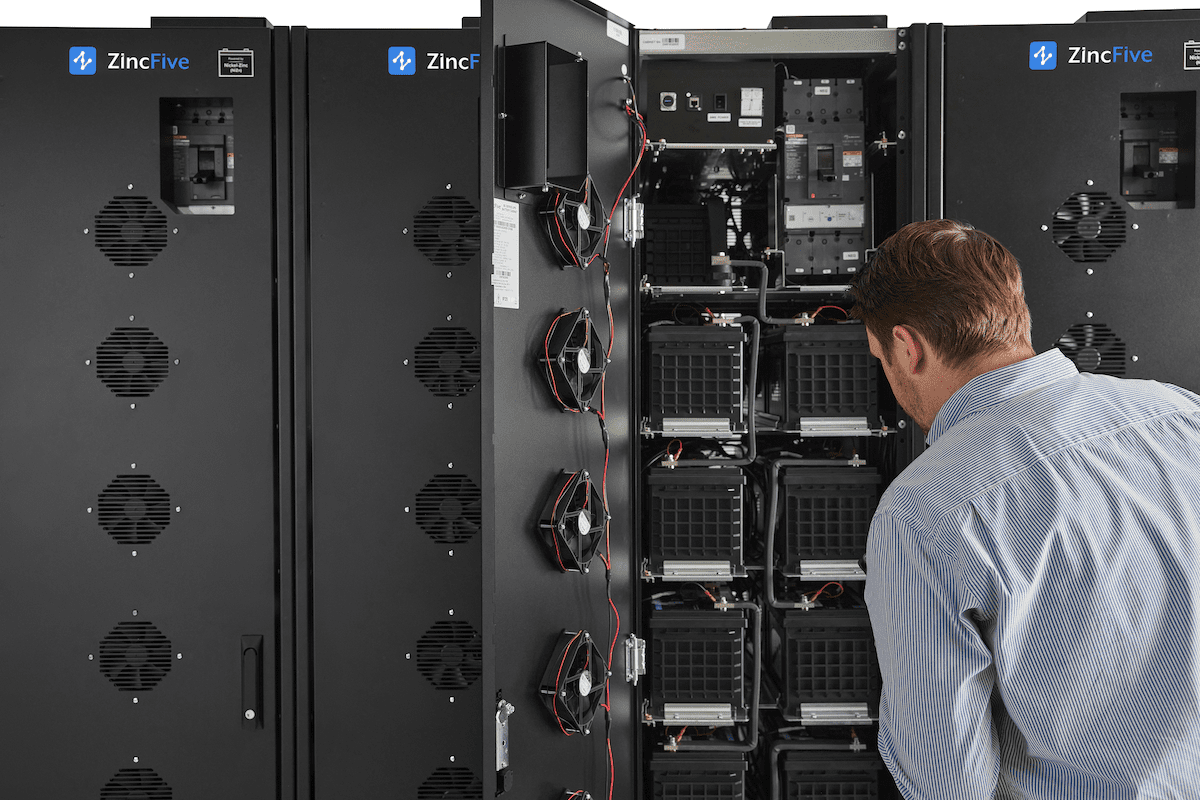
BC 2: Innovative Cabinet Design Meets Unrivaled Battery Performance
Read blogFor example, upgrading your UPS battery system is a great place to start. Choosing a UPS battery with a smaller footprint reduces gray space and frees up more white space. Look for a battery cabinet with the smallest linear footprint per watt so you can leverage more power in less space. By choosing batteries with a higher power density, you can reduce the necessary number of battery cabinets and have more room for additional servers – or even a smaller overall facility. Non-flammable chemistries, such as nickel-zinc, also eliminate the need for additional safety equipment, permitting, and space considerations required by lithium-ion batteries. This can help lower batteries’ footprints even further.
Smaller, more efficient equipment allows data centers to save energy costs, reduce data centers’ overall carbon footprints, and offer an avenue for their customers to lower their scope 3 emissions to meet regulatory and ESG targets. As the data center industry becomes more competitive, those who offer more affordable, sustainable services through profitable equipment upgrades have a significant advantage in attracting and retaining more customers.
Previously published by Data Center knowledge
The Sustainability Advantages of Nickel-Zinc Batteries
April 4, 2023
Nickel-zinc (NiZn) batteries are a more sustainably sourced and environmentally friendly alternative to other battery chemistries.
A Climate Impact Profile by Boundless Impact Research and Analytics compared the environmental impact of lead-acid, lithium and NiZn batteries, demonstrating that NiZn has advantages with lower GHG emissions, water footprint, energy footprint, carbon payback time, material use, and volatile organic compounds (VOCs).
Combining these metrics, NiZn had a 9.4 out of 10 impact score on its overall performance, with higher scores representing higher positive environmental impact. The cradle to grave carbon footprint of a nickel zinc battery is significantly less than lead-acid or lithium batteries.

Here’s a more detailed breakdown of each element on the chart:
- Material Use
NiZn batteries use common, highly available, conflict-free materials which are also highly recyclable. Nickel and zinc are respectively four and five times more abundant in the earth’s crust than lithium and lead. In addition, while lead exposure is a global health concern and lithium’s reactivity to air and water makes it a fire hazard, nickel and zinc are non-toxic and non-flammable. - Greenhouse Gas Emissions
Nickel-zinc batteries’ lifetime greenhouse gas emissions are four times lower than lead-acid and six times lower than lithium-ion emissions. Since nickel and zinc sourcing require fewer emissions and NiZn battery manufacturing carbon footprint is lower, users purchasing $1M of NiZn batteries save 148,255 tons of CO2e – a 537 percent improvement over lithium, and a 1,700 percent improvement over lead-acid batteries. - Carbon Payback Time
Carbon Payback Time (CPT) measures the time it takes for a battery to offset its cradle to gate carbon footprint. NiZn chemistry’s CPT is between 0.16 and 0.21 years – 400% faster than lithium-ion and lead-acid batteries. - Volatile Organic Compounds (VOCs)
Emitted as gases from solids – including those used to produce lithium-ion and lead-acid batteries – VOCs are infamous for causing short-and long-term adverse health effects. A healthier alternative, NiZn batteries do not use VOCs in production. - Water Footprint
Even including water requirements for raw material extraction, a NiZn battery still demands 96% less water from cradle to gate than the average lithium-ion battery. - Energy Footprint
The energy footprint, manufacturing to gate, for NiZn is 23-33% less than that of lithium-ion batteries and lead-acid pure-lead batteries.
ZincFive’s commitment to sustainability and the environment extends beyond its products.
ZincFive is a member of the Initiative for Responsible Mining Assurance (IRMA), as part of the company’s continued commitment to safeguard human rights, communities impacted by mining, and the broader environment.as part of the company’s continued commitment to safeguard human rights, communities impacted by mining, and the broader environment. IRMA works to advance responsible mining practices, providing third-party verification and certification against comprehensive environmental and social criteria for all mined materials. Membership in the initiative is the latest development in ZincFive’s commitment to promote ESG standards within the company for the benefit of all stakeholders.

Climate Impact Profile
Boundless analyzed the climate impact of the ZincFive nickel-zinc (NiZn) battery technology, taking into account key performance indicators such as greenhouse gas (GHG) emissions, water footprint, energy footprint, and hazardous material requirements, scoring ZincFive’s NiZn batteries at 9.4 with 10 representing the highest positive environmental impact.
Read Paper
Three Ways to Improve Data Center Sustainability
March 21, 2023

In today’s information and technology-driven economy, data centers are fundamental to maintaining the day-to-day operations that keep businesses, organizations, and governments running. They act as centralized information hubs and enable the storing, processing, and dissemination of data and applications — vital to the operational continuity underpinning contemporary economic growth.
The intense processing power behind data centers inevitably means that they demand significant energy resources and produce heat waste. In fact, data centers are so energy intensive that they account for 2.4% of global electricity usage and 0.5% of greenhouse gas emissions (GHG) in the United States, which contains more data centers than any other country.
The outsized environmental impact of data centers has garnered increasing attention in recent years as businesses face growing pressures from investors, consumers, and regulatory agencies to integrate sustainability into their operations, and the industry is responding. For many organizations, data centers comprise a significant portion of their overall emissions (either scope 1 or 3, depending on ownership), making the issue quite salient.
The good news is the variety of ways in which data centers can upgrade their facilities to meet evolving pressures, hedge against uncertainty, and become more sustainable, efficient, and highly cost-effective. Effective methods include optimizing airflow dynamics, adopting modular design, and switching to alternative battery technologies like nickel-zinc.
Optimizing Cool Airflow
The industry-recognized optimization standard for data center infrastructure (“hot aisle/cold aisle”) was pioneered in 1992 by IBM’s Robert Sullivan — an internationally recognized engineer — and remains a practical way of boosting existing cooling technology without needing additional capital investment. In this specific configuration, cabinets containing processors are placed so that the front of one will never face the back of another, where heat exhaust escapes.
Rearranging a data center in this manner effectively creates alternating rows of cold supply and hot return air, reducing energy usage. It’s also important to reinforce the separation of alternating aisles with physical barriers that seal off gaps for air and to clear airflow obstructions — often poorly placed cables — from intake and exhaust openings. Doing so will deliver the highest-quality airflow dynamics, guaranteeing reduced energy costs, improved corporate sustainability metrics, and greater operational reliability.

Batteries and Cooling Combine for Data Center Sustainability
Read BlogAnother economic — albeit geographically and logistically restrictive — way data centers can optimize their airflow is by making use of free air cooling. As the name suggests, free air cooling is a process whereby external ambient air temperatures are used to cool data centers’ processors via heat exchange. The caveat of this cooling method is that it’s location-dependent — and many of the most attractive places for data centers to locate (i.e. big tech hubs) don’t have the required climatic conditions.
Mountainous and some northern hemisphere regions are especially effective for free air cooling, as they boast low and stable temperatures year-round.
Modular Data Centers

PMDCs’ ability to add and replace components as needed provides several environmental benefits. Since they don’t need to be designed on a massive scale on location, they generally have smaller footprints, more efficient power and cooling options, and the ability to easily replace equipment with more climate-friendly alternatives such as nickel-zinc batteries. Some modular data centers can even be built in existing buildings, lowering the construction footprint even further. As the survey shows, data center operators plan to take full advantage of modular designs’ financial and environmental benefits in 2023 and beyond.
Sustainable Backup Batteries
Batteries comprise an integral part of information technology but are often overlooked when it comes to a data center’s sustainability directives. Since even a few seconds of data center downtime can disrupt operations around the world, uninterruptible power supply (UPS) systems are essential to maintain uptime during a power outage. These UPS systems must contain backup batteries, which present a key opportunity for contributing to sustainability goals.
For example, because nickel and zinc are four and five times more abundant in the Earth’s crust than lead and lithium, and boast more sustainable mining processes, nickel-zinc batteries have six-times the GHG avoidance compared to lithium-ion, and four-times relative to lead-acid. They also reduce overall water usage, eliminate volatile organic compounds during manufacturing, and are non-flammable.
Additionally, nickel-zinc allows for higher operating temperatures, offering reduced cooling requirements and resulting in energy savings. In many cases, the UPS is rated to operate at up to 104°F (40°C) or higher, but the battery operating temperature limits the ability to increase temperature and reduce cooling costs in that space. Fortunately, nickel-zinc can tolerate higher temperatures, thus providing an opportunity to reduce cooling costs and improve Power Usage Effectiveness (PUE) and sustainability.

The Powerful Benefits of Nickel-Zinc Batteries for Data Centers
Read BlogUnsurprisingly then, nickel-zinc batteries have achieved the highest climate rating of 9.4/10 according to Boundless Impact Research and Analytics’ analysis of environmental and performance-based factors for battery chemistries commonly used in data centers. This is one of a few key reasons why Corscale recently announced that it will make use of nickel-zinc chemistry in its uninterruptible power supply system.
Conclusion
As major consumers of energy around the world, data centers have proactively taken it upon themselves to become leaders in reducing emissions, and are well-positioned to continue meeting the increasingly stringent environmental demands of investors, consumers, and regulatory agencies in the years to come. Though it’s not a silver bullet solution, the positive economics of airflow optimization, modular design, and alternative battery chemistries offer impactful, accessible, and low-risk ways of improving data center sustainability.
Previously published by Data Centre Solutions
5 Trends Shaping Data Center Power Infrastructure In 2023
March 15, 2023
Flexible, resilient, and green might be words you associate with your garden – but in 2023, they’re also exactly what clients want from their data center operations.
Each year brings exponentially higher demand for speed and power to run the metaverse, edge computing, IoT, 5G, AI, and hybrid cloud deployments. And it doesn’t take a crystal ball to see that as the digitization of global entertainment, industry, and medical centers accelerates, so will the need for data center infrastructure to support this heavy load.
The following five concepts, each proving itself to be more than just a trend, will define how data centers meet this increasing demand in the new year.
1. Sustainability is a necessity, not a luxury
Like the rest of the world, data centers are now facing a climate crisis as temperatures and weather events soar. This last summer saw extreme heat waves causing stress for European and Californian data centers; Twitter itself lost a key data center to extreme heat. Fortunately, many data center operators are preparing their centers to withstand such extremes.
Meanwhile, data centers are seeking ways to increase their power load and serve higher client demand, without significantly increasing their electricity and emissions burdens. Solutions that help decouple power load and emissions will help data operators prepare for increased emissions regulations and clients’ growing awareness of the need for sustainable data center operations.

Nickel-Zinc Climate Impact
Boundless analyzed the climate impact of the ZincFive nickel-zinc (NiZn) battery technology, scoring ZincFive’s NiZn batteries at 9.4 with 10 representing the highest positive environmental impact.
Read Report
Solutions such as nickel-zinc (NiZn) batteries can reduce scope 3 emissions and attract clients by helping them adhere to reporting requirements. NiZn batteries’ life cycle GHG emissions are four times lower than lead-acid batteries’, and six times lower than lithium-ion batteries’. Their carbon payback time – the time required for emissions savings from the product’s use to offset the GHG from its production – is a mere 25 percent of lithium-ion and lead-acid batteries’ payback time. Other ways to increase a data center’s sustainability include incorporating clean energy into its power supply, reusing waste heat, and cooling options that use less water; the green Wyoming Hyperscale data center uses several of these options.
The green data center market is projected to grow by 14% annually through 2032, partly due to these centers’ lower costs over time. For both financial and environmental reasons, wise operators are taking heed and incorporating more sustainable measures into their centers’ operations.
2. The quality of backup power strategies matters
On-site power failure is the most common cause of significant data center outages, with the majority caused by uninterruptible power supply (UPS) failure. High expenses associated with outages make maintaining immediate power with dependable UPS systems even more critical. UPS systems must contain backup batteries that perform reliably under any circumstances. For example, NiZn batteries remain conductive even if weakened or depleted. So, unlike lithium and lead-acid chemistries, these battery strings continue to operate even with depleted cells and make what would otherwise be an expensive emergency into a simple replacement at the next planned maintenance action.
For prolonged power outages, diesel generators are typically used for temporary power production. These generators require batteries to start them, and the batteries must also be reliable to avoid instances where the backup generators fail to start when needed. For this purpose, starter batteries with high current discharge capability and reliable string operation like NiZn enable improved generator availability.
Hyperscale data centers have another option for backup power as well: rack-level battery backup can overcome some of the challenges of centralized backup, such as excess heat and conversion losses. Rack-level backup both saves significant space and power in hyperscale data centers and improves reliability. While a centralized UPS approach often impacts significant segments of downstream equipment, rack-level backup limits any effects from one faulty BBU to a single rack.
3. Costs must be reduced without sacrificing performance
Data center operators are working under economic constraints and face continual pressure to deliver more with less. Reducing costs in 2023 while simultaneously improving performance will require the adoption of key strategies that take advantage of new technologies and practices, with the acknowledgement that it will require a collection of tactics as opposed to a single silver bullet.
Space is at a premium in data centers, and the less space that equipment takes up, the more computing power and associated profits can be accommodated. Data center operators thus prioritize power capability, where a smaller machine or device can deliver the same or greater amount of service to the facility as its larger counterparts. For example, a NiZn battery system nearly halves the space needed for batteries in data centers compared to traditional lead-acid and over 30% less than newer lithium-ion solutions. These smaller footprints stem from NiZn batteries’ high power capability: they can operate at higher powers to deliver more megawatts in fewer cabinets, and so can be sized to support shorter end-of-life runtimes while removing stranded battery capacity.
Outages are costly, and although those related to power problems are thankfully becoming shorter, even outages of a few minutes are becoming more expensive. Between 2019 and 2022, the portion of all outages which cost under $100K dropped from 60% to 29%, while outages costing over $1 million jumped from 11% to 25%. Power disruptions are the biggest cause of these outages, and their prevention will continue to be a priority for operators looking to minimize costs. Fortunately, higher reliability batteries and UPS solutions are now available to address this issue.
For data center operators looking to reduce costs, a series of strategies have emerged that should be adopted in 2023, if not already in place. Reducing physical footprint of equipment and addressing causes of power related outages can both manage costs without hindering the ability to meet customer demands.
4. Higher operating temperatures reduce the need for cooling
Rising temperatures aren’t only happening outside data centers: 2022 saw data centers increasingly using higher operating temperatures to reduce the costs associated with cooling. Data centers dedicate large amounts of their operating budgets towards facility cooling: on average, 40% of a data center’s energy consumption goes into powering its cooling and ventilation systems. Operating at higher temperatures can help lower energy load and help fulfill sustainability goals while lowering costs.
Of course, increasing temperatures require a balancing act to ensure they don’t result in shortened equipment lifespan, safety issues, and voided product warranties. For instance, lead-acid batteries’ sensitivity to heat has often traditionally stymied efforts at raising temperatures. Fortunately, this is changing: nickel-zinc backup batteries are approved for operation at up to 10 degrees Celsius above lead-acid batteries’ recommended limit.
Temperature flexibility is an emerging strategy that has become possible thanks to the availability of alternative technologies. As these strategies are increasingly adopted in 2023, data centers can reduce cooling system investments, improve sustainability, and lower costs while maintaining operational reliability and safety.
5. Modular power solutions are becoming widespread
Each year sees a more urbanized world, with more data center operators serving densely packed populations where space is at a premium. These operators find the smaller sizes and flexible designs of modular data centers increasingly appealing. In contrast to traditional data center designs, these centers are composed of prefabricated units and preconfigured equipment. They require less space (and so lower real estate costs), are easier, less expensive, and faster to build, and can be deployed almost anywhere.
Why Modular Data Centers are Good for the Environment
Read BlogModular data centers also allow operators to scale and replace systems as needed, instead of having to pay for expensive reconfiguration projects. This only-add-as-needed feature makes modular data centers both more cost-efficient and more environmentally friendly, which helps data centers and clients meet their above-mentioned sustainability goals. Batteries with smaller footprints, higher operating temperatures and safety in operation can significantly reduce the cost of modular power solutions for data centers.
With all these benefits, it’s no wonder that the modular data center market is projected to grow from $23 billion in 2022 to $88.5 billion by 2030. In fact, a recent survey of 228 data center executives found that over half have already deployed prefabricated modular data centers (PMDCs), and 99% plan to use them in the near future – a wise decision.
What’s Expected of Data Centers in 2023 – and Beyond
The data center of the future is powerful, sustainable, affordable, and flexible. Many characteristics that were previously seen as optional are becoming increasingly necessary, and those failing to catch up to new opportunities risk becoming laggards in a rapidly evolving industry. Data centers are facing fierce competition for clients, and must pursue every advantage they can in 2023. To do so, there needs to be an awareness of technologies, best practices and challenges, and a willingness to adopt the necessary changes and their associated benefits.
Previously published by Data Center Post
The BC 2: Innovative Cabinet Design Meets Unrivaled Battery Performance
February 10, 2023

Data center operators shouldn’t have to choose between having a reliable backup system, saving space on equipment footprint, or attracting ESG-focused clients with sustainable solutions. So we designed UPS battery cabinets with all these qualities. They’re more reliable, power-dense, and sustainable than their lead-acid and lithium counterparts. They also boast the smallest footprint in the industry. The latest generation of BC Series UPS Battery Cabinets, the BC 2, puts all of these benefits into an even smaller package.
What’s new? The BC 2’s optimized design offers a 20% smaller footprint than ZincFive’s original BC battery cabinet, which already led the industry with the smallest footprint per kilowatt and fewest cabinets per megawatt. This not only saves valuable space in the data center for revenue-generating equipment, but also provides even easier shipping, installation, and maintenance.
What’s the same? Within that optimized package live the same nickel-zinc batteries that for the last ten years have delivered best-in-class reliability, power density, safety, and sustainability. It also continues to be paired with an intelligent BMS system which allows for passive operation and no runtime interruptions.
Let’s take a look at what the BC 2 Cabinet has to offer: the best is now even better.
Packing Power into the Smallest Footprint in the Industry
In data centers, space is money. The smaller a UPS battery’s footprint, the more white space it frees up for the data center’s profit-making IT equipment, such as servers. And since UPS batteries are arranged in rows, the battery cabinet’s width measurement matters most: narrow battery systems can pack more power capacity into the same row.
The original BC battery cabinet already held the industry record for delivering the same amount of power as much larger lithium and lead-acid batteries, in the smallest package available. The BC 2 improves further on this: it’s the same powerful battery, but in a cabinet narrowed 20% from a 27” width to 21”.
This battery cabinet delivers as much power as lead-acid battery cabinets twice its size. Lead-acid batteries need 240” width, and lithium batteries need 153.5” width, to deliver 1250 kW of power. In contrast, BC 2 cabinets can deliver the same amount with only 84” of linear width.

Compared to the space lead-acid and lithium batteries take up in a data center, the BC 2’s tiny footprint gives operators multiple options. They can use the extra space to generate more profit by installing more servers and other IT equipment. Or, especially in urban areas with expensive real estate, they can save money by developing a smaller data center footprint in the first place. These cabinets are also well-suited to modular data centers, since operators can use shorter containers for them.
ZincFive batteries aren’t just smaller than their counterparts; they’re also much lighter and more easily shipped. The BC 2 cabinet, which includes both the battery and the BMS system, weighs just one third of a lead-acid system with the same power capacity. It’s much easier to transport, especially since the package ships fully complete and assembled. This reduces onsite installation time and potential for human error.
In the BC 2 cabinet, data center operators get the same power supply as much larger batteries – but with all the added spatial, financial, and shipping benefits that come with the smallest and lightest package in the UPS battery industry.
Most Reliable, Durable Backup Battery for Data Centers
Like the original BC Cabinet, the BC 2 contains the most reliable backup batteries in the data center industry. This reliability stems from several characteristics of nickel-zinc batteries not shared by their lead-acid or lithium counterparts: the ability to pass current through depleted cells, higher current tolerance, and greater temperature range
Each battery string supporting UPS applications contains hundreds of individual cells arranged in series. For example, typical lithium batteries each contain 136 cells per string, and valve-regulated lead-acid (VRLA) batteries 240 cells per string. If just one cell in either chemistry’s battery string fails, it can become a high impedance or an open circuit, which prevents the lithium or VRLA battery string from discharging power. One failed cell can result in the data center losing a critical load. Such an event can mean expensive emergency maintenance visits, or more frequent preventative maintenance visits to ensure all failed cells or batteries are replaced immediately.
In contrast, even a weak or depleted ZincFive NiZn cell can still pass current through its string safely. This keeps the battery string functional and avoids the need for an emergency maintenance call. Instead, one can simply replace the battery at the next routine maintenance check.
In addition, nickel-zinc batteries can operate at higher temperatures than most lithium or lead-acid batteries. While most lead-acid batteries require temperatures under 77°F (25°C) and lithium batteries under 86°F (30°C), nickel-zinc batteries can operate at ambient temperatures up to 95°F (35°C) and remain under warranty. Importantly, ZincFive nickel-zinc batteries have warranty terms that allow for temperature excursions of up to 122°F (50°C) for up to 5% of their operating life without violating the warranty. As data centers consider raising operating temperatures to ease cooling costs and increase sustainability, UPS systems with ZincFive NiZn batteries will provide higher reliability at lower costs.
A bonus for those in earthquake-prone areas: the BC 2 cabinet is seismic-rated with a robust seismic-tested design that makes it resistant to even severe earthquakes, boosting its reliability even further. A wide operating temperature range, coupled with inherent reliability at the cell level, makes nickel-zinc batteries like those in the BC2 Cabinet some of the most reliable in the industry.
Attract Climate-Conscious Customers with Reduced Emissions
The growing urgency around climate change and pressure from stakeholders, policymakers, and the public has made sustainability a factor for data center customers as they choose their providers. Data center operators who can prove sustainability within their operations have an edge in attracting these customers – and nickel-zinc batteries’ low climate impact helps provide that edge.
ZincFive’s nickel-zinc batteries have gone through a third-party climate impact analysis and show a significantly lower lifetime climate impact than that of lead-acid and lithium batteries. Their lifetime emissions are only a sixth of lithium batteries’ lifetime emissions, and only a quarter of lead acid batteries’. Sustainable production processes give them a carbon payback time – the time required for emissions savings from the product’s use to offset the GHG of its production – four times faster than that of lithium and lead-acid batteries.
The findings of this research allow data center customers to include often-elusive Scope 3 emissions reduction in their ESG reporting. By choosing the BC 2 battery cabinets, data center operators can gain a competitive advantage by showcasing their and their customers’ commitment to sustainability.
BC 2: The Complete Package
Our engineers designed the BC 2 cabinet to suit the needs of data center operators without compromising on any features. With the smallest footprint in the industry, the BC 2 offers data centers the ability to maximize their white space and allocate it to more revenue-generating activities. It contains the most reliable UPS backup chemistry available to ensure that critical loads are protected at all times, in any situation. Nickel-zinc’s sustainability advantages paired with minimal maintenance requirements make the BC 2 an attractive choice for data center operators who are looking to reduce their carbon footprint and simplify their operations. Building on the success of the original BC, the BC 2 sets a new bar for the industry for years to come: delivering power whenever you need it, without compromise.
