Nickel-Zinc UPS Battery Cabinets are Built For an Easy Upgrade at Data Centers Worldwide

June 28, 2024

Description

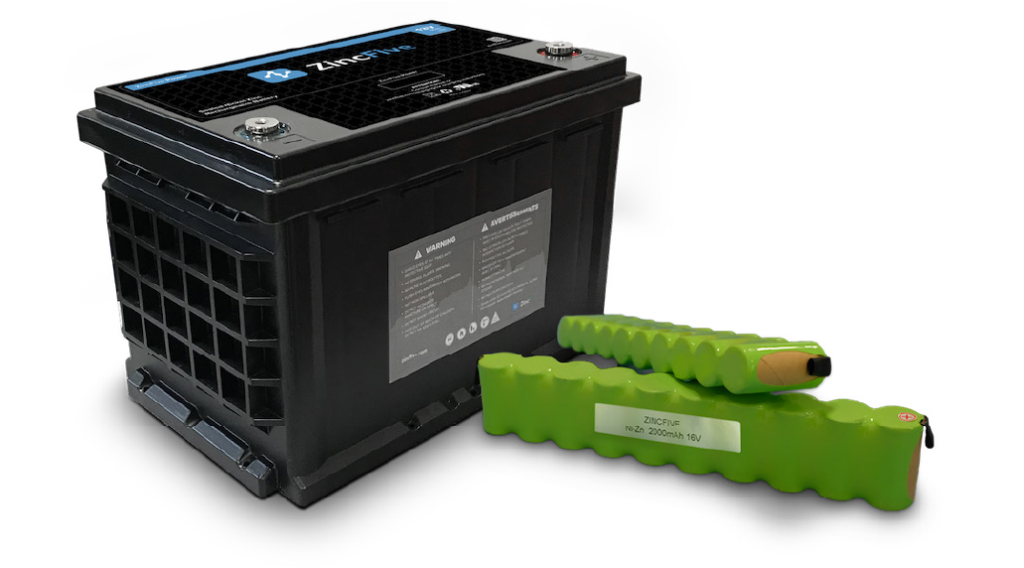
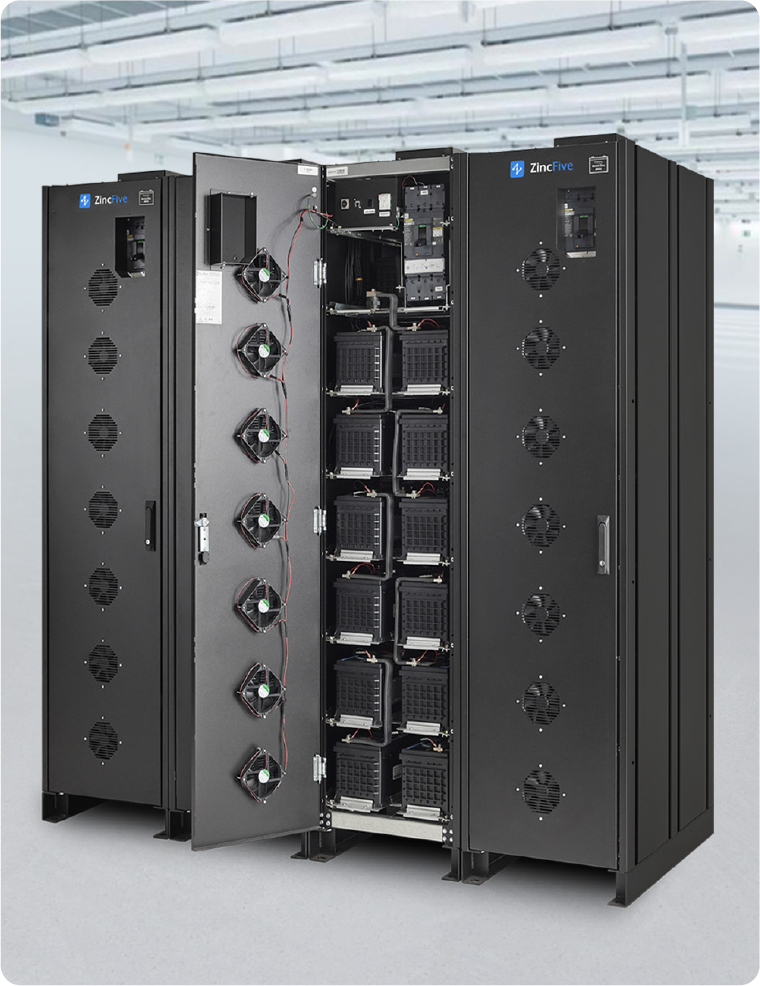
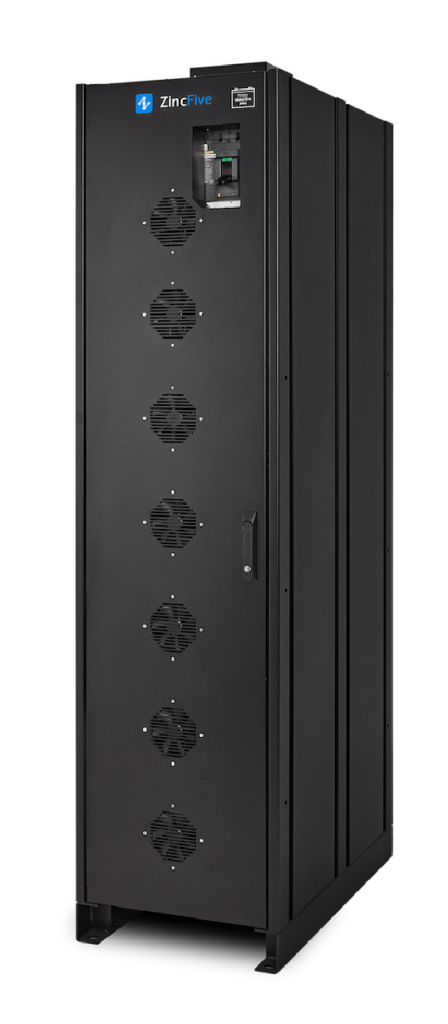
As the world’s first NiZn BESS (Battery Energy Storage Solution) product featuring backward and forward compatibility with megawatt class UPS inverters designed for lead-acid batteries, ZincFive’s BC Series UPS Battery Cabinet offers a drop-in replacement for battery storage systems in both new and existing UPS installations utilizing lead-acid batteries. Through its use, data centers can efficiently upgrade their UPS systems to harness the benefits of ZincFive’s NiZn batteries.

Register to read full paper

Introduction

As cloud-based services and storage become central to business operations, data centers are under increasing pressure to ensure the resilience of their mission critical facilities. Data centers rely on uninterruptible power supply (UPS) systemsto secure continued operations during power outages and other disturbances, most often powered by lead-acid batteries. However, UPS systems that utilize nickel-zinc (NiZn) battery technology have specific advantages over lead-acid in terms of performance, reliability, safety, lifetime cost and climate impact.

Despite these advantages of alternative battery chemistries, most existing UPS systems were already designed to work with lead-acid batteries. Since each battery chemistry has its own charge/discharge profile, these UPS systems often would require additional hardware and re-engineering to accommodate non-lead-acid batteries. The time and cost needed for such modifications prevent the switch from lead-acid to alternative chemistries.

Thus, the best solution to this dilemma is a “drop-in replacement” battery storage system that not only enables the incorporation of alternative battery chemistries, but also functions in an existing UPS system without the need for additional modifications. This characteristic enables backward and forward compatibility that saves UPS Original Equipment Manufacturers (OEMs) and data centers time and money by integrating new battery types into traditional UPS systems without expensive modifications.

As the world’s first NiZn BESS (Battery Energy Storage Solution) product featuring backward and forward compatibility with megawatt class UPS inverters designed for lead-acid batteries, ZincFive’s BC Series UPS Battery Cabinet offers a drop-in replacement for battery storage systems in both new and existing UPS installations utilizing lead-acid batteries. Through its use, data centers can efficiently upgrade their UPS systems to harness the benefits of ZincFive’s NiZn batteries.

Why Switch from Lead-Acid to Nickel-Zinc?

Historically, most data centers depend on lead-acid batteries to power their UPS systems. The lead-acid battery was the first chemistry used and remains popular today, but alternative battery chemistries such as lithium-ion and nickel-zinc offer compelling value propositions driving many data center end users and OEMs to switch to a new battery chemistry.

Modern data centers bear a larger compute and power burden each year. Digital transformation, 5G, edge computing, the Internet of Things, artificial intelligence and machine learning all require a continually increasing level of computing power and density. For example, Dell expects that future rack densities will far exceed those of today,¹ which have already vastly grown. Since 2012, the amount of computing used for the largest AI training runs has expanded by more than 300,000 times,² and the computer resources consumed by AI double every 100 days.³

The rising power density per rack and the need to provide space for as much compute power as possible in the data center also applies to infrastructure UPS and energy storage densities need to increase to reduce the infrastructure footprint. Additionally, data centers are being designed and built both faster and larger, emphasizing these trends further.

The shortcoming of lead-acid batteries is particularly evident when compared to the capabilities of ZincFive’s NiZn batteries:

Power Density

NiZn batteries have higher power density than lead-acid batteries, so by choosing NiZn battery backup, data center designers can reduce the footprint needed for energy storage. In fact, NiZn batteries have twice the power density, and so can reduce the footprint by as much as 50% compared to lead-acid batteries. Similarly, NiZn batteries can deliver the same amount of power with half the weight of lead-acid batteries. This reduces the structural requirements of the UPS room. Smaller footprint and less weight will reduce capital expenditure (CapEx) costs associated with energy storage.

Safety

Data center operators are responsible for the safety of their facilities and personnel. NiZn technology is inherently safer than lead-acid or lithium batteries. NiZn batteries do not exhibit thermal runaway and are non-flammable, as proven through testing at the cell level using the Underwriters Laboratories UL 9540A test method. Their superior weight and safety makes the batteries easier to handle.

Reliability

Battery string reliability is key to avoiding unplanned maintenance: when a lead-acid or lithium-ion battery cell fails, it creates an open circuit that halts string operation. A weak or depleted NiZn cell, on the other hand, remains conductive, allowing the string to continue operating. This turns an emergency situation with other battery chemistries into a simple battery replacement at the next planned maintenance cycle with little cost and no operational impact.

  • Unlike lead-acid and lithium-ion chemistries, a weak or depleted NiZn cell remains conductive, allowing the string to continue operating.
  • Turns an emergency, unplanned maintenance situation for lithium and lead-acid into a simple string repair at the next planned maintenance cycle.

NiZn reliability delivers planned maintenance with no operational impact! This is a new paradigm in battery string reliability, contributing significantly to improved data center uptime.

Lifespan & Maintenance Costs

For lead-acid batteries, operating expenditures (OpEx) over the life of the UPS system can be more expensive than up-front CapEx. NiZn solutions dramatically lower OpEx through their much longer useful life and simplified maintenance. Additionally, the size and weight advantages of NiZn batteries compared to lead-acid batteries can lower the investment needed to house energy storage within data centers. NiZn batteries also have a wider operating temperature range than other technologies, which reduces demands on data center cooling systems. By lowering OpEx, ZincFive solutions reduce ownership costs over lead-acid based UPS products when looking across the total UPS useful life.

Sustainability

NiZn batteries are mainly composed of common, highly available, non-hazardous materials as opposed to lead-acid batteries containing significant amounts of lead and other hazardous materials. Even after a long operational life, NiZn is one of the most recyclable battery chemistries on the market. Unlike many other materials, both nickel and zinc can be recycled while maintaining their physical and chemical properties. ZincFive’s zinc electrode contains no hazardous lead, cadmium or mercury, and so is environmentally benign. In fact, NiZn batteries have the best climate impact score – 9.4 out of 10 – of backup battery chemistries typically used in data centers, according to a recent 3rd party Climate Impact Report.

As rack-level compute density rises, so do the requirements for backup power in smaller, safer footprints. With their high power density, longer lifespan, sustainability and greater reliability, NiZn batteries are the ideal choice for backing up the increasing data center loads.

Why Alternative Battery Chemistries Need Backward/Forward Compatibility

While NiZn batteries’ characteristics give data centers more than enough reason to make the switch from lead-acid, one challenge often stands in the way: the average data center UPS system was not built with them in mind.

Rather, most data centers were designed specifically to charge lead-acid batteries. Since every battery chemistry has a different charge/discharge profile, alternative batteries can’t charge from the typical UPS system without a costly and time-consuming reengineering process.

Fortunately, one workaround exists to avoid that extra time and cost. A NiZn battery chemistry can, in fact, charge from a UPS made only for lead-acid battery profiles without additional hardware – as long as it has backward/forward compatibility, the ability to seamlessly operate with a UPS designed for a different battery chemistry than its own.

Less Greenhouse Gas (GHG) Footprint than lithium-ion batteries when compared to nickel-zinc.

Less Greenhouse Gas (GHG) Footprint than lead-acid batteries when compared to nickel-zinc.

Less energy footprint than lithium-ion and lead-acid pure lead batteries when compared to nickel-zinc.

Even including water requirements for raw material extraction, the ZincFive battery still demands 96% less water than the average lithium-ion battery.

ZincFive’s BC Series UPS Battery Cabinet: the Key to an Easy Upgrade

ZincFive‘s BC Series Battery Cabinets, while housing NiZn batteries with all of their associated benefits, adapt the lead-acid charging system to the needs of the nickel-zinc battery. The battery cabinets’ intelligent charging & monitoring system emulates the profile of lead-acid batteries to the UPS. Since the UPS doesn’t “know” that the NiZn battery string has a different chemistry, it operates the string just as it would for its previous lead-acid inhabitants.

This way, ZincFive’s UPS Battery Cabinet’s specialized profile allows operators to use NiZn battery cabinets as “drop-in” replacements. Able to support 1MW of UPS output power with only four battery cabinets and the industry’s smallest linear footprint, this NiZn Battery Cabinet offers a lower TCO, lower maintenance and higher performance alternative for data center UPS energy storage.

Conclusion

By utilizing ZincFive’s BC Series Battery Cabinets, data center operators can easily integrate NiZn’s benefits into existing UPS systems with no need for hardware modifications. The cabinets’ backward and forward compatibility with megawatt class inverters allows them to function as a straightforward drop-in replacement for existing lead-acid battery cabinets. This allows data centers to take advantage of NiZn’s higher power density, superior reliability, lower costs, longer lifespan, and multiple environmental advantages that modern data centers need: the perfect choice to safely back up their power and maintain critical operations.

Citations

¹ https://www.delltechnologies.com/asset/en-us/products/servers/industry-market/2020-server-trends-and-observations-brief.pdf

² https://www.technologyreview.com/2019/11/11/132004/the-computing-power-needed-to-train-ai-is-now-rising-seven-times-faster-than-ever-before/

³ https://openai.com/blog/ai-and-compute/

https://www.ul.com/services/ul-9540a-test-method

https://www.boundlessimpact.net/climate-impact-assessment

Tags:
  • batteries, 
  • data centers, 
  • uninterruptible power supply
  • Featured Papers

    A Comprehensive Guide to the U.S. Codes and Standards for Energy Storage Systems (ESS)

    This white paper provides an informational guide to the United States Codes and Standards regarding Energy Storage Systems (ESS), including battery storage systems for uninterruptible power supplies and other battery backup systems.

    June 28, 2024
    1 / 2
  • Featured Papers

    Climate Impact Profile

    Advanced energy storage solutions are increasingly needed to transition the electricity grid, transportation, building and industrial sectors towards renewable energy sources. ZincFive’s nickel-zinc battery is a high-capacity battery with environmental and safety advantages.

    June 28, 2024
    2 / 2

Runtime Optimization: As Data Centers Reduce UPS Runtimes, The Right Batteries Become More Critical

June 28, 2024

Description

When utility power goes down, data center Uninterruptible Power Supply (UPS) systems immediately switch over to backup batteries, which provide power to the facility until the generators come online. This transitional period is known as “battery runtime” or “ride-through time.” In the past decade, data center designs have continued to reduce battery runtime.

Register to read full paper

Executive Summary

When utility power goes down, data center Uninterruptible Power Supply (UPS) systems immediately switch over to backup batteries, which provide power to the facility until the generators come online. This transitional period is known as “battery runtime” or “ride-through time.” In the past decade, data center designs have continued to reduce battery runtime.

A 30-minute runtime was considered normal.

A 15-minute runtime was expected.

Many data centers are operating with a 5 minute runtime and new designs are focusing on switching their facilities over to generator power in 3 minutes or less.

The reduction in battery runtime provides an opportunity for data center owners to re-examine the batteries they use for backup power in their facilities. Due to limits in their chemistries, traditional lead acid and lithium-ion batteries cannot be optimized for runtimes of less than 5 minutes. In either case, data centers must oversize their battery bank, buying more batteries than they actually need in order to provide adequate short-term power.

As data center owners adopt data center designs with faster automatic failover from UPS to generator, they should invest in a battery that:

  1. Can be optimally sized for runtimes of 5 minutes or less;
  2. Provides a small footprint with reliable and safe short-term power burst;
  3. Offers total cost of ownership (TCO) savings, by requiring a smaller number of batteries to support UPS designs with shorter runtimes.

Nickel-zinc (NiZn) battery technology offers all these advantages and is a smart choice for the future of data center backup power as UPS technologies continue to improve.

The Industry Moves Towards Shorter Runtimes

An Uninterruptible Power Supply (UPS) system serves as part of the fail-safe power mechanism for a data center. Should the utility power experience an outage, the backup power system seamlessly transitions from UPS battery backup to longer duration backup generators. This ensures business continuity for servers housed at that facility, and prevents costly downtime, loss of revenue, and potential damage to the company’s reputation.

In the past decade, automatic failover in data centers has gotten faster and smoother, and battery runtimes have been significantly reduced. Ten years ago, a 30-minute runtime was considered normal. Five years ago, a 15-minute runtime was expected. Today, many data centers are operating with a 5 minute runtime and new designs are focusing on switching their facilities over to generator power in 3 minutes or less.

The Trend in Reduction of Battery Runtime is Due to Several Factors:

Improvements in generator technology – Today’s generators are able to start up faster. When a power outage hits, the generators can usually start up and come online in under 50 seconds. When the UPS sees that the main input has been transferred to the generators, they slowly transition the facilities load over from the batteries to the generator typically over a 10 second ramping period known as the walk-in period. In some facilities, this total startup and transition to generator happens within 30 to 45 seconds.

Improvements in power delivery architecture – Generators may not be the site’s only backup power source and may not even be the first option during automatic failover. For example, if a facility has dual power feeds and one utility feed goes down, the UPS will automatically switch the facility over to the second utility feed. The backup batteries may still provide power to the facility during this switchover which only typically requires around 5 seconds to make the transfer.

Some corporations have achieved multiple-site redundancy by setting up data centers in several cities, with servers running synchronized applications. For example, if a Denver data center which is hosting eCommerce applications goes down, the company’s IT systems will automatically switch customers over to those same applications hosted on servers in their Atlanta and Phoenix data centers.

Multiple-site redundancy doesn’t directly affect UPS failover times. The switchover of applications usually happens in less than 1 minute – but in this case, the switchover is software-driven. Still, having data centers in several cities means that a business will not be interrupted if one facility goes down. This gives a company peace of mind since it lowers the risk of losing business due to a data center outage.

Even with faster automatic failover and reduced battery runtime, UPS systems are as reliable as ever in providing continuous uptime to data center facilities with reliability reaching 99.99999%. In fact, some data center owners are now adopting new and more robust automatic failover plans to accommodate faster turnover. They now expect their generators to come online faster, and count on the UPS to reliably transfer the data center’s load to generator power in less than 1 minute.

With data center design and construction teams adopting these new and more robust failover plans and reducing their battery runtimes, it creates a highly competitive landscape and is causing other providers to reevaluate their runtime requirements to better optimize their UPS and battery systems. They have an opportunity to choose a battery solution that supports this inevitable move to shorter runtimes.

A few key qualities they should consider include:

  1. Reliability and safety during short-term, high-power discharge.
  2. High-density power delivery that enables right-sizing of battery loads for data center UPS systems with runtimes moving below 5 minutes.
  3. Total Cost of Ownership (TCO) savings.

Choosing a Reliable Battery for Shorter UPS Runtimes

There are batteries available today that offer reliable power delivery for UPS systems for shorter runtimes. Due to output current limitations, a majority of these battery solutions have to be oversized to meet the UPS power requirements. Nickel-zinc batteries are uniquely capable of safely supporting extremely high-power discharges in very small footprints, consequently reducing the UPS room’s overall space requirements and the quantity of cabinets necessary for installation.

The right choice of a high-power battery solution for short runtimes can simplify the site installation and reduce the site risk, provided that it is a safe and reliable solution.

As seen in Figure 1 in a lead acid or lithium-ion battery string, failed cells are typically accompanied by a steep rise in internal resistance which will block the current flow from surrounding cells when the battery string is expected to provide runtime for an outage. This impedance block will create an open circuit, and subsequent failure to discharge. A single bad battery cell can bring down an entire string. Data center owners usually try to compensate for this by adding additional redundant battery strings – which increases the TCO of the battery system.

Contrary to the other chemistries, a weak or depleted nickel-zinc cell will see a reduction in internal impedance and, instead of creating an open circuit, will remain conductive and allow the battery string to discharge. This means that even with a weak or depleted cell the nickel-zinc battery system will continue to deliver runtime, reducing the need for redundant battery strings required by other chemistries. That is inherent reliability at the electrochemical level.

Figure 1: Lead-Acid or Lithium-Ion vs. Nickel-Zinc String Discharge Reliability

Choosing a Safe Battery for Short-Duration Discharge

It is possible to choose a battery that not only delivers a reliable electric charge for a short-duration runtime, but also delivers that charge safely.

Nickel-zinc batteries are alkaline batteries. Unlike lead acid and lithium-ion batteries, the nickel-zinc battery has zero risk of thermal runaway. This gives the battery several advantages when it comes to safety:

  1. A nickel-zinc battery can provide a high-power, short-term discharge without the risk of thermal runaway. This makes the battery a safe option for UPS systems with shorter runtimes.
  2. In the case of a bad battery cell, the nickel-zinc battery can still provide a safe, sustained discharge, thanks to the battery’s electrochemistry.
  3. The nickel-zinc battery can provide high levels of current without posing a safety risk.

Lithium chemistries specifically rely on Battery Management Systems (BMS) to ensure the cells are functioning and to prevent any safety risk that could occur. The risk this poses to the reliability of the lithium battery system is that if a single battery cell is determined to be out of tolerance, the BMS must protect the battery string and disconnect itself from the system as not to cause any adverse conditions or potential safety concerns. If this happens and the battery system is disconnected by the BMS, that means no runtime for the data center when it is needed most.

Unlike with other types of batteries, the BMS for nickel-zinc batteries does not automatically shut down a battery string or prevent the battery from discharging for any reason.

Nickel-zinc batteries do not require these controls as they are safe at the cell level. These systems do not have discharge parameters that are required to be managed by a BMS as there is no safety risk or thermal runaway concerns with this chemistry. This means the battery system can provide runtime for the data center without any concern of the BMS preventing a discharge.

Changing workloads and corporate priorities have caused data center builders and operators to take a closer look at UPS runtimes. With the explosive market growth in AI comes different and often reduced backup power requirements. Meanwhile, larger facilities mean the difference between 3 minutes and 7 minutes of battery runtime likely doesn’t impact the end result if a generator fails to start. Focusing specifically on achieving enough runtime to ride through generator starting and load transfers allows our data center clients to reduce their capex, ease their supply chain burden, and reduce equipment footprint, allowing them to maximize the sellable space in their facilities.”

Gary Russinko, PE & Managing Principal,
kW Mission Critical Engineering

Right-Sizing Battery Banks for Faster UPS Runtimes

Right sizing your battery bank begins with selecting a battery that can be optimized for shorter battery runtimes. Data center designers and operators are reducing their runtime requirement to less than 5 minutes, with some targeting 3 minutes at 10 years as an optimized solution.

Let’s look at a common industry example of a 1MW UPS design for a side-by-side comparison. In this example, the data center can switch over to generator power in 1 minute or less, and because of this, it is determined that they only require a 3-minute (at 10 years) battery runtime design.

Figure 2 shows how this setup might work using different types of batteries.

Most data centers today use either traditional lead acid or lithium-ion batteries as their backup power source but these batteries may not be the best option for UPS systems with faster automatic failover. Due to limits in their battery chemistries, lead acid and lithium-ion batteries may not be optimized for UPS runtimes under 5 minutes whereas nickel-zinc solutions can.

Lead acid batteries have a high discharge rate but a low energy density. This means you need a larger number of batteries to handle your data center load.

Lithium-ion battery cabinets, on the other hand, have a higher energy density but have a lower discharge rate. This is due to limitations in maximum current and the safety risk an overcurrent scenario poses to thermal runaway risks. If the discharge current goes above this limit, the BMS that controls the lithium-ion batteries will shut the cabinet down. These overcurrent protection limits increase the risk of cutting off the system in the middle of battery runtime, preventing the system from providing the high-power discharge required to support the critical load.

In either case, with lead acid or lithium-ion batteries, you have to oversize your battery bank to reach your target load of 1 MW and provide a sustained, short-duration uninterrupted, high-power discharge. This means the data center must buy a larger number of battery cabinets to serve a UPS system with a runtime of less than 3 minutes.

To achieve 1 MW power requirements for 3 minutes at 10 years you would need:

Figure 2: Nickel-Zinc vs. Lithium-Ion vs. Lead Acid Battery Cabinet Footprint

On the other hand, nickel-zinc batteries offer three times the power density of lead acid, two times the current carrying capability of industry leading lithium-ion batteries, and a BMS that is passive during a discharge and will not interrupt the operation as there is no safety risk to do so.

Using nickel-zinc batteries, data centers can safely optimize their battery load for runtimes of 5 minutes or less. In the example above they would only need 3 cabinets of nickel-zinc batteries to reach 1 MW target load, and provide a 3-minute short-term, high-power discharge.

Many data centers are selecting runtimes less than 5 minutes to optimize cost and minimize footprint. These customers have realized long ago that 5 minutes of UPS battery runtime does not provide added protection. If a generator fails to start, the problem cannot be corrected in 5 minutes or even 15 minutes.”

Harry Handlin, U.S. Data Center Segment
Leader at ABB

Achieving Total Cost of Ownership Savings with Shorter Runtimes

Today’s UPS systems can provide TCO savings for data center owners who take advantage of shorter battery runtimes. If one knows how to optimize a battery bank to provide a sustained discharge for less than 5 minutes, one can reduce the quantity of batteries required to meet the facility’s load.

Since NiZn batteries can be optimally sized for runtimes of 5 minutes or less, one only needs to buy the minimum number of battery cabinets to support the load and runtime requirements.

This reduction in batteries that nickel-zinc battery technology can offer for shorter runtimes has large implications to the overall total cost of ownership decrease. The largest contributing factors are the footprint reduction, installation costs and lower overall maintenance costs over the life of the system. These can be compounded – and the savings even larger – if the UPS and battery system are containerized in a modular power system where footprint reduction can translate to larger savings.

Conclusion

Shorter runtimes may not suit every data center’s needs. Many facilities maintain longer battery runtimes during automatic failover for various reasons. For such applications, nickel-zinc batteries continue to offer a robust and dependable backup power source.

Nickel-zinc batteries are a smart choice for the future. As UPS systems and generators improve on transfer time, this failover will become even faster and more reliable as data centers are able to switch over to generator power (or from one utility feed to another) more seamlessly than ever before. With these improvements, there will be a high demand for a battery that can be right-sized and optimized for shorter runtimes, while still delivering a high-power discharge.

The nickel-zinc battery offers the power density, reliability, safety, and reduced runtime capabilities that the data centers require.

Tags:
  • batteries, 
  • data centers, 
  • uninterruptible power supply
  • Featured Papers

    A Comprehensive Guide to the U.S. Codes and Standards for Energy Storage Systems (ESS)

    This white paper provides an informational guide to the United States Codes and Standards regarding Energy Storage Systems (ESS), including battery storage systems for uninterruptible power supplies and other battery backup systems.

    June 28, 2024
    1 / 2
  • Featured Papers

    Climate Impact Profile

    Advanced energy storage solutions are increasingly needed to transition the electricity grid, transportation, building and industrial sectors towards renewable energy sources. ZincFive’s nickel-zinc battery is a high-capacity battery with environmental and safety advantages.

    June 28, 2024
    2 / 2

A Comprehensive Guide to the U.S. Codes and Standards for Energy Storage Systems (ESS)

June 28, 2024

Description

This white paper provides an informational guide to the United States Codes and Standards regarding Energy Storage Systems (ESS), including battery storage systems for uninterruptible power supplies and other battery backup systems. There are several ESS technologies in use today, and several that are still in various stages of development.

Register to read full paper

Introduction

This white paper provides an informational guide to the United States Codes and Standards regarding Energy Storage Systems (ESS), including battery storage systems for uninterruptible power supplies and other battery backup systems. There are several ESS technologies in use today, and several that are still in various stages of development.

While various technologies, such as flywheels, fuel cells, compressed gas, and others, are either in use or development, the primary focus of most of the jurisdictional Authority Having Jurisdiction (AHJ) is currently being placed on electrochemical storage systems.

These same Codes – and many of the Standards cited – cover all of the currently available ESS technologies, and in some cases, there are additional Codes and Standards cited to cover those specific technologies. For the sake of brevity, electrochemical technologies will be the primary focus of this paper due to being the ESS choice of the vast majority of users. Technologies such as pumped hydro, compressed gas, fuel cells, and various methods of gravity storage are not covered in this paper.

Why do we have Codes and Standards?

A code repository is necessary to increase awareness and improve safety in the energy storage industry. Electrochemical energy storage has a reputation for concerns regarding the ventilation of hazardous gases, poor reliability, short product life, substantial cooling requirements, and high levels of periodic maintenance.

Like the newer lithium battery technologies, the traditional lead-acid technology has developed a stigma. While generally a safe product, damage presents the risk of fire. When damaged, lead-acid, lithium, and some other battery technologies may also leach corrosive chemicals such as mercury, cadmium, and lead into landfills and may contaminate water supplies and ecosystems. These chemicals are dangerous to human health and are expensive to clean up. Users desire a safe, cost-effective alternative that requires less maintenance and is environmentally sustainable.

Definition of Codes and Standards

What differentiates Codes from Standards is the usage. Codes are an overarching statement of best (and safest) practices for an entire industry or technology.

As seen in the provided definitions, a Code is a set (or collection) of mandatory regulations that are established and enforced by a governmental authority. This is generally a collection of safety practices and other associated Standards enforced for the purposes of safety and reliability.

Standards, on the other hand, are technology or product specific, and provide a method to verify that the technology or product meets or exceeds the minimum acceptable level of safety.

What we refer to as “Codes” are actually model Codes, published by one of several nationally recognized organizations, with the purpose of presenting the “best practice” for subjects covered by the intended area of application. Each model code presents the latest consensus information on its related subject. These model Codes are then reviewed and adopted by the various jurisdictions, and when accepted become the legal Code for that jurisdiction. There are several separate model Codes, covering a variety of applications. For the purposes of this paper, only the applicable fire Codes and their related Standards will be considered.

In some cases, these Codes are adopted on a statewide basis. In others, they may be adopted on a county-by-county, or city-by-city basis. In county and local cases, the jurisdiction is allowed to amend the Code to make it more stringent, but in no case may the jurisdiction reduce the Code if it is adopted in full by a higher authority.

There are two primary organizations in the United States that publish these model Codes:

National Fire Protection Association (NFPA)

The first to be organized was the National Fire Protection Association (NFPA), which was organized in 1896 by several men associated with fire insurance companies. Currently, NFPA sponsors over 300 consensus Codes and Standards covering many safety related areas.

International Code Council (ICC)

The second is the International Code Council (ICC). ICC was organized by merging three separate regional code writing organizations. In 1972, the Building Officials Code Administrators International (BOCA), the Southern Building Code Council International (SBCCI), and the International Conference of Building Officials (ICBO) created the Council of American Building Officials (CABO) and published a single cooperative code for residential construction. This code was not well received but led to the formation of a more comprehensive set of building Codes. In 1994, these three organizations merged to form ICC, and created a single set of Codes that had no regional limitations. The first “I-Codes” were published in 2000.

Every jurisdiction in the US has adopted either the NFPA Codes or International Code Council’s I-Codes. Currently (2023), there are eight states that adopt the NFPA 1 Fire Code, and forty-two that adopt the International Fire Code. Interestingly, although there are much more advanced Codes available, there are still several jurisdictions that are using the 2015 revisions of the Codes, and at least one that is still using the 2009 revision.

As one gains understanding of the increasing number of new battery chemistries, and the associated risk factors, it is hard to justify maintaining an outdated Code base unless that Code is regularly amended to maintain the intended safety aspects of the more recent Codes.

Storage Technologies and Electrochemistries

There are several basic groups of ESS technologies in use today. They are usually broken into categories such as Mechanical, Gravity, Electrical and Electrochemical. While some of these may somewhat bridge gaps between technology groups, these are generally recognized as the major categories for Code purposes. It should be noted that technologies falling under the “Gravity” section have very little mention in the Fire Codes.

National Fire Protection Association (NFPA)

The first to be organized was the National Fire Protection Association (NFPA), which was organized in 1896 by several men associated with fire insurance companies. Currently, NFPA sponsors over 300 consensus Codes and Standards covering many safety related areas.

Electrical

Electrochemical Double Layer Capacitors (EDLC) – The EDLC is considered a “supercapacitor” or an “ultracapacitor.” It is an electrostatic-based system with two electrodes producing electrostatic effects with activated carbons. These ultracapacitors can store or deliver energy at tremendous rates.
Supercapacitors – This is a general term for electrochemical double-layer capacitors.

Electrochemistries

Sources: Ricardo Consulting, AABC, National Academy of Sciences, and ZincFive estimates


Lead-Acid (LA)

The Lead-Acid battery utilizes the chemical reaction between lead and sulfuric acid. During discharge, lead and sulfuric acid react to form lead sulfate and hydrogen ions. During charging, the lead sulfate and hydrogen ions recombine into lead and sulfuric acid. This cycle of chemical reactions between lead and acid allows the battery to store and release electrical energy.


Nickel-Cadmium (NiCd)

The Nickel-Cadmium battery is based on the redox reaction between nickel hydroxide (NiOOH) and cadmium (Cd). Nickel hydroxide is the anode in the battery, and cadmium is the cathode. When the battery is charging, the reaction is reversed, nickel hydroxide is reduced to metallic nickel, and cadmium is oxidized to cadmium oxide (CdO).


Nickel-Metal Hydride (NiMH)

The Nickel-Metal Hydride battery is based on a chemical reaction between nickel and hydrogen. When the battery is discharged, the nickel is oxidized, and hydrogen is reduced, releasing electrons to provide electrical power. The reversed reaction occurs when the battery is being charged, which causes the hydrogen to oxidize and the nickel to reduce, allowing electrons to be absorbed from an external source.


Nickel-Zinc (NiZn)

The Nickel-Zinc battery is the process of chemical reactions between the anode (nickel) and the cathode (zinc) to produce electrical energy. Specifically, the nickel anode reacts with hydroxide ions during discharge, releasing electrons and forming nickel hydroxide. These electrons then travel to the zinc cathode, which reacts with zinc ions, releasing more electrons and forming zinc hydroxide. This process is reversed during charging.


Zinc-Manganese Dioxide (ZnMnO²)

The Zinc-Manganese Dioxide battery is also known as a zinc-carbon or alkaline battery, a secondary battery that can be recharged and reused multiple times. It is an improved version of the non-rechargeable zinc-carbon battery commonly used in household devices like remote controls, flashlights, and toys. The primary components of a rechargeable zinc-manganese dioxide battery are the anode, cathode, and electrolyte.

  • The battery’s anode is composed of zinc metal or a zinc alloy. During the recharging process, an electrical charge is applied to the battery, and the anode’s zinc ions combine with the electrolyte’s hydroxide ions, thus producing zinc hydroxide. The manganese oxide on the cathode is then changed back to manganese dioxide. During the battery operation (and discharge when the battery is in use), the zinc atoms at the anode undergo an oxidation reaction, releasing electrons and forming positively charged zinc ions

Sodium (High Temperature)

The electrochemistry of sodium batteries is based on the intercalation of sodium ions in graphite anodes and the reduction of sodium ions at a metal-oxide cathode. During charge, sodium ions are inserted into the graphite anode, and during discharge, the sodium ions are released and reduced at the metal-oxide cathode. The main advantage of using sodium instead of lithium is cost, as sodium is much more abundant and less expensive than lithium.

  • Sodium Sulfur (NaS) – Sodium sulfur batteries are based on the redox reaction between sodium (Na) and sulfur (S). The reaction occurs in a cell with an anode
    of sodium, a sulfur cathode, and a molten lithium and sodium chloride electrolyte. When the battery is charged, sodium ions move from the anode to the cathode and react with sulfur to produce sodium sulfide. During discharge, the reaction reverses, and the sodium sulfide is converted back into sodium and sulfur. The electrochemistry of sodium sulfur batteries makes them very efficient and can store large amounts of energy. They are also highly durable and have a long life span.
  • Sodium Metal Chloride (Na NiCl2) – Sodium metal chloride batteries involve the transfer of electrons between the anode and cathode, resulting in the oxidation of sodium at the anode and chlorine reduction at the cathode. The electrolyte is actually a solid beta-alumina that separates the liquid electrodes. This process is reversed during charging.

Flow

Flow batteries are electrochemical cells that use two different liquid electrolytes stored in separate tanks and pumped through the cell. The electrolytes are typically held in flow cells and separated by a membrane that allows ions to pass through. During operation, the two electrolytes react in the cell, generating electrical energy. This energy can power various loads, including motors, pumps, and lights. The process can be reversed, allowing a flow battery to act as a generator and store energy for later use.

  • Vanadium Redox (VRFB) – Vanadium redox flow batteries are electrochemical energy storage systems that use a vanadium-based electrolyte solution. The vanadium electrolyte is stored in two tanks and is circulated through a cell stack. The cell stack consists of a series of electrochemical cells where oxidation and
    reduction reactions take place. During charging, oxidation occurs in the cell stack, causing the vanadium in the electrolyte to be oxidized. During discharge, the vanadium is reduced. This cycle allows the battery to store and release electrical energy as needed.
  • Zinc-Air (ZnO2) – The zinc-air flow batteries use zinc metal as the anode and air-breathing cathodes. The zinc metal is oxidized at the anode, releasing electrons that travel through the external circuit to the cathode. Oxygen from the air is reduced at the cathode, forming hydroxide ions. The hydroxide ions react with zinc ions in the electrolyte to form zincate ions, which are then released into the electrolyte. The zincate ions are then re-oxidized at the anode, and the cycle is repeated. This process is powered by the flow of electrons from the anode to the cathode, generating electrical energy.
  • Zinc-Bromine (ZnBr) – Zinc-Bromine flow batteries are based on the redox reaction between zinc and bromide ions in an aqueous electrolyte stored in two tanks separated by a membrane. During charging, zinc is oxidized at the anode, and bromide is reduced at the cathode, forming a zinc bromide complex. During discharge, the reaction is reversed. The energy is stored in the zinc bromide complex, which can be recharged several times.

Lithium

Lithium batteries are rechargeable batteries that utilize lithium metal or compounds’ electrochemical properties to store energy. They are the most common type of rechargeable battery used in consumer electronics such as cell phones, tablets, and laptops. Lithium batteries are also used in electric vehicles, medical devices, and military applications. The electrochemistry of lithium batteries is based on the redox reaction between lithium and an electrolyte solution. In a lithium battery, lithium ions are stored in the cathode material and are released into the electrolyte solution during charging. As the lithium ions travel through the electrolyte solution, they react with the anode material to form lithium metal, releasing electrons. During discharge, the lithium ions travel back to the cathode and take electrons from the anode, creating an electric current. (There are over 20 “lithium” chemistries. These are the most widely used in stationary applications.)

Lithium Iron Phosphate (LFP) – Lithium Iron Phosphate (LFP) batteries rely on a reversible redox reaction between the active materials, lithium iron phosphate (LiFePO4), and carbon. Upon charge, lithium ions (Li+) are inserted into the anode (negative electrode) while electrons are supplied to the cathode (positive electrode). When the battery is discharged, the lithium ions are extracted from the anode and travel through the electrolyte to the cathode. This is where the electrons are recombined to form the LiFePO4 compound. During this process, the battery releases energy in the form of electricity.

  • Lithium Nickel Manganese Cobalt Oxide (NMC) – Lithium Nickel Manganese Cobalt Oxide (LiNiMnCoO2 or NMC) batteries are rechargeable lithium-ion batteries that have become increasingly popular recently. In these batteries, the positive electrode, or anode, is made of lithium cobalt oxide (LiCoO2). The negative electrode, or cathode, is made of a combination of nickel, manganese, and cobalt oxides (NMC). Lithium ions move from the anode to the cathode during charging, depositing onto the negative electrode. During discharging, the lithium ions move from the cathode to the anode in the opposite direction. This process of shuttling lithium ions back and forth between the anode and cathode provides power for the battery.
  • Lithium Nickel Cobalt Aluminum Oxide (NCA) – Lithium Nickel Cobalt Aluminum Oxide (NCA) is a rechargeable lithium-ion battery that utilizes a specific combination of materials in its cathode, including lithium, nickel, cobalt, and aluminum oxides to store and release electrical energy. During discharge, lithium ions move from the anode to the cathode through the electrolyte, creating an electric current. Nickel and cobalt are known for their high energy densities, while aluminum helps stabilize the cathode structure. The NCA cathode chemistry offers several advantages, including increased energy density, a long life cycle, high operating voltage, quick charging, and thermal stability. NCA batteries are commonly used in electric vehicles, power tools, and portable electronics.
  • Lithium Titanate (LTO) – Lithium Titanate anodes have been known since the 1980’s. The cathode can be lithium nickel manganese oxide (LMO) or nickel manganese cobalt oxide (NMC) compound, while the anode replaces the graphite with lithium titanate formed in a spinel arrangement. During charging, lithium ions move from the anode to the cathode. During discharge, lithium ions move from the cathode to the anode. This movement of ions creates an electric current, which is used to power a device. Lithium titanate has good fast charge characteristics and performs well at low temperatures but exhibits lower energy density than other technologies and is safer than most lithium batteries. LTO is expensive when compared to other lithium batteries.

How Codes Are Applied

Starting with the NFPA 1-2018 and IFC 2018, the Codes introduced some measure of regulation to ensure the safety of installed Energy Storage Systems (ESS). Although there was limited regulation regarding batteries and their installation, maintenance, and explosion/fire control in earlier revisions of the Codes, it was relatively rudimentary compared to later Codes.

As the adoption of newer battery technologies increased, both NFPA and ICC recognized that these technologies required more stringent regulation. The AHJs were unfamiliar with lithium, sodium, and other new technologies and had limited or no understanding of their potential problems. NFPA had several conflicting Codes and Standards cited in their fire code and recognized that creating a unified Energy Storage System (ESS) Standard was the best way to deal with that issue. This led to NFPA 855, the single ESS Standard NFPA now recognizes. The IFC 2021 revision deals with ESS slightly differently but has a chapter (Chapter 12) dedicated to Energy Systems and a section (Section 1207) dedicated to Electrical Energy Storage Systems. The IFC 2021 essentially copies the Maximum Allowable Quantities table (1206.9) from the IFC 2018, adds Nickel-Metal Hydride and Flow batteries to the table, and reprints almost the same data. There are additional stipulations in the requirements of the IFC 2021, but ICC did not go to the same lengths as NFPA in their 2021 edition. The 2024 edition of the IFC is anticipated to be more closely aligned with NFPA 855-2023.

Both the NFPA 1 National Fire Code and the ICC International Fire Code have adopted significant enhancements to the earlier code language in their 2021 revisions. Many jurisdictions still utilize the 2018 and earlier revisions of the Fire Codes. Still, many jurisdictions with high data center density are adopting the 2021 revisions and/or implementing NFPA 855-2020 as their ESS standard. While the 2021 revisions of the International Fire Code is the most recent available today (Q3, 2023), the new NFPA 1-2024 Fire Code has just been released in September of 2023, and NFPA 855 has already been updated with the NFPA 855-2023 Standard.

In the case of a jurisdiction adopting either of these Fire Codes and their related Standards, there are significant restrictions on some Energy Storage technologies. Any technology not explicitly listed in the relevant tables (Table 9.4.1 in NFPA 855-2023, and Table 1207.5 in IFC 2021), and even some of those listed but not specified as having an unlimited allowable quantity in a given fire area, will have to be approved on a case-by-case basis. Some jurisdictions will not allow a lithium battery to be installed under any circumstances. In contrast, some will allow them with severe restrictions on where they are installed, how much capacity is allowed, and what type of lithium battery is being proposed.

As mentioned earlier, the cited Standards significantly influence the Codes and their implementation. It is necessary to highlight some of these Standards (other than NFPA 855) due to their importance to both Codes. Three of particular importance are UL 1973, UL 9540, and UL 9540A.

List of Major U.S Codes and Standards

This section provides a comprehensive list of major U.S. Codes and Standards. See Appendix A for a concise cheat sheet for Codes and Appendix B for Standards.

Building Codes

International Building Code (IBC)

IBC 2018 – The International Building Code (IBC) 2018 is the most widely used in the United States. It is a model code developed by the International Code Council (ICC) that establishes minimum regulations for building design, construction, occupancy, and use to ensure public health, safety, and welfare. The IBC 2018 contains regulations for building materials, energy efficiency, fire safety, structural design, and more.

IBC 2021 – The 2021 version of the IBC is the sixth edition of the code, first published in 2000. The IBC establishes minimum regulations for the construction and maintenance of buildings and structures and addresses areas such as the design of structural elements, the installation of mechanical systems, fire protection and life safety systems, and energy conservation. The IBC is the basis for local and state building Codes throughout the United States.


Life Safety Code (NFPA)

A set of Standards developed by the National Fire Protection Association (NFPA) to protect people from fire dangers. The purpose of the NFPA Life Safety Code is to provide a uniform set of Standards for fire prevention and safety in all types of buildings, including schools, hospitals, hotels, and other public and private structures. Most states and localities have adopted the NFPA Life Safety Code throughout the United States.

NFPA 101 – The NFPA Life Safety Code addresses minimum building design, construction, operation, and maintenance requirements necessary to protect building occupants from danger caused by fire, smoke, and toxic fumes.


Fire Codes

NFPA 1 National Fire Code (varies by jurisdiction)

NFPA 1 offers a comprehensive, integrated approach to fire code regulation and hazard management, covering everything from fire alarms and sprinkler systems to building and process hazards and life safety issues.

NFPA 1 – 2015 – The Fire Code, 2015 (NFPA 1, 2015), produced by the National Fire Protection Association (NFPA), is the foundation for many state and
city Codes. The NFPA 1, 2015, and local jurisdiction amendments form the state Codes. Adopting jurisdictions include Connecticut, Delaware, Florida, Massachusetts, Detroit, New Hampshire, Rhode Island, Texas, and Vermont.

NFPA 1 – 2018 – The Fire Code, 2018 (NFPA 1, 2018) is produced by the National Fire Protection Association (NFPA). This document provides the foundation for many state and city Codes. The state Codes form the NFPA 1, 2018, and local jurisdiction amendments. Adopting jurisdictions include Florida, Hawaii, Kentucky, Maine, Maryland, New Hampshire, Rhode Island, Nashville and Davidson County, and West Virginia.

NFPA 1 – 2021 – The Fire Code 2021 (NFPA 1, 2021), produced by the National Fire Protection Association (NFPA), provides the foundation for many state and
city Codes. The NFPA 1, 2021, and local jurisdiction amendments form the state Codes. Adopting jurisdictions include Connecticut, Delaware, Massachusetts, and
West Virginia.


NFPA 70 National Electrical Code

NFPA 70, National Electrical Code (NEC) is the benchmark for safe electrical design, installation, and inspection to protect people and property from electrical hazards. The NEC has been adopted in all 50 states.

NFPA 70 – 2017 – The 2017 edition of the code includes safety requirements for electric vehicles, solar photovoltaic systems, and more.

NFPA 70 – 2020 – The 2020 edition of the electrical code includes requirements for various electrical systems-related topics, such as conductor protection, grounding and bonding, overcurrent protection, and more.

NFPA 70 – 2023 – The 2023 edition includes the latest electrical safety requirements.


International Fire Code (IFC)

This model code developed by the International Code Council (ICC) provides fire safety regulations for constructing, protecting, and occupying new and existing buildings, structures, and premises. The IFC covers many topics, including fire prevention, fire protection systems, flammable and combustible liquids, hazardous materials storage, means of egress, and emergency planning. The IFC also includes provisions for testing, inspection, and maintenance of fire protection systems and requirements for fire safety in high-rise buildings. IFC – 2015 IFC – 2018 IFC – 2021


NFPA 1 National Fire Code (varies by jurisdiction)

The National Fire Protection Association. It is a non-profit organization that develops, publishes, and disseminates over 300 consensus Codes and Standards to minimize the possibility and effects of fire and other risks.

(This is a sub-set. There are too many individual Standards to list all of them.)

NFPA 12 – The NFPA standard on carbon dioxide extinguishing systems. This document provides requirements and guidelines for designing, installing, maintaining, inspecting, and testing carbon dioxide extinguishing systems.

NFPA 13 – The NFPA standard for installing sprinkler systems. It outlines requirements for designing, installing, and maintaining automatic sprinkler systems for fire protection.

NFPA 15 – The NFPA standard for water spray fixed systems for fire protection. This standard guides the design, installation, operation, and maintenance of water spray systems used for fire protection.

NFPA 17 – the NFPA standard providing safety requirements for installing, maintaining, and using gaseous fire suppression systems. The standard applies to systems that use halocarbon agents, CO2, or inert gas gaseous fire suppression chemicals to extinguish fires.

NFPA 68 – The NFPAs standard on the design, installation, maintenance, testing, and use of explosion protection systems. It is intended to minimize the effects of
explosions caused by releasing flammable gases, vapors, and dust.

NFPA 69 – The NFPA standard for preventing fire and explosions in hazardous locations. It covers the design, installation, testing, and maintenance of systems and equipment used in hazardous locations.

NFPA 110 – The NFPA standard for emergency and standby power systems. The purpose of this standard is to provide requirements for the proper installation and maintenance of emergency and standby power systems to ensure their safe and reliable operation during an emergency.

NFPA 111 – The NFPA standard for stored electrical energy emergency and standby power systems. This standard covers the design, installation, maintenance, and testing requirements of emergency and standby power systems used in healthcare facilities, industrial facilities, and other commercial and institutional buildings.

NFPA 750 – The NFPA standard on installing, inspecting, and maintaining water-based fire protection systems. The standard includes information on the design, installation, and maintenance of fire sprinkler systems, fire pumps, fire hydrants, and other water-based fire protection equipment.

NFPA 855 – The NFPA standard for designing, installing, and maintaining fire protection systems. It establishes requirements for the identification, inspection, testing, and maintenance of fire protection systems and assessing the fire protection system’s performance.


Standards

ICC – International Code Council

ASHRAE/ICC Std. 240 – ASHRAE/ICC Standard 240 is a standard developed by the American Society of Heating, Refrigerating, and Air-Conditioning Engineers (ASHRAE) and the International Code Council (ICC) that provides requirements for fire-resistance ratings of roof/ceiling assemblies and roof/ceiling decks. It offers valuable guidance for protection from the spread of fire from one building to another and from the spread of smoke and heat from one area to another within the same building.


UL – Underwriters’ Laboratories

UL 94 – This standard outlines the flammability test procedures for materials used to manufacture components and parts in devices and appliances. It is a commonly used standard for testing the flammability of materials and products used in the electronics industry.

UL 263 – This standard provides for the safety of Fire Tests of Building Construction and Materials. It requires that building materials and products be tested and certified to meet specific fire safety requirements. The tests determine the material’s flame spread and smoke development characteristics, and the results are used to classify the material as either Class A or Class B.

UL 1741 – This standard applies to all types of inverters and other power conversion equipment operating photovoltaic (PV) systems. UL1741 ensures that inverters and related systems comply with the National Electrical Code (NEC) safety requirements. It also provides that the equipment is designed, tested, and labeled correctly to reduce potential PV system operating risks.

UL 1778 – This voluntary standard applies to installing Uninterruptible Power Supplies (UPS) and other related power systems. It outlines requirements for installing and operating such systems, including testing and maintenance, to ensure safe operation.

UL 1973 – ANSI/CAN/UL 1973:2022 Standard for Safety – Batteries for Use in Stationary and Motive Auxiliary Power Applications

Scope

  • These requirements cover battery systems as defined by this standard for use as energy storage for stationary applications such as for PV, wind turbine storage or for UPS, etc. applications. These systems shall be installed in accordance with NFPA 70, C22.1, or other applicable installation Codes.
  • The basis for UL 1973 is battery system safety testing and analysis, which determines if the battery system has any operational safety issues that must be managed or controlled to ensure safe operation. All electronics and/or software used to ensure safe operation must be tested to demonstrate that they can reliably manage the battery system safety
    aspects.

There have been two CRDs issued for compliance with UL 1973. These include:

  • i1973_3_20220902, dated 9/2/2022, which adds nickel-zinc batteries to the technologies covered by UL 1973 and specifies the testing parameters for all monobloc batteries in Annex H.
  • i1973_3_20230323, dated 3/23/2023, provides testing exceptions for nickel-based batteries tested per Section 7.12.1.

These CRDs are specific to nickel-based batteries used in typical stationary applications such as UPS, PV, etc.

UL 1974 – This standard is for fire protection systems, including fire alarm systems, emergency voice/alarm communication systems, and high-rise evacuation systems. The standard ensures the safety of occupants in buildings where fire protection systems are installed.

UL 2075 – This standard certifies that products used in hazardous locations are safe to use. The standard covers the construction, installation, and operation of devices used in hazardous locations, such as those with flammable gases, vapors, and liquids.

UL 9540 – ANSI/CAN/UL 9540:2023 Standard for Safety – Energy Storage Systems and Equipment

Scope

  • These requirements cover an energy storage system (ESS) that is intended to receive and store energy in some form so that the ESS can provide electrical energy to loads or to the local/area electric power system (EPS) when needed. Electrochemical, chemical, mechanical, and thermal ESS are covered by this Standard. The ESS shall be constructed either as one unitary complete piece of equipment or as matched assemblies, that when connected, in accordance with the manufacturer’s installation instructions,form the ESS. An ESS consists of at least an energy storage function and energy storage protective function. If the ESS includes multiple parts that are housed in separate enclosures, it shall be considered as a multi-part ESS covered by this Standard. Individual parts (e.g. power conversion equipment, a battery, etc.) of an ESS are not considered an ESS on their own. This Standard evaluates the compatibility and safety of these various components and parts integrated into an ESS. The ESS can be an AC ESS or a DC ESS as defined in this Standard.

NOTE:

As can be seen in the italicized section of the Scope statement, Individual components of an ESS do not require a UL 9540 listing. These components may be tested as part of a UL 9540 system and then be recognized or listed as a UL 9540 component.

The UL 9540 listing is applied only to a complete system, including the charging, storage, and inverter in a single system (even if it is in multiple modules).

System components, such as batteries, safety control electronics, etc., have to be tested (as in the case of batteries undergoing the UL 9540A Test Method) or tested/listed under UL 1973 or other relevant Standards.

UL 9540A – ANSI/CAN/UL 9540A:2109 Standard for Safety – Test Method for Evaluating Thermal Runaway Fire Propagation in Battery Energy Storage Systems

Scope

1.1.

The test methodology in this standard determines the capability of a battery technology to undergo thermal runaway and then evaluates the fire and explosion hazard characteristics of those battery energy storage systems that have demonstrated a capability to undergo thermal runaway.

1.2

The data generated will be used to determine the fire and explosion
protection required for an installation of a battery energy storage system intended for installation, operation and maintenance in accordance with ICC IFC, NFPA 1, NFPA 70, IEEE C2, CAN/CSA C22.2 No. 0, and other codes affecting energy storage systems, and the manufacturer’s installation instructions.

1.3

Fire protection requirements not related to battery energy storage system equipment are covered by appropriate installation codes.

NOTE: This is NOT a Pass/Fail test!

As stated in the Scope of the document, the data collected during the testing will be evaluated and used to determine the appropriate level of fire and explosion protection required by the specific product. The testing follows a progressive test-level methodology, where a single cell (or monobloc, i.e., the smallest unit manufactured) is tested, and if no propagation is noted, the testing ends. If propagation occurs, the product advances to the next testing level (module) and is retested. This testing continues through the unit and installation levels until the propagation is controlled; the fire and explosion requirements are determined at this point. This, then, is the data that the AHJ uses to determine the requirements for installation in the applicable jurisdiction.

There have been ten CRDs issued for UL 9540A. In the interest of space, those will not be listed here, but it is recommended that the reader should familiarize himself with them. As seen by the number of CRDs published, UL 9540A is an actively evolving Standard that has (and will continue to) changed as new chemistries come into the marketplace and as experience proves that more aspects of the testing need to be explored.

UL 60950-1 – This is an international safety standard for Information Technology Equipment (ITE). This standard is used to test and certify ITE for safety compliance and is administered by Underwriters Laboratories (UL). This standard covers safety requirements for ITE, ranging from power supplies and cables to servers and other computer components.

UL 62368-1 – This safety standard includes audio/video, information, and communication technology equipment. This standard was published in 2017 and outlines safety requirements for various equipment, from consumer electronics to professional audio/video equipment. This standard replaces UL60065 and UL60950-1.

Looking Ahead

New Codes and Upcoming Code Updates

Many Codes are due for updated releases next year, which are very important in the ESS world. Among these are the NFPA 1 National Fire Code and the ICC International Fire Code, International Building Code, International Mechanical Code, and several more from ICC, all expected to be released late in 2023. In addition, the NFPA 101 Life Safety Code will be released in late 2023.

Many of the NFPA and UL Standards are either due for a revision release or are in the development cycle for release soon.

As a reminder, checking for the latest amendments or additions to the existing Codes and Standards is extremely important. For example, NFPA will issue Technical Interim Amendments (TIA), which supersede the language in the published document. UL issues Certification Requirement Decisions (CRD) to update the language in their Standards and add or remove requirements for compliance with the Standard in question. In both cases, these changes will be resolved by the Technical Committee responsible for the specific document and incorporated in the document’s next release.

Conclusion

In Summary

It is difficult to overemphasize the importance of maintaining an awareness and understanding of the relevant Codes and Standards affecting modern ESS systems’ selection, use, installation, and maintenance. There are many choices from a broad spectrum of solutions available. Some of these may present challenges in being acceptable to the local AHJ having jurisdiction over Fire Code enforcement, or potentially, even with the AHJ having jurisdiction over the Building Code that applies to their jurisdiction.

Knowing and understanding these Codes and Standards’ impact on implementing a given ESS could have significant financial and scheduling issues for the end user. There is a value in maintaining a knowledge of the most recent revisions and additions to these documents, as this is a rapidly changing landscape, and what is considered acceptable in the Codes and Standards today may change to an unacceptable risk in a very short time.

International Code Council (ICC), https://www.iccsafe.org/
National Fire Protection Association (NFPA), https://www.nfpa.org/
American Society of Heating, Refrigerating and Air-Conditioning Engineers (ASHRAE), https://www.ashrae.org/
Underwriters Laboratories (U.L.), https://www.ul.com/-Underwriter
Battery University, https://batteryuniversity.com/
Energy Systems and Energy Storage, http://www.eseslab.com/index
DOE/EPRI 2013 Electricity Storage Handbook in Collaboration with NRECA, https://www.sandia.gov/app/uploads/sites/163/2021/09/SAND2013-5131.pdf
Environmental and Energy Study Institute, https://www.eesi.org/papers/view/issue-brief-energy-storage


Appendix A: Codes

Org.Document
Number
TitlePublication
Date
Next Revision
Due
NFPA1National Fire Code20212024
NFPA30Flammable and Combustible Liquids Code20212024
NFPA70National Electrical Code20232026
NFPA72National Fire Alarm and Signaling Code20222025
NFPA101Life Safety Code20212024
NFPA400Hazardous Materials Code20222025
Org.Document
Number
TitlePublication
Date
Next Revision
Due
ICCIBC 21International Building Code20212024
ICCIEBC 21International Existing Building Code20212024
ICCIFC 21International Fire Code20212024
ICCIFGC 21International Fuel Gas Code20212024
ICCIMC 21International Mechanical Code20212024
ICCIPC 21International Plumbing Code20212024
ICCIPMC 21International Property Maintenance Code20212024
ICCIRC 21International Residential Code20212024
ICCIWUIC 21International Wildland-Urban Interface Code20212024
Org.Document
Number
TitlePublication
Date
Next Revision
Due
IEEEC2National Electrical Safety Code20232028

Appendix B: Standards

Org.Document
Number
TitlePublication
Date
Next Revision
Due
NFPA12Standard for Carbon Dioxide Extinguishing Systems20222025
NFPA12AStandard for Halon 1301 Fire Extinguishing Systems20222025
NFPA13Standard for Installation of Sprinkler Systems20222025
NFPA15Standard for Water Spray Fixed Systems for Fire Protection20222025
NFPA17Standard for Dry Chemical Extinguishing Systems20242027
NFPA68Standard on Explosion Protection by Deflagration Venting20232026
NFPA69Standard on Explosion Prevention Systems20192024
NFPA76Standard for Fire Protection of Telecommunications Facilities20202024
NFPA110Standard for Emergency and Standby Power Systems20222025
NFPA111Standard on Stored Electrical Energy Emergency and Standby Power Systems20222025
NFPA750Standard on Water Mist Fire Protection Systems20232026
NFPA770Standard on Hybrid (Water and Inert Gas) Fire Extinguishing Systems20212024
NFPA855Standard for the Installation of Stationary Energy Storage Systems20232026
Org.Document
Number
TitlePublication
Date
Next Revision
Due
UL263Fire Test of Building Construction and Materials2021UL does not publish new editions on a schedule.
UL268Smoke Detectors for Fire Alarm Systems2016
UL1741Inverters, Converters, Controllers and Interconnection Systems Equipment for Use with Distributed Energy Resources2021
UL1778Uninterruptible Power Systems2023
UL1973Batteries for Use in Stationary, Vehicle Auxiliary Power and Light Electrical Rai (LER) Applications2022
UL1974Evaluation for Repurposing Batteries2018
UL9540Energy Storage Systems and Equipment2023
UL9540ATest Method for Evaluating Thermal Runaway Fire Propagation in Battery Energy Storage Systems2019
Org.Document
Number
TitlePublication
Date
Next Revision
Due
IEEE1491IEEE Guide for Selection and Use of Battery Monitoring Equipment in Stationary Applications2012IEEE documents are updated on a ten-year cycle unless there is an amendment or corrigenda published.
IEEE1635IEEE/ASHRAE Guide for the Ventilation and Thermal Management of Batteries for Stationary Applications2012
IEEE1657Recommended Practice for Personnel Qualifications for Installation and Maintenance of Stationary Batteries2018
IEEE1679IEEE Recommended Practice for the Characterization and Evaluation of Energy Storage Technologies in Stationary Applications2020
Tags:
  • batteries, 
  • data centers, 
  • uninterruptible power supply

3 Strategies for Data Center Power Savings, Efficiency, and Sustainability

June 26, 2024
3 data center strategies

Data centers have long been known as energy-intensive market players. And thanks to the expansion of remote work, high-speed streaming and the proliferation of many digital and AI tools, U.S. demand for data center capacity has skyrocketed over recent years and expects a 10% increase per year until 2030. 

While data center operators are implementing aggressive actions like efficiency-focused retrofits to help curb energy usage, future-focused data centers must be able to support the increasing demand for more data, faster service, AI, cloud solutions, and more while minimizing their physical footprint. The larger a data center’s footprint, the more expensive it is to build it, maintain it, and manage its environmental impact. 

The Rising Demand vs. Cost Management Challenge 

With this demand increase comes many caveats. Today, data centers are grappling with various obstacles, potentially impacting their ability to operate reliably, manage costs and demonstrate resilience when it matters most. Several factors affecting these data hubs include: 

  • Limited access to power in several locations
  • Rising energy prices due to increased energy consumption
  • Increased pressure from investors, customers and regulatory bodies to reduce carbon emissions
  • The rise in frequency and severity of power outages

Data centers must meet rising compute power demands while practicing operational efficiency and sustainability to aid ambitious clean energy usage targets, drive down costs, tackle corporate responsibility, and improve disaster resilience.  

Here are three ways data centers can save money and prepare themselves for workload-driven energy consumption in 2024:

1. Do More with Less Space 

The more power an operator can fit into a smaller real estate footprint, the lower real estate costs are relative to the revenue generated. Data centers typically categorize space into two categories: ‘white space,’ indicating areas with equipment that increases capacity and so directly makes a profit, and ‘gray space,’ back-end support systems that do not directly generate profit – for instance, generators and uninterruptible power supply (UPS) systems. 

Minimizing gray space with smaller, power-dense equipment allows operators to maximize the profit-driving white space. Profitable upgrades include replacing older, less efficient infrastructure equipment with newer, more efficient technologies. While the initial investment may seem high, upgrading to more efficient equipment will ultimately lower long-term costs.  

 Upgrading the UPS battery system is a great place to start. Choosing a UPS battery with a higher power density reduces the gray space required, because fewer battery cabinets are needed to meet the data center’s power demand. Look for a battery cabinet with the smallest linear footprint per watt so you can pack more power in less space and free up room for additional servers – or even a smaller overall facility. Non-flammable chemistries, such as nickel-zinc, also eliminate the need for additional safety equipment, permitting, and space considerations required by lithium-ion batteries. This can further lower battery system footprints. 

2. Avoid Expensive Outages 

Research from The Uptime Institute has found that outages are becoming longer and more costly, with one in five organizations reportedly experiencing a significant outage in the past three years. 

However, 43 percent of outages in a data center are caused by the failure of the UPS system itself. Many batteries can fail open or with a high impedance path, which prevents the battery from supporting the critical UPS load. 

Nickel-zinc batteries’ greater reliability makes them ideal for use in a data center. In contrast to other battery chemistries, a weak or depleted cell in the battery string will continue to discharge and carry the load. All that’s needed is a simple battery replacement at the next planned maintenance cycle: little cost, and no operational impact. Nickel-zinc batteries help data centers protect themselves against the high costs of power backup failures. 

Nickel-zinc batteries also do not go into thermal runaway. This safety advantage reduces site risk, which addresses potential insurance concerns and eases the approval process by Authorities Having Jurisdiction (AHJ). As a result, NiZn batteries don’t need the safety equipment for greenfield or retrofits required for lithium-ion batteries. Instead, they are a convenient drop-in replacement for lead-acid batteries in data centers.

3. Run equipment at higher operating temperatures to reduce the need for cooling

Today, data centers dedicate a significant portion of their operating budgets toward facility cooling. Recently, data center operators including colocation giant Equinix, Meta, and Microsoft have begun employing flexible temperature strategiesand operating at higher temperatures to reduce costs. 

While operating cooling systems at higher temperatures can lower energy load and reduce costs, it requires a balancing act to avoid the risk of shortened equipment lifespan, safety issues, and voided product warranties. Fortunately, current technology allows data centers to reduce cooling system investments, improve sustainability, and lower costs while maintaining operational reliability and safety. 

For instance, nickel-zinc UPS battery cabinets can operate at higher temperatures than their counterparts. Modular designs pose an opportunity to create climate-specific environments for the UPS and battery systems. By utilizing nickel-zinc batteries, these rooms can operate at higher temperatures and offer the combined benefits of lower CapEx for lower-capacity cooling systems, and reduced OpEx over the life of the cooling system. As high-temperature events increase in frequency due to climate change, investing in battery systems that can withstand harsher environments in 10-15 years is a distinct advantage for facilities being built today. 

More Resilient, Cost-Effective Data Centers

As data center demand skyrockets, facilities must prioritize actions that will help drive down costs, increase operational efficiency, and help meet sustainability targets. Those who do this first can enjoy the advantages of meeting the growing appetite for data while converting savings and efficiencies into profits.

Previously Published by Intelligent Data Centres

Author
Tim Hysell, ZincFive CEO
Tim Hysell
Co-Founder & CEO, ZincFive
Tim has over three decades of entrepreneurial success in founding, owning, and directing profitable business operations in renewable energy, banking, manufacturing, and medical devices. His companies partnered with global giants such as Siemens, Phillips, and Hewlett-Packard. Prior to owning his own businesses, Tim worked for General Electric, Hewlett-Packard, and Providence Health Systems. Tim is also a co-founder and board member of Pacific West Bank in Oregon.

Rethinking Resilience: Preparing Data Centers for the Next AI Wave

June 4, 2024
BC Series nickel-zinc for AI

Recent high-profile outages have underscored the critical importance of data center resilience. Twitter’s (now X) outage during Rihanna’s Super Bowl Halftime Show and Microsoft’s eight-hour outage affecting Teams, Outlook, and M365 caused widespread disruptions for millions of users. Even more alarming was the outage experienced by Australian telecommunications provider Optus, which led to transport delays, banking issues, and cut hospital phone lines for 12 hours, affecting over 10 million users (nearly 40% of the population) and 400,000 businesses.

The consequences of data center outages are further emphasized by Uptime Intelligence’s 2024 data center outage report. The report reveals that 55% of operators experienced an outage in the past three years, with more than half of respondents reporting that their most recent significant outage cost over $100,000 and 16% stating that these outages cost more than $1 million.

As AI pushes data center energy consumption to unprecedented levels, the need for a resilient power infrastructure has never been more pressing. The International Energy Agency (IEA) projects that data center electricity usage will double by 2026, while training newer AI models consumes 50 times more electricity than previous generations. As various sectors further integrate AI into their operations, the need for the facilities that power these services to maintain resilience grows both in importance and difficulty.

Bridging the Gap: Enterprise Strategies in the Age of Hyperscaler Dominance

Read Post

Faced with these challenges, data center operators must take decisive action to enhance their resilience and adjust to the demanding requirements of AI. By addressing the most common causes of outages, specifically power issues and human error, including inadequate regular, comprehensive uninterruptible power supply (UPS) testing, data center operators can ensure the reliability and stability of their facilities in an increasingly complex and demanding technological landscape.

Resolving these issues requires examining their causes first. Power issues consistently emerge as the most common cause of serious outages, according to Uptime Intelligence’s March 2024 report. A staggering 42% of respondents pointed to UPS failure as the leading cause of power-related outages, while 30% of incidents involved issues with the transfer switch to a generator, and 20% were attributed to generator failure itself.

Human error also plays a significant role in nearly 40% of data outages, highlighting the critical importance of proper training and adherence to established procedures. Among those who reported a human error-caused outage, 48% cited failure of staff to follow procedures, while 45% pointed to incorrect procedures. 

These findings underscore the urgent need for data center operators to prioritize both the modernization and upkeep of their power infrastructure and their staff’s ongoing training and education. Implementing comprehensive staff training and process reviews presents a significant opportunity to reduce human error-related outages.

To limit the risk of power-related outages, data center operators should regularly perform maintenance and rigorous testing under real-world conditions of backup power systems. They can also adopt more advanced and reliable UPS battery technologies, such as nickel-zinc. Unlike lead-acid and lithium-ion backup batteries, nickel-zinc batteries continue to discharge and carry the load even when a cell in the battery string becomes weak or depleted. This allows the battery string to continue operating and makes what would otherwise be an emergency into a simple note for replacement at the next planned maintenance cycle – no added maintenance costs or operational impact.

ZincFive BC 2 UPS Battery Cabinets powered by nickel-zinc

Powering the Future: Nickel-Zinc Batteries Unlock Data Centers’ AI Potential 

Read Post

Nickel-zinc batteries offer several additional benefits to increase data centers’ reliability and efficiency. Unlike lithium-ion batteries, they are incapable of thermal runaway at the cell level and can operate reliably at higher temperatures – which can also lead to lower cooling costs. They also boast a greater power density than their counterparts, delivering the same amount of power in a significantly smaller footprint. This allows operators to save valuable space for income-generating equipment like servers and racks, while still providing ample backup power for intensive AI applications. Nickel-zinc batteries are also more sustainable than lead-acid and lithium batteries and can serve as a convenient drop-in replacement for lead-acid batteries, making a seamless transition to this more advanced technology.

As data center energy consumption continues to soar due to the increasing demands of AI and other power-intensive applications, ensuring a resilient power infrastructure has become more critical than ever. By embracing comprehensive staff training, rigorous testing and maintenance practices, and safe, reliable and sustainable battery technologies like nickel-zinc, data center operators can significantly bolster the resilience of their facilities and ensure they are well-equipped to handle the ever-increasing demands of the digital landscape. Taking proactive steps to address the root causes of outages and implementing innovative solutions helps facility operators ensure that customers can rely on them – no matter what the future holds.

Previously published by Data Center Frontier

Tags:
  • AI, 
  • batteries, 
  • data centers, 
  • immediate power, 
  • nickel-zinc
Author
Tim Hysell, ZincFive CEO
Tim Hysell
Co-Founder & CEO, ZincFive
Tim has over three decades of entrepreneurial success in founding, owning, and directing profitable business operations in renewable energy, banking, manufacturing, and medical devices. His companies partnered with global giants such as Siemens, Phillips, and Hewlett-Packard. Prior to owning his own businesses, Tim worked for General Electric, Hewlett-Packard, and Providence Health Systems. Tim is also a co-founder and board member of Pacific West Bank in Oregon.

The Race to Reduce UPS Runtime: Why Backup Battery Selection Matters More Than Ever

May 20, 2024
BC 2 immediate power

In the high-stakes world of data centers, where downtime can spell disaster, the quest for reliable, uninterrupted power is crucial. When utility power goes down, data center Uninterruptible Power Supply (UPS) systems immediately turn to backup batteries to provide power until the generators come online. This ensures business continuity for servers housed at that facility and prevents costly downtime, loss of revenue, and potential damage to the company’s reputation. 

Known as “battery backup runtime,” this transitional period has been slashed from 30 minutes to under 5 minutes within the last decade by advanced generator technologies and power architectures. Now, many new designs plan to shift their facilities to generator power in 3 minutes or less. The reduction in battery runtime provides a valuable opportunity for data center owners to optimize their UPS systems for reliability and cost savings. 

For instance, many data center UPS systems currently rely on lead-acid batteries – which typically are not optimized for runtimes under 5 minutes. Re-evaluating the “tried and true” backup battery chemistries can reveal better options with greater reliability and safety during short-term, high-power discharges, a reduced footprint, and lower total cost of ownership. 

Harry Handlin, U.S. Data Center Segment Leaders at ABB says: “Many data centers are selecting runtimes less than 5 minutes to optimize cost and minimize footprint. These customers have realized long ago that 5 minutes of UPS battery runtime does not provide added protection. If a generator fails to start, the problem cannot be corrected in 5 minutes or even 15 minutes.”

How ABB and Their Customers Future-Proof Construction Supply Chain with NiZn Technology

Read Post

Due to their chemistries, traditional lead-acid and lithium-ion batteries require data center owners to purchase more cabinets than ultimately needed to provide adequate short-term power. In a lead-acid or lithium-ion battery string, a single failed cell impedes the current flow from surrounding cells in the string, creating an increased voltage drop or open circuit that can bring down the entire string in an outage. Compensating for this weak point requires data center owners to purchase additional redundant battery strings, increasing the overall cost of ownership and taking up valuable real estate within the data center. 

In addition, lithium batteries’ risk of thermal runaway requires their Battery Management System (BMS) to disconnect them if even a single battery cell is out of tolerance. While necessary to prevent safety hazards, this precaution can prevent a battery system from providing runtime for the data center. 

Newer battery technologies, such as nickel-zinc chemistries, eliminate this need for extra space and costs. Unlike lithium-ion and lead-acid cells, a weak or depleted nickel-zinc cell remains conductive and allows the rest of the battery string to continue delivering power. Nickel-zinc batteries are also incapable of thermal runaway, so they don’t need to be disconnected in case of a cell failure – allowing them to provide runtime without any concern of the BMS automatically shutting down a battery string. This inherent reliability reduces the need for (and costs of) redundant battery strings. 

2023 Recap

“Safe enough” is not safe: Assessing battery tradeoffs in data centers

Read Post

Nickel-zinc batteries also boast a winning combination for short–term, high-discharge applications: high power density and a high discharge rate. This allows them to reliably provide vast amounts of short-term power in smaller footprints than lead-acid and lithium battery systems. In contrast, lead-acid batteries have a high discharge rate but relatively low power density, requiring more or larger batteries to handle an equivalent load. Meanwhile, lithium-ion battery cabinets are limited to a low discharge rate, since the BMS shuts them down if their discharge current goes above the level needed to prevent fire hazards. These overcurrent protection limits increase the risk of cutting off the system during use. 

Nickel-zinc batteries offer three times the power density of lead-acid, twice the current carrying capability of industry-leading lithium-ion batteries, and a BMS that won’t interrupt runtime operations (since there’s no risk of thermal runaway). This further reduces the cabinets needed and the UPS room’s space requirements, allowing more room within the data center for revenue-generating equipment like servers. 

For instance, a 3-minute high-power discharge for a 1 MW UPS load would only require 3 cabinets of nickel-zinc batteries, compared to 5 lithium-ion cabinets and 6 lead-acid cabinets. Since nickel-zinc batteries can be optimally sized for runtimes of 5 minutes or less and offer greater reliability, data center operators only need to buy the minimum number of battery cabinets to support their load and runtime requirements – decreasing their UPS systems’ total cost of ownership. 

As data center owners adopt data center designs with faster automatic failover from UPS to generator, they will need a battery that can be right-sized and optimized for shorter runtimes while still delivering a high-power discharge. When choosing these batteries, they should invest in a battery that provides reliable, safe short-term power bursts in a small footprint with cost-of-ownership savings. With higher power density, reliability, safety, and reduced runtime capabilities, nickel-zinc batteries are a smart and cost-effective choice for the future of data center backup power.

Runtime Optimization: As Data Centers Reduce UPS Runtimes, The Right Batteries Become More Critical

Read Paper

Previously published with Data Center Dynamics

Tags:
  • batteries, 
  • high power density, 
  • immediate power, 
  • nickel-zinc, 
  • uninterruptible power supply
Author
Tod Higinbotham, ZincFive CEO
Tod Higinbotham
CEO, ZincFive
Tod has a strong track record of successfully growing advanced materials companies in the energy storage, semiconductor, and solar markets. He served as Executive VP/GM for ATMI and led the rapid growth of the company, which sold more than $1 billion. Tod was an executive member of the leadership team at Advanced Silicon Materials, a world leader in high-purity silicon materials, the business that was sold to REC to form their solar materials business. He was formerly the CEO of PowerGenix, the company that pioneered the novel nickel-zinc battery technology that has become the core of ZincFive’s solution portfolio.

Bridging the Gap: Enterprise Strategies in the Age of Hyperscaler Dominance

April 30, 2024

Every modern data center, whether in the hands of the hyperscalers or the enterprise, will have to reimagine the way power is managed and backed up as part of a broader innovation strategy.

The AI era is poised to reshape the data center landscape. Businesses of every size are looking for ways to leverage generative AI. That means they’ll need more data centers – ones that are higher performing, safer, and more efficient.

The hyperscalers are the ones setting expectations for modern data centers. They have the resources to pursue greenfield opportunities, building new infrastructure with the best technology the market has to offer.

But that doesn’t mean enterprises have to settle for less. With the right technologies that optimize the use of real estate, it’s possible to retrofit a smaller-scale data center for the AI era. This means careful consideration of compute infrastructure to power AI applications, new approaches to rack configurations, cooling technologies, and data storage.

It also means strategically looking at a data center’s power backup systems to ensure a balanced power strategy for brownfield retrofit. Every data needs backup power, but it’s likely your existing power equipment is hogging floor space – without adding a dime of revenue. New technology innovations like nickel-zinc (NiZn) batteries offer more density in power backup, potentially ramping backup capacity while freeing up valuable floor space for increased productivity.

Centralized or Distributed Backup Power

To understand the scale of change occurring, consider the numbers. McKinsey forecasts that data center demand will grow by about 10% a year until 2030. By then, demand will reach a total of 35 GW in the US market alone.

As it stands, data center customers are eating up more real estate than data centers can support. For both hyperscalers building new data centers and enterprises making upgrades, one answer is to drive up density delivering more compute per square foot. It’s no surprise, then, that even major cloud service providers are concerned with the amount of real estate their backup power systems are claiming from income-producing assets.

Outside of a modular data center

Designing for AI: Advancing Modular Builds to Accommodate Higher Demand 

Read Post

Typically, data centers have centralized uninterruptible power supply (UPS) backup systems. In the world of hyperscalers, there’s a move toward distributed backup systems – server rack battery backup units (BBUs).

Non-profits such as the Open Compute Project are pushing new standards that take this distributed approach to backup power. While it’s an approach that has several advantages for hyperscalers, it’s less optimal for colocation facilities or the enterprise. This is because colocation facilities need to accommodate different tenant configurations, making it less feasible. Meanwhile, a decentralized approach would be overkill for enterprise-grade workloads.

There’s also in-server backup power, which ensures the server shuts down properly in the event of an outage.

These backup systems can be complementary to one another, or not. The key is to find the right combination to ensure your power-hungry AI workloads can keep running. Many modern data center retrofits involve modular infrastructure, giving existing facilities the flexibility to add what equipment they need, in an iterative fashion and a constrained space.

The Move Away From Lead-Acid

Unfortunately, the lead-acid batteries that have supported data centers for decades are inefficient and hogging valuable real estate. They also have a limited operating temperature range, requiring even more space for cooling technology.

Lead-acid batteries are relatively cheap at the outset, but more modern battery technologies are worth the investment. Lithium-ion batteries hit the market less than a decade ago, but they already account for a sizable share of the market in new data center construction. They’re more efficient – thus taking up less valuable floor space – and don’t have to be replaced as often as lead-acid.

Sustainable Backup Power with Uncompromised Safety and Reliability

Read Post

Nickel-zinc battery technology is not volatile like both lead-acid and lithium-ion. In fact, it has no thermal runaway and can operate at a wider temperature range than either competing battery chemistry. While lithium-ion batteries offer high energy density, nickel-zinc batters deliver high power density – meaning it has a higher power discharge rate. In a backup scenario, when the sole goal is to run a battery for anywhere from 15 to five minutes or less, you want a small battery that can quickly discharge a large amount of power.

Compatibility With Older Equipment

While hyperscalers have the luxury of starting fresh, the enterprise can’t ignore the incumbent equipment populating its data centers. Up until the introduction of lithium-ion, lead-acid batteries were in every data center.

Utilizing the same UPS charging system, data center operators can more easily retrofit nickel-zinc batteries with existing UPS equipment via drop-in replacements.

Meanwhile, replacing lead-acid batteries with nickel-zinc may be easier than purchasing new lithium batteries, due to the additional safeguards that lithium batteries require. The volatile chemistry of lithium creates more costs around venting, high-capacity fire suppression, enhanced room burn ratings, and other safety features that aren’t necessary for nickel-zinc batteries.

Data center growth with nickel-zinc battery cabinets

Tomorrow’s Growth, Today’s Challenges: The Next Frontier for Data Centers

Read Post

The bottom line is that all businesses, of every size, will need to modernize their data center strategy to keep up with the promise of AI. The opportunity to simply build new data centers doesn’t always exist, but the right retrofitting strategy will give the enterprise the transformative power it needs.

Previously Published by Data Center Knowledge

Tags:
  • AI, 
  • batteries, 
  • data centers, 
  • immediate power, 
  • uninterruptible power supply
Author
Tod Higinbotham, ZincFive CEO
Tod Higinbotham
CEO, ZincFive
Tod has a strong track record of successfully growing advanced materials companies in the energy storage, semiconductor, and solar markets. He served as Executive VP/GM for ATMI and led the rapid growth of the company, which sold more than $1 billion. Tod was an executive member of the leadership team at Advanced Silicon Materials, a world leader in high-purity silicon materials, the business that was sold to REC to form their solar materials business. He was formerly the CEO of PowerGenix, the company that pioneered the novel nickel-zinc battery technology that has become the core of ZincFive’s solution portfolio.

Tomorrow’s Growth, Today’s Challenges: The Next Frontier for Data Centers

March 15, 2024
Data center growth with nickel-zinc battery cabinets

The digital economy is growing – that’s indisputably good news. Developments in AI and growing compute power are creating room for new opportunities and innovations of all kinds. 

This growth, however, hasn’t come easily. The global data center market is stretched to its limits. That doesn’t just mean that demand for capacity is outpacing supply. It also means that IT operators are left with overworked equipment, unable to replace it or acquire new equipment quickly enough – and that leads to critical system outages. In the worst-case scenarios, an overworked data center leads to risky scenarios

While there have been bumps in the road, progress isn’t stopping. The demand for data center capacity remains robust, with hyperscalers – cloud titans like Amazon, Google, Meta and Microsoft – leading the way in greenfield deployments. Why are hyperscalers starting from scratch? First, existing infrastructure clearly can’t keep up with demand. Just as critically, hyperscalers have the resources and opportunity now to shape infrastructure to their needs, setting the stage for decades of innovation and economic growth. 

Meeting capacity needs 

Hyperscalers already operate approximately 900 data centers worldwide, Synergy Research Group reported earlier this year – accounting for about 37% of worldwide capacity. By contrast, just five years ago, nearly 60% of data center capacity was in on-premise facilities. In another five years, according to Synergy, overall capacity is expected to double, with hyperscalers claiming more than half of it. 

By one estimate, the global data construction market should grow from $50.34 billion (as of 2022) to $73.43 billion by 2028. The buildout continues, even amid economic headwinds, global political uncertainty and continued supply chain challenges. 

Broadly speaking, this growth continues thanks to the ever-expanding digital world. Commerce, communication and just about all facets of everyday life are increasingly digital. Major business sectors like healthcare, transportation and manufacturing continue to digitize their operations, demanding more data center capacity. 

Meanwhile, the burgeoning possibilities of generative AI are driving demand for more processing power and more storage. Only about one year has passed since the release of OpenAI’s ChatGPT, yet according to one recent survey, 80% of chief data officers believe generative AI is likely to transform their organizations.

ZincFive BC 2 UPS Battery Cabinet with door open showcasing ZincFive's nickel-zinc batteries

Powering the Future: Nickel-Zinc Batteries Unlock Data Centers AI Potential

Read More

The demand for greenfield facilities is also coming from organizations running workloads at the edge. Small yet mighty data centers are powering digital services for retailers, hospitals and countless other entities with distributed operations. 

Agile, efficient, sustainable

Organizations pursuing greenfield projects aren’t just looking for more capacity. Along with more computing power, there’s a whole range of advanced capabilities that new data centers offer. 

For one thing, the data centers of the future have to be exceptionally agile. Unlike the resources found in older facilities, new infrastructure can scale up and scale down as needed to meet the fluctuating requirements of modern workloads. 

Additionally, new infrastructure can offer real-time monitoring and automated maintenance, helping IT administrators maintain seamless operations with less effort. The global data center automation market was valued at $7.6 billion in 2022, according to data from Grand View Research, and it’s expected to hit a whopping $20.9 billion by 2030.

Meanwhile, organizations are facing more and more pressure to build more sustainable data centers. That means building facilities with lower emissions and lower water usage. For instance, Google last year acknowledged that its data centers used 4.3 billion gallons of water in 2021. By Sept. 2023, the company was hyping new facilities (in the desert of Mesa, Arizona, no less) that use innovative air-cooling solutions to drastically cut back on its water usage. 

Then there are advancements in battery technology that can help improve a facility’s power density – a key factor when you want to minimize a data center’s physical footprint while supporting power-hungry workloads. 

Since their initial availability about a decade ago, data center designers have increasingly turned to lithium-ion batteries in lieu of lead-acid batteries. They’re more efficient – thus taking up less of the valuable floor space – and don’t have to be replaced as often as lead-acid. The downside is that lithium-ion batteries are relatively volatile, creating a greater risk of data center fires

The latest battery technology, nickel-zinc batteries, takes up even less floor space than lithium. Additionally, while lithium-ion batteries offer high energy density, nickel-zinc batteries deliver high power density – meaning it has a higher power discharge rate. In a backup scenario, when the sole goal is to run a battery for just about five minutes, you want a small battery that can quickly discharge a large amount of power. This combination – a higher power discharge rate combined with a smaller footprint – will be key to the future of data centers. 

Data center technician working on nickel-zinc battery cabinet

Choosing the Right Battery for your Data Center 

Read More

Meanwhile, the nickel-zinc batteries developed by ZincFive aren’t volatile, like lead-acid and lithium-ion. In fact, it has no thermal runaway at the fundamental cell level and can operate at a wider temperature range. Nickel-zinc batteries also have an operating life up to 3x longer than that of lead-acid batteries, making them significantly more sustainable. All told, nickel-zinc batteries are safer, more reliable, longer lasting and offer a smaller footprint than the competition – and that amounts to a low total cost of ownership. 

A better future for everyone

Building the data center of the future will take a great deal of innovation – traditional infrastructure and designs won’t cut it in tomorrow’s world. There will be greater demands for capacity and power, but budgetary realities will require an efficient use of space and more nimble operations. Meanwhile, political pressure and the realities of a warming planet will require safer, more efficient and more sustainable operations. The industry’s hyperscalers are already embarking on the massive projects that will set the standards for decades of digital infrastructure. Let’s hope they get it right. 

Previously published by Data Center Post

  • batteries, 
  • data centers, 
  • high power density, 
  • nickel-zinc, 
  • safety, 
  • small footprint, 
  • sustainability, 
  • uninterruptible power supply
Author
Tod Higinbotham, ZincFive CEO
Tod Higinbotham
CEO, ZincFive
Tod has a strong track record of successfully growing advanced materials companies in the energy storage, semiconductor, and solar markets. He served as Executive VP/GM for ATMI and led the rapid growth of the company, which sold more than $1 billion. Tod was an executive member of the leadership team at Advanced Silicon Materials, a world leader in high-purity silicon materials, the business that was sold to REC to form their solar materials business. He was formerly the CEO of PowerGenix, the company that pioneered the novel nickel-zinc battery technology that has become the core of ZincFive’s solution portfolio.

Efficient and Flexible: The Power of Modular Construction in Data Centers  

February 27, 2024
Outside of a modular data center

Driven by the need for increased efficiency, flexibility, and sustainability, the data center industry is pivoting to modular data centers. As modular construction becomes the new standard, facilities are under pressure to take full advantage of the benefits offered by this paradigm shift. Those who are late to embrace these advantages risk losing their edge to competitors in attracting customers, investors, and employees. 

Modular vs. Traditional Data Centers: Understanding the Differences

Modular data centers are pre-fabricated, scalable units that can be easily assembled, modified, and reconfigured as needed. These units consist of standardized modules including power, cooling, and IT systems, which allow quick deployment and hassle-free expansion.  

In contrast, traditional data centers are custom-built, fixed structures that require significant time, resources, and planning for construction and expansion. A recent survey of 228 data center executives found that over half had already deployed modular facilities, while 99% shared that they have plans to use modular data center designs in the coming years. 

Inside of a modular data center

Designing for AI: Advancing Modular Builds to Accommodate Higher Demand 

Read More
The Key Advantages: Efficiency and Scalability 

Modular data centers’ inherent efficiency is one of their primary benefits. By using standardized components, operators can optimize modular data centers for specific power, cooling, and space requirements. These adaptations lower both operational costs and the amount of waste. From the beginning, modular data centers are easier to work with: they can be built off-site in a controlled, indoor environment, which reduces delays and eliminates weather concerns. 

Modular data centers also offer unparalleled scalability. As a company’s IT needs grow, it can rapidly deploy additional modules without disrupting existing operations. This flexibility not only saves time and money, but also ensures that businesses can adapt to changing demands with minimal downtime. 

Upgrading UPS Systems and Alternative Battery Chemistries 

A critical component of any data center is the Uninterruptible Power Supply (UPS) system, which ensures continuous operation during power outages or fluctuations. Modular data centers provide a significant advantage when it comes to upgrading UPS systems, as they can easily accommodate alternative battery chemistries such as lithium-ion and nickel-zinc. These alternative chemistries offer higher power density, smaller footprints, lower weight,  and faster recharge times compared to traditional lead-acid batteries. 

Choosing the Right Battery for Your Data Center 

Read More

For instance, nickel-zinc battery chemistries’ high power density allows operators to reduce the space (and associated costs) needed for backup power supplies. Some nickel-zinc UPS battery cabinets can deliver the same power as lead-acid battery cabinets twice their size and weight, which significantly reduces the number of cabinets required and the linear size of the overall container. Nickel-zinc batteries can also operate at higher temperatures, which enables a lower-capacity cooling system with lower up-front and operating costs. Since they can’t go into thermal runaway, nickel-zinc batteries don’t need the additional safety infrastructure that lithium-ion batteries require – making them ideal for modular data centers. 

Environmental Impact and Sustainability: The Green Benefits of Modular Data Centers 

Increased demands for scope 3 emissions transparency are gaining momentum, driven by pressure from investors, regulators and the general public. Data centers that stay ahead of the competition in reporting and addressing scope 3 emissions will attract customers and investors who are seeking comprehensive disclosure and commitments to sustainability. This applies to the climate impact of both the data center companies and their customers (as happens with colocation facilities). 

Modular data centers have a significantly smaller environmental footprint compared to traditional data centers. Due to their scalable nature, modular data centers can be tailored to meet specific energy requirements, resulting in reduced energy consumption and lower greenhouse gas emissions. They can be also easily upgraded to incorporate technologies with lower environmental footprints, such as the previously discussed sustaimable batteries for UPS systems. 

The manufacturing of containerized/modular data centers

Why Modular Data Centers are Good for the Environment

Read More
The Bottom Line: Embracing the Future of Data Center Infrastructure 

With greater efficiency, scalability, flexibility, and sustainability, modular data centers are the new norm for data center infrastructure. As the demand for data storage and processing grows, savvy enterprises will recognize and act on the benefits of adopting modular data center solutions to remain competitive, reduce costs, and minimize their environmental impact. By not only adopting modular construction, but fully embracing its advantages, businesses can ensure that they are well-equipped to adapt to the ever-changing technological landscape while contributing to a greener, more sustainable future. 

Previously published by Digitalisation World

Tags:
  • high power density, 
  • modular data center, 
  • safety, 
  • small footprint, 
  • sustainability
Author
Tod Higinbotham, ZincFive CEO
Tod Higinbotham
CEO, ZincFive
Tod has a strong track record of successfully growing advanced materials companies in the energy storage, semiconductor, and solar markets. He served as Executive VP/GM for ATMI and led the rapid growth of the company, which sold more than $1 billion. Tod was an executive member of the leadership team at Advanced Silicon Materials, a world leader in high-purity silicon materials, the business that was sold to REC to form their solar materials business. He was formerly the CEO of PowerGenix, the company that pioneered the novel nickel-zinc battery technology that has become the core of ZincFive’s solution portfolio.

How to achieve sustainable data center backup systems

February 26, 2024

Data center reliability and resilience are non-negotiable. These facilities, which house vital digital assets and support critical business operations, must maintain high uptime to meet the demands of an increasingly connected world.

At the heart of this reliability is the center’s uninterruptible power supply (UPS) system, which ensures consistent power flow and protects against potentially catastrophic downtime.

A UPS system failure can lead to significant financial losses, damage to equipment, loss of data, and erosion of customer trust. According to the Uptime Institute, more than two-thirds of all outages cost data centers over $100,000.

Backup power systems have another increasingly urgent imperative: sustainability. Investors, customers, and regulators are exerting pressure on industries, including the data center sector, to adopt environmentally friendly practices and ultimately achieve net zero GHG emissions.

The failure to embrace sustainability carries risks that extend beyond environmental harm. Reputational damage, regulatory penalties, and loss of business from eco-conscious clients can all impact the bottom line.

Conversely, the adoption of sustainable practices can enhance a company’s reputation, attract investment, and provide a competitive edge in an increasingly green market. Sustainable UPS systems can help data centers achieve these goals by reducing their environmental impact.

Choosing the Right Battery for your Data Center 

Read More

So how can UPS systems be made more sustainable? One key lies in the choice of batteries used in these systems. Traditional UPS systems often rely on valve-regulated lead-acid (VRLA) batteries.

While these technologies have long been considered a standard, alternative battery chemistries can offer a path to more sustainable UPS systems, taking into consideration a variety of characteristics:

Material use: The materials used in different battery chemistries vary in their lifecycle environmental impact. For instance, nickel and zinc are safe and abundant materials that mitigate battery hazards, health risks, and scarcity concerns compared to the lead and lithium used in lead-acid and lithium batteries. This advantage carries through to the end of the battery lifecycle; recycling nickel and zinc batteries uses less energy than lead, which requires energy-intensive high heat smelting.

Greenhouse gas (GHG) emissions: The production, use, and disposal of batteries all contribute to GHG emissions, which drive climate change. Certain battery chemistries and designs, such as nickel-zinc batteries, have a lower manufacturing carbon footprint than other battery types. They’re also energy-efficient with a long lifespan, further reducing these emissions.

Carbon payback time: This is the time it takes for a product to ‘pay back’ the carbon emitted during its production through its operational life. A shorter carbon payback time means the product used less carbon in its manufacture and is more beneficial for the environment.

Volatile organic compounds (VOCs): VOCs are often used during the production of batteries and can contribute to air pollution and health problems. Batteries that minimize the use of VOCs in their production processes are more sustainable.

Water footprint: This refers to the total volume of freshwater used to produce a product. Battery manufacturing can be water-intensive, so choosing batteries that prioritize water efficiency in their manufacturing processes contributes to their sustainability.

Energy footprint: This is the total energy consumed over a product’s lifecycle, including its manufacturing process. The less energy used over the battery’s lifecycle, the lower its energy footprint and the more environmentally friendly it is.

These characteristics play a crucial role in determining the sustainability of UPS batteries in data centers. By understanding these factors, data center operators can make informed choices that favor sustainability, reducing their environmental impact while maintaining reliable power supply.

For instance, nickel-zinc (NiZn) batteries fulfill all these requirements by using abundant raw materials with a low carbon manufacturing footprint, yielding a shorter carbon payback time than lead-acid and lithium-ion batteries.

ZincFive paper on NiZn battery climate impact

Nickel-Zinc Climate Impact Profile

Read More

Over their lifetime, nickel-zinc batteries use 95 percent less water than lithium batteries, and 22-33 percent less energy than lithium-ion and lead batteries.

Data center operators including Corscale and Wyoming Hyperscale have chosen to utilize NiZn-powered UPS systems for their facilities, driven in large part by their sustainability metrics.

According to Boundless Impact Research and Analytics’ analysis, nickel-zinc batteries have achieved the highest climate rating of 9.4 out of 10, making them an ideal option for data centers looking to reduce their scope 3 emissions and reach their sustainability goals.

Considering sustainability when implementing resilience strategies is not just good for the environment – it’s good for business. Environmental responsibility is becoming a necessity rather than a choice.

By choosing sustainable UPS energy storage systems, data centers can improve their environmental performance, meet growing stakeholder expectations, and ensure their operations remain resilient and reliable.

Previously published by Data Center Dynamics.

Tags:
  • batteries, 
  • nickel-zinc, 
  • safety, 
  • small footprint, 
  • sustainability
Author
Tim Hysell, ZincFive CEO
Tim Hysell
Co-Founder & CEO, ZincFive
Tim has over three decades of entrepreneurial success in founding, owning, and directing profitable business operations in renewable energy, banking, manufacturing, and medical devices. His companies partnered with global giants such as Siemens, Phillips, and Hewlett-Packard. Prior to owning his own businesses, Tim worked for General Electric, Hewlett-Packard, and Providence Health Systems. Tim is also a co-founder and board member of Pacific West Bank in Oregon.