Three ways to sustainably optimize your backup power system

Data center power backup systems are not always top of mind for facility operators – but they’re essential to avert crippling outages that often cost over $100,000.
In the event of a power outage, these systems provide the necessary backup power to keep data centers running and prevent data loss or downtime. However, building and maintaining an efficient and reliable backup power system can be complex and expensive.
Effective data center operators should have a strong understanding of their backup power systems so they can identify and execute opportunities to optimize them.
Optimization of backup power systems will inherently involve maximizing reliability and minimizing cost. However, there are additional characteristics to consider as well, such as safety and sustainability.
The environmental impact of data centers has gained increasing attention in recent years as businesses face growing pressures from investors, consumers, and regulatory agencies to incorporate sustainability into their operations.
To improve the sustainability of backup power systems without sacrificing reliability, operators will need to take into consideration the components that make up these systems, including the uninterruptible power supply (UPS), genset starters, and the generators themselves.
The UPS
The UPS is a critical component of a data center power system. In the event of a utility power outage, it provides immediate backup power to sensitive equipment like servers, cooling systems, and switches.
The UPS, operating via its batteries, acts as an essential bridge while the data center’s generator prepares to take over. However, the reliability of the UPS can be affected by battery performance.
UPS systems must contain backup batteries that perform reliably under any circumstances. UPS batteries must perform in parallel strings to provide adequate power and run time to the UPS in the event of an outage.
In lead-acid and lithium batteries, if any single cell in one of these batteries fails, one of the battery strings does not operate. This risks potentially making the data center’s UPS unable to supply enough power or run time when an outage occurs.
Traditional UPS systems use lead-acid batteries, which are heavy, bulky, and require regular maintenance and replacement. One strategy to improve a UPS system’s reliability is using nickel-zinc (NiZn) batteries.
Unlike cells in lead-acid or lithium-ion batteries, cells in NiZn batteries remain conductive even if weakened or depleted. This allows the battery string to continue operating and makes what would otherwise be an emergency, into a simple note for replacement at the next planned maintenance cycle – no added maintenance costs or operational impact.
In addition to being more reliable, NiZn batteries are also more power-dense than either lithium or lead batteries. Over a short timeframe, they can discharge over twice the power of leading lithium-ion batteries.
This makes them the ideal option for a data center UPS, as less space is required to temporarily power the facility during an outage. This allows more real estate within the data center to be dedicated toward revenue-generating hardware such as servers and storage, increasing the center’s profits as well as its reliability.

The Sustainability Advantages of Nickel-Zinc Batteries
Read PostAlternative UPS batteries also offer an opportunity to improve data center sustainability. For example, because nickel and zinc are four and five times more abundant in the Earth’s crust than lead and lithium, and boast more sustainable mining and manufacturing processes, NiZn batteries have six times the GHG avoidance compared to lithium-ion, and four times relative to lead-acid. They also reduce overall water usage, eliminate volatile organic compounds during manufacturing, and are non-flammable.
The generator starter
The generator starter is another critical battery-related component of a data center backup power system, as generators can’t provide needed power if the engine doesn’t start. According to Cummins Power Generation, “weak or undercharged starting batteries are the most common cause of standby power system failures.”
A data center generator’s ability to act as primary power or as a last resort in mission-critical backup applications is gated by the availability and reliability of the starting batteries.
While lead-acid batteries are the industry standard for generator starting batteries, they’re unfortunately not the most reliable choice. One alternative is using nickel-cadmium (Ni-Cd) batteries, which have proved over several decades to be more reliable and longer-lasting than lead-acid batteries.
However, Ni-Cd battery systems are expensive and require much more space than lead-acid systems. Like lead-acid batteries, Ni-Cd batteries also contain toxic heavy metals.
By using NiZn batteries in genset starters, data center managers can improve the reliability of their backup power systems and reduce costs. Like Ni-Cd, NiZn offers a much longer life than lead-acid. With safe and powerful performance over the past decade, NiZn batteries have also proven to be:
- The smallest and lightest-weight starting energy source for data center class gensets
- One of the lowest maintenance, requiring no regular battery maintenance
- The longest life of currently available engine starting batteries
- An ideal energy storage device for engine starting due to no thermal runaway, high power density delivering high cold cranking amps, high cycle-life, and recyclability

Data Center Modernization: Building for Power Density
Read PostThe power delivery and long-life advantages of NiZn chemistry make these batteries ideal for high-reliability, cold-cranking amps generator applications. A NiZn generator starter battery system provides the same power as an equivalent lead-acid battery system, in a 75 percent smaller footprint – freeing up valuable space in the data center.
While lead-acid batteries require frequent maintenance and replacement, the service life of NiZn engine starting battery systems exceeds ten years and needs no regular battery maintenance.
Today, integrated NiZn engine starting systems can effectively replace the entire lead-acid battery, charger, and control system.
These integrated systems simplify the entire starting battery system while improving reliability and sustainability, lowering lifetime costs, and eliminating the hassle of lead-acid battery maintenance and replacement.
The generator
While the importance of generators cannot be understated, they pose environmental challenges, primarily due to their reliance on fossil fuels. A series of strategies have been developed to strike a balance between maintaining generator reliability and promoting sustainability.
One of the most effective ways to reduce the carbon footprint of generators is by switching fuel sources. For example, several data center facilities are beginning to replace diesel with biofuels, which are made from organic materials and are a more sustainable choice compared to traditional fossil fuels. They burn cleaner, reducing the emission of greenhouse gases.
High-efficiency generators offer superior performance with lower fuel consumption and emissions. While the initial investment may be higher, the long-term benefits in terms of reduced emissions and operational costs are substantial.
Finally, running generators at optimal loads can significantly improve their efficiency and reduce fuel consumption. Implementing load monitoring systems can help manage power distribution effectively, ensuring generators operate at their most efficient level.
While generators are an indispensable part of data center backup power systems, there is ample scope to enhance their sustainability. By adopting greener fuels, investing in high-efficiency models, and optimizing power load, operators can make significant strides toward a more sustainable system without compromising on reliability.

Modular Data Centers: The Rising Trend and Ideal Applications
Read PostWhen developing a new data center, modular construction techniques allow more efficient use of resources, reduced waste, and easier implementations of sustainable technologies.
In conclusion, building and maintaining a reliable data center backup power system requires careful consideration of the components involved. The UPS batteries, genset starter, and generator all play a crucial role in ensuring the continuity of data center operations and must be both reliable and sustainable.
Data center professionals must understand and optimize their backup systems to sustainably maintain business continuity and reduce the risk of costly downtime.
Previously published by Data Center Dynamics


Balancing AI’s potential and pitfalls in data center operations

The number of greenfield hyperscale data centers is surging — and is expected to continue growing. Grand View Research anticipates growth of 13% each year through 2030.
This new infrastructure buildout is fueling the most challenging workloads that the computing industry has ever undertaken, with compute requirements of large language model training growing at a clip of at least 1.5 times Moore’s Law (which observes that the that the number of transistors on an integrated circuit doubles every two years with minimal rise in cost).
But when we peer into underlying GPU power requirements to fuel this training, we discover platforms that gobble energy at startling rates. NVIDIA’s new Blackwell GPUs, the solution of choice for hyperscalers’ largest training deployments in 2024, consume a whopping 1200 watts per GPU, more than 70% higher than the previous generation. (That said, the company says they contribute to more efficient processes because their increased power means that fewer are required per workload.) When you look at the Grace Blackwell platform, the data is even more eye-opening, with an energy draw of 2700 W per system.
Given that traditional data centers deliver five to 10 kW per server rack, it is abundantly clear that these new powerhouses require fundamental power delivery changes to maintain rack density.
What are hyperscalers doing to address this? Well, in greenfield environments, the solution starts with delivery of more power per rack with new configurations: 30 kW per rack and beyond, with some reports forecasting rack power scaling up to 200 kW. This enables providers to deploy increased compute density per rack to scale compute capability in training clusters further.

AI’s impact on data center power requirements
Read PostThis also, of course, delivers an exponential increase in heat. Operators are turning to direct liquid and immersion cooling solutions as the only alternatives to dissipate heat generated by these powerful configurations. The debate over when liquid cooling should replace air cooling technologies, at least in these hyperscale environments, is all but over. Air cooling simply cannot address the heat generation of these high-powered GPUs.
Operators are also paying special attention to the cradle-to-grave sustainability of data center environments, with more focus on embedded carbon, power consumption at use, and infrastructure circularity in alignment with corporate carbon commitments. In pursuing these efforts, 63% of respondents to ZincFive’s 2024 Data Center Energy Storage Industry Insights Report survey found that their organizations’ sustainability programs resulted in reduced costs. The same survey found that sustainability was the second highest consideration when selecting energy storage solutions.
As operators build out high-density, high-power capacity racks, a new approach to power backup must also be considered given the sheer scale of power draw within the cluster — and the mission criticality of training runs to the underlying business opportunity. Here, we see new approaches to both immediate and long-term battery backup also coming under new consideration.
In particular, new battery chemistries have the potential to offer something that lithium-ion or lead acid cannot. A nickel-zinc chemistry, for instance, delivers immediate power backup that is tailored for unexpected AI training cluster outages, delivering power failover prior to server reboot or generator ignition. It also has improved power density — taking up less valuable real estate space in the data center — and has no risk of thermal runaway.

The Rise of Immediate Power Solutions (IPS): Transforming Data Centers
Read BlogAs we approach the second half of the decade, the growth of hyperscalers is set to continue, driven by the expanding potential of AI. With use cases limited only by human creativity, AI adoption will inevitably grow — but faces constraints due to the capacity of data centers to scale and meet evolving power demands.
Finding safe, reliable, and sustainable infrastructure and energy solutions will fuel the next wave of innovation, whether through new technologies, strategies, or partnerships. These solutions will have to be identified and implemented across various fronts, including the sourcing, use, and storage of power. Fortunately, many of these solutions are already emerging.
Previously published by Latitude Media.

Tackling operational challenges in modern data centers

Rapid advancements in technology, customer demands, and product availability can present major challenges for data center operators who want to keep their facilities competitive, efficient, and profitable. Navigating these current and emerging challenges can be the critical factor in distinguishing your data center’s reliability and caliber of service from the competition.
1. Supply chain issues
Supply chain bottlenecks continue to plague data centers, as shortages of critical components and materials lead to delays in shipping, sliding project timelines, and increased costs for customers. Many data center operators have become unable to meet their need for affected equipment such as generators, UPS batteries, transformers, servers, building materials, and other big-ticket items. This gap in availability is leading many to settle for any readily available items, even if not from their preferred vendor.
Data center operators are addressing this challenge by diversifying their portfolios to reduce reliance on single sources or regions. This diversification often involves looking past traditional solutions to consider alternatives. Adopting alternative approaches that use readily available materials can speed up the supply chain.

How Diverse Chemistries Strengthen the Battery Supply Chain
Read PostLonger contracts to purchase capacity for future delivery also help reduce supply chain delays. And of course, building strong relationships with suppliers and vendors can help ensure access to necessary components and materials.
2. Reliable electricity access
The continuous heavy power consumption of data centers can strain local electrical utility systems with limited supply or transmission capacity. This poses a question of whether areas heavily populated with data centers, like Northern Virginia, Columbus, and Pittsburgh, have enough electricity capacity, and if they should only be permitted to use a certain percentage of grid power. This shortage creates setbacks in approving the construction of new facilities.
These utilities are growing hesitant to permit data centers due to the risk to grid reliability, especially with the high costs associated with outages. According to Uptime Institute, 80 percent of surveyed data center managers and operators said their organizations have experienced outages in the past three years, with power disruptions accounting for 43 percent of all outages. However, it is important to note that the nature of power outages is changing. While the number of outage rates is falling, the outages that do occur are more costly. Appropriate backup power strategies are necessary to reduce downtime and associated costs.
Energy-efficient equipment is an effective way to reduce overall demand on the grid. With utilities limiting the number of data centers and other large facilities they permit in a given area, offering an energy-efficient facility can make it more likely to have a project preferred over others. There are multiple ways to reduce data center energy use, which can not only help reduce costs, but also showcase to utilities that your facility will be responsible with the precious power that is being supplied to it.
3. Sustainability
Like the rest of the world, data centers are now facing a climate crisis as temperatures and weather events soar. Data centers are also seeking ways to increase their power load and serve higher client demand, without significantly increasing their electricity and emissions burdens. Solutions that help decouple power load and emissions will help data operators prepare for increased emissions regulations and clients’ growing awareness of the need for sustainable data center operations.

How to achieve sustainable data center backup systems
Read PostSustainable equipment solutions can reduce Scope 3 emissions and attract clients by helping them adhere to reporting requirements. Other ways to increase a data center’s sustainability include incorporating clean energy into its power supply, reusing waste heat, and cooling options that use less water; the green Wyoming Hyperscale data center uses several of these options.
4. Increased data demands
The rapid adoption of AI, machine learning, IoT devices, and cloud computing results in customer demand that drives rack power densities. In the US alone, McKinsey’s analysis shows that demand is expected to increase from 17 GW in 2022 to 35 GW by 2030. This will require more equipment, mainly servers, to increase data center capacity. But the larger the data center’s footprint, the more expensive it is to manage and maintain. This is especially true for the rising number of data centers constructed in urban areas, with higher real estate prices and related taxes.
The more power one can fit into a smaller real estate footprint, the less expensive real estate costs are relative to the revenue generated. For instance, modular data centerscan reduce the footprint and cost of containerized electrical rooms by using smaller, more power-dense equipment.
Smaller equipment footprints, especially for infrastructure, make more room for servers and for profits. The key is to do more with less space, and maximizing physical space leads to more efficient operations.
5. Labor shortages
As the data industry expands, meeting the demand for a large, skilled workforce has been difficult. We’ve seen personnel constraints for positions in operations, field technicians, maintenance, and even construction professionals. This shortage causes construction delays, increased labor costs, and unreliable project timelines.
Data centers can help fill this labor gap by investing in training programs, partnering with educational institutions, building awareness of industry career opportunities, and providing datacenter-specific curricula to local colleges and universities.
In conclusion, while it may initially seem daunting for data center operators to overcome these challenges, many of the proposed solutions can be addressed simultaneously. For instance, smaller and more efficient equipment can improve sustainability and help meet increased data demand by freeing up floor space for more servers, while also reducing electricity needs. Such holistic approaches equip data centers to tackle these issues collectively, empowering them to seamlessly transition into the next era of digital infrastructure.
Previously published with Data Center Dynamics
AI’s impact on data center power requirements
We’ve entered the era of AI, and everyone is interested in tapping into its potential – individuals and enterprises alike. It’s easy to imagine that mass adoption of AI could change the world in dramatic ways.
AI, however, isn’t some standalone technology that can be leveraged on its own. To meet current and future demands for AI, the world’s technological infrastructure will have to undergo some major changes. That’s in part because, compared to other existing digital tools, the power draw of AI is immense.
To fully understand the power demands of AI, consider the hypothetical scenario posited in a research paper recently published in the scientific journal Joule: If Google replaced its current search engine with ChatGPT-like technology, its power consumption would soar. In 2021, Google’s total electricity consumption was 18.3 TWh, with AI accounting for 10-15 percent of this total, researcher Alex de Vries noted. But with ChatGPT-like functionality, it would take 29.3 TWh per year just to power Google Search. That’s as much electricity as the entire country of Ireland typically consumes in a year.
To be clear, Google won’t be making this kind of move, for several reasons. Even so, de Vries noted, Nvidia is projected to ship 1.5 million AI server units per year by 2027. Those servers would consume somewhere between 85.5 to 134 TWh of electricity annually.
This brings data center operators to an inflection point. To keep up with modern demands for generative AI, companies will have to either build greenfield data centers or rip and replace their existing infrastructure.
Data Center Modernization: Building for Power Density
Read PostWhat’s more, businesses have to consider exactly how to power their new servers – when building out new power infrastructure for the data center, you don’t want to rely on yesterday’s technology.
In the era of AI, power density in the data center is more important than ever. This should prompt data center architects to consider emerging options like nickel-zinc (NiZn) batteries, an innovation that delivers industry-leading power density.
Every data center has to include a battery backup system (BBU) – either distributed in the server racks or a centralized uninterruptible power supply (UPS) with batteries – to ensure that in the event of a power outage, critical systems keep running and vital data is preserved.
Traditionally, UPS systems have relied on lead-acid batteries. While sticking with the status quo has its advantages, NiZn batteries have twice the power density. For the same level of backup power, NiZn is about half the size and half the weight.
More modern UPS and BBU systems also leverage lithium-ion batteries as an alternative to lead-acid batteries. Lithium-ion batteries are indeed more efficient and denser than lead-acid batteries. As far as data center battery options go, lithium-ion offers the highest energy density.
In other words, lithium-ion batteries will slowly trickle out energy over time but are unable to meet the high power density requirements of modern AI infrastructure.
By comparison, NiZn batteries have a similar energy density to lithium-ion batteries but offer a much higher power density. This means NiZn batteries will safely discharge higher levels of power than other technologies in a smaller space, making it optimal for a power-dense AI infrastructure backup power system that’s expected to leap into action quickly and keep mission-critical systems running, just milliseconds after a power outage.
All told, a power-dense technology amounts to a smaller battery, which means smaller backup systems and a smaller overall footprint – allowing data center operators to power AI solutions without having to add real estate at an untenable pace.
A recent forecast from Synergy Research Group shows how the largest data center operators are already putting more value on power density. According to the research firm, the average capacity of new hyperscale data centers to be opened over the next six years will soon be more than double that of current operational hyperscale data centers.
Higher power density also allows data center operators to better control peak loads – an increasingly important issue in the AI era.

It’s Time to Rethink Data Center Power
Read PostThe power draw of AI compute isn’t a constant. Instead, its power requirements come in ebbs and flows, with higher power draws during training runs or when enterprise-grade models are put into production.
There are several factors aside from power density that will impact the performance and sustainability of data centers in the AI era. When it comes to power generation, heat generation, cooling, and thermal volatility are major considerations.
These are areas where NiZn once again offers notable benefits. With no thermal runway, NiZn batteries can operate over a wider temperature range than other batteries. That means NiZn requires less cooling technology. NiZn batteries also require less safety-related infrastructure than lithium-ion alternatives, which are chemically volatile.
Investing in the infrastructure to support generative AI will take forward-looking strategic decision-making. It’s never easy to invest in emerging technologies, but a revolutionary innovation like generative AI deserves the most future-proof infrastructure.
Previously published with Data Center Dynamics
The Rise of Immediate Power Solutions (IPS): Transforming Data Centers
Driven by the surge in online services, consumer electronics, IoT, and AI adoption, our ever-increasing reliance on digital infrastructure makes data center uptime more crucial than ever. While meeting these rising demands, data center operators must also keep in mind workplace safety, manage rising property costs, and respond to increasing sustainability concerns from both regulators and clients. Together, these factors signal a shift towards backup power solutions that offer greater reliability, space efficiency, and environmental stewardship.
The escalating demands on data centers underscore the need for a new category of energy storage: Immediate Power Solutions (IPS). This emerging classification responds to the evolving landscape of digital infrastructure, distinguishing it from traditional Energy Storage Systems (ESS) by focusing on the immediate, high-rate power essential for critical operations. Where ESS primarily serves long-duration energy storage with a focus on capacity, IPS zeroes in on delivering instant power for short durations and their acute need for reliability, workplace safety, efficient space utilization, and sustainability.
Examining available mission-critical backup applications through the lens of IPS provides clarity on which systems best suit that application. For instance, lead-acid battery technology relies on one of the older battery chemistries in use today. Although lead-acid batteries are often seen as the familiar, “safe” option by many data center operators in powering their uninterruptible power supply (UPS) systems, their suitability for IPS – particularly considering current data center demands for safety, reliability, sustainability, and space efficiency – has been surpassed by other, more modern chemistries.

Immediate Power Solutions (IPS): Definition, Benefits, and Impact
Read PostOne alternative considered by data center operators for their UPS systems is lithium-ion. Lithium batteries’ energy density – their ability to release moderate amounts of energy over a long duration – make them well-suited for certain applications such as electric vehicles and cellular phones. However, IPS solutions require greater power density: the ability to release massive amounts of energy within a short timeframe (for instance, the amount of energy needed to power a data center until backup generators come online). Lithium batteries’ potential for thermal runaway also requires specialized safety equipment, which complicates installation and takes up valuable space in data centers.
Fortunately, other technologies have been developed specifically for the needs of IPS. For instance, nickel-zinc chemistries are significantly more power-dense than either lead-acid or lithium batteries. This power density allows them to immediately power an entire data center while taking up less than half the footprint of lead-acid battery systems – allowing greater space for revenue-generating equipment like servers.
Nickel-zinc batteries also offer more reliability than lead-acid and lithium batteries, whose battery strings cannot transmit power in the event of a cell failure. Depleted nickel-zinc battery cells maintain conductivity, allowing the battery system to continue operating and carry the electrical load. This feature significantly reduces the risk of complete system failures during critical power outages. Nickel-zinc batteries are also incapable of thermal runaway and more tolerant of higher temperatures than lithium and lead batteries, adding to their safety and reliability.
Powering the Future: Nickel-Zinc Batteries Unlock Data Centers’ AI Potential
Read PostAs sustainability standards rise for both clients and regulators, environmental impact has become a paramount consideration for immediate power applications – and once again, nickel-zinc batteries deliver. Their lifecycle emissions are 537 percent lower than lithium batteries, and 1,700 lower than lead-acid batteries. A nickel-zinc battery’s lifecycle demands 96% less water than a lithium-ion battery, and 23-33% less energy than that of lithium-ion and lead-acid batteries. Instead of relying on controversial intensive mining practices for lead and lithium, they use the earth-abundant materials of nickel and zinc. Innovative UPS battery technologies like this offer a more power and space-efficient, safer, and sustainable alternative to help data centers uphold their reliability standards.
Until recently, transitioning from lead-acid to advanced battery technologies has faced hurdles like compatibility and high retrofitting costs (often caused by lithium-ion’s need for specialized fire safety equipment). Today, some nickel-zinc UPS cabinets are designed with backward and forward compatibility for straightforward integration into existing UPS systems. This allows operators to easily swap out lead-acid batteries for nickel-zinc solutions and streamlines the upgrade process to more efficient, safer battery solutions without the need for extensive system redesigns.
As data centers power the global economy, the critical role of UPS systems in ensuring uninterrupted operations cannot be overstated. The transition towards IPS shows the demand for more reliable, space-efficient, and environmentally sustainable backup power solutions. Nickel-zinc batteries’ greater reliability, energy density, and safety profile both address immediate operational challenges, and align with forward-looking sustainability goals. By seamlessly integrating into existing systems, they pave the way for a smoother upgrade path to ensure that data centers remain robust and ready for the future.
Previously published by Data Center Dynamics
Modular Data Centers: The Rising Trend and Ideal Applications
A data center is typically built like any other building: from the ground up. It takes time and a robust budget to draw out custom plans, source materials and strategically assemble key components like servers, cooling units and backup generators. Ideally, building a data center is a major capital investment that will serve the needs of its owners and operators for years.
Today’s businesses, however, have needs that are changing rapidly. AI, distributed computing and other innovations are pushing industries to quickly expand and modernize their operations. At the same time, data center operators are often working under fiscal constraints that make accelerated, bespoke data center buildouts simply infeasible.
This dynamic is generating increased interest in one solution: modular data center designs.
Modular data centers are currently a small but growing portion of the market. They accounted for 3.6% of overall data center revenue in 2022, according to research firm Omdia. Worth $3.25 billion in 2023, the modular data center market is expected to hit $5.25 billion by 2026.
What is a modular data center? Unlike the traditional stick-built data center – which encapsulates all the necessary components to run large-scale server operations – a modular data center relies on pre-built components. That includes server modules, cooling modules, power modules and more – built off-site in a commodified fashion. They can be added and subtracted, like boxes of cargo lifted on and off a shipping container. Data center architects can leverage all-in-one prefabricated modules, which include power, cooling, and IT infrastructure into a single solution. Alternatively, they can build out their operations with single-function modules, such as pre-built power or cooling modules.
Data Center Modernization: Building for Power Density
Read PostData center modules are becoming a more viable option thanks to emerging technologies like nickel-zinc (NiZn) batteries. It’s simpler, safer and more cost effective to build a power module with NiZn battery technology, primarily because of its stable chemistry. NiZn batteries have no thermal runaway at the cell level, meaning a modular unit would not require a fire suppression system. By comparison, a standalone power module with lithium-ion battery technology would require a fire suppression system and may require a deflagration vent. Additionally, with NiZn batteries, a power module could operate at a higher maximum temperature, reducing cooling costs and the footprint occupied by an HVAC system.
Why go modular?
Modular data center buildouts can benefit both the hyperscaler and the enterprise market, depending on an organization’s priorities. An organization of any size will benefit from the speed of using prefabricated modules, as opposed to building new capacity on site. To be sure, the method sacrifices the ability to customize data center specs, an advantage that larger entities may be willing to wait for – and pay for.
The cost of a data center buildout will be top of mind for most entities, particularly in the enterprise space. When cost efficiency is a priority, a modular approach makes sense. Using NiZn batteries in a modular power unit will bring down its cost in multiple ways. First, a module with NiZn batteries will be smaller than one with lithium-ion batteries by several feet, given that it requires less cooling and fire suppression equipment. A smaller container is simply a cheaper container. On top of that, ZincFive has demonstrated how NiZn batteries can ship straight from the factory to their final destination, completely pre-packaged within a modular battery cabinet. By comparison, volatile lithium-ion batteries typically are shipped separately and installed on site.

The Sweeping AI Trends Defining the Future Data Center
Read PostModular units also offer organizations flexibility and scalability. A business can easily build up capacity incrementally, adding units where and when it needs them.
At the same time, module vendors can guarantee a certain level of quality and security. With a standard design, modules should be consistently reliable, as well as relatively simple to manage and maintain. Meanwhile, modular units – built with standardized components – offer organizations a relatively low-waste way to add capacity to their data centers.
The advantages that come with modular buildouts can’t be overlooked in the current data center market. Broader computing trends like AI and high-performance computing will continue to keep demand for quick data center expansions for some time. Meanwhile, ongoing supply chain disruptions and imbalances will make out-of-the-box solutions like modular units all the more valuable. On top of all this, modular units are sure to look more appealing thanks as regulatory bodies put more scrutiny on the environmental impact of data centers and impose requirementsfor data center efficiency.
As computing needs evolve, data center design is evolving as well, with modular units that can keep up with the accelerated pace of demand without any sacrifices in performance or efficiency.
Previously published by Data Center Post
Data Center Modernization: Building for Power Density
Every day, thousands of data centers – millions of square feet of compute capacity – are put to work. The data center ecosystem has grown with the unrestrained optimism that comes with entering a new era – in this case, the digital era.
The advent of AI is fueling the need for even more growth. At some point, however, every growing market runs up against obstacles. In the case of data centers, one major obstacle is simply the lack of available space and power in desirable locations.
Consider the market in Northern Virginia: Northern Virginia is the largest data center market in the world, according to 2023 data from Cushman & Wakefield. The region is home to around 300 data centers, offering a total capacity of more than 2,500 MW – 4x the capacity of the second-largest American market (Dallas offers 654 MW).
The Sweeping AI Trends Defining the Future Data Center
Read PostIt should come as no surprise the region is of interest to data center operators: Northern Virginia is situated at the seat of US power, just across the river from Washington, DC. Half a century ago, this led to investments in data storage and connectivity that laid the groundwork for a robust tech industry. However, as Cushman & Wakefield noted, the market there “encountered an unprecedented multi-year pause on development” in 2022, due to “the growing pressures of limited power and land.” As the Governing.com wrote, the proliferation of data centers in Northern Virginia has “become harder to ignore, igniting opposition to projects that encroach on residential neighborhoods and Civil War battlefields.”
Why density matters
The real estate and utility power crunch in desirable data center locations underscores how data center operators need to be thinking about power density. However, real estate scarcity is just one reason power density matters. The power demands of AI are significant, and the nascent technology is quickly becoming table stakes for the enterprise.
Meanwhile, as demand for compute increases, chipmakers are rising to the occasion. For instance, there are GPUs on the market – designed for AI and high-performance computing applications – that at peak power consumption consume more power than the average American household.

It’s Time to Rethink Data Center Power
Read PostAll told, US data center power consumption is anticipated to skyrocket in the coming years. By 2030, it should reach 35GW, according to a report from commercial property consultancy Newmark – nearly double its 2022 level. Density will be key to meeting these power needs. Per the report, hyperscalers will need data centers that support 40-to-60kW per rack.
Power density isn’t just necessary to accommodate more demanding workloads – it’s also the financially smart move. By installing higher-density racks, an organization can reduce the relative number of racks it needs to maintain, as well as cabling, power distribution units and other infrastructure.
Getting more power per rack
To make more kilowatts available per rack, data center architects should consider emerging technologies like nickel-zinc (NiZn) batteries, an innovation in battery technology led by ZincFive. Many data centers include an uninterruptible power supply (UPS) – a battery backup system to ensure that in the event of a power outage, critical systems keep running and vital data is preserved. Traditionally, UPS systems have relied on lead-acid batteries, but nickel-zinc batteries offer twice the power density.
Higher power density in a battery means nickel-zinc batteries will discharge at high rates of power, making it optimal for a backup system that’s expected to keep mission-critical systems running, within milliseconds after a power outage.

Powering the Future: Nickel-Zinc Batteries Unlock Data Centers’ AI Potential
Read PostMeanwhile, by adopting nickel-zinc batteries, a data center operator can build an even denser environment by reducing the footprint of cooling systems and other safety infrastructure. Nickel-zinc batteries are non-flammable – they exhibit no thermal runaway – making them a safe alternative to both lead-acid and lithium-ion batteries. Typically, cooling systems consume around a whopping 40% of a data center’s power, so reducing that infrastructure is a sure-fire way to improve a data centers’ PUE (power usage efficiency). There are other techniques for improving rack density, such as moving from alternating current (AC) power to direct current (DC) power.
Greater power density is coming to the data center – there’s simply no other option, given the demands of AI and the scarcity of real estate in preferred locations. But by leveraging new technologies, data centers can prepare for a future that includes AI, high-performance computing, and other power-hungry innovations that drive the future of business.
Previously published by Data Center Knowledge
The Sweeping AI Trends Defining the Future Data Center
2023 has been a breakthrough year for artificial intelligence. A decades-old concept previously relegated to sci-fi stories is now a mainstream tool, which millions use in their everyday lives. Netflix users are getting personalized recommendations with the help of AI. Developers are using it to automate code reviews. Designers are using AI for new product iterations.
Behind the scenes, data centers are buzzing with more activity than ever. IT teams are reassessing their plans and resources to ensure they can thrive in the AI era. There’s no longer any doubt that AI will reshape the way we live and work — and thus reshape the infrastructure underpinning it all.
There are clear macro trends emerging in artificial intelligence, including an explosion of new AI use cases across the consumer and business landscape, a continued surge in generative AI, and growing regulatory and compliance requirements. Each of these has significant implications for the datacenter marketplace. Everything from processor design to battery chemistry within the data center needs to be reconsidered.
New AI use cases continue to emerge
As AI continues to improve, its impact on the economy is sure to be far-reaching, extending across all industries. Novel use cases continue to emerge in healthcare, education, commerce, and other critical sectors. SaaS AI tools are making the technology more accessible than ever. According to an estimate from Goldman Sachs published earlier this year, AI could eventually increase annual global GDP by 7%.
While this is a boon for society, these data-intensive workloads are already putting a strain on the data center market. Around the world, data center capacity is shrinking, according to CBRE, due to strong demand. Combined with challenges such as construction delays and power limitations, the pressure is forcing data center costs to rise as well. Even with higher data center prices, demand continues to grow. Businesses across verticals want to deploy more AI-powered solutions.
It’s Time to Rethink Data Center Power
Read PostAs AI becomes more pervasive in critical business systems and applications, it’s worth considering whether AI use cases will be supported by critical load designations or hit by load shedding during an outage. With the increased power density of AI, variability in AI driven power demand and general demand for more capacity, data center operators will need to ensure they have appropriate and sufficient power and backup resources. Advancements in battery technology can be a strategic tool in improving both a facility’s power density and its thermal stability. ZincFive’s nickel-zinc (NiZn) batteries deliver industry-leading power density and operate over a wider temperature range — with no thermal runaway.
The rise of generative AI
Industries aren’t just exploring AI — they’re specifically interested in generative AI.
Generative AI quickly became a mainstream tool with the release of OpenAI’s ChatGPT in late 2022. While other AI-powered tools offer insights and predictions based on existing data, generative AI tools can create entirely new content.
The potential for generative AI is immense. In less than a year, its advent has already upended business-as-usual in sectors like software development, education and media. While the technology is already making waves, the deployment of generative AI is still in early stages. Technology giants like Microsoft, Google, Adobe and others are investing huge sums to integrate generative AI into their tools.
Meanwhile, enterprises are similarly eager to leverage generative AI. Market research firm Enterprise Technology Research found that nearly half of the organizations it surveyed earlier this year are evaluating its business use cases. The most common use cases cited were customer support, text and data summarization, code generation and documentation, and writing content. The technology is sure to improve and evolve over the next year, bringing more sophisticated use cases and user-friendly tools.

Rethinking Resilience: Preparing Data Centers for the Next AI Wave
Read PostTraining generative AI models is a huge task that requires significant computing power. According to Dell, the largest models take months to train, even with dedicated data centers filled with GPUs. Training OpenAI’s ChatGPT-3, for instance, would take as long as 34 days, even with more than 1,000 Nvidia A100 GPUs. All of those GPUs, meanwhile, require valuable floor space, tremendous amounts of power, and sophisticated hardware cooling systems.
However, the truth of the matter is that AI workloads are not consistent in their power draws. Training models takes immense power, as does running enterprise-grade models in production. There are times, however, when AI loads will put less strain on a data center. AI’s inconsistent power draw causes a cycling effect on batteries that the industry is still adjusting to. This is yet another reason why the power density and thermal stability of nickel-zinc batteries has become more compelling.
The need to innovate
It’s clear generative AI will test the limits of data center design. And as more industries find new use cases for AI, the pressure on the status quo will build. Typical data centers as they exist today simply aren’t built for such power-intensive workloads. For a server rack running standard enterprise applications, the average power draw is around 7 kW, according to data center organization AFCOM. Yet AI applications typically use more than 30 kW per rack.
While most of the attention in IT infrastructure falls on advanced processors, there’s room for innovation throughout the datacenter. Data center planners, for instance, should consider new cooling methods, such as liquid cooling, to keep infrastructure at safe temperature levels. Options like nickel-zinc batteries could allow data centers to operate over a wider temperature range while also offering a longer operating life and industry-leading power density.

Efficient and Flexible: The Power of Modular Construction in Data Centers
Read PostIt’s not just the equipment within a data center that needs a refresh — the design of buildings themselves will change to accommodate AI workloads. Modular data center buildings are becoming mainstream, allowing organizations to build out their infrastructure as needed. This requires safe and efficient components, with power more distributed than the typical, centralized UPS (uninterruptible power supply) backup systems.
As data centers evolve to incorporate AI, data center operators will also find ways to use AI themselves. Data center maintenance and operations is a clear use case for AI, allowing for more efficiency and greater security.
Growing regulatory and sustainability requirements
As organizations prepare to leverage AI, every step of the process — from data center buildout to deployment — should consider the evolving regulatory environment. When ChatGPT hit the mainstream, it was also a wakeup call for policymakers and regulators who have been mulling over new rules to govern the AI era.
In the coming months and years, AI practitioners are sure to see new rules regarding the way AI models are built and deployed. They’re also likely to see updated regulations around physical infrastructure, requiring critical systems and large facilities to be safeguarded against everything from cyberattacks to fires.
A new wave of regulation could also zero in on the environmental impact of data centers. Organizations are already taking the initiative to consider stepped up ESG goals as they build out their datacenter footprint. With a growing awareness of the toll that AI can take on our environment, datacenter planners need to think about how materials in their facilities are sourced, what pollutants they may emit, and how they can eventually be recycled.
We’ve reached a serious inflection point in the development of AI. Its impact on society will reverberate in ways we can’t entirely anticipate. We can, however, watch the broad trends unfolding and take steps to guarantee we’re prepared for the new AI era.
Previously Published by Network Computing
It’s Time to Rethink Data Center Power
For the past two decades, US energy consumption has remained relatively steady, with growth in demand tempered by advances in energy efficiency. Then, generative AI changed everything.
With businesses clamoring to harness the potential of AI, data center operators have a mandate to outfit their facilities with the latest CPUs, GPUs and other components that power the most demanding workloads. That level of power, however, has sparked a surge in electricity needs. And meeting those needs is harder than it sounds.
Already, data center projects are being hamstrung by power problems. Data center operators need more power — and they need it from clean power sources. They also need a transmission system that can handle a heavier load. The burden, however, doesn’t belong solely to utility providers. Data center operators also need to innovate. By rethinking data center design, operators can minimize their power needs. Meanwhile, they need to strategically monitor and manage their power usage to ensure optimal operations.
The AI revolution is fully under way. But without a top-to-bottom reassessment of power solutions, its progress could slow to a crawl.
A surge in demand
Insufficient power resources are already slowing projects down by years, according to a recent report from Cushman & Wakefield, a global commercial real estate services firm.
“Over the past year, power has become the number one consideration for data center operators as they conduct site selection to rapidly grow their portfolios,” the firm’s 2024 Global Data Center Market Comparison says. “Many utility providers are suggesting wait times of 2-3 years or more for sizable power to be delivered to their developments.”

Rethinking Resilience: Preparing Data Centers for the Next AI Wave
Read PostData center operators are expanding their footprint in anticipation of the growth of AI. Currently, hyperscalers need around 10 kW to 14 kW per rack, the commercial property consultancy Newmark noted in a recent report. However, AI workloads will push that requirement up to 40 kW to 60 kW per rack. All told, Newmark expects AI to drive US data center demand to 35 GW by 2030, up from 17 GW in 2022.
As they anticipate greater power demands driven by AI, data center architects should consider what types of AI loads they are building for — in other words, whether a data center operator will manage primarily inference or training. With AI training, there may be extreme load steps that require larger utility feeds or the use of innovative battery storage. There is interest in using batteries to offload these peaks and spare the uninterruptible power supply (UPS) from these load steps. These batteries could be located relatively close to AI servers and allow for a significant reduction in utility MWs to the facility.
Securing access to different power sources, transmission lines
When data center architects plot out new builds, they aren’t just thinking about power availability but also the source of that power. Across the globe, more stringent regulatory environments as well as pressure from corporate stakeholders are driving data center operators to step up their reliance on renewable energy.
The demand for renewable power is reflected in forecasts for U.S. energy production: Solar installations will account for “almost all growth” in US power generation in 2024-2025, according to the U.S. Energy Information Administration (EIA). Utilities are opting for solar installations, Reuters notes, thanks to tax credits available from the 2022 Inflation Reduction Act.
While the shift to clean energy is happening, data center developers still need to think strategically about siting new facilities. Even with the increase in solar installations, the EIA said that by 2025, solar will still only account for 7% of power production in the US.
Along with power generation, data center developers need to consider transmission. On both of these matters, developers can collaborate directly with utility providers to ensure they can access the power they need.
The US electric grid faces capacity shortfalls, the North American Electric Reliability Corporation (NERC) warned in December, due to increases in demand and fossil fuel generators coming offline.
Delivering sustainable backup power
Transmission lines should also be assessed for reliability. Aging transmission lines, as well as transmission lines impacted by extreme weather events, can potentially cause costly outages. Power issues are consistently the most common cause of serious and severe data center outages, the Uptime Institute found in its annual outage analysis. More than half of the respondents surveyed by the Institute said their most recent significant, serious or severe outage cost more than $100,000.
The costly nature of outages underscores the importance of backup power systems. As with other power sources in the data center, developers face an imperative to make backup systems sustainable.
How to Achieve Sustainable Data Center Backup Systems
Read PostNickel-zinc (NiZn) batteries, an innovation in battery technology led by ZincFive, can power UPS systems more sustainably than traditional lead-acid batteries or lithium-ion batteries. In comparison to other chemistries, NiZn produces lower GHG emissions and offers a smaller water footprint and energy footprint. Specifically, NiZn batteries’ lifetime greenhouse gas emissions are 4x lower than lead-acid and 6x lower than lithium-ion emissions. Nickel-zinc batteries use common, widely available, conflict-free materials. They’re also highly recyclable.
Meanwhile, major corporations are exploring a range of alternative energy sources for backup generators. Microsoft, for instance, has been testing the viability of using large-format hydrogen fuel cells to supply data center backup power. Microsoft is also installing a “resiliency microgrid,” which relies on renewable natural gas, for backup power at its San Jose, Calif. data center.
Dealing with heat
Data center developers and operators should also be looking for ways to more efficiently manage the heat generated by their infrastructure. Cooling systems are all the more critical as businesses adopt AI and HPC systems that emit greater levels of heat. Typically, cooling systems consume around 40% of a data center’s power.
In addition to offering sustainable backup power, NiZn batteries allow data center operators to reduce the footprint of their cooling systems and other safety infrastructure. Nickel-zinc batteries exhibit no thermal runaway at the cell level and are thus non-flammable, unlike other UPS battery alternatives.
3 Strategies for Data Center Power Savings, Efficiency, and Sustainability
Read PostConclusion
While power plays second fiddle to innovations in computational hardware and increasingly sophisticated AI workloads, it’s a fundamental part of the data center. And as with other elements in the data center, it’s rapidly evolving. To build a data center that can meet the demands of tomorrow’s workloads, data center developers and operators should reconsider their power infrastructure, top to bottom.
Previously published by Datacentre Solutions
Solving Brownfield and Greenfield Data Center Challenges with Nickel-Zinc (NiZn) Immediate Power Solutions

Description
The world’s business happens in data centers. To meet the demands of the modern, AI-driven era, data center capacity will have to dramatically expand. Data center operators need to pursue greenfield projects, building new facilities from the ground up, as well as brownfield projects that modernize older data centers or retrofit other kinds of existing structures. Creating more capacity is a straightforward goal. However, greenfield and brownfield data center buildouts come with their own respective sets of challenges. Greenfield and brownfield projects also offer different advantages, and an organization has to be strategic in their approach.
This paper aims to assess both strategies. After tracing the evolution of the data center market to the current capacity crunch, this paper identifies the key criteria for any project: meeting cost, sustainability and safety objectives. It details why these are a data center operator’s main priorities and how to meet them.
Next, this paper dives into why an organization may want to embark on the costly, ambitious endeavor of a greenfield data center buildout and what challenges may arise. Then it explores the advantages of brownfield buildouts, which are especially appealing for any organization with substantial investments in existing infrastructure that still hold value.
Lastly, in both greenfield and brownfield buildouts, immediate power delivery is an essential consideration. This paper demonstrates how nickel-zinc (NiZn) battery chemistry, an innovation in battery technology led by ZincFive, delivers immediate power while helping to address many of the obstacles that slow down both greenfield and brownfield projects.
Register to read full paper
Executive Summary
The world’s business happens in data centers. While data centers are typically associated with technology companies, every industry in every corner of the globe needs space to store and process valuable data.
To meet the demands of the modern, AI-driven era, data center capacity will have to dramatically expand. Data center operators need to pursue greenfield projects, building new facilities from the ground up, as well as brownfield projects that modernize older data centers or retrofit other kinds of existing structures.
Creating more capacity is a straightforward goal. However, greenfield and brownfield data center buildouts come with their own respective sets of challenges. Greenfield and brownfield projects also offer different advantages, and an organization has to be strategic in their approach.
This paper aims to assess both strategies. After tracing the evolution of the data center market to the current capacity crunch, this paper identifies the key criteria for any project: meeting cost, sustainability and safety objectives. It details why these are a data center operator’s main priorities and how to meet them.
Next, this paper dives into why an organization may want to embark on the costly, ambitious endeavor of a greenfield data center buildout and what challenges may arise. Then it explores the advantages of brownfield buildouts, which are especially appealing for any organization with substantial investments in existing infrastructure that still hold value.
Lastly, in both greenfield and brownfield buildouts, immediate power delivery is an essential consideration. This paper demonstrates how nickel-zinc (NiZn) battery chemistry, an innovation in battery technology led by ZincFive, delivers immediate power while helping to address many of the obstacles that slow down both greenfield and brownfield projects.
Given the major investments needed to build a modern data center — whether from the ground up or otherwise — decision-makers are sure to consider the most reliable, future-proof technologies available. NiZn battery technology is becoming more common in the data center world as infrastructure operators look for safe, sustainable, cost-efficient ways to grow.

Background and Current Challenges
The data center market has its origins in the mid-1900s, when IBM housed mainframes in designated computer rooms. Since then, the concept of a data center has come to refer to any facility that offers dedicated space for centralized computer and telecommunications systems. In addition to the requisite compute, storage and networking hardware, data centers comprise supporting infrastructure such as power sources, backup power systems and cooling systems.
An enterprise that needs to leverage computing or telecom capabilities has a few options. First, it can build an on-premise data center for its own use. Alternatively, it can use a colocation facility, where computing resources like servers and storage devices are available for rent. The colocation host covers expenses like power, cooling infrastructure and physical security, benefitting from the economies of scale that come from hosting multiple customers. An enterprise can also choose to run its digital operations via cloud-based applications housed in hyperscale data centers — massive facilities run by technology giants like Amazon, Google, Meta and Microsoft.
The amount of data that flows through data centers has skyrocketed in the digital age. One way to measure data center growth and activity is by their power consumption; this helps us gauge the power draw of the actual servers housed within a data center, which may not directly correlate with a facility’s physical footprint.
In 2014, data center power consumption in the US amounted to approximately 7 gigawatts.
By 2022, it reached 17 GW.
By 2030, it is expected to reach 35 GW.
More than doubling in less than a decade.
In 2014, data center power consumption in the US amounted to approximately 7 gigawatts. By 2022, it reached 17 GW, and it is expected to reach 35 GW by 2030, according to McKinsey analysis¹ — more than doubling in less than a decade. Meanwhile, most of the growing demand for data center power is coming from hyperscalers and colocation facilities. In 2014, enterprises were responsible for nearly 60% of data center power consumption; they now account for around 20%.
Data center demand is growing because commerce, communication and other elements of everyday life are increasingly happening in the digital sphere. The beginning of the AI era is sending demand even higher; enterprises and organizations are taking a growing interest in generative AI, which requires more processing power and more storage.
To keep up with this demand, data center operators will need to create more space. As of mid-2023, data center vacancy rates were declining across the globe². In Q1 2023, Northern Virginia — by far and away the largest data center market — had a vacancy rate of just 1.8%, down from 2.6% a year earlier.
Given market realities — such as data center operators’ budget constraints and the sunk costs of legacy infrastructure — meeting demands for capacity will require a two-fold approach. First, many organizations will find it worthwhile to build entirely new, modern data centers. Building from the ground up on a previously-undeveloped site is known as greenfield construction. Alternatively, it may be more logical for an organization to retrofit existing facilities. Modernization projects that leverage existing facilities are referred to as brownfield projects.
Both brownfield and greenfield data center projects face a number of challenges, including supply chain disruptions, talent shortages, construction delays, a changing regulatory environment and real estate constraints.
Additionally, the industry will have to overcome major power supply constraints, a challenge that’s slowing down data center development around the globe. Supplying sufficient power to data centers will require adequate power generation, as well as improved transmission and distribution. Data center developers can also tackle the challenge with infrastructure that uses power more efficiently.
Given the myriad challenges facing the IT industry, there are key considerations for any data center buildout.
Key Criteria for Greenfield and Brownfield Projects
Any brownfield or greenfield data center buildout must be cost effective, meet increasing sustainability mandates and meet safety requirements.

Cost
Data center operators are making major investments to expand and upgrade their facilities. The global data construction market is forecasted to grow from $50.34 billion (as of 2022) to $73.43 billion by 2028. A decade ago, data center spending accounted for roughly 36% of overall IT spending. Now, it’s projected to account for nearly 53%.
Hyperscalers continue to make eye-popping investments in new facilities. Amazon Web Services in January 2024 announced it would spend 2.26 trillion yen³ (15.3 billion USD) on cloud infrastructure in Tokyo and Osaka between now and 2027. At the same time, Google announced a new $1 billion investment⁴ on just one new data center on a 33-acre site in the UK.
Given the sizable investments at stake, data center operators want every dollar well spent. Furthermore, organizations face serious macroeconomic headwinds such as persistent inflation combined with high interest rates, global political uncertainty, and supply chain disruptions that have increased construction and procurement costs. Limited real estate availability also drives up costs in regions where data center operators want to expand their facilities. Meanwhile, data center operators must look past their initial construction costs and consider the evolution of operating expenditures as well as capital expenditures.
Data center buildouts can keep costs in check with wise investments in different components. Cooling systems, for instance, can account for 15% to 20% of the overall cost of a data center project⁵, making the system design a financially critical decision.
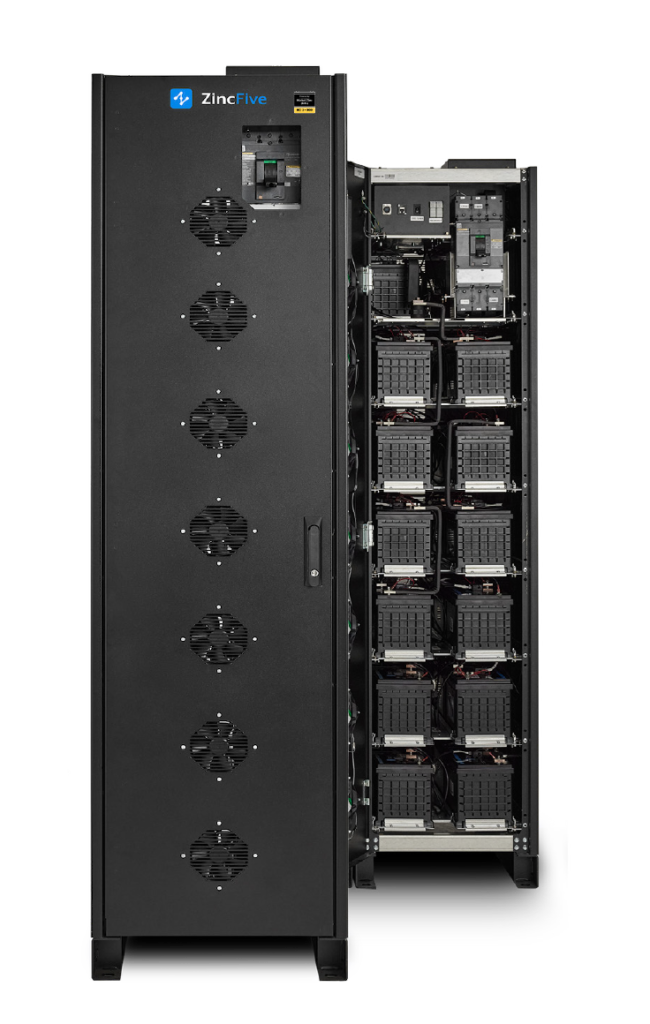
Nickel-zinc batteries, meanwhile, can reduce equipment costs in multiple ways. ZincFive’s battery cabinets offer the smallest footprint-per-watt on the market, minimizing the amount of costly real estate that must be dedicated to backup power systems.
NiZn batteries are also low maintenance and have long life; ZincFive battery cabinets come with a 10-year warranty, as do some lithium-ion battery cabinets. By comparison, traditional lead acid battery cabinets come with a warranty lasting around 3 to 7 years. Additionally, since nickel-zinc battery technology has no thermal runaway at a cell level, it can operate at a wider temperature range than competing battery technologies, saving money on cooling systems.
A decade ago, data center spending accounted for roughly 36% of overall IT spending. Now, it’s projected to account for nearly 53%.
BC 2 Battery Cabinets Powered by Nickel-Zinc Batteries

Sustainability
Increasingly, every data center buildout must consider its environmental impact. Data center architects and operators are expected to rely on renewable energy when possible, minimize energy consumption and use energy as efficiently as possible. These goals are tracked in part by measuring a data center’s power usage effectiveness (PUE), water usage effectiveness (WUE), and carbon footprint.
As governments grapple with climate change, they’re imposing new sustainability requirements on the data center market and the broader economy. The European Union, for instance, updated the Energy Efficiency Directive (EED)⁶ in 2023, requiring data centers to monitor and report their energy consumption and emissions. In the United States, states have largely driven the regulatory environment. For instance, California last year adopted two new laws⁷ requiring companies to disclose more information related to their greenhouse gas emissions and climate-related financial risks. Corporate entities are also feeling the pressure to achieve certain sustainability goals from their shareholders and the general public. According to Gartner⁸, 2022 was the first year surveyed CEOs called environmental sustainability a top 10 strategic business priority.
There are a variety of tactics that data center architects and operators can leverage to meet these sustainability requirements. Hyperscalers, for instance, are adopting innovative air-cooling solutions to drastically cut back on data center water usage.
NiZn batteries are more environmentally friendly than other battery chemistries. A Climate Impact Profile by Boundless Impact Research and Analytics⁹ found that, compared with lead-acid and lithium batteries, NiZn has advantages with lower GHG emissions, water footprint, energy footprint, and other sustainability metrics. Specifically, NiZn batteries’ lifetime greenhouse gas emissions are 4x lower than lead-acid and 6x lower than lithium-ion emissions. Meanwhile, a NiZn battery demands 96% less water from cradle to gate than the average lithium-ion battery. The energy footprint, manufacturing to gate, for NiZn is 23%-33% less than that of lithium-ion batteries and lead-acid pure-lead batteries.
Nickel-zinc batteries use common, widely available, conflict-free materials. Nickel and zinc are abundant in the Earth’s crust, respectively, 4x and 5x more than lithium and lead. They are also fully recyclable, environmentally friendly with a low carbon footprint, and not hazardous.
Because NiZn batteries are highly recyclable, they are a logical component of a “circular economy.” The concept of a “circular economy,” which is gaining traction in corporate conversations, refers to a holistic system that minimizes waste and pollution, keeps products in use, and regenerates natural resources.

Safety
As more data centers are built around the globe, delivering mission-critical services for countless businesses and entities, safety is paramount.
Fires are not only an obvious safety risk within the data center but also a real business risk. The Uptime Institute found that 7% of data center outages in 2023 were caused by fires10. While not all data center fires are the result of batteries, components such as lithium can certainly accelerate fires, potentially destroying millions of dollars of servers.
Consequently, data center operators have to invest in proper fire suppression, deflagration venting and other safety features. Alternatively, they can invest in safer technology.
NiZn battery chemistry is inherently safer than both lead-acid and lithium-ion, with no thermal runaway at the cell level. The aqueous electrolyte lacks the flammability and reactivity of organic solvent-based electrolytes used in lithium batteries, which, when failed, can emit toxic fumes.
Compared to lead-acid batteries, ZincFive’s nickel-zinc batteries do not out-gas during normal operation.
UL 9540A testing shows that ZincFive’s nickel-zinc batteries do not exhibit thermal runaway, making them non-flammable and non-reactive to air and water.
The result is reduced safety-related infrastructure, lower costs, and peace of mind.
NiZn batteries’ lifetime greenhouse gas emissions compared to alternatives:
4x
lower than lead-acid
6x
lower than lithium-ion emissions
Greenfield & Brownfield Data Center Projects
Greenfield Data Center Projects
As the demand for data center capacity continues to grow, hyperscalers are leading the way in greenfield deployments. Hyperscalers have the capital to start from scratch. It takes significant resources to scout out available real estate in strategically sound locations, and then build an entirely new facility that can accommodate leading-edge innovation. A new hyperscale data center typically costs upwards of $200 million, with the potential to reach into the billions.
In 2023, hyperscalers operated approximately 900 data centers worldwide, according to Synergy Research Group, accounting for about 37% of worldwide capacity. Overall data center capacity is expected to double by 2028, with hyperscalers accounting for more than half of it.
Building a greenfield data center is about more than simply adding capacity. As hyperscalers extend their reach to new markets and geographic regions, they need to bring their infrastructure closer to their customers. Furthermore, cloud customers are increasingly reliant on distributed workloads, leveraging data centers in different regions of the world to better serve their own customers. More distributed infrastructure also allows cloud customers to better utilize edge-based technologies.
Building from the ground up also gives an organization the opportunity to take different design approaches. Traditionally, data center buildouts take a stick-built approach: materials are delivered to the site of construction, and the facility is built from the ground up. However, data center operators are increasingly turning to modular designs, relying on pre-built components to quickly establish a larger data center footprint.
Modular data centers represent a small but growing portion of the market: in 2022, they accounted for 3.6% of overall data center revenue, according to research firm Omdia. That figure should reach 5% by the end of 2026. The modular data center market in 2026 is forecast to be worth $5.25 billion, up from $3.25 billion in 2023.

In some cases, an organization may want to take a hybrid approach, building a custom-designed data center that includes pre-built power or cooling modules. With current mainstream battery technology, this can be a challenging approach. With some lithium-ion batteries, for instance, a standalone power module would need to include an HVAC system to ensure a maximum temperature within the module of 28 degrees Celsius. It would require a fire suppression system and a deflagration vent. The entirety of the internal structure would have to meet higher burn ratings. On top of all that, these changes to the structure of the container in some areas require different permitting, taxation, and can hamper the data center’s overall footprint.
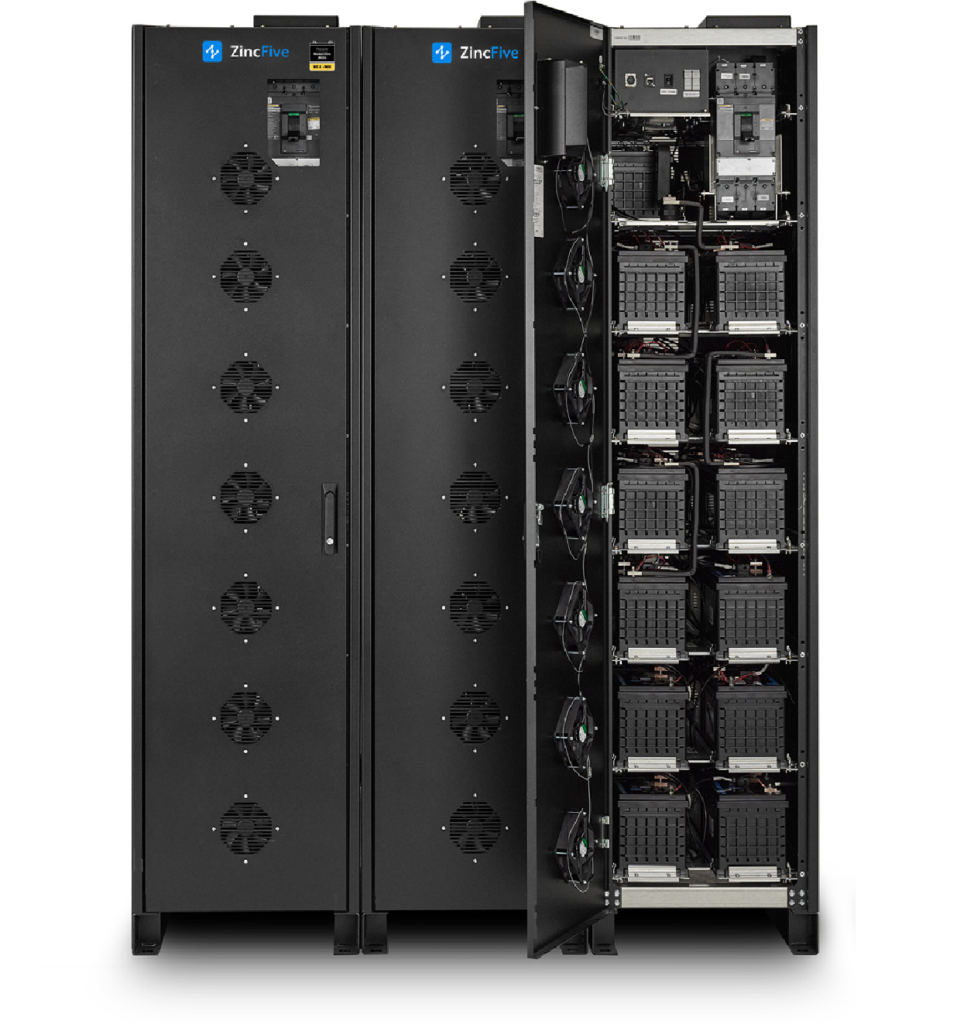
By comparison, with NiZn battery technology, the option of installing a power module outside of a main server building becomes significantly simpler, safer and more cost effective. Given that NiZn batteries have no thermal runaway at the cell level, the modular unit does not require a fire suppression system. Additionally, container operations can reach up to 35 degrees Celsius; thus, it reduces cooling costs and reduces the footprint occupied by the HVAC system. NiZn batteries also offer higher power density, discharging high levels of power quickly. Compared to conventional lead-acid batteries, ZincFive’s NiZn batteries offer up to 3x the power density while being half the size and one third of the weight.
All told, using NiZn batteries instead of lithium-ion batteries can reduce the length of a modular power container by several feet. This is noteworthy, given that the average container costs approximately $10,000 per foot. Additionally, ZincFive’s modular battery cabinets are significantly more cost effective because the batteries ship from the ZincFive factory to their destination inside the cabinet. Due to the volatile nature of lithium-ion batteries, some brands must be shipped separately and installed upon arrival.
Meanwhile, hyperscalers intent on optimizing the footprint of new data centers have resources they can leverage, such as the Open Compute Project’s data center design principles.
For instance, the collaborative industry organization — helmed by major companies including Meta, IBM, Intel, Nokia, Google and Microsoft — opted to include a distributed offline backup power strategy in its design principles, as opposed to a standard inline centralized UPS for backup power. ZincFive’s in-rack battery backup units allow data center organizers to take a distributed approach.
As with any major capital investment, a number of external factors can impact the construction of a greenfield data center. Macroeconomic headwinds, global political uncertainty and supply chain challenges all impact the data center market. In key markets, the limited availability of land — whether due to high costs, political interference or both— is a major challenge.
Northern Virginia, for instance, is the largest data center market in the world and remains a desirable location for new infrastructure. However, data center buildouts have experienced delays in recent years, in part because of local opposition.
Limited power capacity is also a serious constraint on the greenfield data center market. In Singapore, for instance, the government in 2019 enacted a three-year moratorium on data center construction in response to the energy consumption they require. Meanwhile, in London — the second-largest data center market — “a key electricity substation upgrade in the western corridor has been delayed,” according to CBRE. “As a result, securing power from the grid operator is almost impossible for the next few years. This is a problem for the hyperscalers, given their desire to expand their availability zones in the western corridor.”
Brownfield Data Center Projects
While greenfield buildouts will significantly contribute to the growth of the overall data center market, breaking ground on an entirely new facility isn’t always the logical way to build more capacity.
Organizations of all kinds — including hyperscalers, enterprises, medical facilities and educational institutions, to name a few — have existing data centers or other sites that they can retrofit with modern data center technology. Brownfield buildouts allow organizations to leverage the real estate already in their possession, as well as legacy IT equipment. By pursuing a brownfield buildout, an organization can potentially avoid the regulatory hurdles that can slow down greenfield projects. All told, brownfield projects can be completed relatively quickly and with a smaller budget.
Brownfield projects are sure to look more appealing to enterprises ready to integrate AI into their workflows. While hyperscalers are already making significant investments in AI-powered products, the opportunities to leverage AI extend far beyond the walls of Microsoft or Google. Nearly half of organizations surveyed last year said they were evaluating the business use cases for AI. However, to keep up with the demand generated by AI, data center capacity will need to grow by nearly 300%, according to one estimate.
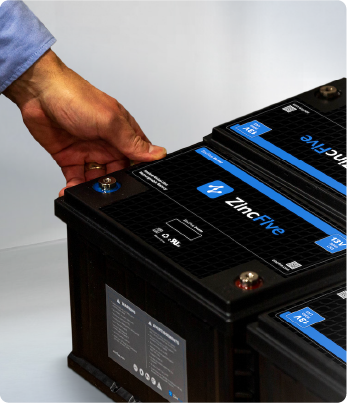
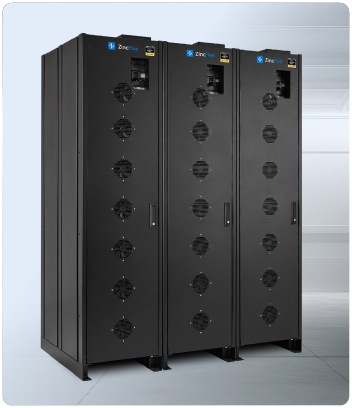
9.4/10
ZincFive’s technology scores a 9.4 out of 10 impact score on its overall performance, the highest positive Climate Impact score of leading battery chemistries.
Modular data center expansions provide ways for organizations to quickly add capacity to existing operations. For instance, an enterprise could add a power module unit outside of its existing data center, delivering more power capacity to support increasing compute power within a facility. Alternatively, adding a power module outside of the data center would allow an enterprise to strip out old power and cooling infrastructure that sits within the facility, occupying valuable floor space. As is the case for greenfield projects, brownfield projects can add power modules that leverage NiZn battery technology for simple, safe and cost effective power expansions.
NiZn batteries also provide an option for data center operators who want to replace existing lead-acid batteries with a safe, longer-lasting and more sustainable option. ZincFive offers a NiZn drop-in replacement for lead-acid UPS batteries. It is adapted to use the same charging system as lead-acid batteries, making the replacement process seamless. NiZn batteries have an operating life up to 3x that of lead-acid batteries, thanks to the stable, non-corroding positive nickel current collector in nickel-zinc batteries.
NiZn batteries also give data center operators a way to make existing facilities more sustainable. Generally speaking, sustainability goals are easier to reach with greenfield projects, which can use the most sustainable components for every part of the facility. Brownfield projects may include building materials that are less energy efficient, for instance. Older buildings may also have different layouts that simply make them harder to cool efficiently. However, the cradle to grave carbon footprint of a nickel-zinc battery is significantly less than lead-acid or lithium batteries.
Additionally, NiZn batteries’ lifetime greenhouse gas emissions are 4x lower than lead-acid and 6x lower than lithium-ion emissions. Furthermore, nickel-zinc batteries use common, widely available, conflict-free materials.
Brownfield projects face many of the same external challenges as greenfield projects, including economic headwinds and supply chain disruptions. While limited real estate can be a challenge for greenfield projects, it may counterintuitively serve as an advantage for brownfield buildouts — there may be economic incentives available for organizations that can modernize older buildings.
Data center operators may also run up against resistance within their own organization, if leaders are inclined to use existing infrastructure as long as possible before undertaking modernization projects. However, technologies like NiZn can help make a compelling case for facility upgrades. For one thing, NiZn batteries are more reliable than lead-acid or lithium-ion batteries — the cells remain conductive even when weak or depleted. Most leaders would agree that the risk of letting business-critical systems fail is not worth taking simply to squeeze a few more years out of existing battery backup systems. Furthermore, NiZn batteries can help reduce operating costs by reducing the need for safety infrastructure.
Conclusion
Data center operators have reached a critical point where they must decide how to add capacity to their operations. If they do not, they risk being left behind while competitors host new, in-demand, power-hungry AI tools.
There are a few key considerations for every data center buildout: cost, safety and sustainability. Along with other bleeding-edge technologies, ZincFive’s field-proven nickel-zinc battery technology can help data center architects and operators meet requirements in each of these areas. Entities that need more data center capacity can pursue greenfield projects or brownfield projects. One route may make more sense than the other, given an organization’s size, existing infrastructure, available capital and capacity needs.
In each of these scenarios, incorporating nickel-zinc battery technology is a wise choice.
Citations
2 https://www.cbre.com/insights/reports/global-data-center-trends-2023
7 https://watershed.com/blog/california-sb-253-and-sb-261-a-guide-for-companies
9 ZincFive Climate Impact Profile
10 https://uptimeinstitute.com/resources/research-and-reports/annual-outage-analysis-202
-

Featured Papers A Comprehensive Guide to the U.S. Codes and Standards for Energy Storage Systems (ESS)
This white paper provides an informational guide to the United States Codes and Standards regarding Energy Storage Systems (ESS), including battery storage systems for uninterruptible power supplies and other battery backup systems.
June 28, 20241 / 2 -

Featured Papers Climate Impact Profile
Advanced energy storage solutions are increasingly needed to transition the electricity grid, transportation, building and industrial sectors towards renewable energy sources. ZincFive’s nickel-zinc battery is a high-capacity battery with environmental and safety advantages.
June 28, 20242 / 2